




The NCAA Is Watching: How ProhiBet and New Betting Rules Are Changing March Madness
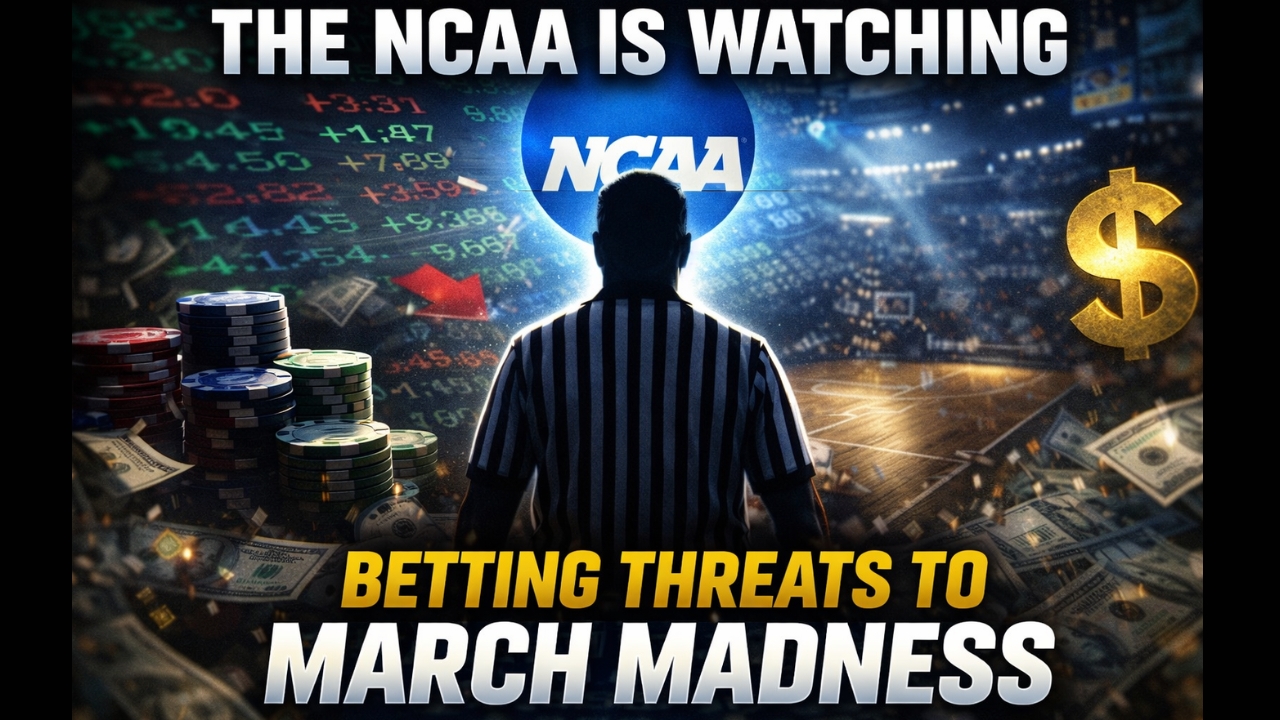
The bracket drops on March 15. But before the first ball tips, the NCAA has already made one thing clear: the integrity of this tournament is not up for debate, and they have the technology to back that up.
Two separate but connected moves announced in the days leading up to Selection Sunday show just how seriously college basketball's governing body is treating the gambling problem that has been building in plain sight. One move targets the officials calling the games. The other targets the information surrounding the players playing them. Together, they represent the most aggressive integrity posture the NCAA has ever taken heading into a tournament.
What Is ProhiBet and How Does It Work?
The tool at the center of this conversation is called ProhiBet, developed by a company called Integrity Compliance 360, or IC360.
ProhiBet is a technology that crosschecks anonymized identification data with sportsbooks to flag impermissible bettors. IC360 works with sports leagues and sportsbooks to track the betting market.
The way it works in practice: the names of officials and other enrolled individuals are uploaded to the ProhiBet system, anonymized, and then crosschecked with customer data at participating sportsbooks. If someone on the prohibited list tries to open a sportsbook account or place a wager, the administrator on the collegiate property side gets an email with the information of the compliance professional at the sportsbook platform, and the person on the platform side gets the same information.
More than two dozen U.S. sportsbooks use ProhiBet, and many NCAA schools and conferences have implemented the technology as well. The UFC, the PGA Tour, and major sportsbook operators like Caesars, Hard Rock Bet, Underdog, and Betr are all part of the network.
The NCAA announced that it will monitor basketball, baseball and softball tournament officials for betting using a technology called ProhiBet, a technology that crosschecks anonymized identification data with sportsbooks to flag impermissible bettors. https://t.co/voO0xXgDud
— ESPN (@espn) March 10, 2026
This Year, Referees Are in the System for the First Time
The headline announcement is that officials are now being added to the ProhiBet network for the first time at a championship event.
The NCAA announced Tuesday that it will begin monitoring its officials in this year's basketball, baseball and softball championships with ProhiBet. More than 220 officials, including alternate referees, will work the men's and women's basketball tournaments. In addition to the background checks that officials must pass to be eligible for the postseason, their names will be uploaded to the ProhiBet system.
If any suspected violations are discovered, the NCAA said it would consider whether the activity could merit removal of the referee's championship officiating duties.
IC360 and the NCAA announced that the college sports body is engaging IC360's ProhiBet solution for referees and other officials who will oversee the upcoming NCAA Division I Championships across men's and women's basketball, as well as baseball and softball.
NCAA Managing Director of Enforcement Mark Hicks called it a significant step forward. "Implementing ProhiBet is a major step in increasing integrity protections for college sports," Hicks said. "This platform adds another layer to the NCAA's robust integrity monitoring program as we work to keep competition integrity and student-athlete well-being paramount in a rapidly evolving sports betting environment."
IC360 Co-CEO Scott Sadin added that the collaboration "sets a new industry benchmark and reinforces the importance of proactive deterrence and detection in keeping collegiate athletics fair."
What About Players? A Separate Tool Is Targeting That Side Too
ProhiBet is already used for athletes. That is not new. IC360 already monitors college sports and helps to prevent student-athletes, coaches and other personnel who should not be betting on college events from doing so. The expansion for this March Madness adds officials into that same net.
But the NCAA's response to the player side of the gambling issue goes beyond just monitoring whether athletes are placing bets. The bigger concern entering this tournament is the pressure, harassment, and manipulation that comes at players from outside.
IC360 Managing Director of ProhiBet Matt Heap noted that since May 2024, IC360 has received more than 17,000 responses to survey questions addressed to student-athletes, coaches and other staff. He said 4.3% of respondents reported being asked to give inside information on a sporting event and 4.1% have felt threatened, harassed or pressured by someone who bet on their game.
A recent NCAA survey found that 36% of Division I men's basketball players reported social media abuse related to sports betting within the last year. That number is not a small fringe issue. It is more than one in three players being harassed because of someone's bet slip.
The Player Availability Rule: A New Layer of Protection
Because of the gambling pressure surrounding player injury and availability information, the NCAA introduced an entirely separate program that debuts this tournament.
The Division I Men's and Women's Basketball Committees announced Wednesday that the 2026 NCAA Tournaments will require teams to submit player availability reports for every game. The policy is designed to address growing concerns tied to sports betting and the pressure athletes often face regarding injury information.
For the first time, the NCAA will punish teams that do not provide player availability reports. Fines start at $10,000. The reports are intended to combat betting-related pressure, solicitations and harassment athletes receive from bettors connected to their playing status.
The penalty structure has real teeth. A first offense carries an institutional penalty of up to $10,000. A second offense jumps to up to $25,000. A third offense, or any subsequent violation, carries a penalty of up to $30,000 for the institution and an additional penalty of up to $10,000 assessed directly to the head coach.
HD Intelligence, a company that already manages availability reporting for several major conferences, will serve as the official reporting service provider for the 2026 championships.
The availability reporting system will function as a pilot program during the 2026 Division I men's and women's championships before any potential expansion to other NCAA sports or events.
Why This Is Happening Now: The Point-Shaving Wake-Up Call
This is not a precautionary pivot. It is a response to what has already happened inside the sport.
IC360 has helped to uncover several instances of suspected match-fixing or illicit betting within college sports. In January of this year, it was revealed that 26 people were accused in a point-shaving scheme that allegedly involved 39 NCAA college basketball players across 17 schools.
That scandal put the entire college basketball world on notice. Thirty-nine players. Seventeen schools. The point-shaving problem is not isolated, it is networked, and it is active.
IC360 detected suspicious wagers ahead of a contest between Eastern Michigan and Central Michigan, leading to notifications sent to the company's client partners. IC360 also identified "abnormal betting activity" for two separate contests that season.
NCAA President Charlie Baker has been vocal in calling on states to eliminate college player prop bets, which he sees as particularly dangerous. The NCAA runs one of the largest integrity monitoring programs in the world and has implored states to eliminate prop bets because of the integrity risks those bets pose.
Several states have taken action, including full bans on college player props in Ohio, Maryland, Vermont and Louisiana. But that still leaves the majority of states where prop bets on college athletes are legal and widely available.
The Platform Has Limits
ProhiBet is not foolproof. One documented case from Texas shows exactly where the gaps exist.
ProhiBet technology is designed to block members of Texas' athletic department from accessing their accounts to make wagers. But the violation descriptions described a disconnect between ProhiBet and PrizePicks, a popular daily fantasy website where five of the individuals made wagers. PrizePicks "modified their frequency of checking against the ProhiBet," allowing four individuals into the account.
IC360's Matt Heap acknowledged the problem, noting that prediction markets, fantasy platforms, and other newer betting mechanisms fall under different regulatory frameworks. "There are other types of platforms in this ecosystem now. There's prediction markets, there's fantasy, different things they can play at 18 years old. Some of these platforms have props stuff on there and they fall under a whole different set of regulations, if any at all."
That gap is real. The NCAA can lock down access to traditional sportsbooks through ProhiBet. What it cannot fully control yet is the explosion of non-traditional platforms that operate in legal grey zones.
The Bigger Picture for College Basketball
March Madness is the biggest single betting event in American sports outside of the Super Bowl. The money moving around these games is staggering, and with that comes pressure on every person connected to the results.
Every game in both the men's and women's tournaments will be subject to the new reporting requirements from the opening tip to the final buzzer.
What the NCAA is building, piece by piece, is a full-court press on the integrity problem. Officials are now inside the ProhiBet net. Players have been in it for years. Availability reports are now mandatory. Coaches face personal fines if their institutions fail to comply. The message from Indianapolis is that the sport is not going to hand itself over to the betting markets without a fight.
Whether it is enough is a different question. The point-shaving indictments from January showed that 39 players across 17 schools were allegedly already compromised before any of these new tools were fully deployed. The scale of the problem may be larger than any single technology can contain.
But the NCAA is at least moving with urgency. With 68 teams, 220 officials, and millions of dollars in bets riding on every possession, urgency is the only appropriate speed.
Follow BallerTube at ballertube.com for the latest in college basketball news, player coverage, and recruiting updates.
2394

3765
4643

4499
2596