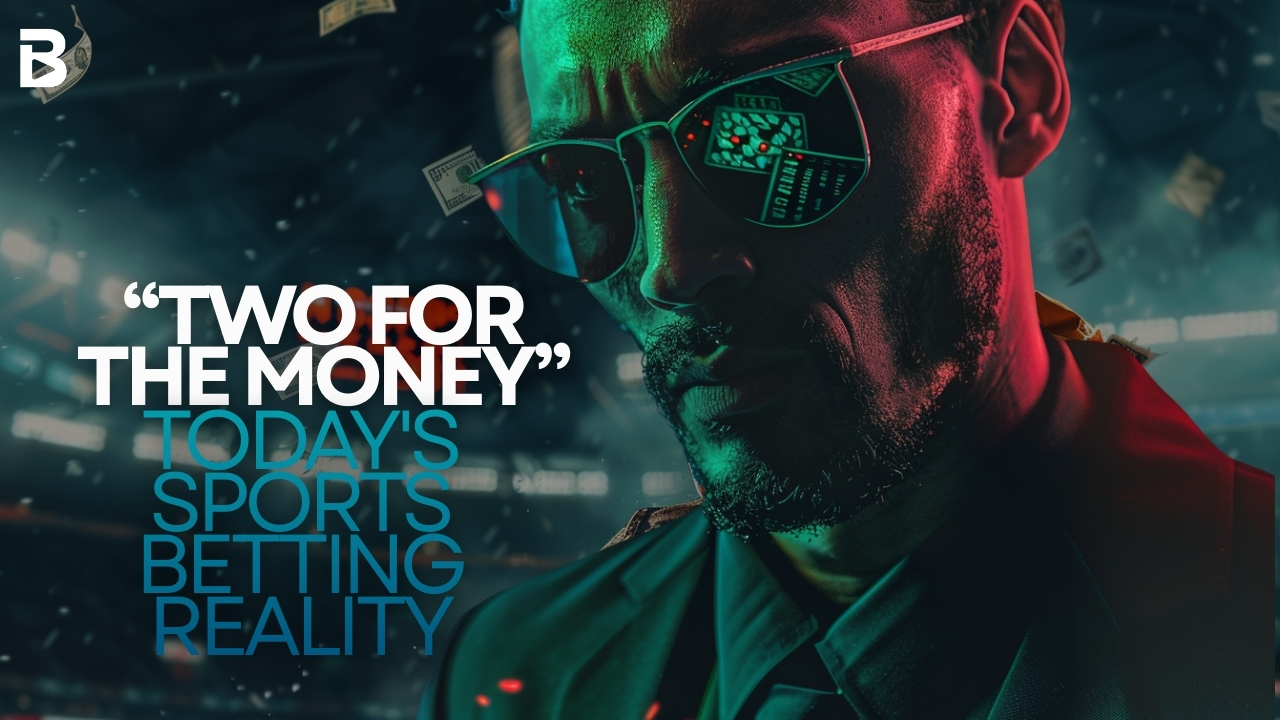
The Al Pacino thriller about sports betting manipulation warned us 20 years ago. We didn't listen. Now it's everywhere.
In 2005, a movie starring Al Pacino and Matthew McConaughey flopped at the box office. Critics dismissed it. Audiences ignored it. "Two for the Money" made $30 million worldwide and disappeared into streaming obscurity.
Twenty years later, that movie looks like a prophetic documentary.
Everything "Two for the Money" warned us about — the predatory manipulation, the manufactured winners, the addiction cycle, the celebrity endorsements, the illusion that you're smarter than the house — is now playing out in real-time across America.
Except now it's legal. Now it's on your phone. Now it's during the game, in the commercial breaks, on your favorite athlete's Instagram story.
Now it's inescapable.
If you haven't seen "Two for the Money," here's the setup: Brandon Lang (McConaughey) is a college football star whose career ends with a devastating knee injury. Broke and desperate, he starts working at a sports betting call center, where he discovers he has a gift for picking winners.
Walter Abrams (Pacino) — a charismatic, manipulative sports consulting guru — discovers Brandon and flies him to New York, rebrands him as "John Anthony," and turns him into the face of a multi-million dollar sports betting empire built on smoke, mirrors, and the desperate belief that someone, somewhere knows how to beat the system.
The movie shows how Walter doesn't just sell picks. He sells hope. He sells confidence. He sells the fantasy that you're one inside tip away from changing your life.
Sound familiar?
The Touts Are Back — And They're On Your Timeline
In "Two for the Money," Brandon Lang becomes "John Anthony" — a manufactured persona designed to sell the dream of guaranteed winners.
In 2025, we call them "sports betting influencers."
Open Twitter (sorry, X) during NFL Sunday and you'll see dozens of accounts posting:
"🔒 LOCK OF THE YEAR 🔒"
"99-2 ON MY LAST 101 PICKS"
"VEGAS DOESN'T WANT YOU TO SEE THIS"
"DM FOR MY VIP PICKS ($$$)"
These are the modern Walter Abrams. Except instead of a call center in New York, they operate from anonymous Twitter accounts with crypto in their bio and Telegram channels charging $49.99/month for "exclusive insider picks."
They post screenshots of winning tickets. They never post the losers. They claim connections with "someone inside the organization." They promise you'll "retire your boss by playoffs."
It's Brandon Lang's origin story, except now there are thousands of them, and they have direct access to your phone 24/7.
The best part? Most of them are losing money themselves. Just like in the movie.
The House Always Wins — But Now It Has Your Biometric Data
In "Two for the Money," Walter runs a sports consulting firm that charges clients for picks. His business model is simple: Win or lose, he gets paid. The house always wins.
Now the house is DraftKings, FanDuel, BetMGM, Caesars, and a dozen other apps on your phone.
And they've perfected Walter's playbook.
Here's how it works in 2025:
Step 1: The Welcome Bonus
"Bet $5, Get $200 in Bonus Bets!" They hook you with free money. You win your first few bets because beginners often do. You feel smart. You feel like you've cracked the code.
Just like Brandon Lang's early hot streak.
Step 2: The Algorithmic Manipulation
The apps track everything. What games you watch. What teams you follow. When you're most likely to bet (hint: after a few drinks, late at night). They send push notifications at precisely the right moment to trigger impulse bets.
"Chiefs -3.5 looking good! Bet now before the line moves!"
Walter Abrams would be jealous.
Step 3: The In-Game Betting Trap
Remember when you could only bet before the game started? Now you can bet on every play. Every drive. Every pitch. Every possession.
It's not gambling. It's a slot machine disguised as football.
The more bets you make, the more the odds tilt toward the house. But you keep betting because you're "due for a win." You keep chasing.
Just like Brandon Lang chasing that high after his first big score.
Step 4: The Personalized Push
Lost three bets in a row? Here's a "bonus bet" to keep you playing. Haven't logged in this week? Here's a notification about tonight's game. Your team is playing tonight? Here's an offer you "can't refuse."
They're not helping you win. They're keeping you engaged.
Because an engaged bettor is a losing bettor.
DraftKings has got all the sports action and responsible gaming tools you need for the new year. The crown is yours! 🫡👑 @DraftKings #DKPartner pic.twitter.com/5vNypkS2ij
— LeBron James (@KingJames) January 4, 2025
Even LeBron Sold Out — The King Is Selling The Dream
One of the most memorable scenes in "Two for the Money" shows Walter explaining how celebrity endorsements sell the dream. Get someone famous to vouch for you, and people trust the product without questioning it.
In 2025, that scene plays out every Sunday during NFL broadcasts.
Jamie Foxx tells you to bet on FanDuel.
Kevin Hart wants you to download DraftKings.
Wayne Gretzky — THE Wayne Gretzky — is shilling for BetMGM.
J.B. Smoove is doing commercials for Caesars.
And then there's LeBron.
LeBron James — the NBA's all-time leading scorer, four-time champion, billionaire, guy who literally just broke a 22-year record held by... himself — is now promoting sports betting.
Let that sink in.
The same LeBron who built his brand on "I Promise." The same LeBron who opened a school for underprivileged kids. The same LeBron who positioned himself as a role model for an entire generation.
He's now telling you to bet on the Lakers.
It's not just ironic. It's insidious.
Because when LeBron James tells you something is okay, millions of people believe it. He's not some random celebrity. He's an icon. A legend. A guy who kids literally worship.
And now he's selling them sports betting.
Here's what makes it worse:
LeBron doesn't need the money. His net worth is over $1 billion. His NBA contracts, Nike deal, and business ventures have made him generationally wealthy.
He's not promoting sports betting because he's broke.
He's promoting it because the endorsement deal was too big to refuse.
Just like Walter Abrams turning Brandon into "John Anthony" — it's all branding. It's all manipulation. It's all designed to make you forget that statistically, you're going to lose.
The only difference? In the movie, the celebrities were fictional. Now they're real, and they're the biggest stars on the planet.
When The GOAT Becomes The Shill
There's something uniquely dystopian about LeBron James promoting sports betting.
This is a man who:
- Came from nothing in Akron, Ohio
- Witnessed firsthand what gambling addiction does to communities
- Built a billion-dollar empire on discipline, hard work, and smart decisions
- Preaches about financial literacy and building generational wealth
And now he's the face of an industry designed to extract money from the people who can least afford to lose it.
The cognitive dissonance is staggering.
LeBron will post motivational quotes about hard work and dedication, then five posts later there's a sponsored ad telling you to "live bet the Lakers at halftime."
He'll talk about his investment portfolio and business acumen, then tell his 159 million Instagram followers to download a betting app.
He's selling financial ruin while preaching financial literacy.
And because he's LeBron, millions will listen.
The Commercial That Says Everything
There's a recent sports betting commercial featuring multiple celebrities sitting around talking about their "foolproof systems" for betting.
They're all wrong. They all lose. The punchline is supposed to be "betting is fun even when you lose!"
But here's the actual punchline: They all got paid millions to be in that commercial.
The house always wins. And in 2025, the celebrities are part of the house.
LeBron got his check. Jamie Foxx got his check. Kevin Hart got his check.
You? You get the $5 welcome bonus and a dopamine hit when your parlay hits once out of twenty times.
The "Guaranteed Winners" Are Still Lying
Here's the central con in "Two for the Money": Walter's firm claims to have inside information. Secret sources. Proprietary systems. Guaranteed winners.
It's all bullshit. They're just making educated guesses like everyone else.
In 2025, the con is identical.
"I have a source inside the locker room."
"My algorithm is 87% accurate."
"Vegas is begging me to stop sharing this system."
"This insider info cost me $10K but I'm giving it to my followers."
Here's the truth: If someone actually had a foolproof betting system, they wouldn't sell it to you for $99/month. They'd bet millions themselves and retire.
The people selling picks are making money from YOU, not from betting.
Just like Walter Abrams.
The house doesn't fear smart bettors. The house fears bettors who quit betting.
The Addiction Cycle Is Designed Into The Product
The darkest part of "Two for the Money" is watching Brandon descend into addiction. He starts believing his own hype. He thinks he's invincible. He bets bigger. He loses bigger. He spirals.
Walter watches it happen because an addicted client is a profitable client.
In 2025, sports betting apps have turned addiction into a science.
The variable reward system — sometimes you win, sometimes you lose, but you never know when the next win is coming — is literally the same mechanism that makes slot machines addictive.
The near-miss effect — your team loses by one point, your parlay misses by one leg — keeps you thinking "I was SO close" and betting again.
The cashless system — you're not gambling with money, you're gambling with numbers on a screen — removes the psychological barrier of handing over cash.
The 24/7 availability — there's always a game, always a bet, always a way to chase losses at 2 AM.
In the movie, Brandon hits rock bottom when he loses everything on one massive bet. He screams. He breaks down. He realizes he's been conned.
In 2025, thousands of Americans are having that same moment every single day.
The National Council on Problem Gambling reports calls to their helpline have increased 30% since states started legalizing sports betting.
30%.
And the apps keep advertising. And LeBron keeps posting. And the money keeps flowing.
The State Governments Became Walter Abrams
Here's the most cynical part of the whole operation:
In "Two for the Money," Walter runs an unregulated gambling enterprise. It's legal, but barely. It exists in a gray area.
In 2025, state governments have become Walter.
Since the Supreme Court overturned the federal ban on sports betting in 2018, 38 states have legalized it. Not because they care about your freedom to bet on the Knicks. Because they need the tax revenue.
New York collected $709 million in sports betting taxes in 2024.
New Jersey pulled in over $500 million.
Pennsylvania, Illinois, Michigan — all cashing in.
The states take their cut. The sportsbooks take their cut. The celebrities get paid. The influencers get their affiliate commissions.
And you? You're the product.
The state legalizes it. The apps make it frictionless. The celebrities normalize it. The influencers push it. The algorithms manipulate it.
It's Walter's sports consulting firm, scaled to a $10 billion industry.
Rigged college football. Either the ref took the under or he was keeping that spread from getting close. pic.twitter.com/upUO6aKIY0
— Invisidon (@QuantumAlteredX) November 24, 2025
The Lie That You Can Beat The System
The core message of "Two for the Money" is brutal: The house always wins. You can't beat the system. The only winners are the people selling the dream.
Brandon realizes this too late. After all his "guaranteed winners" and inside information and algorithm-backed picks, he's just another gambler who thought he was smarter than everyone else.
He wasn't.
Neither are you.
Here are the actual statistics on sports betting:
- The average sports bettor loses money over time. Period.
- Professional bettors who make a living betting sports represent less than 1% of all bettors
- Even sharp bettors (the pros) typically win only 53-55% of the time
- The vig (the house's cut) means you need to win 52.4% of bets just to break even
- Parlay bets — the ones the apps push hardest — have some of the worst odds in gambling
You're not going to outsmart Vegas. You're not going to find the system. You're not going to turn $100 into $10,000 with "one simple trick."
The people who run these sportsbooks employ PhDs in mathematics. They have decades of data. They adjust lines in real-time based on thousands of factors.
You have a hunch about the Cowboys.
And LeBron James telling you to bet doesn't change the math.
The Scenes That Hit Different Now
If you rewatch "Two for the Money" in 2025, certain scenes are uncomfortably prophetic:
The scene where Walter explains how they manipulate clients by giving them "special VIP treatment" — Now that's FanDuel's "VIP Program" that gives high-volume bettors "exclusive perks" (to keep them gambling).
The scene where Brandon's girlfriend confronts him about his addiction — Now that's thousands of conversations happening in American homes every Sunday.
The scene where Walter explains that selling hope is more profitable than selling actual winners — Now that's every betting influencer's business model and every celebrity endorsement deal.
The scene where Brandon realizes he's been used as a pawn — Now that's the moment when bettors check their yearly totals and realize they've lost thousands while LeBron cashed his endorsement check.
The movie showed us exactly what would happen if sports betting went mainstream.
We legalized it anyway. And we let billionaire athletes sell it to us.
The People Making Money Aren't Betting
Here's the final truth that "Two for the Money" hammered home:
Walter made millions. Not from betting. From selling picks.
Brandon made money. Not from betting. From being the face of the operation.
The real winners were never the gamblers. They were the operators.
In 2025, the same dynamic plays out:
DraftKings' revenue in 2024: $4.6 billion
FanDuel's revenue: $3.9 billion
Sports betting influencers with 100K+ followers: Easily making six figures annually
LeBron's endorsement deal: Undisclosed, but certainly tens of millions
Jamie Foxx's endorsement deal: Also millions
The only people consistently making money in sports betting are the people NOT betting.
They're the ones selling you the dream.
LeBron isn't betting his billion-dollar fortune on the Lakers. He's getting paid millions to convince YOU to bet on them.
What The Movie Got Wrong
"Two for the Money" got almost everything right about sports betting.
But there's one thing the movie didn't predict: How normal it would become.
In the film, Brandon's gambling is treated as a vice. Something shameful. Something to hide.
In 2025, sports betting is treated as entertainment. It's mainstream. It's advertised during family-friendly NFL broadcasts. It's built into ESPN's coverage. It's promoted by the most respected athletes in the world.
We've normalized the thing the movie warned us about.
And we let LeBron James — THE KING — be the face of it.
That might be the scariest part of all.
How To Watch Sports Without Losing Your Rent
If you're going to bet on sports (and statistically, you probably are), here's the advice Brandon Lang wishes someone had given him:
Set a strict budget and never exceed it. Treat it like entertainment money, not investment money.
Never chase losses. The second you start betting to win back what you lost, you've become the addict in the movie.
Ignore the touts. Anyone selling you picks is making money from YOU, not from their betting genius.
Ignore the celebrity endorsements. LeBron isn't betting his money. He's getting paid to get you to bet yours.
Delete the apps when you're drinking. Drunk betting is how people lose mortgages.
Track your actual results. Most bettors have no idea how much they've actually lost over time.
If you're betting to solve financial problems, stop. That's not betting. That's desperation. And desperation always loses.
The Movie Ended With A Warning
"Two for the Money" ends with Brandon walking away from Walter's empire. He's broke. He's humbled. He's learned the hard way that the house always wins.
The final scene shows Walter already grooming the next Brandon Lang. The cycle continues. The con goes on. Someone else will believe they're different. Someone else will think they've cracked the code.
Twenty years later, we're all living in that final scene.
The sportsbooks are grooming millions of new Brandon Langs every season. The influencers are selling the dream. The apps are sending the push notifications. The celebrities — even the greatest athletes who ever lived — are doing the commercials.
And we keep betting.
Because this time will be different.
This time we'll win.
This time we've got a system.
We don't.
"Two for the Money" tried to warn us.
We should have listened.
Instead, we made sports betting legal, put it on every phone in America, and let LeBron James sell it to us during Christmas Day games.
Walter Abrams would be proud.