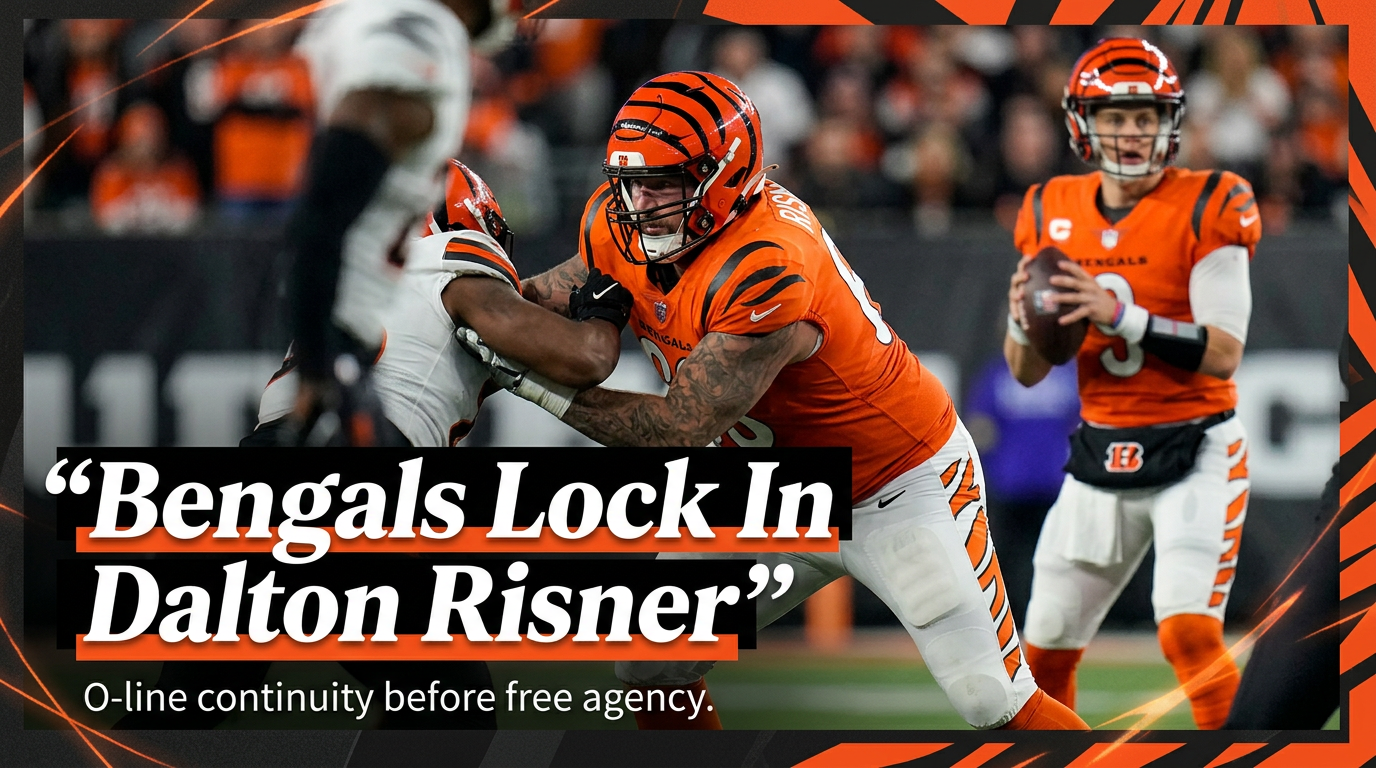
The Bengals re-signed starting guard Dalton Risner ahead of free agency, locking in continuity for Joe Burrow’s protection while the rest of the league starts its pre-market shuffling. I don’t have live access to contract databases or today’s full report, so I can’t give an exact, verified dollar amount, but league insiders have consistently projected Risner in the mid-tier starter range: think a short deal, roughly one to two years, with an average annual value in that affordable interior-lineman band rather than top-of-market guard money. That structure would fit how Cincinnati usually operates with veterans on the line — pay solid starter money, keep flexibility, and avoid cap-clogging guarantees.
View this post on Instagram
Why the Bengals did this
-
Offensive-line continuity has been a clear priority after years of Burrow taking too many hits. Bringing Risner back keeps a known quantity at guard instead of rolling the dice on a cheaper flier or a mid-round rookie.
-
Locking him in before the market opens prevents a potential bidding situation with needy teams and lets Cincinnati set its trench foundation early in the offseason.
-
With Risner in place, the Bengals can let the board come to them in the draft rather than forcing an early-round guard pick.
Contract angle (Ballertube lens)
Again, without direct access to the hard numbers, here’s what this likely looks like in team-building terms:
-
Short-term, starter-level deal: Bengals historically prefer deals that allow exits after a year or two if play dips, especially for non-premium positions like guard.
-
Manageable cap hits: Expect a modest signing bonus, some guarantees in Year 1, and cap hits that still leave room for at least one notable defensive signing.
-
Flex with the draft: If a young guard they love falls in April, Cincinnati can still pivot — Risner’s deal doesn’t box them in the way a huge long-term contract would.
Defensive free agency targets and plans
With a starting guard secured, Cincinnati can turn its attention to the side of the ball that cost them games late: defense.
Here’s how their defensive free-agency plan is likely to stack up, based on needs, recent roster moves, and their usual team-building patterns:
-
Edge depth opposite Trey Hendrickson
-
They’ll be looking for either a rotational pass rusher who can win on third downs or a versatile edge who can kick inside on passing downs.
-
Expect mid-tier veterans or upside signings rather than a massive splash unless a value deal appears.
-
-
Cornerback help
-
Another outside corner to compete for starting snaps is a high-probability target, especially if a veteran starter departs or recent draft picks haven’t fully locked down roles.
-
Short-term, lower-risk deals with proven zone/press versatility fit their usual profile.
-
-
Safety and nickel versatility
-
Modern Bengals defenses lean on DB flexibility; look for a safety or nickel who can cover tight ends and backs while holding up in sub-packages.
-
This is often where they find “value signings” late in the first or second wave of free agency.
-
-
Front-seven rotational pieces
-
An interior defensive lineman who can anchor against the run and help on early downs will be on the radar.
-
They won’t overspend here if the draft class is strong at DT, but they’ll aim to avoid going into the draft with a glaring hole.
-
Big-picture Ballertube takeaway
Re-signing Dalton Risner is a classic “do the boring thing that wins games” move. It doesn’t dominate the highlight shows, but it keeps Burrow upright, stabilizes the offensive line room, and frees the Bengals to spend their best money and picks on fixing the defense. The real fireworks now are likely to come on that side of the ball — edge, corner, and safety — while the offense benefits quietly from continuity up front.