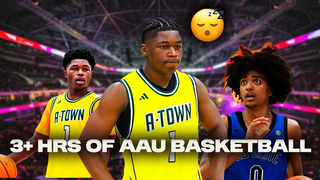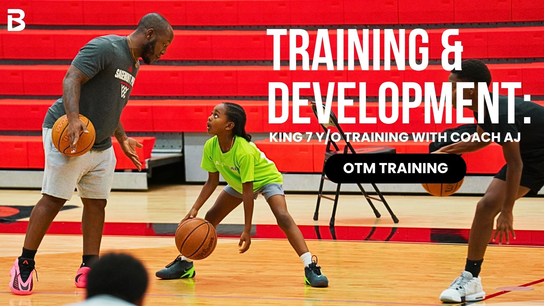
Walk into almost any major girls basketball event today and you’ll feel the shift immediately. The jerseys look different. The names across the chest aren’t always tied to a local high school anymore. Instead, they read like brands—academies, institutes, national programs. Teams built, not born.
Prep schools have officially entered the girls basketball space in a serious way.
For years, this model belonged mostly to the boys side. That’s where the powerhouses were, where players reclassified, transferred, and chased exposure through national schedules. Now, girls basketball is stepping into that same world, and it’s happening fast.
The question is simple, but the answer isn’t:
Are prep schools creating real opportunity for girls basketball players—or are they selling something that only works for a select few?
The New Pathway
Traditionally, the roadmap for a girls basketball player was clear. You played for your local high school. You built your name through your school season. Then you hit the AAU circuit in the spring and summer, where most of the recruiting happened.
That system wasn’t perfect, but it was understood.
Prep schools are changing that structure.
Now, instead of staying home, players are leaving—sometimes across the country—to join programs that promise a higher level of competition, more visibility, and better development. These teams don’t just play local schedules. They travel nationally. They seek out matchups. They operate with a different level of intention.
For players who feel overlooked or underexposed, it’s an attractive option.
It feels like skipping the line.
The Appeal Is Real
Let’s be clear—prep schools didn’t grow this quickly for no reason.
They’re offering things that many traditional high schools simply can’t.
More training time. More skill development. More access to resources. More games against elite competition. More eyes in the gym.
For some athletes, especially those in smaller markets or weaker programs, that can make a huge difference.
Instead of hoping a college coach finds you, prep schools try to put you directly in front of them.
That’s powerful.
And when it works, it really works.
There are players who have used prep programs to completely change their recruiting trajectory. They go from under-the-radar prospects to legitimate college recruits in a matter of months.
Those stories are real. They’re part of why this model keeps growing.
https://www.cbssports.com/high-school/basketball/news/high-school-basketball-no-18-bishop-mcnamara-erases-19-point-second-half-deficit-to-upset-no-1-sierra-canyon/
But Here’s the Catch
Not all prep schools are built the same.
That’s where things start to get complicated.
At the top level, there are programs with structure, experienced coaching, academic support, and real recruiting relationships. These programs know what they’re doing, and they deliver on their promises more often than not.
But as the demand has grown, so has the number of programs trying to capitalize on it.
And not all of them are equipped to truly develop players.
Some are still figuring it out. Some are more focused on branding than building. Some sell the dream without having the foundation to support it.
From the outside, it can be hard to tell the difference.
Everything looks high-level on social media. Everything looks competitive in highlights.
But once you step into the day-to-day reality, the gap between programs becomes clear.
Exposure Isn’t Automatic
“Exposure” is the word that sells everything.
It’s what families hear. It’s what players chase.
But exposure isn’t guaranteed—it’s earned.
Just being on a prep team doesn’t mean college coaches are watching you. It doesn’t mean you’ll be featured. It doesn’t mean you’ll have the ball in your hands when it matters.
In fact, for many players, the move to a prep school comes with a major adjustment.
You’re no longer the star. You’re surrounded by talent. Everyone was “the player” somewhere else.
Now you’re fighting for minutes.
And if you’re not playing, you’re not being seen.
That’s the part that doesn’t always get talked about.
A player who averaged 20 points at her local high school might suddenly be playing 12 minutes a game. Her role changes. Her confidence can take a hit. And the exposure she came for starts to fade.
So while prep schools can increase the level of competition, they can also decrease individual visibility if the fit isn’t right.
https://www.ballertube.com/news/428/leah-dewitt-lands-alabama-and-ucf-offers-class-of-2028-point-guard-is-one-of-the-most-recruited-players-in-the-country/?tag_ids=64,1,11,33337,18,40158
The Role of Fit
This is where a lot of decisions go wrong.
Players don’t always choose prep schools based on fit. They choose based on reputation, hype, or promises.
But fit is everything.
Does the coach believe in your game? Does the system match your strengths? Is there a real opportunity for you to play and grow?
If the answer to those questions is no, then it doesn’t matter how “big-time” the program is.
You can get lost.
And once you get lost in a prep system, it’s not always easy to recover. The clock doesn’t stop. Recruiting windows don’t wait.
The Transfer Effect
Prep schools have also fueled a new kind of movement in girls basketball.
Players are more willing than ever to leave their original situations in search of something better.
That mobility can be empowering. It gives athletes control over their path.
But it also creates instability.
Teams are constantly changing. Rosters turn over quickly. Chemistry becomes harder to build. Loyalty to a program or a community starts to fade.
High school basketball used to be about representing where you came from. Prep basketball is often about positioning yourself for where you want to go.
That shift isn’t necessarily wrong—but it does change the experience.
Academics Matter More Than People Admit
Another layer that deserves more attention is academics.
The best prep schools treat education as a priority. They provide structure, support, and accountability. They prepare players not just for college basketball, but for college life.
But not every program holds that same standard.
Some lean heavily into basketball and offer flexible academic setups that don’t fit every student. That can become a problem, especially for players who need structure or who aren’t naturally self-directed.
At the end of the day, very few players will make a living playing basketball.
Education still matters.
And if a prep school isn’t taking that seriously, it should raise questions.
The Financial Reality
There’s also a financial side that doesn’t always get talked about openly.
Some prep schools are expensive. Tuition, travel, housing—it adds up quickly.
For families, it can feel like an investment in a dream.
But like any investment, there’s risk involved.
There’s no guarantee of a scholarship. No guarantee of development. No guarantee of exposure translating into offers.
That doesn’t mean it’s not worth it. But it does mean families need to go in with clear eyes.
Why This Moment Is Different for Girls
The rise of prep schools in girls basketball matters because the sport itself is growing.
There’s more attention. More media coverage. More college opportunities. More interest overall.
For a long time, girls basketball didn’t have the same infrastructure as the boys side. Prep schools are part of closing that gap.
They’re creating new pathways.
That’s a positive step.
But growth always comes with growing pains.
Girls basketball now has to navigate the same challenges the boys side has dealt with for years—over-promising programs, uneven development, and systems that don’t work equally for everyone.
The Success Stories—and What We Don’t See
It’s easy to focus on the players who benefit.
The ones who transfer to a prep school and blow up. The ones who gain offers. The ones who find the right situation and thrive.
Those stories are real, and they deserve to be told.
But they’re not the full picture.
For every success story, there are players who don’t get the same outcome.
Players who struggle to find their role. Players who don’t get the exposure they expected. Players who leave one situation hoping for better, only to end up in a similar or worse one.
Those stories don’t get posted.
They don’t go viral.
But they exist—and they matter just as much when evaluating the system.
https://www.ballertube.com/news/427/one-of-one-a-ja-wilson-signs-the-largest-contract-in-wnba-history/?tag_ids=9248,5203,10482,20426
Opportunity or Misconception?
The truth sits somewhere in the middle.
Prep schools are absolutely creating opportunity. They’re opening doors that didn’t exist before. They’re pushing the game forward in certain ways.
But they can also create the illusion that there’s only one way to succeed.
That if you’re not in a prep program, you’re behind.
That’s simply not true.
There are still players getting recruited from traditional high schools. There are still multiple paths to college basketball.
Prep school is an option—not a requirement.
What Players and Families Need to Understand
Before making the move, players and families need to ask hard questions:
Will you actually play?
Will you develop?
Is the coaching staff invested in you?
Is the academic structure solid?
Are you choosing this for the right reasons—or just chasing hype?
Because the name on the jersey doesn’t matter if the situation isn’t right.
The Future of Girls Basketball
Prep schools aren’t going anywhere.
If anything, they’re going to keep growing.
More programs will pop up. More players will explore that path. The landscape will continue to evolve.
The key will be accountability.
Programs that truly develop players will stand out. The ones that don’t will eventually get exposed.
And over time, the players, families, and coaches who approach this space with clarity will benefit the most.
My Final Outlook
The rise of prep schools in girls basketball says a lot about where the game is headed.
It’s growing. It’s expanding. It’s creating new possibilities.
That’s the opportunity.
But like anything built around ambition and exposure, it can also blur the line between what’s real and what’s being sold.
That’s where the illusion comes in.
For players, the goal isn’t just to find a bigger stage.
It’s to find the right one.
Because in the end, development—not branding—is what actually moves the game forward.