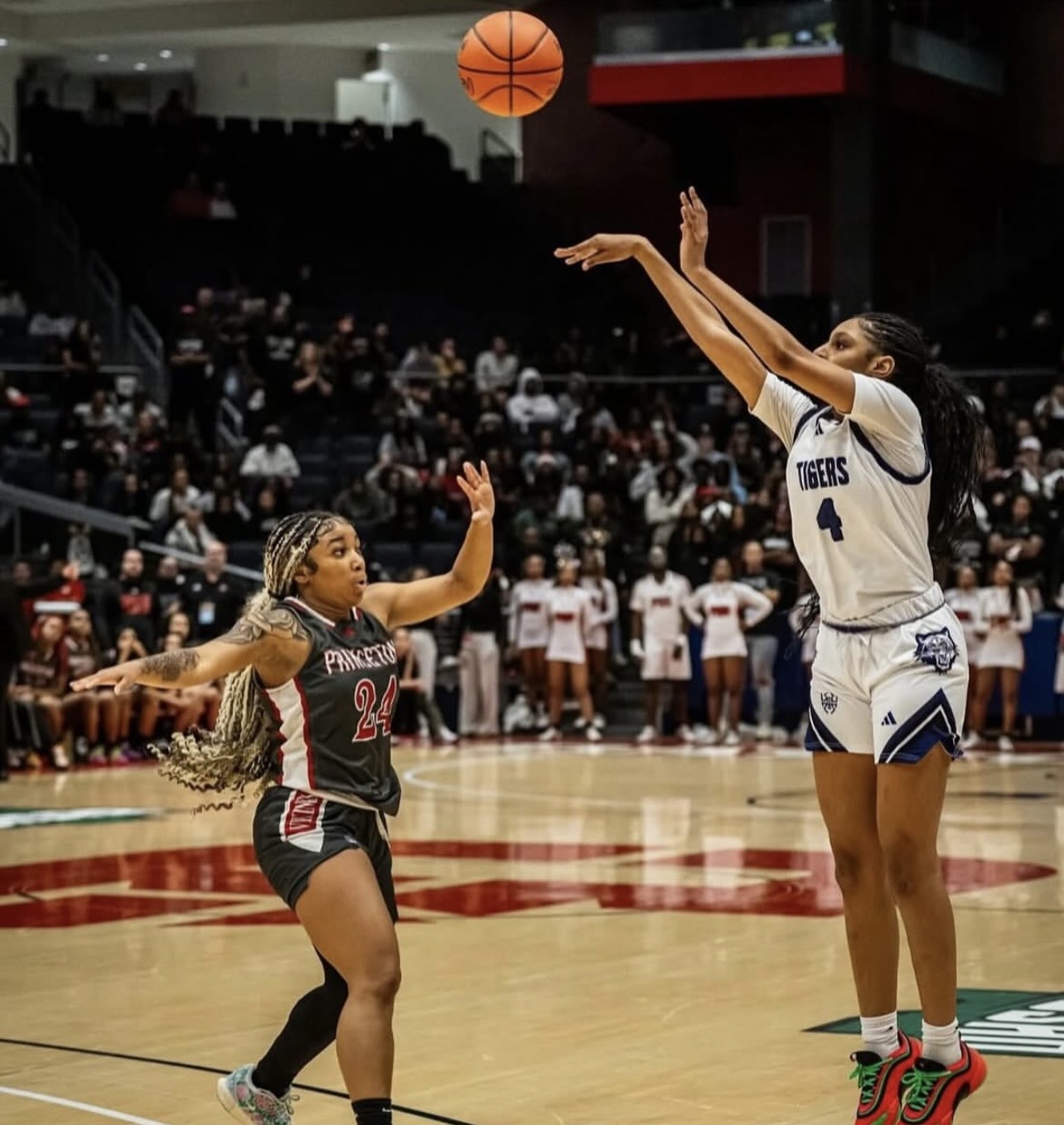
In Ohio girls basketball, there’s a difference between players who show flashes and players who build something real early. One is built on moments. The other is built on habits.
At Pickerington Central High School, there isn’t much room for players who rely on flashes. The program doesn’t reward inconsistency. It doesn’t bend to potential alone. It demands a level of discipline that exposes who is ready and who still needs time.
That’s why when a young player starts gaining traction in that environment, people pay attention.
Zoe Coleman, Class of 2027, is starting to become one of those names.
Not because of viral clips. Not because of early hype campaigns. But because of how she plays—and more importantly, how she carries herself inside a system that doesn’t hand anything out.
Built in a System That Doesn’t Wait
Pickerington Central has long been one of the more respected programs in Ohio. The expectations are established before players ever step onto the varsity floor. Defense is mandatory. Effort is assumed. Accountability is constant.
For younger players, that can be overwhelming. The speed of the game increases. The margin for error shrinks. And the adjustment period often separates those who are just talented from those who are ready to grow.
Coleman’s early presence in that system is what makes her interesting. She isn’t being developed in a low-pressure environment where mistakes go unnoticed. She’s learning in a structure that demands awareness on every possession.
And instead of looking out of place, she looks like she’s adapting.
Playing With Pace Control, Not Panic
One of the easiest ways to evaluate a young player is to watch how they respond to speed. High school varsity basketball, especially in competitive regions like Ohio, forces quick decisions. Players who can’t process the game fast enough tend to rush, over-dribble, or force bad shots.
Coleman doesn’t fall into that pattern.
She plays with a sense of control that feels intentional. Not slow—but measured. She doesn’t move like she’s trying to catch up to the game. She moves like she’s reading it.
That shows up in small ways. She doesn’t pick up her dribble unnecessarily. She doesn’t attack into traffic without a plan. She doesn’t force passes that aren’t there just to keep a play alive.
Instead, she keeps possessions organized. She understands spacing. She recognizes when to advance the ball and when to reset.
For a Class of 2027 player, that level of composure stands out.
https://www.cbssports.com/high-school/basketball/news/highlights-recap-tyran-stokes-scores-31-in-debut-at-rainier-beach-leads-nationally-ranked-vikings-to-81-60-win/
Offensive Approach: Letting the Game Come to Her
Coleman’s offensive game isn’t built around dominating possessions. It’s built around making the right ones matter.
She doesn’t need a high volume of shots to be effective. She finds ways to contribute within the flow of the offense rather than trying to bend the offense around her.
That starts with movement. She cuts with purpose. She relocates when defenders lose track of her. She spaces correctly to create driving lanes for teammates and keeps defenders honest.
When she does attack, it’s direct. There’s no wasted motion. Her drives are typically built on timing rather than isolation-heavy setups. She sees an opening and takes it, instead of trying to manufacture one out of nothing.
That efficiency is something coaches value more than raw scoring numbers, especially at the high school level.
Because players who can operate within structure are easier to trust in bigger moments.
https://www.ballertube.com/news/233/florida-nation-basketball-joins-elite-new-balance-lady-p32-e32-circuits-elevating-girls-basketball-in-south-florida/?tag_ids=9143,33448,35171,35170,35169,33693,35168,35167,34707,35166,35165,35164,35163,12675,35162,10709,35161,33068,35160,34097,35159,35158,34589
The Importance of Playing Without the Ball
A lot of young players struggle when they don’t have the ball in their hands. Their energy drops. Their movement slows. They become spectators instead of participants.
Coleman doesn’t appear to have that issue.
She stays active within possessions. She looks for opportunities to impact the game without needing to control it. That could be through a cut, a screen, or simply maintaining proper spacing to open up options for others.
This kind of off-ball awareness is often overlooked in early evaluations, but it’s one of the clearest indicators of long-term potential.
Because at higher levels, not every player will be the primary option. Players who already understand how to contribute without dominating the ball tend to transition more smoothly.
Defensive Discipline: Earning Minutes the Right Way
If there’s one thing that gets players on the floor at Pickerington Central, it’s defense.
Offense can come and go. Shooting can fluctuate. But defensive effort and positioning are non-negotiable.
Coleman’s defensive approach reflects an understanding of that standard.
She doesn’t overcommit. She doesn’t chase steals at the expense of positioning. Instead, she stays disciplined. She keeps her body in front. She rotates when needed. She communicates through actions, even if she’s not the loudest voice on the floor.
That reliability matters.
Coaches don’t just look for players who can make plays—they look for players who won’t break the system. Coleman’s ability to stay within defensive structure gives her an advantage over peers who rely on risk-heavy styles.
And at the high school level, that’s often what earns trust first.
Physical Development and the Next Step
Like most players in the Class of 2027, Coleman is still developing physically. Strength, balance, and endurance will all continue to evolve over the next few years.
That growth will directly impact her game.
Finishing through contact is one area where added strength will make a difference. As defenders get stronger and more physical, the ability to absorb contact and still complete plays becomes critical.
Lateral quickness and defensive endurance will also continue to develop. While she already shows good positioning, increased strength and conditioning will allow her to maintain that level of defense over longer stretches.
These are natural steps in the development process—not gaps, but opportunities.
Mental Consistency: The Separator
Talent can get a player noticed. Consistency is what keeps them relevant.
Coleman’s approach to the game suggests a level of mental steadiness that coaches look for early. She doesn’t appear to get rattled easily. She doesn’t force herself into plays when things aren’t going her way.
Instead, she stays within her role and continues to contribute in smaller ways until opportunities open up.
That kind of mindset is valuable in a program that emphasizes team play over individual recognition.
Because over time, players who remain consistent tend to see their roles expand naturally.
Learning Curve in a Competitive Environment
Ohio girls basketball is not forgiving. Every game presents a different challenge—different defensive schemes, different levels of physicality, different pace.
For a young player, adapting to that variety is part of the process.
Coleman is still early in that journey, but being in a program like Pickerington Central accelerates the learning curve. She’s exposed to high-level competition in practice and in games. She’s being coached in a system that demands attention to detail.
That environment doesn’t just develop skills—it develops habits.
https://www.ballertube.com/news/224/after-special-k-is-girls-eybl-facing-the-next-wave-of-talent-movement/?tag_ids=9143,10135,26676,34790,34789,34788,34787,34786,23,34785,10713,30152,34707,32689,34155,34348,31965,31964,34730,4075,32688,33249
And habits are what carry players forward.
Long-Term Projection: Why She’s a Name to Track
It’s easy to get caught up in early rankings and projections, especially in today’s recruiting landscape. But the players who sustain attention over time are usually the ones who build their games the right way from the beginning.
Coleman fits that mold.
She doesn’t rely on one-dimensional strengths. She doesn’t need to dominate the ball to be effective. She contributes in ways that translate across levels—decision-making, positioning, effort, and efficiency.
Those traits tend to age well.
As her game continues to expand—whether that’s through improved shooting range, stronger finishes, or increased confidence as a primary option—her profile will continue to grow.
But even without those additions, her foundation is already solid.
The Bigger Picture: Development Over Hype
In today’s basketball culture, it’s easy for young players to get caught up in exposure. Social media highlights. Rankings. Early recognition.
But development doesn’t happen in highlight clips. It happens in practice reps, film sessions, and the small adjustments that most people never see.
Coleman’s early path suggests a focus on development rather than attention.
She’s learning how to play within a system. She’s building habits that translate. She’s earning trust through consistency rather than demanding it through flashes.
That approach may not always generate immediate headlines, but it creates something more valuable: sustainability.
My Final Outlook
At this stage, Zoe Coleman is still building her identity as a high school player. There’s room to grow. There are areas to develop. That’s expected.
But what stands out already is the foundation.
She plays with control. She understands structure. She competes without losing discipline.
In a program like Pickerington Central High School, those traits matter more than early stats or highlight plays. They’re what keep players on the floor. They’re what earn trust from coaches.
And over time, they’re what turn potential into production.
Coleman isn’t being rushed into anything. She’s being developed.
And in Ohio girls basketball, that might be the most important advantage a young player can have.
One of the most overlooked parts of Zoe Coleman’s early development is something that doesn’t always show up in evaluation notes, box scores, or highlight breakdowns: her acceptance of role.
At the Class of 2027 stage, this is where a lot of young players struggle. Everyone has been “the best player” at some point in their youth career. Everyone has been told they are special. But varsity basketball—especially in a structured program like Pickerington Central—forces a reset. Roles shrink before they expand. Touches become earned instead of expected. Impact is measured differently.
Coleman appears to understand that reality early.
Instead of trying to force a primary scoring identity too soon, she operates within what the game gives her. That doesn’t mean she’s passive—it means she’s efficient with opportunity. She takes good shots, not just available shots. She moves the ball without hesitation when the advantage shifts elsewhere. She contributes without needing constant validation through volume.
That type of acceptance is not limiting—it’s developmental. It allows a young player to stay on the floor, build trust, and gradually expand responsibilities without disrupting team structure. Coaches tend to reward that behavior with more opportunity over time, not less.
How Winning Environments Shape Young Guards
Playing at Pickerington Central also accelerates something that cannot be manufactured in training: understanding what winning basketball actually looks like at a high level.
In lower-pressure environments, young guards can survive on talent alone. They can dominate possessions without much consequence. But in winning programs, every possession has a standard attached to it. That standard isn’t just about scoring—it’s about decision quality, defensive engagement, and situational awareness.
Coleman is being shaped inside that environment right now.
That matters because winning environments tend to produce players who understand how to fit into larger systems later. Whether she remains in a similar structure at the next level or transitions into a different style of play, that early exposure to accountability gives her a baseline that many young players don’t develop until much later in their careers.
It also builds adaptability. When players are trained early to adjust to structure, they tend to struggle less when systems change. Instead of resisting coaching or roles, they learn how to operate within different expectations while still impacting the game.
Expanding Her Offensive Confidence Without Forcing Identity
As Coleman continues to develop, one of the key areas of focus will be expanding offensive assertiveness without losing efficiency. That balance is difficult for young players. Too much passivity can limit growth. Too much aggression can break rhythm and trust.
Right now, her game suggests she is trending toward the correct side of that balance. She doesn’t hesitate when opportunities are clear, but she also doesn’t force actions that aren’t there. That restraint is often what keeps young guards in rotation early.
The next stage will be learning when to escalate aggression within possessions. That might mean recognizing mismatches earlier, initiating contact more consistently in certain situations, or becoming more intentional about creating her own shot when the offense stalls.
Those adjustments don’t require a complete overhaul—just increased confidence layered onto an already structured foundation.
Why Her Growth Curve Feels Stable
Some young players experience volatile development curves—big highs followed by noticeable inconsistency. Coleman’s early profile suggests something different: stability.
She doesn’t rely heavily on streak-based production. Her value isn’t tied to whether she is scoring in bunches or making highlight plays. Instead, it’s built on repeatable actions: defensive positioning, smart passes, controlled possessions, and consistent effort.
That stability is important because it gives coaches something they can rely on. And in basketball, reliability often leads to expanded opportunity faster than raw talent alone.
If that trend continues, her growth may not look explosive from the outside—but internally, within her game, it will be steady and meaningful. Those are often the players who develop into long-term contributors rather than short-term rotations.
The Long View on Her Trajectory
Looking ahead, Zoe Coleman’s trajectory will likely be defined less by sudden breakout moments and more by gradual expansion of responsibility. That’s not a limitation—it’s often how the most dependable players are built.
As her physical tools improve, her reads will become faster. As her confidence grows, her scoring aggression will increase naturally. As her experience builds, her leadership voice will likely develop within the team structure.
The key indicator to watch over the next phases of her development won’t just be statistical output—it will be usage within pressure situations. Late-game possessions, defensive assignments against top scorers, and trust in initiating offense under stress will all signal how far her role has evolved.
At her current stage, she is laying the groundwork for that responsibility rather than fully operating in it. And in a program that values structure and accountability, that process is intentional.
Final Perspective on Her Foundation
What makes Zoe Coleman worth tracking is not early hype or isolated performances—it’s the alignment between her habits and the environment she’s in.
She plays within structure. She defends with discipline. She makes decisions that support team success. And she does it without needing constant spotlight moments.
That combination is what programs look for when projecting long-term value.
There is still a long development path ahead, as there is for any Class of 2027 player. Physical growth, skill expansion, and expanded roles will all shape what comes next. But the foundation already suggests a player who understands how to function within winning basketball.
And in Ohio girls basketball—where competition is constant and standards are high—that foundation is often the difference between players who flash briefly and players who build something that lasts