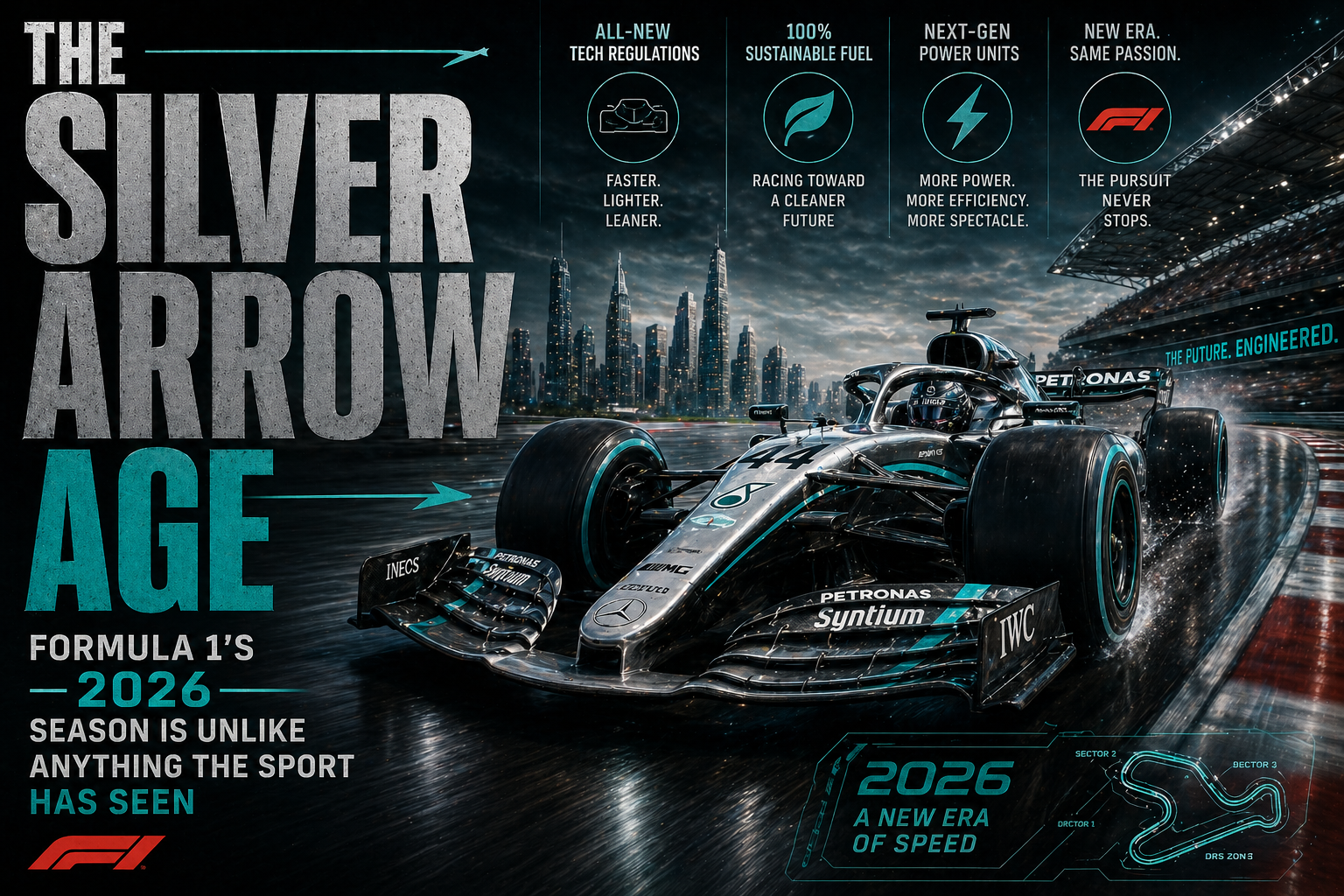
The Silver Arrow Age — Formula 1's 2026 Season Is Unlike Anything the Sport Has Seen
New rules. New cars. A teenage championship leader. A war that cancelled two races. And a four-time world champion so frustrated he's considering walking away from the sport entirely. Formula 1's 2026 season has delivered more headlines in three races than most seasons produce in twenty-two.
The 2026 Formula One World Championship was always going to be unlike anything the sport had produced in recent memory. The most sweeping regulatory overhaul in the sport's history — featuring a 50-50 split between combustion and electrical power, active aerodynamics, entirely new chassis, three new engine manufacturers, and dramatically redesigned car proportions — promised to reset the competitive order from the ground up and create a genuinely new era. Three races into that era, one team has already pulled away from the field, one 19-year-old has already rewritten the record books, two races have been cancelled due to geopolitical conflict, and the sport's governing body has been forced to convene emergency meetings to address driver safety concerns. Formula 1 in 2026 is not boring.
The Standings: Mercedes 135, Everyone Else 90 Behind
Through three rounds — Australia, China (Shanghai), and Japan (Suzuka) — the current drivers' championship standings are: Kimi Antonelli leads with 72 points, George Russell second with 63, Charles Leclerc third with 49, and Lewis Hamilton fourth with 41. Mercedes lead the Constructors' Championship with 135 points, 45 ahead of second-placed Ferrari and 90 ahead of third-placed McLaren. The defending champions McLaren are in serious trouble. Both cars suffered mechanical failures in China. Max Verstappen, their most recent world champion, has been furious with the car's behavior under the new regulations and has publicly questioned his future in the sport.
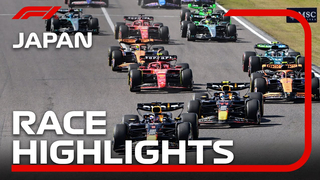
The season opener in Melbourne saw George Russell claim his maiden victory at Albert Park, with Antonelli finishing second in a Mercedes 1-2. China saw Antonelli take his first career win at 19 years old. Japan produced his second consecutive victory — making him, with his triumph in Suzuka, the youngest championship leader in Formula 1 history, and Italy's first drivers' title leader since Alberto Ascari in 1953. The statistical milestones have arrived faster than anyone anticipated.
The New Era Explained: What Actually Changed
The 2026 regulations represent the most fundamental architectural shift in Formula 1's history. For the first time, the power unit operates with an equal 50-50 split between internal combustion and electrical output. Active aerodynamics — physical wing adjustments built into the car — allow drivers to optimize drag and downforce during the race itself. The cars are smaller and lighter, designed to be more nimble, and the entire energy management philosophy requires a driving style that veterans — particularly Verstappen — have found deeply frustrating.
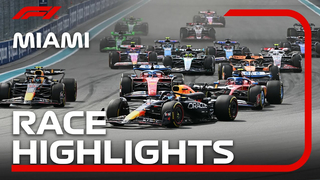
The energy harvesting system forces drivers to lift and coast on straights as the battery charges, creating significant speed differentials between cars in close proximity. Oliver Bearman suffered a serious crash at the Japanese Grand Prix caused by exactly this phenomenon, prompting the FIA to convene emergency meetings with team bosses and engine manufacturers. The resulting agreement introduces a package of changes for the Miami Grand Prix — most significantly, increasing the super-clipping limit from 340 to 470 horsepower, which will substantially reduce the lift-and-coast requirement and allow more flat-out driving.
Three new engine manufacturers entered with the regulation change. Audi made their Formula 1 debut after acquiring the Sauber team. Ford returned as Red Bull's engine partner — the first time Ford has supplied F1 engines since 2004. Honda relaunched a fully independent programme, now supplying Aston Martin rather than Red Bull. The reshuffling has dramatically altered the engine performance hierarchy, with Mercedes' power unit clearly leading the field through the first three races.
The Controversy: Cancelled Races and Verstappen's Warning
The Bahrain Grand Prix (April 12) and Saudi Arabian Grand Prix (April 19) were both cancelled on March 14 following the outbreak of the Iran war and the associated safety concerns for personnel travelling to the Middle East. The cancellations — which F1 confirmed on March 14, citing the complexity of logistics and the impossibility of finding replacement venues on short notice — left a five-week gap in the calendar between Japan and Miami. The 2026 season now runs 22 races instead of the originally planned 24.
Verstappen's ongoing dissatisfaction has become the sport's defining off-track storyline. The four-time world champion called the new regulations' racing product a "joke" and stated publicly that he was considering his future in Formula 1 if the racing product did not improve. The mid-season rule changes were partly a response to the feedback from drivers, with Verstappen's voice — given his status as the sport's biggest active star — carrying outsized weight in the paddock conversation.
Mercedes face a significant technical deadline: a June 1 cutoff by which their geometric compression ratio advantage must be eliminated following a vote among the five power unit manufacturers. That advantage, worth approximately 0.3 seconds per lap, disappears from Monaco onwards. Ferrari, McLaren, and others are widely expected to be granted ADUO — Accelerated Development Under Outstanding — opportunities to upgrade their power units before that point, making the Miami to Monaco window crucial for Mercedes to extend their championship lead before the field closes in.
What Comes Next: Miami Through the Championship
The season resumes with a Sprint weekend in Miami on May 1-3. Canada follows on May 24. The championship currently belongs to Antonelli on merit — two wins, consistent pace, and the psychological advantage of having already broken records at 19 that most drivers never approach at any age. Russell's single win and consistent podium finishes make him the co-favourite within the team. Outside Mercedes, Leclerc is the only driver with a realistic mathematical case to compete for the title — but only if Ferrari can close the power unit gap when ADUO is granted.
Betting markets give Russell a 42.5% implied probability of winning the drivers' title, Antonelli 30.8%, and Leclerc approximately 15%. The most interesting question in Formula 1 right now is not whether Mercedes will win the championship — it is which of their two drivers will win it, and whether the inter-team dynamic between a proven race winner and a teenage sensation produces harmony or tension as the season develops.