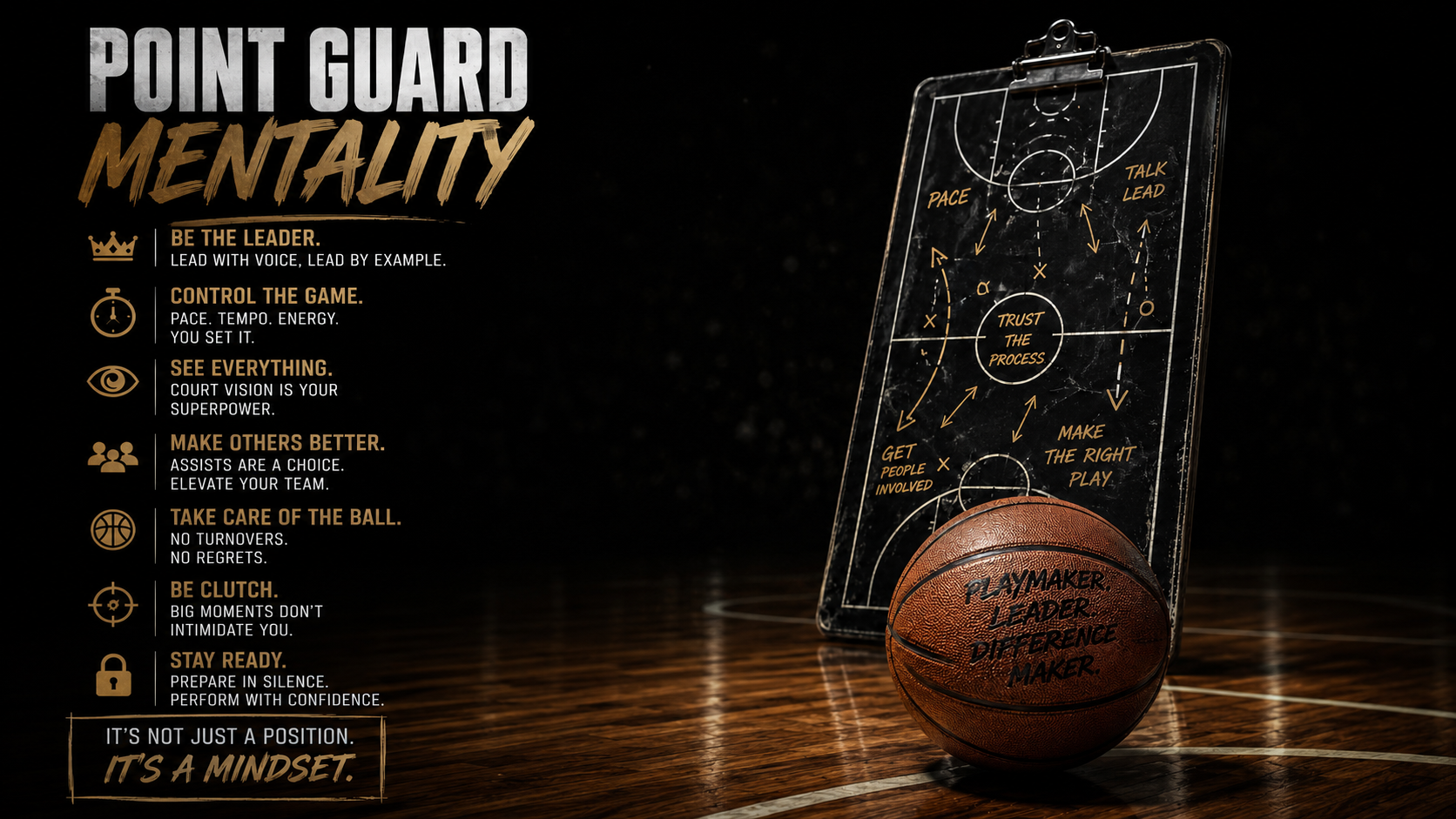
Basketball has always celebrated scorers. The players who hit deep threes, dunk over defenders, and fill up the stat sheet usually get the most attention. But every great team has something deeper behind the highlights. Every winning program eventually finds a leader who controls the pace, settles the pressure, and makes everyone better around them. That player is usually the point guard.
The Hardest Position on the Floor
The point guard position is one of the hardest jobs in sports. A point guard is expected to think faster than everyone else on the floor while still performing under pressure. They must know the offense, understand defensive rotations, communicate with teammates, and make split-second decisions every possession. Some people call the point guard “the coach on the floor,” and that description fits perfectly.
More Than Flashy Plays
Point guard mentality is not about being flashy. It is about leadership, control, confidence, and sacrifice. The best point guards understand that the game is bigger than individual stats. Their goal is to win, organize, and lead.
Leadership Sets the Tone
A true point guard mentality starts with leadership.
Every team looks for direction during difficult moments. When the game becomes intense, teammates naturally look toward the point guard for stability. Great point guards do not panic when defenses pressure them or when momentum shifts. Instead, they stay calm and focused. That calmness spreads throughout the team.
Accountability and Responsibility
Leadership also means accountability. A point guard cannot blame teammates every time something goes wrong. The best floor generals take responsibility first. They encourage teammates instead of tearing them down. They communicate clearly, stay positive, and keep everyone locked into the game plan.
Confidence Without Selfishness
One of the greatest qualities a point guard can have is confidence without selfishness. Confidence allows a guard to attack pressure, take open shots, and make aggressive decisions. But selfishness destroys team chemistry. The best point guards know when to score and when to create opportunities for others.
https://www.ballertube.com/news/475/no-love-lost-but-the-dream-won-anyway-angel-reese-s-emotional-return-to-chicago/?tag_ids=9245,9247,5203,23651,39889
Understanding Team Rhythm
This balance separates good guards from elite ones.
Some players can score 25 points every night, but if the offense becomes stagnant and teammates stop touching the ball, the team often struggles long term. A true point guard understands rhythm. They recognize who has the hot hand. They know when to slow the game down and when to push the pace. They make teammates feel involved.
Building Trust With Teammates
That ability builds trust.
When teammates trust their point guard, the entire team becomes stronger. Players cut harder, run the floor faster, and defend with more energy because they know their leader is trying to help everyone succeed.
Basketball IQ and Court Vision
Basketball IQ is another major part of point guard mentality.
The position demands constant thinking. Point guards must read defenses before the play even begins. They must recognize traps, mismatches, help defenders, and weak-side rotations. Every possession becomes a mental challenge.
Playing Chess on the Court
The smartest point guards almost look like they are playing chess while everyone else is playing checkers.
They know how to manipulate defenders with pace, hesitation moves, and angles. They understand timing. Sometimes the best pass is not immediate. Sometimes waiting one extra second forces the defense to collapse.
Controlling Tempo and Pace
Young guards often believe speed solves everything. But experienced point guards understand that changing speeds is more effective than simply moving fast. Controlling tempo is one of the hidden skills that separates average guards from elite floor leaders.
Mental Toughness Under Pressure
Point guard mentality also requires toughness.
Not just physical toughness, but mental toughness.
Point guards face constant pressure. Defenders pick them up full court. Coaches expect them to limit turnovers. Fans criticize every mistake because the ball is usually in their hands the most. Despite all that pressure, great point guards stay composed.
Responding to Adversity
They bounce back quickly after turnovers.
They stay aggressive after missed shots.
They continue communicating even when things are not going well.
Mental toughness matters because basketball is a game of runs. Every player will face adversity. A point guard’s reaction during those moments often determines how the rest of the team responds.
Defense Wins Games
Defense is another overlooked part of point guard mentality.
Many young guards focus only on scoring and flashy handles, but elite point guards take pride in defending. Pressure defense can completely change a game. A strong defensive point guard disrupts offensive rhythm before the opponent even enters their offense.
https://www.cbssports.com/nba/news/2026-nba-mock-draft-gary-parrish-first-round-draft-lottery/
Leadership Through Effort
Defense also shows effort and heart.
When a point guard dives for loose balls, pressures the ball handler, and communicates on switches, teammates usually follow that energy. Leadership through effort is powerful.
Turning Defense Into Offense
The best point guards understand that defense creates offense. A steal can instantly become a fast-break opportunity. A defensive stop can shift momentum. Great floor generals impact the game even when they are not scoring.
Communication Is Everything
Communication is another critical part of point guard mentality.
Point guards must constantly talk.
They call out plays, direct teammates into position, identify defensive coverages, and help maintain organization during chaos. Silent point guards often struggle leading teams because basketball requires constant communication.
Building Team Chemistry
Communication also builds chemistry.
Teams that communicate well usually defend better, rotate faster, and trust each other more. Great point guards become extensions of the coaching staff because they help organize everything happening on the floor.
Sacrificing for Team Success
Another important part of point guard mentality is sacrifice.
Some nights a point guard may need to score aggressively. Other nights they may only score eight points but finish with twelve assists and strong defense. The mindset is always about doing whatever the team needs most to win.
The Unseen Side of Leadership
That sacrifice is not always glamorous.
Sometimes it means setting the tone defensively.
Sometimes it means slowing the game down instead of chasing highlights.
Sometimes it means trusting teammates during clutch moments instead of forcing difficult shots.
Winning point guards understand that leadership often requires humility.
The Evolution of Modern Point Guards
Modern basketball has changed the point guard position in many ways. Today’s guards are often expected to score more than previous generations. The rise of three-point shooting and spacing has created more opportunities for guards to attack offensively.
Still, the core mentality remains the same.
The best point guards still value leadership, decision-making, and team success over personal attention.
Great Examples of Point Guard Leadership
Players like Magic Johnson changed the game with vision and leadership. Chris Paul built a career on control, intelligence, and leadership. Stephen Curry revolutionized shooting while still creating opportunities for teammates. Jalen Brunson has shown how toughness, patience, and composure can elevate an entire team.
Each player has a different style, but all of them understand the responsibility of leading a team.
Social Media vs Real Basketball
Young players often focus heavily on dribble moves because social media highlights flashy ball handling. Handles matter, but mentality matters more.
A point guard can have incredible moves, but if they cannot read defenses, communicate, or make smart decisions, their impact becomes limited.
Winning Through Smart Decisions
Winning basketball is built on decision-making.
The best point guards make simple plays consistently. They avoid unnecessary risks. They understand clock management. They value possessions. They recognize momentum shifts before others notice them.
Earning the Coach’s Trust
Coaches trust point guards who stay under control.
That trust is earned through preparation.
Preparation is one of the biggest hidden parts of point guard mentality. Great point guards study the game. They learn opponent tendencies. They understand scouting reports. They work on conditioning because the position requires constant energy.
The Importance of Film Study
Film study can give point guards a major advantage. Watching defensive coverages, transition habits, and offensive tendencies allows guards to think ahead during games. Preparation slows the game mentally.
When players know what to expect, they react faster and more confidently.
Building Relationships With Teammates
Point guards must also build strong relationships with teammates.
Chemistry matters.
A great point guard learns where teammates prefer the ball. Some shooters want passes directly into the shooting pocket. Some bigs prefer bounce passes during pick-and-roll actions. Understanding those details improves offensive efficiency.
Trust Is Built Through Consistency
Trust is built through consistency.
Teammates believe in point guards who stay composed, communicate honestly, and make winning plays repeatedly.
Adapting to Different Situations
Point guard mentality also includes adaptability.
Every game is different.
Some defenses trap aggressively. Others switch everything. Some teams play zone. Others apply full-court pressure. Great point guards adjust quickly instead of forcing the same style every game.
Experience Creates Control
Adaptability is one of the reasons experienced guards become so valuable. They understand how to control different situations.
Performing in Clutch Moments
Late-game situations especially reveal true point guard mentality.
In close games, every possession matters more. Crowd noise increases. Pressure rises. Decision-making becomes critical. Great point guards embrace those moments instead of fearing them.
Making the Right Play
Sometimes the right play is taking the shot.
Sometimes the right play is making the extra pass.
The key is reading the moment correctly.
Clutch point guards stay patient under pressure. They avoid panic. They trust preparation and fundamentals.
Emotional Control and Composure
Another underrated part of point guard mentality is emotional control.
Basketball is emotional. Referees miss calls. Opponents trash talk. Momentum changes quickly. Point guards cannot allow emotions to control their decisions.
Staying Calm Under Pressure
Emotional discipline helps teams stay focused.
When point guards lose composure, teams often follow that energy. But when point guards remain calm, confident, and focused, teammates feel more secure.
That emotional stability is a leadership skill.
Advice for Young Point Guards
Young players developing point guard mentality should focus on more than scoring averages. They should study decision-making, leadership, communication, and defense. They should learn how to impact winning in multiple ways.
The True Value of a Point Guard
Sometimes the best point guard on the floor is not the leading scorer.
Sometimes it is the player controlling tempo, organizing teammates, defending hard, and making smart decisions possession after possession.
Responsibility Defines the Position
Point guard mentality is ultimately about responsibility.
The position carries pressure because the ball is constantly in your hands. Every decision matters. Every possession can shift momentum. Great point guards embrace that responsibility rather than avoiding it.
Conclusion: Controlling the Game
The greatest floor generals understand one simple truth: leadership is earned through consistency, trust, and sacrifice.
A real point guard does not just play the game.
They control it