Reddit Co-Founder's Firm Acquires ONIT in College Trading Card Deal
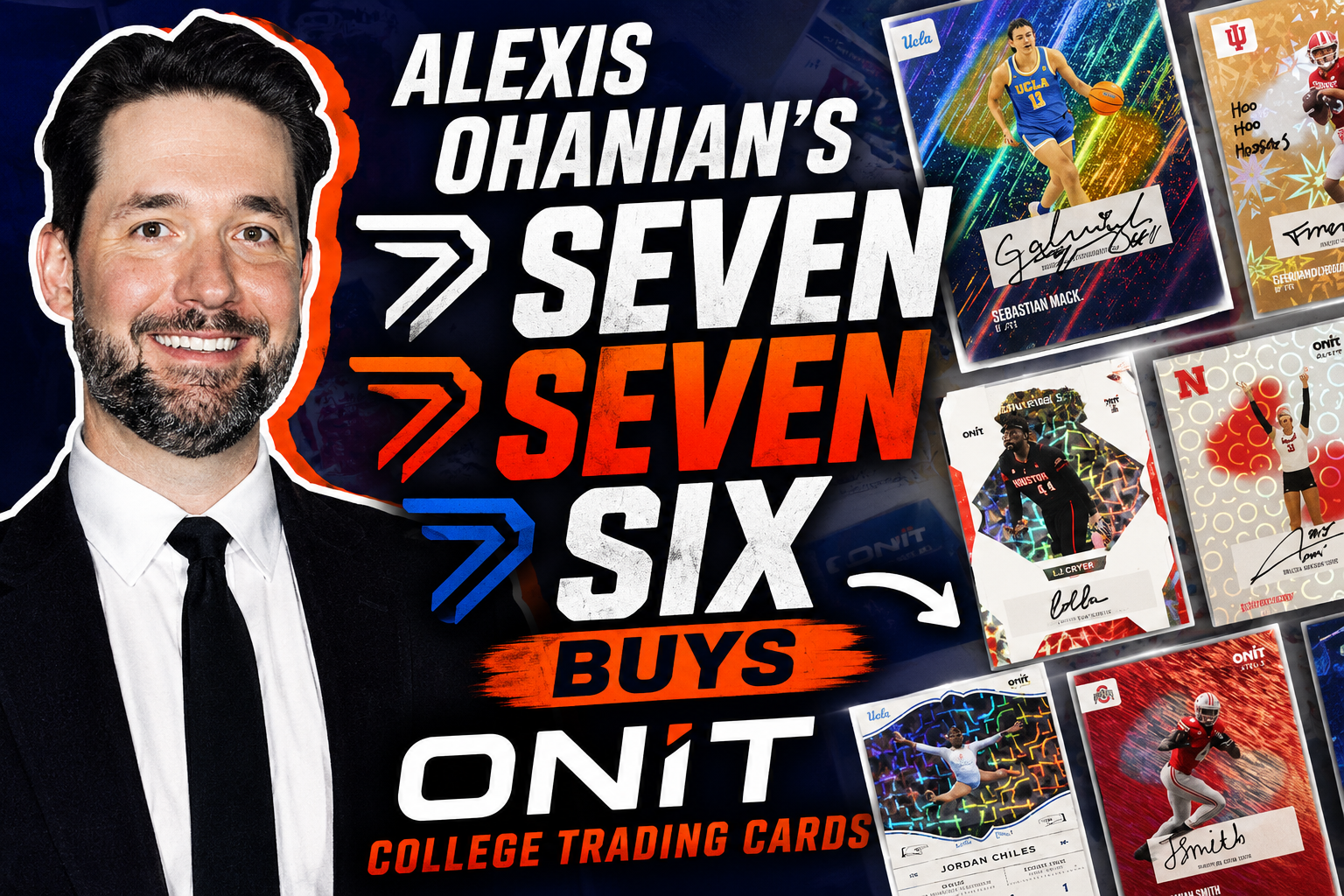
The officially licensed college trading card world just got a much bigger backer. Seven Seven Six, the venture capital firm founded by Reddit co-founder Alexis Ohanian, has acquired ONIT, one of the leading trading card companies operating in the collegiate space. The deal was first reported by Extra Points and confirmed by Yahoo Sports on Wednesday.
For anyone who follows the business side of college sports, this is a notable signal. Trading cards are no longer a nostalgia item sitting in a shoebox. In the name, image, and likeness era, they have become a real revenue stream for student-athletes and a fast growing corner of the college sports economy. Ohanian's firm just bet on that future in a big way.
Who ONIT Is and Why It Matters
ONIT has quietly built one of the deepest rosters in the college card business. The company has printed officially licensed cards for student-athletes across major programs, including Michigan, UCLA, Ohio State, Georgia, Tennessee, and Texas. That is a wide footprint across the biggest brands in college athletics.
The scale is the part that stands out. During the 2024-25 academic year, ONIT worked with more than 8,000 student-athletes across 212 teams. Even more telling for where the company has planted its flag, ONIT featured more women's sports student-athletes than all other trading card companies combined. In a market that has historically centered on football and men's basketball, that is a real point of difference.
Alongside the acquisition, ONIT named a new leader. Former NASCAR and The Athletic executive Evan Parker is stepping in as the company's Chief Executive Officer. Parker brings a mix of league level sports business experience and media background, which fits a company trying to turn collectibles into a durable platform rather than a one off product.
How the ONIT Model Actually Pays Athletes
To understand why this deal matters, it helps to know how ONIT works. The Boise, Idaho based company produces officially licensed collegiate trading cards and collectibles through NIL agreements with athletes, and it has partnered with more than 100 Division I programs to build team specific product sets. The athletes are not just pictured on the cards. They are paid for them.
According to ONIT, a majority of the company's profits, reported at 60 percent or more, flow directly to the student-athletes through royalties, while participating universities also receive royalty revenue through their licensing agreements. That structure is the whole point. A card sale is not a marketing freebie. It is a passive, recurring revenue stream tied to an athlete's name and likeness, which is exactly what NIL was supposed to unlock.
The licensing piece is what makes it official rather than bootleg. ONIT has worked with OneTeam Partners on a multiyear group licensing deal designed to bring thousands of athletes, both men and women, into a single program. Group licensing is the mechanism that lets a company produce cards across an entire roster cleanly, with the rights handled up front, rather than chasing individual deals one athlete at a time. Fans can buy the products through the ONIT website, major retailers, card and hobby shops, and live selling platforms, which gives the athletes real distribution rather than a niche corner of the internet.
Why Seven Seven Six Got Into Cardboard
On the surface, a venture firm best known for technology investing buying a trading card company looks like a curveball. Look at the rest of the portfolio and it lines up.
Seven Seven Six has invested aggressively across sports, with a clear lean toward women's and emerging properties. The firm's holdings include the National Women's Soccer League club Angel City FC, the professional volleyball league LOVB, and the ATHLOS track and field venture. It has also backed sports adjacent businesses like the soccer video game GOALS and sports media projects. ONIT, with its strength in women's sports and its officially licensed college reach, fits that pattern neatly.
Ohanian framed his interest as personal as well as strategic. He told Extra Points he is an avid collector of sports memorabilia and that his support for athletics is not limited to the professional level. He has also been a visible college sports donor, pointing to his backing of his alma mater. In his words, "I've been a major supporter of the University of Virginia." The throughline is that the deal lets him combine a personal passion with the kind of platform building his firm specializes in.
What This Means for NIL and the Athletes
For student-athletes, the practical takeaway is straightforward. Trading cards have become one of the cleaner NIL vehicles available. They are tangible, they are officially licensed, and they let an athlete monetize their name and likeness without a complicated endorsement structure. A company with stronger capital and clearer leadership behind it can mean more athletes getting cards, faster payments, and a wider distribution network for the products fans actually want to buy.
There is a reason cards fit so many athletes better than a traditional endorsement. A sponsorship deal tends to reward the small number of stars with big followings. A licensed card program can pay a starting offensive lineman, a backup point guard, or a volleyball libero, because the revenue comes from fans buying a team's set rather than from one athlete's individual fame. That is what makes the model scalable to thousands of names at once, and it is why the royalty structure, not the photo on the front, is the real story for the athletes.
The emphasis on women's athletes is worth underlining. Women's college sports have surged in visibility over the past few years, from basketball to volleyball to gymnastics, and the market for memorabilia tied to those athletes has not always kept pace with the demand. A card company that already leads in that category, now paired with a firm that has built its sports identity around women's properties, is positioned to close that gap.
There is also a broader business lesson here for the college sports world. The money and attention are no longer flowing only to media rights and collectives. Collectibles, gaming, and fan products are becoming their own lane, and serious investors are moving in. When a firm with Ohanian's profile buys a college card company outright, it tells the rest of the market that this category is being taken seriously.
The Bigger Picture for College Sports Business
College athletics is in the middle of a long reshaping. Revenue sharing, NIL collectives, conference realignment, and shifting legal ground have changed how money moves through the sport. Most of the headlines go to the giant numbers attached to television and to football rosters. The ONIT deal is a reminder that the ecosystem around the athletes is also maturing.
A trading card is a small thing on its own. A platform that issues officially licensed cards for thousands of athletes, with the backing to grow distribution and add products, is not small. It is infrastructure. That is the kind of asset that compounds as the audience for college sports, and especially women's college sports, keeps growing.
What Comes Next
Watch how ONIT moves under Parker and whether Seven Seven Six pushes the company to expand its athlete pool, its product lines, and its retail presence heading into the 2026-27 academic year. The early signals (a leadership hire with league and media experience, plus a firm that clearly believes in the category) point to a company that intends to grow rather than coast. For the athletes who get cards and the fans who collect them, that is the part that matters most.

Related Articles
Alexis Ohanian's Seven Seven Six Buys ONIT College Trading Cards