








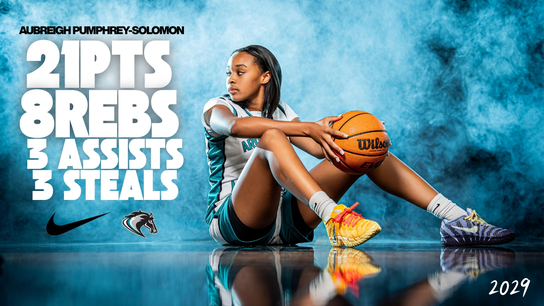

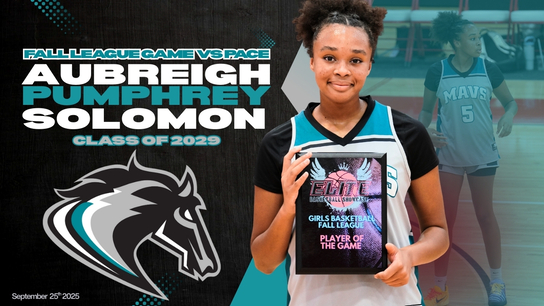
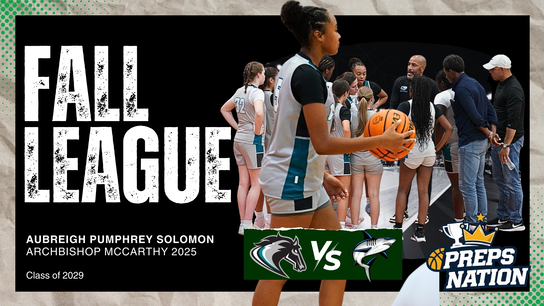
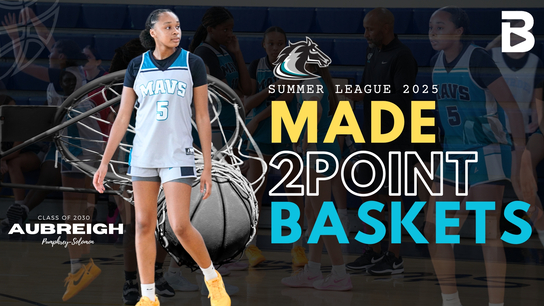




Your subscription greatly helps Preps Nation develop his athletic career, and you have full access to his exclusive content.
The home of high school sports coverage. Nationwide highlights, rankings, and athlete exposure. Built for players, parents, and the culture.
0
Preps Nation
115
Preps Nation
719

Preps Nation
768
Preps Nation
676
Preps Nation
727
Preps Nation
2.0K
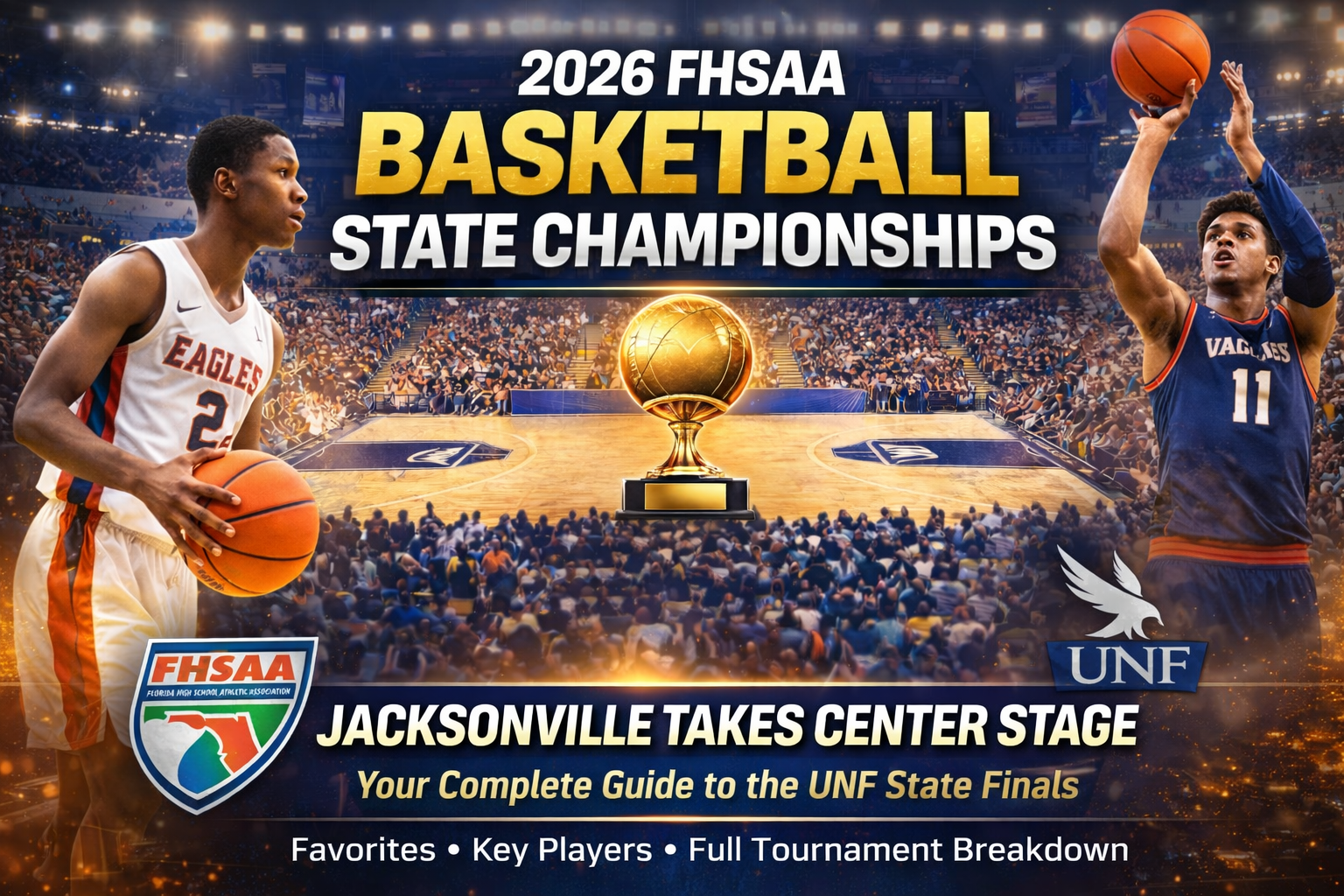
Jacksonville Takes Center Stage: Your Complete Guide to the 2026 FHSAA Basketball State Championships at UNF
For the first time since Gerald Ford was in the White House, Jacksonville is hosting the Florida High School Basketball State Championships. The FHSAA reached a three-year agreement with the University of North Florida and the Jacksonville Sports Foundation to move the tournament from its longtime home in Lakeland to CSI Companies Court at UNF Arena, a modern 5,100-seat facility that has been upgraded with a new playing surface, sound system, and hospitality suite since its 2022 renovation.
The move brings one of the premiere high school sporting events in the state to Northeast Florida for the first time in nearly 50 years. And the talent on display is worth every bit of the wait.
The tournament runs in three separate weeks. The Rural classification champions were crowned February 24 and 27. Classes 1A and 2A play March 5 through 7. Classes 3A through 7A conclude the event from March 9 through 14.
Here is your full breakdown by classification, both boys and girls, along with the favorites, the storylines, and the players you need to know.
BOYS
Sagemont Prep (Weston) enters with five overall state titles in program history and is a perennial contender at the 1A level. They face Impact Christian (27-4) in one semifinal, with Victory Christian (Lakeland) in the other bracket. Sagemont Prep and Victory Christian were finalists last year, and a potential rematch in the championship is a real possibility.
GIRLS
The girls 1A bracket features a rematch of last year's state championship game as Grandview Prep (Boca Raton, 24-4) takes on North Florida Educational Institute (Jacksonville, 16-14), who are still searching for their program's first ever state title. Grandview is chasing their fourth championship overall. NFEI would have home crowd energy playing just minutes from their school.
Favorite: Grandview Prep girls, Sagemont Prep boys.
BOYS
Jacksonville Providence entered as the top-ranked team in the class and is playing some of their best basketball of the season. No team scored forty points against the Stallions during the regional round. Providence faces Northside Christian (Clearwater) in the semis. On the other side, Santa Fe Catholic (Lakeland) squares off against Miami Country Day, which carries size inside with 6-foot-8 senior Kaleb Corbitt.
GIRLS
Miami Country Day is chasing their 11th overall state championship, which would be their fourth in a row. All of their titles have come since 2014. The Spartans enter as the clear favorite on the girls side.
Favorite: Providence boys, Miami Country Day girls.
BOYS
This is the classification everyone in the state is talking about (Fort Lauderdale) is not only the top-ranked team in 3A but the No. 2 program in the entire nation according to the MaxPreps Top 25. The Eagles are loaded with talent, headlined by 6-foot-1 junior guard Cayden Daughtry, who analysts have called possibly the best individual player in the entire state playoffs regardless of classification.
Calvary's semifinal opponent is NSU University School, a surprise entry that has played solid competition all season but has yet to face anything close to what the Eagles will bring. The other semifinal has The Villages Charter taking on Andrew Jackson (Jacksonville, 28-1), which had one of the best records in the state and is making their second Final Four appearance in three years.
GIRLS
The girls bracket features Bolles (Jacksonville, 25-4) against Lake Highland Prep (24-6) in one semifinal, with Somerset Academy Canyons and Carroll School of the Sacred Heart in the other. Bolles brings a home-state advantage with the tournament in Jacksonville and is one of the most consistent programs in Northeast Florida.
Favorite: Calvary Christian boys (heavy). Bolles girls.
Key Players to Watch:
BOYS
Lake Highland Prep (Orlando) brings a 28-1 record and a 24-game win streak. They entered the tournament as one of the hottest teams in the state. Their path to the championship goes through a loaded bracket that could include Villages Charter Buffalo, who feature LSU signee Herly Brutus, a 6-foot-5 four-star forward. The Villages also carries five-star junior point guard Aaron Britt and four-star junior Jomar Bernard.
GIRLS
Bishop Kenny (Jacksonville, 26-4) is in the 4A girls bracket alongside Plantation American Heritage, Bishop Moore, and Booker. Bishop Kenny has another chance to bring a title home to Jacksonville.
Favorite: Lake Highland boys. Bishop Kenny girls as a hometown contender.
Key D1 Signees:
BOYS
Fleming Island (22-8) out of Jacksonville represents the host region in the 5A boys bracket, facing Tampa Jesuit (24-6) in their semifinal. Fleming Island is the local favorite and one of the most well-supported programs in Clay County.
GIRLS
Booker T. Washington (Pensacola, 22-3) is back in the Final Four for the first time since 2001, ending a 25-year drought after five straight regional final losses in previous seasons. Their opponent is Gateway (Kissimmee, 26-3), which has been one of the most consistent programs in Central Florida all season. This semifinal matchup is one of the most compelling games of the entire tournament.
Favorite: Gateway girls based on record and depth. Fleming Island boys have the crowd behind them.
BOYS
Evans (22-7) and Lake Howell (25-5), two Orlando-area programs that won different regions, are matched up against each other in the boys 6A semifinals, guaranteeing Central Florida at least one spot in the championship game. On the other side, St. Thomas Aquinas (Fort Lauderdale, 26-4) is a returning state champion looking to defend their title. Aquinas is ranked nationally and is the clear frontrunner to come out of their side of the bracket.
GIRLS
St. Thomas Aquinas (20-8) faces George Steinbrenner (23-6) in one girls 6A semifinal, with Bartram Trail (Jacksonville, 16-9) taking on Bayside (22-8) in the other. Bartram Trail at 16-9 is the surprise team of the field, having peaked at the right time.
Favorite: St. Thomas Aquinas boys and girls.
Key Player:
BOYS
Miami Columbus is chasing their fifth consecutive 7A state championship, which would tie the all-time Florida record for consecutive titles in the largest classification. That kind of dynasty does not happen by accident. The Explorers are the most accomplished program in the field regardless of classification.
Columbus (24-6) faces Lake Mary (23-7) in their semifinal, while Oak Ridge (20-9) takes on Sarasota (24-6) on the other side.
GIRLS
The 7A girls bracket features Winter Haven (19-6) vs. Ocoee (24-5) and Doral Academy (20-8) vs. Centennial (23-6). Ocoee has been one of the more dangerous programs in Central Florida girls basketball and enters as a legitimate title threat.
Favorite: Columbus boys. Ocoee girls as the team with the best resume.
What makes this year's tournament different is not just the new location. It is the era of player we are watching.
Villages Charter enters with six major college prospects on their roster alone. Calvary Christian's Cayden Daughtry is already drawing eyes from programs across the country. Programs like Columbus, St. Thomas Aquinas, and Lake Highland have long been pipelines for Division I talent, and that tradition is alive and well in 2026.
For parents, coaches, and recruiters, this tournament is one of the best three-week stretches to evaluate talent in the entire country. The concentration of D1 prospects competing at a single site, in a legitimate arena environment, under pressure, is exactly the kind of exposure that changes recruiting trajectories.
Jacksonville has waited 50 years for this. Based on the matchups, it was worth every one of them.
All 3A through 7A championship games take place March 9 through 14 at CSI Companies Court at UNF Arena. Tickets are available via GoFan. General admission is $15 in advance and $18 day-of.
Follow BallerTube for continued coverage of the 2026 FHSAA Basketball State Championships.
3115
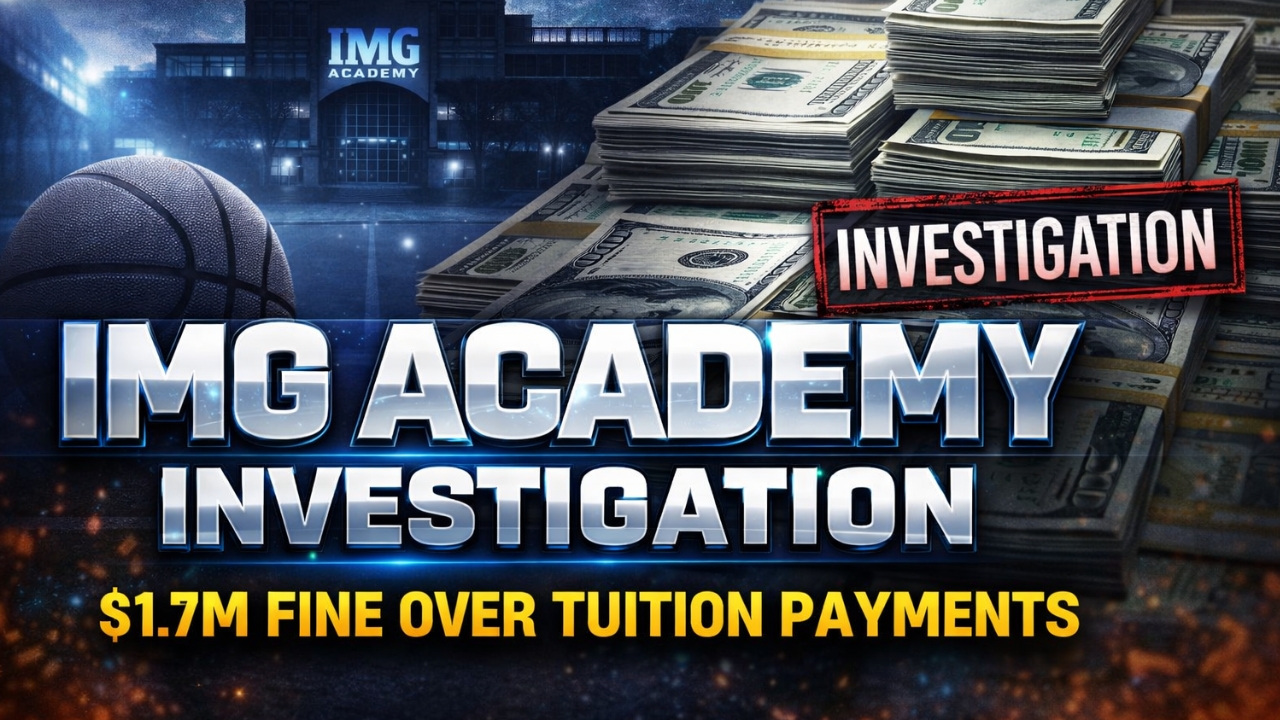
When Elite Dreams Meet Cartel Cash: How IMG Academy Got Caught Taking $800K From Narco Kingpin Families
IMG Academy in Bradenton, Florida sells a very specific product: the fast track to athletic stardom. For $90,000 to $100,000 per year, the world's most elite sports boarding school promises to turn teenage athletes into professional prospects. Tennis champions. NBA draft picks. NFL first rounders. Olympic medalists.
What they didn't advertise was this: for four years, two of those spots went to the children of Mexican drug cartel leaders. And the federal government just made IMG pay $1.72 million for it.
On February 12, 2026, the U.S. Treasury Department's Office of Foreign Assets Control announced that IMG Academy had settled 89 violations of Foreign Narcotics Kingpin Sanctions Regulations. Between 2018 and 2022, IMG enrolled two students whose parents were on the Specially Designated Nationals list for providing financial support and services to a sanctioned Mexican drug trafficking organization.
The tuition payments ranged from $97,867 to $102,235 per academic year. Wire transfers from third party individuals in Mexico. Credit cards on file. Standard operating procedure for an elite institution that educates the children of international wealth.
Except these weren't just wealthy families. These were narco trafficking families. And IMG never bothered to check.
IMG Academy didn't become a $1.26 billion business by accident. Founded in 1978 as the Nick Bollettieri Tennis Academy, IMG has built the most sophisticated youth sports pipeline in America. Over 600 acres in Bradenton. State of the art facilities for tennis, basketball, football, baseball, golf, soccer, lacrosse, track and field. Professional coaching staff. Academic programs designed around athletic training schedules.
The pitch is simple: send us your kid and six figures a year, and we'll maximize their athletic potential while keeping them academically eligible for college. For parents chasing Division I scholarships or professional contracts, IMG is the gold standard.
Current tuition for 2024-2025 ranges from $89,900 to $99,900 for boarding students depending on sport and grade level. Day students pay $69,400 to $73,400. That's before additional costs for specialized training, equipment, travel for tournaments, and everything else that comes with elite youth sports.
IMG's alumni roster reads like a who's who of professional athletics. Serena Williams. Maria Sharapova. Andre Agassi. Eli Manning. Cam Newton. Countless NBA players, NFL stars, Olympic medalists, and professional golfers. If you're serious about turning athletic talent into professional money, IMG is where you go.
And if you're a Mexican drug cartel leader looking to launder money and give your kids access to the American dream? Apparently, IMG worked for that too.
DRUG CARTEL TIES 💸IMG's conduct allowed children of two of the drug cartel's leaders to get elite academic and athletic training in the U.S., the Treasury Department says. DETAILS: https://t.co/EbXdR75pK3 pic.twitter.com/bf0ByjdHNL
— 10 Tampa Bay News (@10TampaBay) February 16, 2026
Here's what OFAC found: between 2018 and 2022, IMG Academy entered into six separate annual tuition enrollment agreements with two students whose parents were sanctioned individuals. The parents were designated as Specially Designated Nationals for supporting a Mexican drug trafficking organization and its principal leader.
IMG invoiced these parents directly. Communicated with them. Processed tuition payments totaling over $800,000 across four years. The payments came through wire transfers from third party individuals in Mexico and credit cards registered to the sanctioned parents.
And IMG never once checked if these people were on the sanctions list.
OFAC's enforcement release was blunt: "Although IMG may have lacked actual knowledge that the individuals with whom it dealt with were sanctioned, IMG Academy did have actual knowledge of the underlying transactions giving rise to the apparent violations."
Translation: you might not have known they were cartel connected, but you knew you were taking money from people whose names matched the federal sanctions list. You just didn't bother to check.
The violations weren't sophisticated. The parents' names matched entries on the SDN List. Basic sanctions screening would have flagged them immediately. But IMG didn't have any sanctions screening. At all.
In its statement, IMG admitted: "Between 2018 and 2022, IMG Academy did not have an OFAC sanctions compliance program in place."
For four years, an institution processing hundreds of international tuition payments annually, many from high risk jurisdictions, operated with zero compliance infrastructure to screen for sanctioned individuals.
That's not an oversight. That's negligence.
OFAC hit IMG with 89 violations across six enrollment agreements and 83 payment transactions. The settlement amount of $1,720,000 reflects what OFAC calls "nonegregious" violations, meaning IMG wasn't actively conspiring with cartels or deliberately evading sanctions.
But OFAC made clear this wasn't voluntary disclosure either. IMG reported the violations when it became aware of them, but federal investigators had already opened an investigation. The academy was already under scrutiny.
OFAC's penalty analysis highlighted both aggravating and mitigating factors.
Aggravating: IMG demonstrated "reckless disregard for U.S. sanctions requirements" by accepting payments and failing to conduct sanctions screening on counterparties. The conduct allowed designated individuals who provided financial support to a sanctioned Mexican drug cartel to conduct commerce with U.S. persons and gain access to the U.S. financial system. The children of two DTO leaders obtained elite academic and athletic training services in the United States as a direct result.
Mitigating: IMG had no prior OFAC penalties in the five years before this incident. The academy took immediate remedial steps after discovering the violations. After an ownership change in June 2023, when BPEA EQT purchased IMG Academy from Endeavor for $1.26 billion, new management hired a Chief Legal Officer who conducted a comprehensive compliance review and implemented a risk based sanctions program.
The message from OFAC was clear: we're letting you off relatively easy because you cooperated and fixed the problem. But this should never have happened in the first place.
Here's what makes this case terrifying: transnational criminal organizations don't just operate in the shadows. They participate in the ordinary economy. They send their kids to elite boarding schools. They buy real estate. They invest in businesses. They live openly among us.
The IMG Academy case exposes how easily cartel money flows through American institutions when those institutions don't implement basic compliance measures.
Think about the mechanics here. Two cartel connected families wanted their kids to get world class athletic training. They had the money. IMG had the spots. The transaction was straightforward: enroll the kids, pay the tuition, receive the services.
At no point did anyone at IMG ask: where is this money coming from? Are these individuals on any sanctions lists? Should we be doing business with people wiring payments from third parties in Mexico?
Because IMG operates in the youth sports world, not the financial services world. They're not a bank. They're not a money transfer business. They're a boarding school. Why would they need sanctions compliance?
Except they absolutely did need it. And now they know.
OFAC's enforcement release specifically emphasized: "Liability does not depend on intent and routing payments through nonsanctioned parties does not mitigate sanctions exposure."
In other words, it doesn't matter that you didn't know. It doesn't matter that the money came through third parties. If you're doing business with sanctioned individuals, you're violating federal law. Full stop.
The IMG Academy settlement dropped on February 12, 2026. The very next day, February 13, the Treasury Department's Financial Crimes Enforcement Network announced the launch of a dedicated whistleblower portal to receive confidential tips relating to fraud, money laundering, and sanctions violations.
That timing wasn't coincidental. The federal government is signaling a coordinated enforcement strategy: broaden the universe of regulated actors subject to sanctions risk, and simultaneously expand the government's ability to learn about violations through insider tips.
The new FinCEN whistleblower portal incentivizes employees, contractors, and anyone with inside knowledge of compliance failures to report violations. Financial rewards. Confidentiality protections. A direct pipeline to federal investigators.
For institutions like IMG Academy, this creates a new risk: you're not just worried about federal audits anymore. You're worried about your own employees turning you in.
And the enforcement net is widening. OFAC made clear that sanctions violations "extend beyond traditional high risk industries" and "can arise from unexpected sectors and routine business relationships, especially when payments are routed through higher risk jurisdictions or structured through third party intermediaries."
Schools. Healthcare providers. Real estate developers. Professional services firms. Luxury goods retailers. Hospitality businesses. Any organization that does business with international clients from high risk jurisdictions is now on notice: implement sanctions screening or risk massive penalties.
The enforcement environment around Mexican cartels just got exponentially more severe. On February 20, 2025, the State Department designated eight organizations as both Foreign Terrorist Organizations and Specially Designated Global Terrorists.
The list included:
Cartel de Sinaloa (Sinaloa Cartel)
Cartel de Jalisco Nueva Generacion (Jalisco New Generation Cartel)
Cartel del Noreste (Northeast Cartel)
La Nueva Familia Michoacana
Carteles Unidos
Cartel del Golfo
Tren de Aragua (Venezuela)
MS-13 (founded by Salvadoran immigrants in the United States)
This wasn't just a narcotics designation. This was a terrorism designation. The legal implications are massive.
Transactions with Foreign Terrorist Organizations carry significant criminal and civil penalties under U.S. law that go beyond normal penalties for dealings with Specially Designated Nationals. This includes extraterritorial U.S. criminal jurisdiction over the provision of material support to FTOs and potential civil liability to U.S. victims of international terrorism.
In plain English: if you do business with these organizations or their leaders, you're not just violating sanctions law. You're potentially providing material support to terrorism. That's a federal crime with serious prison time.
For businesses operating in jurisdictions where these cartels are active, the risk just exploded. Companies need to assess exposure, implement controls, and make difficult decisions about whether they can safely operate in these regions at all.
The fix here wasn't complicated. IMG didn't need sophisticated artificial intelligence or blockchain analytics. They needed basic compliance hygiene.
Screen every student enrollment against the OFAC Specially Designated Nationals List. It's publicly available. It's searchable. It takes minutes.
Implement enhanced due diligence for international students, especially from high risk jurisdictions like Mexico, Colombia, Venezuela, and other regions with known cartel activity.
Flag third party payment arrangements for additional scrutiny. If parents are paying tuition through wire transfers from non family members in foreign countries, that deserves a second look.
Conduct periodic audits of existing student enrollment to ensure no sanctioned individuals slipped through.
Train staff on sanctions compliance obligations and red flags.
Establish clear escalation procedures when potential violations are identified.
None of this is rocket science. This is Compliance 101. And IMG didn't do it for four years.
After the ownership change in 2023, new management implemented exactly these measures. They hired a Chief Legal Officer. Conducted a comprehensive lookback. Built a risk based sanctions compliance program.
In other words, they did what they should have been doing all along.
Here's what the Treasury Department didn't address in its enforcement release:
Who were these students? What sports did they play? Did they go on to play college athletics? Are they still in the United States?
Who were the parents? Which cartel were they connected to? Are they still sanctioned? Have they been prosecuted?
Did other students, parents, or staff know about the cartel connections? Were there rumors? Concerns that were ignored?
How many other elite institutions, schools, universities, and youth sports programs are unknowingly (or knowingly) taking money from cartel families?
That last question is the one that should keep every admissions officer, athletic director, and compliance professional up at night.
If IMG Academy, one of the most high profile youth sports institutions in America, spent four years enrolling and educating the children of Mexican drug cartel leaders without noticing, how many other organizations are doing the same thing right now?
The IMG Academy settlement sends a clear message: ignorance is not a defense. Lack of sophistication is not a defense. Being in a "non traditional" industry is not a defense.
If you're doing business with international clients, you need sanctions compliance. Period.
The federal government is expanding enforcement beyond banks and defense contractors. They're coming after schools, hospitals, real estate firms, luxury retailers, and any other business that might be facilitating cartel access to the U.S. economy.
And they're arming whistleblowers with financial incentives to report violations.
The cost of noncompliance just went up. $1.72 million for IMG Academy. But the reputational damage might be worse. Every parent who sends their kid to IMG now knows the school was educating cartel children. Every college coach recruiting IMG athletes has to wonder if the kid they're looking at has narco money financing their training.
That's the real penalty. Not the settlement. The brand damage.
IMG Academy will survive this. They're too big, too established, too deeply embedded in the youth sports ecosystem to collapse over a sanctions violation. But their reputation took a hit. And every competitor is going to use this against them in recruiting battles for years.
The broader lesson is this: cartels are everywhere. They're not just in the drug trade. They're in the real economy. Sending their kids to your schools. Buying property in your developments. Investing in your businesses.
And if you're not screening for them, you're the next case study in an OFAC enforcement release.
1246

2653

2945

2554
Thank you for your support!
.,.,.,.,.
.,.,.,.,.
.,.,.,.,.
.,.,.,.,.
.,.,.,.,.
Jacksonville Takes Center Stage: Your Complete Guide to the 2026 FHSAA Basketball State Championships at UNF
For the first time since Gerald Ford was in the White House, Jacksonville is hosting the Florida High School Basketball State Championships. The FHSAA reached a three-year agreement with the University of North Florida and the Jacksonville Sports Foundation to move the tournament from its longtime home in Lakeland to CSI Companies Court at UNF Arena, a modern 5,100-seat facility that has been upgraded with a new playing surface, sound system, and hospitality suite since its 2022 renovation.
The move brings one of the premiere high school sporting events in the state to Northeast Florida for the first time in nearly 50 years. And the talent on display is worth every bit of the wait.
The tournament runs in three separate weeks. The Rural classification champions were crowned February 24 and 27. Classes 1A and 2A play March 5 through 7. Classes 3A through 7A conclude the event from March 9 through 14.
Here is your full breakdown by classification, both boys and girls, along with the favorites, the storylines, and the players you need to know.
BOYS
Sagemont Prep (Weston) enters with five overall state titles in program history and is a perennial contender at the 1A level. They face Impact Christian (27-4) in one semifinal, with Victory Christian (Lakeland) in the other bracket. Sagemont Prep and Victory Christian were finalists last year, and a potential rematch in the championship is a real possibility.
GIRLS
The girls 1A bracket features a rematch of last year's state championship game as Grandview Prep (Boca Raton, 24-4) takes on North Florida Educational Institute (Jacksonville, 16-14), who are still searching for their program's first ever state title. Grandview is chasing their fourth championship overall. NFEI would have home crowd energy playing just minutes from their school.
Favorite: Grandview Prep girls, Sagemont Prep boys.
BOYS
Jacksonville Providence entered as the top-ranked team in the class and is playing some of their best basketball of the season. No team scored forty points against the Stallions during the regional round. Providence faces Northside Christian (Clearwater) in the semis. On the other side, Santa Fe Catholic (Lakeland) squares off against Miami Country Day, which carries size inside with 6-foot-8 senior Kaleb Corbitt.
GIRLS
Miami Country Day is chasing their 11th overall state championship, which would be their fourth in a row. All of their titles have come since 2014. The Spartans enter as the clear favorite on the girls side.
Favorite: Providence boys, Miami Country Day girls.
BOYS
This is the classification everyone in the state is talking about (Fort Lauderdale) is not only the top-ranked team in 3A but the No. 2 program in the entire nation according to the MaxPreps Top 25. The Eagles are loaded with talent, headlined by 6-foot-1 junior guard Cayden Daughtry, who analysts have called possibly the best individual player in the entire state playoffs regardless of classification.
Calvary's semifinal opponent is NSU University School, a surprise entry that has played solid competition all season but has yet to face anything close to what the Eagles will bring. The other semifinal has The Villages Charter taking on Andrew Jackson (Jacksonville, 28-1), which had one of the best records in the state and is making their second Final Four appearance in three years.
GIRLS
The girls bracket features Bolles (Jacksonville, 25-4) against Lake Highland Prep (24-6) in one semifinal, with Somerset Academy Canyons and Carroll School of the Sacred Heart in the other. Bolles brings a home-state advantage with the tournament in Jacksonville and is one of the most consistent programs in Northeast Florida.
Favorite: Calvary Christian boys (heavy). Bolles girls.
Key Players to Watch:
BOYS
Lake Highland Prep (Orlando) brings a 28-1 record and a 24-game win streak. They entered the tournament as one of the hottest teams in the state. Their path to the championship goes through a loaded bracket that could include Villages Charter Buffalo, who feature LSU signee Herly Brutus, a 6-foot-5 four-star forward. The Villages also carries five-star junior point guard Aaron Britt and four-star junior Jomar Bernard.
GIRLS
Bishop Kenny (Jacksonville, 26-4) is in the 4A girls bracket alongside Plantation American Heritage, Bishop Moore, and Booker. Bishop Kenny has another chance to bring a title home to Jacksonville.
Favorite: Lake Highland boys. Bishop Kenny girls as a hometown contender.
Key D1 Signees:
BOYS
Fleming Island (22-8) out of Jacksonville represents the host region in the 5A boys bracket, facing Tampa Jesuit (24-6) in their semifinal. Fleming Island is the local favorite and one of the most well-supported programs in Clay County.
GIRLS
Booker T. Washington (Pensacola, 22-3) is back in the Final Four for the first time since 2001, ending a 25-year drought after five straight regional final losses in previous seasons. Their opponent is Gateway (Kissimmee, 26-3), which has been one of the most consistent programs in Central Florida all season. This semifinal matchup is one of the most compelling games of the entire tournament.
Favorite: Gateway girls based on record and depth. Fleming Island boys have the crowd behind them.
BOYS
Evans (22-7) and Lake Howell (25-5), two Orlando-area programs that won different regions, are matched up against each other in the boys 6A semifinals, guaranteeing Central Florida at least one spot in the championship game. On the other side, St. Thomas Aquinas (Fort Lauderdale, 26-4) is a returning state champion looking to defend their title. Aquinas is ranked nationally and is the clear frontrunner to come out of their side of the bracket.
GIRLS
St. Thomas Aquinas (20-8) faces George Steinbrenner (23-6) in one girls 6A semifinal, with Bartram Trail (Jacksonville, 16-9) taking on Bayside (22-8) in the other. Bartram Trail at 16-9 is the surprise team of the field, having peaked at the right time.
Favorite: St. Thomas Aquinas boys and girls.
Key Player:
BOYS
Miami Columbus is chasing their fifth consecutive 7A state championship, which would tie the all-time Florida record for consecutive titles in the largest classification. That kind of dynasty does not happen by accident. The Explorers are the most accomplished program in the field regardless of classification.
Columbus (24-6) faces Lake Mary (23-7) in their semifinal, while Oak Ridge (20-9) takes on Sarasota (24-6) on the other side.
GIRLS
The 7A girls bracket features Winter Haven (19-6) vs. Ocoee (24-5) and Doral Academy (20-8) vs. Centennial (23-6). Ocoee has been one of the more dangerous programs in Central Florida girls basketball and enters as a legitimate title threat.
Favorite: Columbus boys. Ocoee girls as the team with the best resume.
What makes this year's tournament different is not just the new location. It is the era of player we are watching.
Villages Charter enters with six major college prospects on their roster alone. Calvary Christian's Cayden Daughtry is already drawing eyes from programs across the country. Programs like Columbus, St. Thomas Aquinas, and Lake Highland have long been pipelines for Division I talent, and that tradition is alive and well in 2026.
For parents, coaches, and recruiters, this tournament is one of the best three-week stretches to evaluate talent in the entire country. The concentration of D1 prospects competing at a single site, in a legitimate arena environment, under pressure, is exactly the kind of exposure that changes recruiting trajectories.
Jacksonville has waited 50 years for this. Based on the matchups, it was worth every one of them.
All 3A through 7A championship games take place March 9 through 14 at CSI Companies Court at UNF Arena. Tickets are available via GoFan. General admission is $15 in advance and $18 day-of.
Follow BallerTube for continued coverage of the 2026 FHSAA Basketball State Championships.
3115
When Elite Dreams Meet Cartel Cash: How IMG Academy Got Caught Taking $800K From Narco Kingpin Families
IMG Academy in Bradenton, Florida sells a very specific product: the fast track to athletic stardom. For $90,000 to $100,000 per year, the world's most elite sports boarding school promises to turn teenage athletes into professional prospects. Tennis champions. NBA draft picks. NFL first rounders. Olympic medalists.
What they didn't advertise was this: for four years, two of those spots went to the children of Mexican drug cartel leaders. And the federal government just made IMG pay $1.72 million for it.
On February 12, 2026, the U.S. Treasury Department's Office of Foreign Assets Control announced that IMG Academy had settled 89 violations of Foreign Narcotics Kingpin Sanctions Regulations. Between 2018 and 2022, IMG enrolled two students whose parents were on the Specially Designated Nationals list for providing financial support and services to a sanctioned Mexican drug trafficking organization.
The tuition payments ranged from $97,867 to $102,235 per academic year. Wire transfers from third party individuals in Mexico. Credit cards on file. Standard operating procedure for an elite institution that educates the children of international wealth.
Except these weren't just wealthy families. These were narco trafficking families. And IMG never bothered to check.
IMG Academy didn't become a $1.26 billion business by accident. Founded in 1978 as the Nick Bollettieri Tennis Academy, IMG has built the most sophisticated youth sports pipeline in America. Over 600 acres in Bradenton. State of the art facilities for tennis, basketball, football, baseball, golf, soccer, lacrosse, track and field. Professional coaching staff. Academic programs designed around athletic training schedules.
The pitch is simple: send us your kid and six figures a year, and we'll maximize their athletic potential while keeping them academically eligible for college. For parents chasing Division I scholarships or professional contracts, IMG is the gold standard.
Current tuition for 2024-2025 ranges from $89,900 to $99,900 for boarding students depending on sport and grade level. Day students pay $69,400 to $73,400. That's before additional costs for specialized training, equipment, travel for tournaments, and everything else that comes with elite youth sports.
IMG's alumni roster reads like a who's who of professional athletics. Serena Williams. Maria Sharapova. Andre Agassi. Eli Manning. Cam Newton. Countless NBA players, NFL stars, Olympic medalists, and professional golfers. If you're serious about turning athletic talent into professional money, IMG is where you go.
And if you're a Mexican drug cartel leader looking to launder money and give your kids access to the American dream? Apparently, IMG worked for that too.
DRUG CARTEL TIES 💸IMG's conduct allowed children of two of the drug cartel's leaders to get elite academic and athletic training in the U.S., the Treasury Department says. DETAILS: https://t.co/EbXdR75pK3 pic.twitter.com/bf0ByjdHNL
— 10 Tampa Bay News (@10TampaBay) February 16, 2026
Here's what OFAC found: between 2018 and 2022, IMG Academy entered into six separate annual tuition enrollment agreements with two students whose parents were sanctioned individuals. The parents were designated as Specially Designated Nationals for supporting a Mexican drug trafficking organization and its principal leader.
IMG invoiced these parents directly. Communicated with them. Processed tuition payments totaling over $800,000 across four years. The payments came through wire transfers from third party individuals in Mexico and credit cards registered to the sanctioned parents.
And IMG never once checked if these people were on the sanctions list.
OFAC's enforcement release was blunt: "Although IMG may have lacked actual knowledge that the individuals with whom it dealt with were sanctioned, IMG Academy did have actual knowledge of the underlying transactions giving rise to the apparent violations."
Translation: you might not have known they were cartel connected, but you knew you were taking money from people whose names matched the federal sanctions list. You just didn't bother to check.
The violations weren't sophisticated. The parents' names matched entries on the SDN List. Basic sanctions screening would have flagged them immediately. But IMG didn't have any sanctions screening. At all.
In its statement, IMG admitted: "Between 2018 and 2022, IMG Academy did not have an OFAC sanctions compliance program in place."
For four years, an institution processing hundreds of international tuition payments annually, many from high risk jurisdictions, operated with zero compliance infrastructure to screen for sanctioned individuals.
That's not an oversight. That's negligence.
OFAC hit IMG with 89 violations across six enrollment agreements and 83 payment transactions. The settlement amount of $1,720,000 reflects what OFAC calls "nonegregious" violations, meaning IMG wasn't actively conspiring with cartels or deliberately evading sanctions.
But OFAC made clear this wasn't voluntary disclosure either. IMG reported the violations when it became aware of them, but federal investigators had already opened an investigation. The academy was already under scrutiny.
OFAC's penalty analysis highlighted both aggravating and mitigating factors.
Aggravating: IMG demonstrated "reckless disregard for U.S. sanctions requirements" by accepting payments and failing to conduct sanctions screening on counterparties. The conduct allowed designated individuals who provided financial support to a sanctioned Mexican drug cartel to conduct commerce with U.S. persons and gain access to the U.S. financial system. The children of two DTO leaders obtained elite academic and athletic training services in the United States as a direct result.
Mitigating: IMG had no prior OFAC penalties in the five years before this incident. The academy took immediate remedial steps after discovering the violations. After an ownership change in June 2023, when BPEA EQT purchased IMG Academy from Endeavor for $1.26 billion, new management hired a Chief Legal Officer who conducted a comprehensive compliance review and implemented a risk based sanctions program.
The message from OFAC was clear: we're letting you off relatively easy because you cooperated and fixed the problem. But this should never have happened in the first place.
Here's what makes this case terrifying: transnational criminal organizations don't just operate in the shadows. They participate in the ordinary economy. They send their kids to elite boarding schools. They buy real estate. They invest in businesses. They live openly among us.
The IMG Academy case exposes how easily cartel money flows through American institutions when those institutions don't implement basic compliance measures.
Think about the mechanics here. Two cartel connected families wanted their kids to get world class athletic training. They had the money. IMG had the spots. The transaction was straightforward: enroll the kids, pay the tuition, receive the services.
At no point did anyone at IMG ask: where is this money coming from? Are these individuals on any sanctions lists? Should we be doing business with people wiring payments from third parties in Mexico?
Because IMG operates in the youth sports world, not the financial services world. They're not a bank. They're not a money transfer business. They're a boarding school. Why would they need sanctions compliance?
Except they absolutely did need it. And now they know.
OFAC's enforcement release specifically emphasized: "Liability does not depend on intent and routing payments through nonsanctioned parties does not mitigate sanctions exposure."
In other words, it doesn't matter that you didn't know. It doesn't matter that the money came through third parties. If you're doing business with sanctioned individuals, you're violating federal law. Full stop.
The IMG Academy settlement dropped on February 12, 2026. The very next day, February 13, the Treasury Department's Financial Crimes Enforcement Network announced the launch of a dedicated whistleblower portal to receive confidential tips relating to fraud, money laundering, and sanctions violations.
That timing wasn't coincidental. The federal government is signaling a coordinated enforcement strategy: broaden the universe of regulated actors subject to sanctions risk, and simultaneously expand the government's ability to learn about violations through insider tips.
The new FinCEN whistleblower portal incentivizes employees, contractors, and anyone with inside knowledge of compliance failures to report violations. Financial rewards. Confidentiality protections. A direct pipeline to federal investigators.
For institutions like IMG Academy, this creates a new risk: you're not just worried about federal audits anymore. You're worried about your own employees turning you in.
And the enforcement net is widening. OFAC made clear that sanctions violations "extend beyond traditional high risk industries" and "can arise from unexpected sectors and routine business relationships, especially when payments are routed through higher risk jurisdictions or structured through third party intermediaries."
Schools. Healthcare providers. Real estate developers. Professional services firms. Luxury goods retailers. Hospitality businesses. Any organization that does business with international clients from high risk jurisdictions is now on notice: implement sanctions screening or risk massive penalties.
The enforcement environment around Mexican cartels just got exponentially more severe. On February 20, 2025, the State Department designated eight organizations as both Foreign Terrorist Organizations and Specially Designated Global Terrorists.
The list included:
Cartel de Sinaloa (Sinaloa Cartel)
Cartel de Jalisco Nueva Generacion (Jalisco New Generation Cartel)
Cartel del Noreste (Northeast Cartel)
La Nueva Familia Michoacana
Carteles Unidos
Cartel del Golfo
Tren de Aragua (Venezuela)
MS-13 (founded by Salvadoran immigrants in the United States)
This wasn't just a narcotics designation. This was a terrorism designation. The legal implications are massive.
Transactions with Foreign Terrorist Organizations carry significant criminal and civil penalties under U.S. law that go beyond normal penalties for dealings with Specially Designated Nationals. This includes extraterritorial U.S. criminal jurisdiction over the provision of material support to FTOs and potential civil liability to U.S. victims of international terrorism.
In plain English: if you do business with these organizations or their leaders, you're not just violating sanctions law. You're potentially providing material support to terrorism. That's a federal crime with serious prison time.
For businesses operating in jurisdictions where these cartels are active, the risk just exploded. Companies need to assess exposure, implement controls, and make difficult decisions about whether they can safely operate in these regions at all.
The fix here wasn't complicated. IMG didn't need sophisticated artificial intelligence or blockchain analytics. They needed basic compliance hygiene.
Screen every student enrollment against the OFAC Specially Designated Nationals List. It's publicly available. It's searchable. It takes minutes.
Implement enhanced due diligence for international students, especially from high risk jurisdictions like Mexico, Colombia, Venezuela, and other regions with known cartel activity.
Flag third party payment arrangements for additional scrutiny. If parents are paying tuition through wire transfers from non family members in foreign countries, that deserves a second look.
Conduct periodic audits of existing student enrollment to ensure no sanctioned individuals slipped through.
Train staff on sanctions compliance obligations and red flags.
Establish clear escalation procedures when potential violations are identified.
None of this is rocket science. This is Compliance 101. And IMG didn't do it for four years.
After the ownership change in 2023, new management implemented exactly these measures. They hired a Chief Legal Officer. Conducted a comprehensive lookback. Built a risk based sanctions compliance program.
In other words, they did what they should have been doing all along.
Here's what the Treasury Department didn't address in its enforcement release:
Who were these students? What sports did they play? Did they go on to play college athletics? Are they still in the United States?
Who were the parents? Which cartel were they connected to? Are they still sanctioned? Have they been prosecuted?
Did other students, parents, or staff know about the cartel connections? Were there rumors? Concerns that were ignored?
How many other elite institutions, schools, universities, and youth sports programs are unknowingly (or knowingly) taking money from cartel families?
That last question is the one that should keep every admissions officer, athletic director, and compliance professional up at night.
If IMG Academy, one of the most high profile youth sports institutions in America, spent four years enrolling and educating the children of Mexican drug cartel leaders without noticing, how many other organizations are doing the same thing right now?
The IMG Academy settlement sends a clear message: ignorance is not a defense. Lack of sophistication is not a defense. Being in a "non traditional" industry is not a defense.
If you're doing business with international clients, you need sanctions compliance. Period.
The federal government is expanding enforcement beyond banks and defense contractors. They're coming after schools, hospitals, real estate firms, luxury retailers, and any other business that might be facilitating cartel access to the U.S. economy.
And they're arming whistleblowers with financial incentives to report violations.
The cost of noncompliance just went up. $1.72 million for IMG Academy. But the reputational damage might be worse. Every parent who sends their kid to IMG now knows the school was educating cartel children. Every college coach recruiting IMG athletes has to wonder if the kid they're looking at has narco money financing their training.
That's the real penalty. Not the settlement. The brand damage.
IMG Academy will survive this. They're too big, too established, too deeply embedded in the youth sports ecosystem to collapse over a sanctions violation. But their reputation took a hit. And every competitor is going to use this against them in recruiting battles for years.
The broader lesson is this: cartels are everywhere. They're not just in the drug trade. They're in the real economy. Sending their kids to your schools. Buying property in your developments. Investing in your businesses.
And if you're not screening for them, you're the next case study in an OFAC enforcement release.
1246
2653
Preps Nation
115
Preps Nation
719
Preps Nation
768
Preps Nation
676
Preps Nation
727
Preps Nation
2.0K
Preps Nation
1.6K

Preps Nation
978

Preps Nation
720
Preps Nation
837
Preps Nation
560

Preps Nation
840