












About
Your subscription greatly helps Hockey Guys develop his athletic career, and you have full access to his exclusive content.
0

Hockey Guys
894

Hockey Guys
976

Hockey Guys
970

Hockey Guys
1.0K

Hockey Guys
1.5K

Hockey Guys
1.8K

883
GOLDEN. GRITTY. UNSTOPPABLE.Team USA Defeats Canada 2-1 in Overtime to Capture Olympic Gold in Milan
MILAN, ITALY — With 58 minutes of frustration behind them, two minutes of ice time ahead of them, and an entire nation holding its breath, the United States Women's Hockey Team refused to go quietly. On Thursday night inside the stunning Santagiulia Arena, in what may be the greatest gold medal game in the history of the sport, Team USA pulled off a stunning comeback to defeat arch-rival Canada 2-1 in overtime and bring Olympic gold back to the red, white, and blue for the first time since 2018.
It was the kind of game that freezes time. The kind that reminds you why sport exists: why we watch, why we compete, why we teach our daughters to lace up their skates and get back on the ice when everything in them wants to quit. This wasn't just a gold medal. This was a statement.
For the first six games of these Winter Olympics, Team USA had been absolutely dominant, a freight train on skates that outscored its opponents 31-1 and went period after period without surrendering a single goal. They were being called the greatest women's hockey team the United States had ever produced. Then came Canada.
Canada, battered and bruised from a 5-0 group-stage demolition at the hands of these same Americans just nine days prior, walked into that gold medal game with a chip on their shoulder the size of Lake Ontario. Coach Troy Ryan had a plan: be physical, be disciplined, be frustrating. And for most of 60 minutes, it worked to perfection.
The Canadians clamped down on every American rush. They bottled up Caroline Harvey. They neutralized Hannah Bilka. They smothered Megan Keller, until they couldn't anymore. Kristin O'Neill gave Canada the lead after a picture-perfect feed set up a beautiful finish, and for the next 40 minutes, Ann-Renée Desbiens and Canada's defensive unit turned away everything the Americans threw at them. With two minutes left, the U.S. still trailed 1-0. The gold medal was slipping away.
Then Hilary Knight happened.
With the goalie pulled and Team USA in full desperation mode, 22-year-old phenom Laila Edwards launched a rocket toward the net. The 36-year-old captain, the living legend, the woman who has carried this program on her back through five Olympic Games, was exactly where she needed to be. Knight deflected it past Desbiens. Tie game. The arena erupted. The red-white-and-blue contingent in the stands became unhinged. You could feel it through the screen: that electric, primal surge of belief when something impossible suddenly becomes real.
Knight's goal was her 15th career Olympic goal, an all-time American record, breaking the tie she had held with Natalie Darwitz and Katie King. With time expiring in regulation. In a gold medal game. Against Canada. If you write that in a script, people call it too dramatic.
Overtime arrived in 3-on-3 format, wide open ice, heart-attack hockey at its finest. The Americans, riding the wave of Knight's miracle, caught Canada in an ill-timed line change. Taylor Heise threaded a length-of-the-ice pass to Megan Keller, the same Keller who had been smothered all game, and Keller did what champions do. She juked a defender, she found the angle, and she slid the puck past Desbiens to send Team USA into Olympic history.
Final score: USA 2, Canada 1. Golden.
Megan Keller the golden goal
— Kevin Thang (@Skip2MyJays) February 19, 2026
USA women’s hockey run the table 7-0
& make it 8 straight wins over Canada
Canada was 2 minutes away from a dominant shutout win… instead heartbreak #olympics pic.twitter.com/Y2aoCTIx2t
Let's be real: this gold medal isn't just a trophy. It's validation of a decade-long shift in the balance of power between these two programs and a declaration that U.S. women's hockey is in a golden era that shows no signs of slowing down.
Consider what this team has done in the last 12 months alone. In April 2025, they won the IIHF Women's World Championship over Canada in overtime. Tessa Janecke's golden goal after a feed from Taylor Heise in 3-on-3 OT will live forever in the highlight reel. Then, in the fall, they swept Canada 4-0 in the Rivalry Series, outscoring them 24-7 across four games including a jaw-dropping 10-4 blowout. Then a 5-0 dismantling in Olympic group play. And now this. The Americans have beaten Canada nine of the last ten times they've met. That's not a hot streak. That's a power shift.
For decades, Canada was the gold standard: five of seven Olympic golds before Milan, the home of hockey royalty like Marie-Philip Poulin, the woman whose name alone struck fear into American hearts. Poulin scored the game-winning goals in 2010, 2014, and 2022. She's that generational. But even Poulin's return from injury for the gold medal game wasn't enough to stop this version of Team USA.
What's driving this shift? The Professional Women's Hockey League (PWHL) has changed the game. It's the most stable and financially successful professional women's hockey league in history, now with eight teams and expansion plans underway. Players are no longer forced to give up the sport after college or at their athletic peak. They can develop professionally, play meaningful games year-round, and continue sharpening the edge that turns good players into great ones. The proof is in this roster: a blend of young phenoms like Laila Edwards and seasoned veterans like Knight and Keller who have refined their games through professional competition.
This matters enormously for every young girl who has ever dreamed of playing at the highest level. When little girls see Hilary Knight, 36 years old, in her fifth Olympics, scoring the goal that saves the gold medal game, they understand something profound: there is a path. There is a professional league. There is a next level. The ceiling just got raised, again.
We would be doing this editorial a disservice if we didn't stop and properly honor what Hilary Knight did on that ice in Milan. Five Olympic Games. Two gold medals. Fifteen career Olympic goals, the most in U.S. women's history. A key architect in the founding of the PWHL. And a final act so cinematic it belongs in a movie.
Her teammates said it best. Taylor Heise summed it up before the puck even dropped: "We are not here without her." And she was right. Knight didn't just score a goal on Thursday night. She scored a legacy. She scored a future. Every girl who straps on skates because of what she witnessed in Milan is part of Hilary Knight's legacy.
Knight's response when asked how she found herself in that position with two minutes left? Simple. Iconic. Pure competitor: "There was no way we were losing this game. That's all. Simple as that."
That mentality, that refusal to accept defeat, is exactly what we at BallerTube want every young athlete to carry into practice tomorrow. Into tryouts. Into the big game. Into the moments when everything feels like it's slipping away.
At BallerTube, we cover recruiting, athletic development, and the stories that shape the next generation of competitors. And the story of this USA Women's Hockey team is one of the most instructive we've ever had the privilege of covering, not just because of the gold medal, but because of how they won it.
They won it when they were outplayed. They won it when the plan wasn't working. They won it when the clock was almost out. They won it with their best player making the most important play of her career at age 36, proof that preparation, consistency, and heart compound over time in ways that pure talent alone cannot. They won it because a 22-year-old rookie, Laila Edwards, wasn't afraid to let it rip in an Olympic gold medal game.
For parents raising young female athletes, in hockey, in basketball, in any sport, let this be the fuel. The professional infrastructure is growing. The visibility is growing. The opportunities are growing. Your daughter's path to the highest level of competition is more real today than it has ever been. What happened in Milan is proof.
And for the young athletes themselves: watch the replay. Watch Knight tip that puck. Watch Keller juke that defender. Watch the bench erupt. Then go to practice. Do the work. Trust the process. Believe you belong, because you do.

392
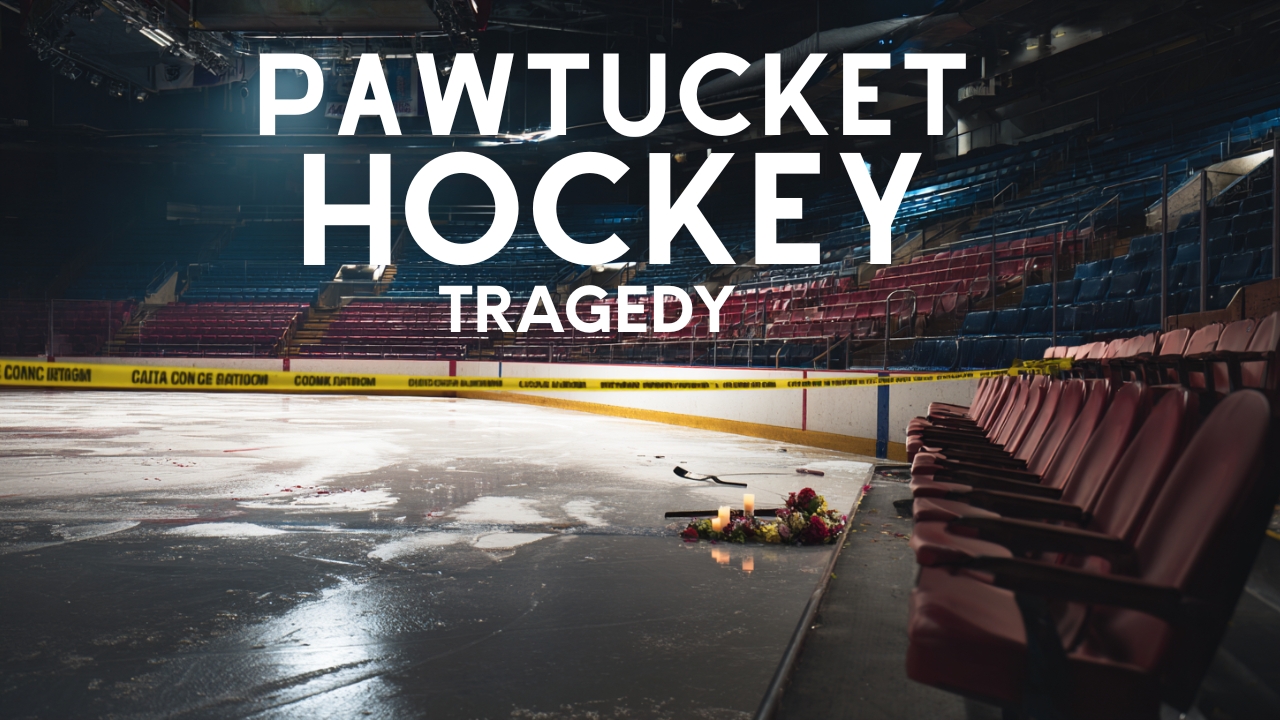
When Family Fractures Turn Fatal: The Pawtucket Hockey Rink Massacre That Nobody Saw Coming
Senior Night was supposed to be a celebration. Parents in the stands, cameras rolling, teenage hockey players lacing up to honor their final high school season. A Monday afternoon full of nostalgia, pride, and community.
Instead, the Dennis M. Lynch Arena in Pawtucket, Rhode Island became a crime scene. Three dead, including the shooter. Three more fighting for their lives in critical condition. A livestream capturing the moment terror replaced joy. And a community asking the question nobody wants to answer: How do you prevent a family from destroying itself in front of hundreds of witnesses?
Robert Dorgan, 56, also known as Roberta Esposito, entered the arena around 2:30 p.m. on February 16, 2026. He was there to watch his son play for North Providence High School in a tournament game. He climbed to the top row of the bleachers, pulled out a gun, and opened fire on his own family.
When the shooting stopped, his ex-wife Rhonda Dorgan was dead at the scene. His son Aidan Dorgan, 20, died later at the hospital. Three other family members, Rhonda's parents Linda and Jerry Dorgan and a family friend, were critically injured and rushed to Rhode Island Hospital. Robert Dorgan turned the gun on himself and ended his own life.
The only reason more people didn't die? A Good Samaritan stepped in, subdued Dorgan, and brought what Pawtucket Police Chief Tina Goncalves called "a swift end to this tragic event."
Team USA🇺🇸 head coach Mike Sullivan opens his availability with some words about the tragic shooting at a high school hockey game in Pawtucket, RI:
— Mollie Walker (@MollieeWalkerr) February 17, 2026
“Our hearts and prayers go to the people that were affected…That certainly is close to home for me, growing up in Massachusetts.… pic.twitter.com/SwitMvnjVu
This wasn't a random act of violence. This was the endpoint of years of family disintegration, court battles, and unresolved trauma that exploded in the worst possible place at the worst possible time.
Court records paint a picture of escalating tension. In early 2020, Dorgan reported to North Providence police that he had recently undergone gender reassignment surgery. He claimed his father in law wanted him out of their shared home, allegedly using derogatory language and threatening retaliation if Dorgan didn't leave.
The father in law was charged with intimidation and obstruction, but prosecutors later dismissed the case.
Around the same time, Dorgan's wife Rhonda filed for divorce. The initial paperwork cited "gender reassignment surgery, narcissistic + personality disorder traits" as grounds for divorce before those reasons were crossed out and replaced with the more neutral "irreconcilable differences which have caused the immediate breakdown of the marriage."
The divorce was finalized in June 2021. Dorgan, who had been living in Jacksonville, Florida working as a truck driver, moved back to Rhode Island.
But the fractures never healed. The resentments never resolved. And on Monday afternoon, four and a half years after the divorce filing, whatever remained of that family came undone in a hail of gunfire.
Outside Pawtucket Police headquarters on Monday evening, Ava Dorgan, 20, spoke to reporters about her father.
"He shot my family and he's dead now," she said, her voice steady but shaken. "He had mental health issues. He was very sick."
On Tuesday, she spoke to The Boston Globe and NBC 10 News, confirming that her mother Rhonda and older brother Aidan were killed in the shooting. Her grandparents, Linda and Jerry Dorgan, along with a family friend, remained in critical condition at Rhode Island Hospital.
Ava added something critical: "I think his gender identity issues are a symptom of a deeper issue." She told NBC 10 that her father had six children and struggled with mental health his entire adulthood.
That statement cuts through all the noise. This wasn't about transgender identity. This was about untreated mental illness, unresolved family trauma, and a man who never got the help he needed.
The son who was on the ice playing in the game left that rink without a mother, father, and brother. That's the reality nobody talks about when they politicize these tragedies.
The game was being livestreamed so families could watch from home. That footage is now evidence in a murder investigation.
On the video, you can hear the pops. At first, players thought they were balloons. Then the sound kept going. Pop. Pop. Pop. Twelve rounds in total, according to Chief Goncalves.
Players on the bench jumped to their feet, scrambling across the ice without their skates, diving for the locker rooms. Spectators in the stands ran for exits, ducking for cover, trying to shield their children.
Olin Lawrence, a player from Coventry, described the chaos: "I was on the ice, and I thought it was balloons at first. It was like, bop, bop. And I thought it was balloons, but it just kept going. And it was actually gunshots. And after the gunshots, me and my teammates ran right to the locker room, and we just bunkered up and we pressed against the door and just tried to stay safe down in there. But, no, it was very scary."
A Walgreens employee nearby told WPRI that panicked people came into the pharmacy saying there had been a shooting. The store closed and evacuated. People hid inside until police arrived.
This wasn't a back alley at 2 a.m. This was a community ice rink full of families on a Monday afternoon.
Chief Goncalves credited an unnamed Good Samaritan with stopping the massacre from escalating further. The individual confronted Dorgan, attempted to subdue him, and helped bring the shooting to an end.
That person likely saved lives. In a situation where most people freeze, run, or hide, someone made the decision to engage an active shooter to protect others.
Pawtucket police responded in less than two minutes. By the time they arrived, the Good Samaritan had already intervened. That's the difference between five dead and three dead. That's the margin in mass casualty events.
This tragedy comes just two months after Brown University in Providence experienced its own mass shooting. In December 2025, a gunman opened fire on campus, killing two students and injuring nine others before also killing an MIT professor. The shooter, Claudio Neves Valente, 48, was later found dead from a self inflicted gunshot wound at a New Hampshire storage facility.
Rhode Island is reeling. Governor Dan McKee released a video statement Monday night: "Our state is grieving again. As governor, a parent, and a former coach, my heart breaks for the victims, families, students, and everyone impacted by the devastating shooting at Lynch Arena in Pawtucket."
Pawtucket Mayor Donald Grebien called the shooting "traumatic" and a "total tragedy," emphasizing that it happened during what should have been a celebration. "These are high school kids. They were doing an event. They were playing with their families watching, a fun time, and it turned into this, so it's got to be traumatic."
The state set up a 211 hotline for counseling and referral services. Mental health resources are being deployed to affected schools. But the damage is done. The trauma is real. And the questions remain.
Here's what nobody wants to address: youth sporting events have virtually zero security.
Think about it. High school football games, basketball tournaments, hockey games, youth soccer leagues. Hundreds, sometimes thousands of people packed into facilities with wide open entry points, minimal staff, and zero security screening.
The Dennis M. Lynch Arena had no metal detectors. No security checkpoints. No bag searches. Robert Dorgan walked in with a firearm, climbed to the top row of the bleachers, and opened fire. Nobody stopped him. Nobody checked him. Nobody had any idea what was about to happen.
And this isn't unique to Pawtucket. This is the reality at youth sporting events across America.
Professional sports? You can't bring a bottle of water into an NBA arena without it being confiscated. College football? Metal detectors, bag checks, pat downs. High school sports? Walk right in. Bring whatever you want. Nobody's checking.
The calculation is simple: these venues assume goodwill. They operate on the belief that parents, families, and community members attending youth sports are there for the right reasons. And 99.9% of the time, that's true.
But it only takes one. One person with a grudge. One family dispute that turns violent. One mentally ill individual who decides a crowded arena full of children is the place to settle a score.
The resistance to implementing security at youth sporting events comes down to three factors: cost, logistics, and optics.
Cost: Metal detectors aren't cheap. Hiring security personnel isn't cheap. Implementing bag check protocols requires staff, equipment, and training. Most youth sports programs operate on tight budgets. Adding security feels like an unnecessary expense until tragedy strikes.
Logistics: Youth sports events happen constantly. Multiple games per day, different age groups, overlapping schedules. Implementing security checkpoints creates bottlenecks, delays, and frustrated parents who just want to watch their kid play.
Optics: There's a psychological resistance to turning youth sporting events into high security zones. Parents don't want their kids growing up thinking they need TSA style screening to attend a hockey game. It feels dystopian. It feels like admitting we've lost something fundamental about community and trust.
But here's the reality: we have lost it. We've lost the assumption of safety. We've lost the luxury of assuming everyone at a youth sporting event is there with good intentions.
Robert Dorgan proved that. And he's not the first.
The argument against implementing security at youth sports venues always comes down to the same talking point: "We don't want to turn our kids' games into police states."
But that's a false choice. Security doesn't mean armed guards with assault rifles patrolling bleachers. It doesn't mean strip searches and interrogations.
Basic security at youth sporting events could include:
Single point of entry with basic bag checks.
Visible security personnel trained in de-escalation and threat recognition.
Anonymous tip lines for reporting concerning behavior.
Emergency response protocols that staff and coaches are trained on.
Communication systems that allow for rapid lockdown or evacuation.
None of that is dystopian. All of it is common sense.
The Dennis M. Lynch Arena had none of these measures. When Robert Dorgan opened fire, there was no security to respond. There was no plan. There was chaos, panic, and a Good Samaritan who risked his own life to stop the carnage.
That Good Samaritan is a hero. But we shouldn't be relying on random acts of heroism to protect children at sporting events.
There's going to be a rush to politicize this. Some will focus on Dorgan's transgender identity. Others will focus on gun control. Both are missing the point.
This was a domestic violence incident. A family dispute that escalated to murder suicide. The fact that it happened in public, at a hockey rink, in front of children, doesn't change the core dynamic: a mentally ill individual with access to a firearm decided to destroy his family and himself.
Dorgan's daughter said it best: "I think his gender identity issues are a symptom of a deeper issue." Mental illness doesn't get addressed by culture war debates. It gets addressed through intervention, treatment, support systems, and family members who recognize when someone is spiraling.
Court records show the warning signs were there. Conflicts with in laws. Divorce citing personality disorders. Years of unresolved trauma. And yet, nothing stopped Monday's massacre.
But the larger systemic failure is this: even if every warning sign had been flagged, even if Dorgan's mental health had been addressed, even if family intervention had occurred, he still would have been able to walk into that arena unchecked because youth sporting events have no security infrastructure.
That needs to change.
Over 100 witnesses were interviewed by Monday night. Players, parents, coaches, arena staff. Everyone saw something. Everyone heard something. Everyone will carry this with them forever.
The players who scrambled off the ice. The spectators who dove for cover. The families who came to watch their kids play hockey and instead watched people die.
Coventry Public Schools confirmed all their players were safe. Johnston Public Schools confirmed their student athletes were safe. North Smithfield, North Providence, and Providence Country Day School all confirmed their students were safe.
But "safe" is relative. Those kids are alive, but they're not okay. Nobody who witnessed that is okay.
Pawtucket police are still investigating. Over 100 witness interviews. Livestream footage. Arena security cameras. ATF and FBI agents assisting. They're building a timeline, reconstructing the events, trying to understand how this happened.
But understanding why doesn't bring back Rhonda Dorgan. It doesn't bring back Aidan Dorgan. It doesn't heal Linda and Jerry Dorgan or the family friend fighting for their lives in the hospital. And it doesn't erase the trauma inflicted on hundreds of people who came to watch a hockey game.
This was preventable. Not just through mental health intervention. Not just through better family support systems. But through basic security measures that recognize the reality of the world we live in.
Youth sporting events are soft targets. They're crowded, unsecured, and full of vulnerable people. Until we stop pretending that won't be exploited, more families will be destroyed.
Robert Dorgan was sick. His daughter said it. The court records showed it. The family knew it. And on Monday, February 16, 2026, that sickness manifested in the worst possible way in a venue that had zero ability to stop it.
Three people are dead. Three more are clinging to life. A community is traumatized. And a high school hockey player lost his mother, father, and brother in one afternoon.
That's the real story. Not the politics. Not the identity debates. Just grief, trauma, and the question we need to answer: When will we finally admit that hoping for the best isn't a security plan?
2666
2964

3377
883
GOLDEN. GRITTY. UNSTOPPABLE.Team USA Defeats Canada 2-1 in Overtime to Capture Olympic Gold in Milan
MILAN, ITALY — With 58 minutes of frustration behind them, two minutes of ice time ahead of them, and an entire nation holding its breath, the United States Women's Hockey Team refused to go quietly. On Thursday night inside the stunning Santagiulia Arena, in what may be the greatest gold medal game in the history of the sport, Team USA pulled off a stunning comeback to defeat arch-rival Canada 2-1 in overtime and bring Olympic gold back to the red, white, and blue for the first time since 2018.
It was the kind of game that freezes time. The kind that reminds you why sport exists: why we watch, why we compete, why we teach our daughters to lace up their skates and get back on the ice when everything in them wants to quit. This wasn't just a gold medal. This was a statement.
For the first six games of these Winter Olympics, Team USA had been absolutely dominant, a freight train on skates that outscored its opponents 31-1 and went period after period without surrendering a single goal. They were being called the greatest women's hockey team the United States had ever produced. Then came Canada.
Canada, battered and bruised from a 5-0 group-stage demolition at the hands of these same Americans just nine days prior, walked into that gold medal game with a chip on their shoulder the size of Lake Ontario. Coach Troy Ryan had a plan: be physical, be disciplined, be frustrating. And for most of 60 minutes, it worked to perfection.
The Canadians clamped down on every American rush. They bottled up Caroline Harvey. They neutralized Hannah Bilka. They smothered Megan Keller, until they couldn't anymore. Kristin O'Neill gave Canada the lead after a picture-perfect feed set up a beautiful finish, and for the next 40 minutes, Ann-Renée Desbiens and Canada's defensive unit turned away everything the Americans threw at them. With two minutes left, the U.S. still trailed 1-0. The gold medal was slipping away.
Then Hilary Knight happened.
With the goalie pulled and Team USA in full desperation mode, 22-year-old phenom Laila Edwards launched a rocket toward the net. The 36-year-old captain, the living legend, the woman who has carried this program on her back through five Olympic Games, was exactly where she needed to be. Knight deflected it past Desbiens. Tie game. The arena erupted. The red-white-and-blue contingent in the stands became unhinged. You could feel it through the screen: that electric, primal surge of belief when something impossible suddenly becomes real.
Knight's goal was her 15th career Olympic goal, an all-time American record, breaking the tie she had held with Natalie Darwitz and Katie King. With time expiring in regulation. In a gold medal game. Against Canada. If you write that in a script, people call it too dramatic.
Overtime arrived in 3-on-3 format, wide open ice, heart-attack hockey at its finest. The Americans, riding the wave of Knight's miracle, caught Canada in an ill-timed line change. Taylor Heise threaded a length-of-the-ice pass to Megan Keller, the same Keller who had been smothered all game, and Keller did what champions do. She juked a defender, she found the angle, and she slid the puck past Desbiens to send Team USA into Olympic history.
Final score: USA 2, Canada 1. Golden.
Megan Keller the golden goal
— Kevin Thang (@Skip2MyJays) February 19, 2026
USA women’s hockey run the table 7-0
& make it 8 straight wins over Canada
Canada was 2 minutes away from a dominant shutout win… instead heartbreak #olympics pic.twitter.com/Y2aoCTIx2t
Let's be real: this gold medal isn't just a trophy. It's validation of a decade-long shift in the balance of power between these two programs and a declaration that U.S. women's hockey is in a golden era that shows no signs of slowing down.
Consider what this team has done in the last 12 months alone. In April 2025, they won the IIHF Women's World Championship over Canada in overtime. Tessa Janecke's golden goal after a feed from Taylor Heise in 3-on-3 OT will live forever in the highlight reel. Then, in the fall, they swept Canada 4-0 in the Rivalry Series, outscoring them 24-7 across four games including a jaw-dropping 10-4 blowout. Then a 5-0 dismantling in Olympic group play. And now this. The Americans have beaten Canada nine of the last ten times they've met. That's not a hot streak. That's a power shift.
For decades, Canada was the gold standard: five of seven Olympic golds before Milan, the home of hockey royalty like Marie-Philip Poulin, the woman whose name alone struck fear into American hearts. Poulin scored the game-winning goals in 2010, 2014, and 2022. She's that generational. But even Poulin's return from injury for the gold medal game wasn't enough to stop this version of Team USA.
What's driving this shift? The Professional Women's Hockey League (PWHL) has changed the game. It's the most stable and financially successful professional women's hockey league in history, now with eight teams and expansion plans underway. Players are no longer forced to give up the sport after college or at their athletic peak. They can develop professionally, play meaningful games year-round, and continue sharpening the edge that turns good players into great ones. The proof is in this roster: a blend of young phenoms like Laila Edwards and seasoned veterans like Knight and Keller who have refined their games through professional competition.
This matters enormously for every young girl who has ever dreamed of playing at the highest level. When little girls see Hilary Knight, 36 years old, in her fifth Olympics, scoring the goal that saves the gold medal game, they understand something profound: there is a path. There is a professional league. There is a next level. The ceiling just got raised, again.
We would be doing this editorial a disservice if we didn't stop and properly honor what Hilary Knight did on that ice in Milan. Five Olympic Games. Two gold medals. Fifteen career Olympic goals, the most in U.S. women's history. A key architect in the founding of the PWHL. And a final act so cinematic it belongs in a movie.
Her teammates said it best. Taylor Heise summed it up before the puck even dropped: "We are not here without her." And she was right. Knight didn't just score a goal on Thursday night. She scored a legacy. She scored a future. Every girl who straps on skates because of what she witnessed in Milan is part of Hilary Knight's legacy.
Knight's response when asked how she found herself in that position with two minutes left? Simple. Iconic. Pure competitor: "There was no way we were losing this game. That's all. Simple as that."
That mentality, that refusal to accept defeat, is exactly what we at BallerTube want every young athlete to carry into practice tomorrow. Into tryouts. Into the big game. Into the moments when everything feels like it's slipping away.
At BallerTube, we cover recruiting, athletic development, and the stories that shape the next generation of competitors. And the story of this USA Women's Hockey team is one of the most instructive we've ever had the privilege of covering, not just because of the gold medal, but because of how they won it.
They won it when they were outplayed. They won it when the plan wasn't working. They won it when the clock was almost out. They won it with their best player making the most important play of her career at age 36, proof that preparation, consistency, and heart compound over time in ways that pure talent alone cannot. They won it because a 22-year-old rookie, Laila Edwards, wasn't afraid to let it rip in an Olympic gold medal game.
For parents raising young female athletes, in hockey, in basketball, in any sport, let this be the fuel. The professional infrastructure is growing. The visibility is growing. The opportunities are growing. Your daughter's path to the highest level of competition is more real today than it has ever been. What happened in Milan is proof.
And for the young athletes themselves: watch the replay. Watch Knight tip that puck. Watch Keller juke that defender. Watch the bench erupt. Then go to practice. Do the work. Trust the process. Believe you belong, because you do.
392
When Family Fractures Turn Fatal: The Pawtucket Hockey Rink Massacre That Nobody Saw Coming
Senior Night was supposed to be a celebration. Parents in the stands, cameras rolling, teenage hockey players lacing up to honor their final high school season. A Monday afternoon full of nostalgia, pride, and community.
Instead, the Dennis M. Lynch Arena in Pawtucket, Rhode Island became a crime scene. Three dead, including the shooter. Three more fighting for their lives in critical condition. A livestream capturing the moment terror replaced joy. And a community asking the question nobody wants to answer: How do you prevent a family from destroying itself in front of hundreds of witnesses?
Robert Dorgan, 56, also known as Roberta Esposito, entered the arena around 2:30 p.m. on February 16, 2026. He was there to watch his son play for North Providence High School in a tournament game. He climbed to the top row of the bleachers, pulled out a gun, and opened fire on his own family.
When the shooting stopped, his ex-wife Rhonda Dorgan was dead at the scene. His son Aidan Dorgan, 20, died later at the hospital. Three other family members, Rhonda's parents Linda and Jerry Dorgan and a family friend, were critically injured and rushed to Rhode Island Hospital. Robert Dorgan turned the gun on himself and ended his own life.
The only reason more people didn't die? A Good Samaritan stepped in, subdued Dorgan, and brought what Pawtucket Police Chief Tina Goncalves called "a swift end to this tragic event."
Team USA🇺🇸 head coach Mike Sullivan opens his availability with some words about the tragic shooting at a high school hockey game in Pawtucket, RI:
— Mollie Walker (@MollieeWalkerr) February 17, 2026
“Our hearts and prayers go to the people that were affected…That certainly is close to home for me, growing up in Massachusetts.… pic.twitter.com/SwitMvnjVu
This wasn't a random act of violence. This was the endpoint of years of family disintegration, court battles, and unresolved trauma that exploded in the worst possible place at the worst possible time.
Court records paint a picture of escalating tension. In early 2020, Dorgan reported to North Providence police that he had recently undergone gender reassignment surgery. He claimed his father in law wanted him out of their shared home, allegedly using derogatory language and threatening retaliation if Dorgan didn't leave.
The father in law was charged with intimidation and obstruction, but prosecutors later dismissed the case.
Around the same time, Dorgan's wife Rhonda filed for divorce. The initial paperwork cited "gender reassignment surgery, narcissistic + personality disorder traits" as grounds for divorce before those reasons were crossed out and replaced with the more neutral "irreconcilable differences which have caused the immediate breakdown of the marriage."
The divorce was finalized in June 2021. Dorgan, who had been living in Jacksonville, Florida working as a truck driver, moved back to Rhode Island.
But the fractures never healed. The resentments never resolved. And on Monday afternoon, four and a half years after the divorce filing, whatever remained of that family came undone in a hail of gunfire.
Outside Pawtucket Police headquarters on Monday evening, Ava Dorgan, 20, spoke to reporters about her father.
"He shot my family and he's dead now," she said, her voice steady but shaken. "He had mental health issues. He was very sick."
On Tuesday, she spoke to The Boston Globe and NBC 10 News, confirming that her mother Rhonda and older brother Aidan were killed in the shooting. Her grandparents, Linda and Jerry Dorgan, along with a family friend, remained in critical condition at Rhode Island Hospital.
Ava added something critical: "I think his gender identity issues are a symptom of a deeper issue." She told NBC 10 that her father had six children and struggled with mental health his entire adulthood.
That statement cuts through all the noise. This wasn't about transgender identity. This was about untreated mental illness, unresolved family trauma, and a man who never got the help he needed.
The son who was on the ice playing in the game left that rink without a mother, father, and brother. That's the reality nobody talks about when they politicize these tragedies.
The game was being livestreamed so families could watch from home. That footage is now evidence in a murder investigation.
On the video, you can hear the pops. At first, players thought they were balloons. Then the sound kept going. Pop. Pop. Pop. Twelve rounds in total, according to Chief Goncalves.
Players on the bench jumped to their feet, scrambling across the ice without their skates, diving for the locker rooms. Spectators in the stands ran for exits, ducking for cover, trying to shield their children.
Olin Lawrence, a player from Coventry, described the chaos: "I was on the ice, and I thought it was balloons at first. It was like, bop, bop. And I thought it was balloons, but it just kept going. And it was actually gunshots. And after the gunshots, me and my teammates ran right to the locker room, and we just bunkered up and we pressed against the door and just tried to stay safe down in there. But, no, it was very scary."
A Walgreens employee nearby told WPRI that panicked people came into the pharmacy saying there had been a shooting. The store closed and evacuated. People hid inside until police arrived.
This wasn't a back alley at 2 a.m. This was a community ice rink full of families on a Monday afternoon.
Chief Goncalves credited an unnamed Good Samaritan with stopping the massacre from escalating further. The individual confronted Dorgan, attempted to subdue him, and helped bring the shooting to an end.
That person likely saved lives. In a situation where most people freeze, run, or hide, someone made the decision to engage an active shooter to protect others.
Pawtucket police responded in less than two minutes. By the time they arrived, the Good Samaritan had already intervened. That's the difference between five dead and three dead. That's the margin in mass casualty events.
This tragedy comes just two months after Brown University in Providence experienced its own mass shooting. In December 2025, a gunman opened fire on campus, killing two students and injuring nine others before also killing an MIT professor. The shooter, Claudio Neves Valente, 48, was later found dead from a self inflicted gunshot wound at a New Hampshire storage facility.
Rhode Island is reeling. Governor Dan McKee released a video statement Monday night: "Our state is grieving again. As governor, a parent, and a former coach, my heart breaks for the victims, families, students, and everyone impacted by the devastating shooting at Lynch Arena in Pawtucket."
Pawtucket Mayor Donald Grebien called the shooting "traumatic" and a "total tragedy," emphasizing that it happened during what should have been a celebration. "These are high school kids. They were doing an event. They were playing with their families watching, a fun time, and it turned into this, so it's got to be traumatic."
The state set up a 211 hotline for counseling and referral services. Mental health resources are being deployed to affected schools. But the damage is done. The trauma is real. And the questions remain.
Here's what nobody wants to address: youth sporting events have virtually zero security.
Think about it. High school football games, basketball tournaments, hockey games, youth soccer leagues. Hundreds, sometimes thousands of people packed into facilities with wide open entry points, minimal staff, and zero security screening.
The Dennis M. Lynch Arena had no metal detectors. No security checkpoints. No bag searches. Robert Dorgan walked in with a firearm, climbed to the top row of the bleachers, and opened fire. Nobody stopped him. Nobody checked him. Nobody had any idea what was about to happen.
And this isn't unique to Pawtucket. This is the reality at youth sporting events across America.
Professional sports? You can't bring a bottle of water into an NBA arena without it being confiscated. College football? Metal detectors, bag checks, pat downs. High school sports? Walk right in. Bring whatever you want. Nobody's checking.
The calculation is simple: these venues assume goodwill. They operate on the belief that parents, families, and community members attending youth sports are there for the right reasons. And 99.9% of the time, that's true.
But it only takes one. One person with a grudge. One family dispute that turns violent. One mentally ill individual who decides a crowded arena full of children is the place to settle a score.
The resistance to implementing security at youth sporting events comes down to three factors: cost, logistics, and optics.
Cost: Metal detectors aren't cheap. Hiring security personnel isn't cheap. Implementing bag check protocols requires staff, equipment, and training. Most youth sports programs operate on tight budgets. Adding security feels like an unnecessary expense until tragedy strikes.
Logistics: Youth sports events happen constantly. Multiple games per day, different age groups, overlapping schedules. Implementing security checkpoints creates bottlenecks, delays, and frustrated parents who just want to watch their kid play.
Optics: There's a psychological resistance to turning youth sporting events into high security zones. Parents don't want their kids growing up thinking they need TSA style screening to attend a hockey game. It feels dystopian. It feels like admitting we've lost something fundamental about community and trust.
But here's the reality: we have lost it. We've lost the assumption of safety. We've lost the luxury of assuming everyone at a youth sporting event is there with good intentions.
Robert Dorgan proved that. And he's not the first.
The argument against implementing security at youth sports venues always comes down to the same talking point: "We don't want to turn our kids' games into police states."
But that's a false choice. Security doesn't mean armed guards with assault rifles patrolling bleachers. It doesn't mean strip searches and interrogations.
Basic security at youth sporting events could include:
Single point of entry with basic bag checks.
Visible security personnel trained in de-escalation and threat recognition.
Anonymous tip lines for reporting concerning behavior.
Emergency response protocols that staff and coaches are trained on.
Communication systems that allow for rapid lockdown or evacuation.
None of that is dystopian. All of it is common sense.
The Dennis M. Lynch Arena had none of these measures. When Robert Dorgan opened fire, there was no security to respond. There was no plan. There was chaos, panic, and a Good Samaritan who risked his own life to stop the carnage.
That Good Samaritan is a hero. But we shouldn't be relying on random acts of heroism to protect children at sporting events.
There's going to be a rush to politicize this. Some will focus on Dorgan's transgender identity. Others will focus on gun control. Both are missing the point.
This was a domestic violence incident. A family dispute that escalated to murder suicide. The fact that it happened in public, at a hockey rink, in front of children, doesn't change the core dynamic: a mentally ill individual with access to a firearm decided to destroy his family and himself.
Dorgan's daughter said it best: "I think his gender identity issues are a symptom of a deeper issue." Mental illness doesn't get addressed by culture war debates. It gets addressed through intervention, treatment, support systems, and family members who recognize when someone is spiraling.
Court records show the warning signs were there. Conflicts with in laws. Divorce citing personality disorders. Years of unresolved trauma. And yet, nothing stopped Monday's massacre.
But the larger systemic failure is this: even if every warning sign had been flagged, even if Dorgan's mental health had been addressed, even if family intervention had occurred, he still would have been able to walk into that arena unchecked because youth sporting events have no security infrastructure.
That needs to change.
Over 100 witnesses were interviewed by Monday night. Players, parents, coaches, arena staff. Everyone saw something. Everyone heard something. Everyone will carry this with them forever.
The players who scrambled off the ice. The spectators who dove for cover. The families who came to watch their kids play hockey and instead watched people die.
Coventry Public Schools confirmed all their players were safe. Johnston Public Schools confirmed their student athletes were safe. North Smithfield, North Providence, and Providence Country Day School all confirmed their students were safe.
But "safe" is relative. Those kids are alive, but they're not okay. Nobody who witnessed that is okay.
Pawtucket police are still investigating. Over 100 witness interviews. Livestream footage. Arena security cameras. ATF and FBI agents assisting. They're building a timeline, reconstructing the events, trying to understand how this happened.
But understanding why doesn't bring back Rhonda Dorgan. It doesn't bring back Aidan Dorgan. It doesn't heal Linda and Jerry Dorgan or the family friend fighting for their lives in the hospital. And it doesn't erase the trauma inflicted on hundreds of people who came to watch a hockey game.
This was preventable. Not just through mental health intervention. Not just through better family support systems. But through basic security measures that recognize the reality of the world we live in.
Youth sporting events are soft targets. They're crowded, unsecured, and full of vulnerable people. Until we stop pretending that won't be exploited, more families will be destroyed.
Robert Dorgan was sick. His daughter said it. The court records showed it. The family knew it. And on Monday, February 16, 2026, that sickness manifested in the worst possible way in a venue that had zero ability to stop it.
Three people are dead. Three more are clinging to life. A community is traumatized. And a high school hockey player lost his mother, father, and brother in one afternoon.
That's the real story. Not the politics. Not the identity debates. Just grief, trauma, and the question we need to answer: When will we finally admit that hoping for the best isn't a security plan?
2666
Hockey Guys
894
Hockey Guys
976
Hockey Guys
970
Hockey Guys
1.0K
Hockey Guys
1.5K
Hockey Guys
1.8K

Hockey Guys
1.9K

Hockey Guys
1.4K
Hockey Guys
2.4K

Hockey Guys
1.6K

Hockey Guys
1.4K

Hockey Guys
1.2K