Senior Night was supposed to be a celebration. Parents in the stands, cameras rolling, teenage hockey players lacing up to honor their final high school season. A Monday afternoon full of nostalgia, pride, and community.
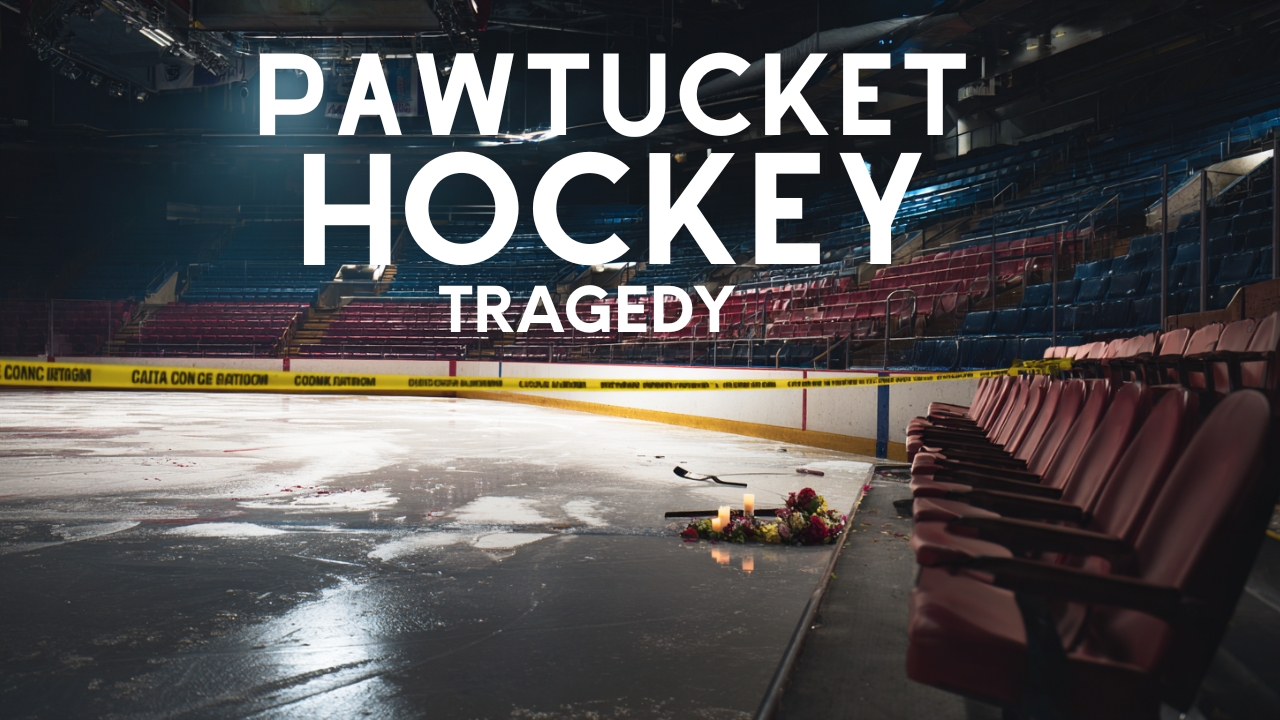
Instead, the Dennis M. Lynch Arena in Pawtucket, Rhode Island became a crime scene. Three dead, including the shooter. Three more fighting for their lives in critical condition. A livestream capturing the moment terror replaced joy. And a community asking the question nobody wants to answer: How do you prevent a family from destroying itself in front of hundreds of witnesses?
Robert Dorgan, 56, also known as Roberta Esposito, entered the arena around 2:30 p.m. on February 16, 2026. He was there to watch his son play for North Providence High School in a tournament game. He climbed to the top row of the bleachers, pulled out a gun, and opened fire on his own family.
When the shooting stopped, his ex-wife Rhonda Dorgan was dead at the scene. His son Aidan Dorgan, 20, died later at the hospital. Three other family members, Rhonda's parents Linda and Jerry Dorgan and a family friend, were critically injured and rushed to Rhode Island Hospital. Robert Dorgan turned the gun on himself and ended his own life.
The only reason more people didn't die? A Good Samaritan stepped in, subdued Dorgan, and brought what Pawtucket Police Chief Tina Goncalves called "a swift end to this tragic event."
Team USA🇺🇸 head coach Mike Sullivan opens his availability with some words about the tragic shooting at a high school hockey game in Pawtucket, RI:
— Mollie Walker (@MollieeWalkerr) February 17, 2026
“Our hearts and prayers go to the people that were affected…That certainly is close to home for me, growing up in Massachusetts.… pic.twitter.com/SwitMvnjVu
The Backstory: A Family Torn Apart By Identity and Mental Illness
This wasn't a random act of violence. This was the endpoint of years of family disintegration, court battles, and unresolved trauma that exploded in the worst possible place at the worst possible time.
Court records paint a picture of escalating tension. In early 2020, Dorgan reported to North Providence police that he had recently undergone gender reassignment surgery. He claimed his father in law wanted him out of their shared home, allegedly using derogatory language and threatening retaliation if Dorgan didn't leave.
The father in law was charged with intimidation and obstruction, but prosecutors later dismissed the case.
Around the same time, Dorgan's wife Rhonda filed for divorce. The initial paperwork cited "gender reassignment surgery, narcissistic + personality disorder traits" as grounds for divorce before those reasons were crossed out and replaced with the more neutral "irreconcilable differences which have caused the immediate breakdown of the marriage."
The divorce was finalized in June 2021. Dorgan, who had been living in Jacksonville, Florida working as a truck driver, moved back to Rhode Island.
But the fractures never healed. The resentments never resolved. And on Monday afternoon, four and a half years after the divorce filing, whatever remained of that family came undone in a hail of gunfire.
The Shooter's Daughter: "He Was Very Sick"
Outside Pawtucket Police headquarters on Monday evening, Ava Dorgan, 20, spoke to reporters about her father.
"He shot my family and he's dead now," she said, her voice steady but shaken. "He had mental health issues. He was very sick."
On Tuesday, she spoke to The Boston Globe and NBC 10 News, confirming that her mother Rhonda and older brother Aidan were killed in the shooting. Her grandparents, Linda and Jerry Dorgan, along with a family friend, remained in critical condition at Rhode Island Hospital.
Ava added something critical: "I think his gender identity issues are a symptom of a deeper issue." She told NBC 10 that her father had six children and struggled with mental health his entire adulthood.
That statement cuts through all the noise. This wasn't about transgender identity. This was about untreated mental illness, unresolved family trauma, and a man who never got the help he needed.
The son who was on the ice playing in the game left that rink without a mother, father, and brother. That's the reality nobody talks about when they politicize these tragedies.
The Scene: Terror Captured On Livestream
The game was being livestreamed so families could watch from home. That footage is now evidence in a murder investigation.
On the video, you can hear the pops. At first, players thought they were balloons. Then the sound kept going. Pop. Pop. Pop. Twelve rounds in total, according to Chief Goncalves.
Players on the bench jumped to their feet, scrambling across the ice without their skates, diving for the locker rooms. Spectators in the stands ran for exits, ducking for cover, trying to shield their children.
Olin Lawrence, a player from Coventry, described the chaos: "I was on the ice, and I thought it was balloons at first. It was like, bop, bop. And I thought it was balloons, but it just kept going. And it was actually gunshots. And after the gunshots, me and my teammates ran right to the locker room, and we just bunkered up and we pressed against the door and just tried to stay safe down in there. But, no, it was very scary."
A Walgreens employee nearby told WPRI that panicked people came into the pharmacy saying there had been a shooting. The store closed and evacuated. People hid inside until police arrived.
This wasn't a back alley at 2 a.m. This was a community ice rink full of families on a Monday afternoon.
The Good Samaritan Who Stopped It From Getting Worse
Chief Goncalves credited an unnamed Good Samaritan with stopping the massacre from escalating further. The individual confronted Dorgan, attempted to subdue him, and helped bring the shooting to an end.
That person likely saved lives. In a situation where most people freeze, run, or hide, someone made the decision to engage an active shooter to protect others.
Pawtucket police responded in less than two minutes. By the time they arrived, the Good Samaritan had already intervened. That's the difference between five dead and three dead. That's the margin in mass casualty events.
Rhode Island's Second Mass Shooting In Two Months
This tragedy comes just two months after Brown University in Providence experienced its own mass shooting. In December 2025, a gunman opened fire on campus, killing two students and injuring nine others before also killing an MIT professor. The shooter, Claudio Neves Valente, 48, was later found dead from a self inflicted gunshot wound at a New Hampshire storage facility.
Rhode Island is reeling. Governor Dan McKee released a video statement Monday night: "Our state is grieving again. As governor, a parent, and a former coach, my heart breaks for the victims, families, students, and everyone impacted by the devastating shooting at Lynch Arena in Pawtucket."
Pawtucket Mayor Donald Grebien called the shooting "traumatic" and a "total tragedy," emphasizing that it happened during what should have been a celebration. "These are high school kids. They were doing an event. They were playing with their families watching, a fun time, and it turned into this, so it's got to be traumatic."
The state set up a 211 hotline for counseling and referral services. Mental health resources are being deployed to affected schools. But the damage is done. The trauma is real. And the questions remain.
The Security Gap Nobody Talks About: Why Youth Sports Are Sitting Ducks
Here's what nobody wants to address: youth sporting events have virtually zero security.
Think about it. High school football games, basketball tournaments, hockey games, youth soccer leagues. Hundreds, sometimes thousands of people packed into facilities with wide open entry points, minimal staff, and zero security screening.
The Dennis M. Lynch Arena had no metal detectors. No security checkpoints. No bag searches. Robert Dorgan walked in with a firearm, climbed to the top row of the bleachers, and opened fire. Nobody stopped him. Nobody checked him. Nobody had any idea what was about to happen.
And this isn't unique to Pawtucket. This is the reality at youth sporting events across America.
Professional sports? You can't bring a bottle of water into an NBA arena without it being confiscated. College football? Metal detectors, bag checks, pat downs. High school sports? Walk right in. Bring whatever you want. Nobody's checking.
The calculation is simple: these venues assume goodwill. They operate on the belief that parents, families, and community members attending youth sports are there for the right reasons. And 99.9% of the time, that's true.
But it only takes one. One person with a grudge. One family dispute that turns violent. One mentally ill individual who decides a crowded arena full of children is the place to settle a score.
Why Youth Sports Venues Resist Security Measures
The resistance to implementing security at youth sporting events comes down to three factors: cost, logistics, and optics.
Cost: Metal detectors aren't cheap. Hiring security personnel isn't cheap. Implementing bag check protocols requires staff, equipment, and training. Most youth sports programs operate on tight budgets. Adding security feels like an unnecessary expense until tragedy strikes.
Logistics: Youth sports events happen constantly. Multiple games per day, different age groups, overlapping schedules. Implementing security checkpoints creates bottlenecks, delays, and frustrated parents who just want to watch their kid play.
Optics: There's a psychological resistance to turning youth sporting events into high security zones. Parents don't want their kids growing up thinking they need TSA style screening to attend a hockey game. It feels dystopian. It feels like admitting we've lost something fundamental about community and trust.
But here's the reality: we have lost it. We've lost the assumption of safety. We've lost the luxury of assuming everyone at a youth sporting event is there with good intentions.
Robert Dorgan proved that. And he's not the first.
The False Choice Between Safety and Community
The argument against implementing security at youth sports venues always comes down to the same talking point: "We don't want to turn our kids' games into police states."
But that's a false choice. Security doesn't mean armed guards with assault rifles patrolling bleachers. It doesn't mean strip searches and interrogations.
Basic security at youth sporting events could include:
Single point of entry with basic bag checks.
Visible security personnel trained in de-escalation and threat recognition.
Anonymous tip lines for reporting concerning behavior.
Emergency response protocols that staff and coaches are trained on.
Communication systems that allow for rapid lockdown or evacuation.
None of that is dystopian. All of it is common sense.
The Dennis M. Lynch Arena had none of these measures. When Robert Dorgan opened fire, there was no security to respond. There was no plan. There was chaos, panic, and a Good Samaritan who risked his own life to stop the carnage.
That Good Samaritan is a hero. But we shouldn't be relying on random acts of heroism to protect children at sporting events.
The Uncomfortable Conversation Nobody Wants To Have
There's going to be a rush to politicize this. Some will focus on Dorgan's transgender identity. Others will focus on gun control. Both are missing the point.
This was a domestic violence incident. A family dispute that escalated to murder suicide. The fact that it happened in public, at a hockey rink, in front of children, doesn't change the core dynamic: a mentally ill individual with access to a firearm decided to destroy his family and himself.
Dorgan's daughter said it best: "I think his gender identity issues are a symptom of a deeper issue." Mental illness doesn't get addressed by culture war debates. It gets addressed through intervention, treatment, support systems, and family members who recognize when someone is spiraling.
Court records show the warning signs were there. Conflicts with in laws. Divorce citing personality disorders. Years of unresolved trauma. And yet, nothing stopped Monday's massacre.
But the larger systemic failure is this: even if every warning sign had been flagged, even if Dorgan's mental health had been addressed, even if family intervention had occurred, he still would have been able to walk into that arena unchecked because youth sporting events have no security infrastructure.
That needs to change.
The Players Who Will Never Forget
Over 100 witnesses were interviewed by Monday night. Players, parents, coaches, arena staff. Everyone saw something. Everyone heard something. Everyone will carry this with them forever.
The players who scrambled off the ice. The spectators who dove for cover. The families who came to watch their kids play hockey and instead watched people die.
Coventry Public Schools confirmed all their players were safe. Johnston Public Schools confirmed their student athletes were safe. North Smithfield, North Providence, and Providence Country Day School all confirmed their students were safe.
But "safe" is relative. Those kids are alive, but they're not okay. Nobody who witnessed that is okay.
Where Do We Go From Here?
Pawtucket police are still investigating. Over 100 witness interviews. Livestream footage. Arena security cameras. ATF and FBI agents assisting. They're building a timeline, reconstructing the events, trying to understand how this happened.
But understanding why doesn't bring back Rhonda Dorgan. It doesn't bring back Aidan Dorgan. It doesn't heal Linda and Jerry Dorgan or the family friend fighting for their lives in the hospital. And it doesn't erase the trauma inflicted on hundreds of people who came to watch a hockey game.
This was preventable. Not just through mental health intervention. Not just through better family support systems. But through basic security measures that recognize the reality of the world we live in.
Youth sporting events are soft targets. They're crowded, unsecured, and full of vulnerable people. Until we stop pretending that won't be exploited, more families will be destroyed.
Robert Dorgan was sick. His daughter said it. The court records showed it. The family knew it. And on Monday, February 16, 2026, that sickness manifested in the worst possible way in a venue that had zero ability to stop it.
Three people are dead. Three more are clinging to life. A community is traumatized. And a high school hockey player lost his mother, father, and brother in one afternoon.
That's the real story. Not the politics. Not the identity debates. Just grief, trauma, and the question we need to answer: When will we finally admit that hoping for the best isn't a security plan?