There’s a phrase you hear all the time in high school basketball.
Coaches say it in meetings. Athletic directors repeat it in interviews. Parents echo it from the stands.
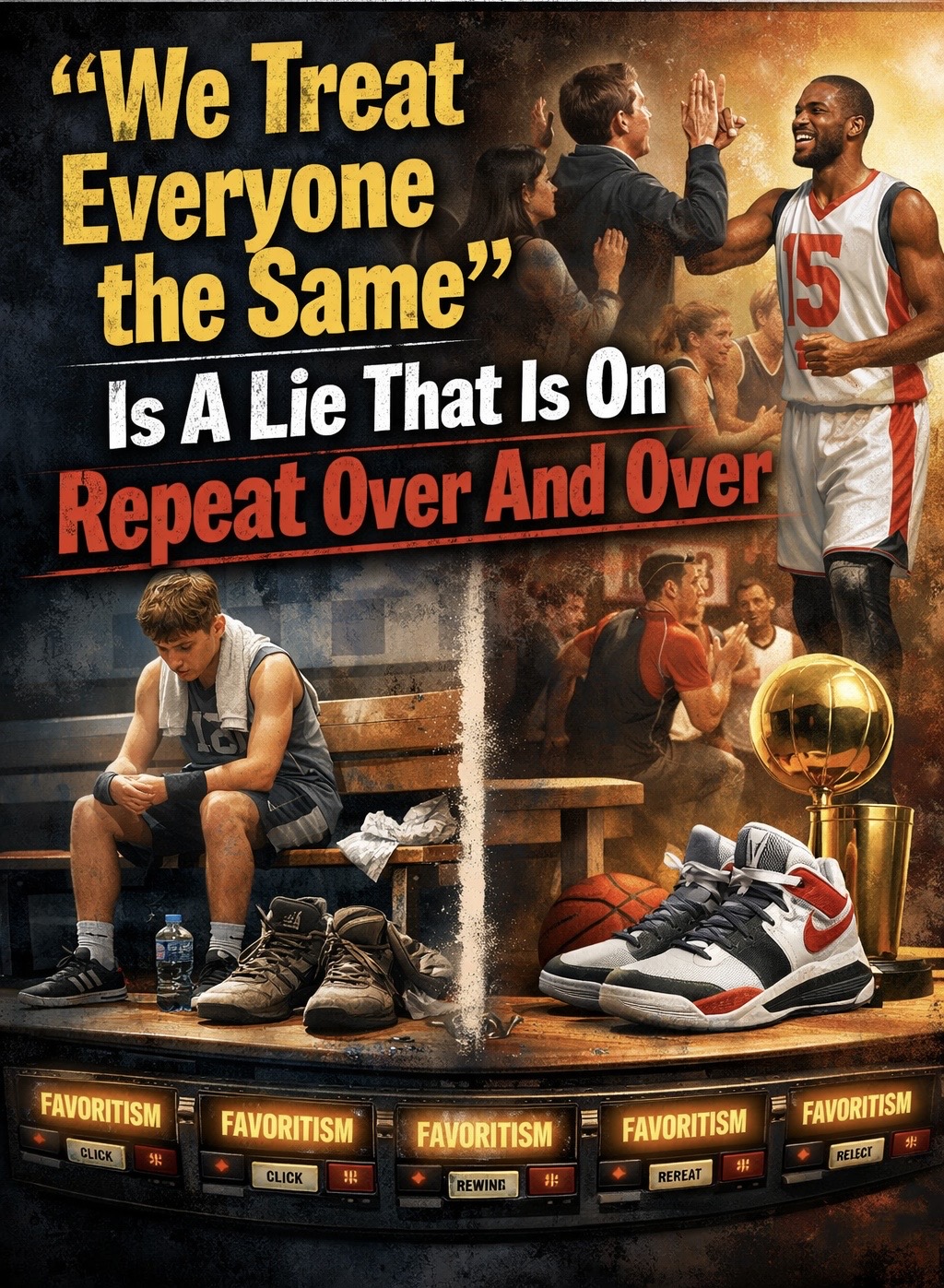
“We treat everyone the same.”
On the surface, it sounds fair. It sounds like equality. It sounds like the right thing to say.
But if you’ve really been around the game—not just watching from the bleachers, but living it, working in it, dealing with players, families, and programs—you know the truth:
That statement is one of the biggest lies in high school basketball.
And not always because people are trying to deceive. Sometimes it’s said out of habit. Sometimes it’s said because it sounds good.
But most of the time, it hides a deeper issue—one that impacts development, opportunity, and the culture of entire programs.
Because the reality is simple:
Treating everyone the same is not the same as treating everyone the right way.
The Problem with “Same”
Let’s break it down.
Players are not the same.
They don’t come from the same backgrounds.
They don’t have the same support systems.
They don’t learn the same way.
They don’t respond to coaching the same way.
So why would we treat them the same?
In education, strong teachers understand differentiation. You don’t give every student the exact same approach and expect the same results—you adjust, adapt, and meet them where they are.
But in basketball, too many programs still operate like it’s one-size-fits-all:
- Same drills
- Same expectations
- Same communication style
- Same consequences
And when players don’t succeed?
The blame shifts.
“They’re not coachable.”
“They don’t work hard enough.”
“They don’t get it.”
Instead of asking the real question:
Did we coach them the way they needed to be coached?
https://www.ballertube.com/news/252/team-sports-vs-individual-sports-what-parents-should-know/
Equality vs. Equity
High school basketball constantly confuses these two.
- Equality = giving everyone the same thing
- Equity = giving each player what they need to succeed
That difference matters.
A senior doesn’t need the same instruction as a freshman.
A player dealing with real-life challenges doesn’t need the same approach as one with full support.
A high-IQ player doesn’t need the same breakdown as someone still learning basics.
Treating them all the same might feel fair—
But in reality, it’s lazy coaching.
The Hidden Hierarchy
Here’s the truth most programs won’t say out loud:
Everyone is already treated differently.
- Top players get more freedom
- They get longer leashes
- They get more opportunities to make mistakes
Meanwhile:
- Role players get pulled quicker
- They get less explanation
- They get labeled faster
So when a coach says, “We treat everyone the same,” it doesn’t match what players actually experience.
And players notice everything.
They see:
- Who gets yelled at vs. corrected calmly
- Who gets second chances
- Who gets developed—and who gets overlooked
That disconnect builds frustration.
It builds resentment.
And eventually—
It breaks trust.
Culture Isn’t Built on Catchphrases
Programs love buzzwords:
- “Family”
- “Accountability”
- “Togetherness”
But culture isn’t built on words.
It’s built on consistency and honesty.
If your message says one thing and your actions show another, players stop believing.
And once belief is gone—
Culture is gone.
Real culture looks like:
- Players understanding their roles (and why)
- Clear, honest communication
- Development for everyone, not just the top 6–7
- Accountability that’s consistent—not selective
It doesn’t mean equal minutes.
It means intentional value for every player.
The Development Gap
This is where programs quietly fall apart.
In too many cases, development is reserved for players who already produce.
Starters get:
- More reps
- More feedback
- More film
- More attention
Everyone else?
They become a practice squad.
They help the top players improve—but nobody is helping them.
Then coaches ask:
- Why don’t we have depth?
- Why aren’t players improving?
- Why do we fall off after one class graduates?
Because development wasn’t distributed—
It was concentrated.
If you want a real program, development has to reach everyone.
Not equally.
But intentionally.
https://www.ballertube.com/news/168/the-new-youth-sports-empire-how-on3-rivals-maxpreps-and-ballertube-are-redefining-the-future-of-recruiting-and-nil/
Coaching Isn’t About Control
Treating everyone the same is easier.
It’s cleaner.
It’s structured.
It feels organized.
But coaching isn’t about control.
It’s about connection.
The best coaches understand their players individually. They know:
- Who needs to be pushed
- Who needs encouragement
- Who needs structure
- Who needs freedom
They adjust.
That’s not favoritism.
That’s effective coaching.
The Player Perspective
Players aren’t asking for special treatment.
They’re asking for:
- Understanding
- Communication
- Recognition
They want to feel seen—not just as a jersey number, but as a person.
When players feel that, they buy in.
When they don’t?
They check out.
And once that happens, it doesn’t matter what system you run—
Your ceiling drops.
What Real Fairness Looks Like
Fairness is not sameness.
Real fairness means:
- Clear expectations
- Consistent accountability
- Earned opportunities
- Intentional development
It also means honesty.
Instead of saying:
“We treat everyone the same.”
Say:
“We coach everyone based on what they need.”
That’s real.
That’s transparent.
That’s trustworthy.
The Impact Beyond Basketball
This goes deeper than wins and losses.
High school basketball is a developmental space—for athletes and for people.
If we teach kids that fairness = sameness, we’re setting them up wrong.
Because the real world doesn’t work like that.
Different people need different things to succeed.
And learning how to adapt, lead, and connect with different individuals—
That’s a life skill.
Basketball should be teaching it.
A Challenge to Coaches
Ask yourself:
- Do I really treat everyone the same?
- Is that actually helping my players?
- Who on my roster am I not reaching?
- What can I adjust?
Because coaching is about impact.
Not just your best player.
Not just your starters.
Every player.
My Final Outlook
“We treat everyone the same” sounds good.
But it’s not real—and it’s not effective.
Great programs aren’t built on sameness.
They’re built on:
- Intentional differences
- Adaptability
- Honest communication
Different approaches.
Different conversations.
Different paths—
Same goal: growth.
When you stop treating everyone the same and start coaching everyone the right way—
That’s when players grow.
That’s when teams improve.
That’s when the game becomes what it’s supposed to be.
The Accountability Layer Nobody Talks About
There’s another layer to this conversation:
Accountability.
It’s preached everywhere:
- “Be accountable”
- “Do your job”
- “Earn everything”
But it’s not applied evenly.
And players see it instantly.
- Star player misses a rotation → teaching moment
- Role player misses it → gets pulled
- Star player shows bad body language → “competitive”
- Bench player does it → “bad attitude”
That’s not accountability.
That’s selective discipline.
Standards should be:
- Effort → non-negotiable
- Attitude → non-negotiable
- Commitment → non-negotiable
For everyone.
When standards shift based on status, the message is clear:
Status matters more than substance.
And once players believe that—
You don’t just lose accountability.
You lose credibility.
Bottom Line
The best programs don’t eliminate differences.
They manage them—with integrity.
Players can accept:
- Roles
- Limited minutes
- Tough coaching
What they won’t accept is:
Inconsistency.