

How BallerTube WorksSix guides to getting the most out of BallerTube
Create Your ProfileBuild your digital sports resumé with highlights and game tapeLearn How
Film, Upload, Watch & ShareOne place to store and share your entire sports career with just one linkLearn How
Stream Games LiveGo live or host Pay-Per-View events streaming.Learn How
NIL, Recruiting & ExposureResources to help athletes and families turn exposure into real opportunities.Learn How
Earn From Your ContentGet tips from fans and your premium contentLearn How
Power Your ProgramTag your athletes, manage all your program's media in one place and make recruiting easier.Learn How
Upload a Video or Reel
Choose Below
Videos are full screen (16:9) and Reels are vertical videos (9:16)
Jasai Miles - Jasai Miles is one of those young players that has every single tool in the toolbox. It is truly mind-blowing to see what he does with the resources he is provided Highlights, Videos and Stats



Are you sure you want to cancel your Jasai Miles subscription?
Your subscription greatly helps Jasai Miles develop his athletic career, and you have full access to his exclusive content.
Jasai Miles
Player Info
Position:
Guard
Country:
United States
City:
Miami, FL
Age:
22
School:
Indiana University
Height:
6'6
Weight:
210
Live now
Ended lives 1652

Aubreigh Pumphrey-Solomon Visits Cousin Jasai Miles at Indiana University After EYBL Run 4 Roses
shoecircuit
853
SUPREME TEAM Pulls Off INSANE Comeback vs Indiana Basketball | Full Game Highlights
collegegametape
654

Jasai Miles Knocks Down Clutch Three in Big Win Over Purdue
collegegametape
929

Indiana is still a basketball school btw #hoosiers #collegebasketba...
Ballergram
736

The Hoosier were dunking everything tonight #indiana #hoosiers #baske...
Ballergram
1.2K

Jasai miles and one #and1 #fyp #strong #basketball
Ballergram
901
Videos
See All



Videos
See AllNews
See All
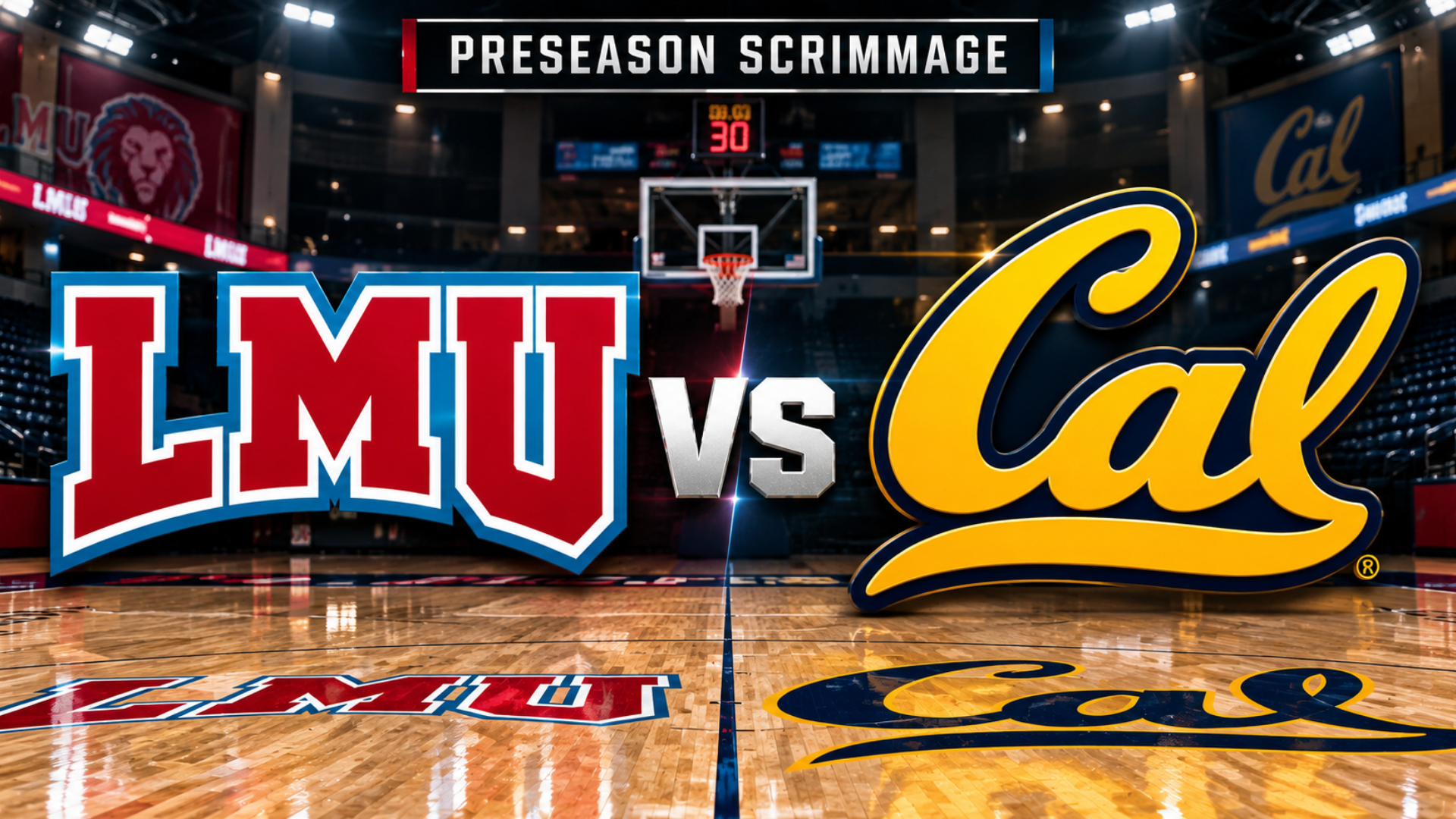
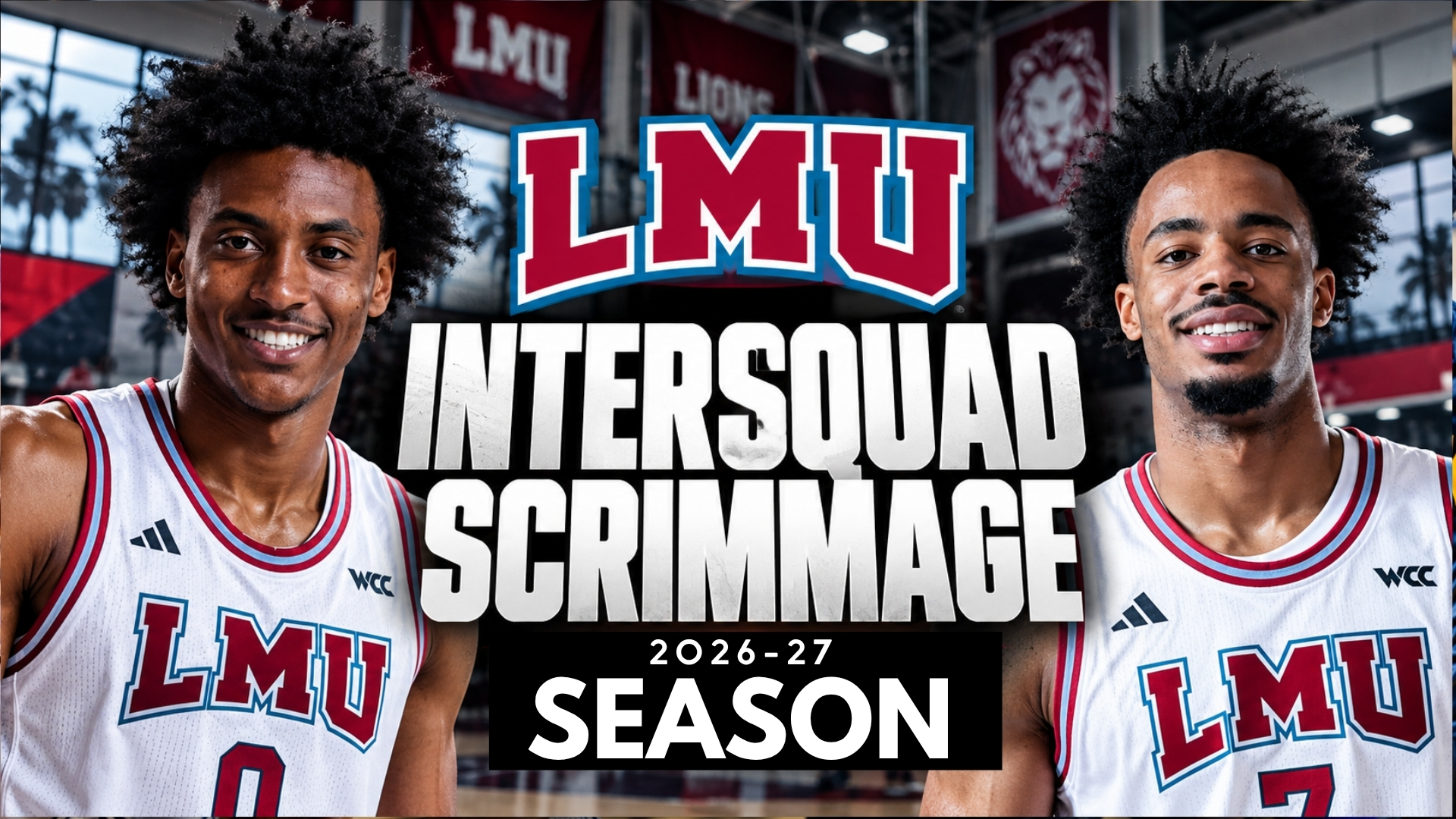
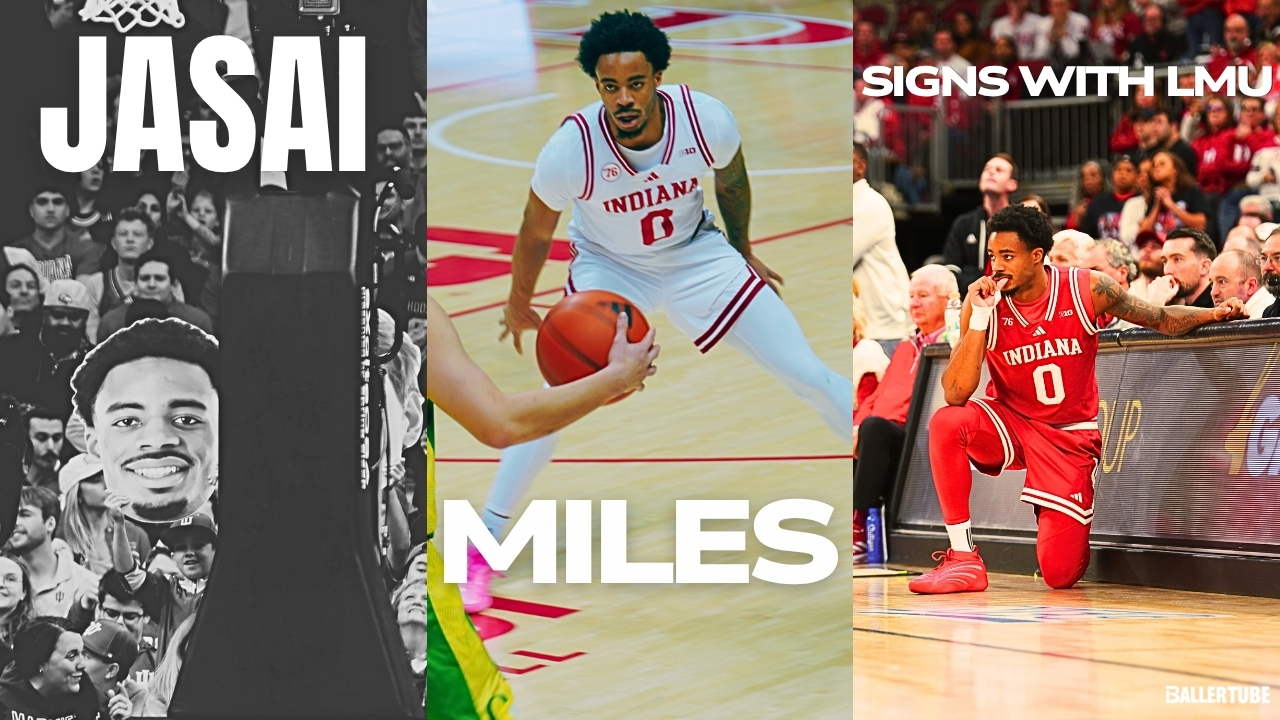
LMU Falls to Cal by One in Preseason Scrimmage, but Lions Show Promise Behind Jasai Miles and Mazi Mosley
Loyola Marymount University's new-look basketball team showed flashes of its potential against California, controlling much of the contest before falling by a single point in a preseason scrimmage. Despite the loss, the Lions demonstrated why their Power Four additions could make them a dangerous team in the West Coast Conference.
For Loyola Marymount, the biggest takeaway from its preseason matchup against Cal wasn't necessarily the final score. It was the opportunity to evaluate how a revamped roster featuring transfers Jasai Miles from Indiana and Mazi Mosley from LSU could compete against Power Four opposition.
LMU led for much of the game before Cal rallied to secure a one-point victory.
The Lions showed encouraging signs, particularly on the defensive end and on the glass, but their offensive execution revealed areas that will need improvement before conference play begins.
The biggest concern? Ball movement.
Too Many Forced Shots, Not Enough Offensive Movement
One of the most noticeable issues with LMU's offense was the tendency for the ball to stick in the hands of the first offensive player initiating a possession.
Rather than consistently moving the defense through passing, penetration, and kick-outs, the Lions occasionally settled into possessions featuring forced shots.
That approach can make an offense predictable, particularly against disciplined defensive teams.
LMU has the personnel to create advantages off the dribble, but those advantages become more dangerous when the ball moves quickly after the initial penetration.
Driving into the paint, forcing defensive rotations, and kicking the ball out to open shooters should create more efficient scoring opportunities.
The Lions don't necessarily need more isolation basketball. They need better offensive connectivity.
And with their collection of talented transfers, that improvement could significantly raise their ceiling.
Jasai Miles Makes His Presence Felt Defensively and on the Glass
Indiana transfer Jasai Miles provided one of the more encouraging individual performances for LMU.
Miles' defensive activity and rebounding stood out throughout the contest, giving the Lions a physical presence capable of impacting possessions without needing to dominate the basketball offensively.
His ability to pursue rebounds from the guard position could become one of LMU's biggest advantages in WCC competition.
Miles has the potential to establish himself among the conference's best rebounding guards if he continues demonstrating that level of effort and positioning.
Equally important is his defensive versatility.
For a team hoping to compete against the WCC's strongest programs, having a guard who can defend, rebound, and contribute in multiple areas is extremely valuable.
Miles demonstrated those qualities against Cal.
However, his most important offensive opportunity may have come on the game's final possession.
The Final Possession Told the Story
With LMU trailing by one point in the closing moments, the Lions had an opportunity to steal the victory.
Miles was left wide open in the corner.
But the basketball never found him.
It was a possession that summarized one of LMU's biggest offensive concerns throughout the scrimmage.
Against quality opponents, recognizing and delivering the ball to open shooters is essential.
The final possession illustrated why improved court awareness, spacing, and ball movement must become priorities.
LMU had an opportunity to generate a quality look, but the offense failed to capitalize on the defensive opening.
These are the types of details that often determine close games.
For a team with postseason ambitions, correcting those mistakes early could make a significant difference.
Mazi Mosley Adds Another Dimension to LMU's Backcourt
LSU transfer Mazi Mosley is another important piece of LMU's revamped roster.
The 6-foot-5 sophomore brings Power Four experience and additional size to the Lions' perimeter rotation.
Mosley's offensive development and ability to operate within LMU's system will be important as the season progresses.
With Miles and Mosley joining the program, LMU has upgraded its perimeter personnel and added players accustomed to competing against high-level opposition.
The challenge now is turning that individual talent into a cohesive offensive unit.
LMU needs its guards to recognize when to attack, when to move the ball, and when to create opportunities for teammates.
The Lions have enough talent to generate quality shots. Their success will depend on consistently finding them.
What Does This Mean for LMU's WCC Championship Aspirations?
Despite the one-point loss, there are reasons for optimism.
LMU competed with an ACC opponent and, based on the flow of the scrimmage, demonstrated an ability to control stretches of the game.
The defensive effort and rebounding from Miles were particularly encouraging.
But competing with a Power Four opponent in October is different from consistently winning conference games.
If LMU hopes to challenge the WCC's top programs, offensive execution must improve.
The Lions need more purposeful ball movement, better penetration-and-kick opportunities, and stronger late-game decision-making.
Those improvements are achievable, particularly for a team still developing chemistry with several new contributors.
A Promising Start, but Work Remains
Ultimately, LMU's preseason loss to Cal should be viewed as a useful early evaluation rather than a major setback.
The Lions showed they can compete against quality opposition.
Miles demonstrated the defensive toughness and rebounding ability that could make him one of the WCC's most impactful guards.
Mosley's arrival provides additional offensive potential.
And the roster has enough talent to make LMU an intriguing team entering the 2026–27 season.
The biggest question is whether the Lions can develop the offensive chemistry necessary to maximize those pieces.
LMU has the personnel to make noise in the WCC. Now it needs to make the ball move as effectively as its players can.
325

531

401
549
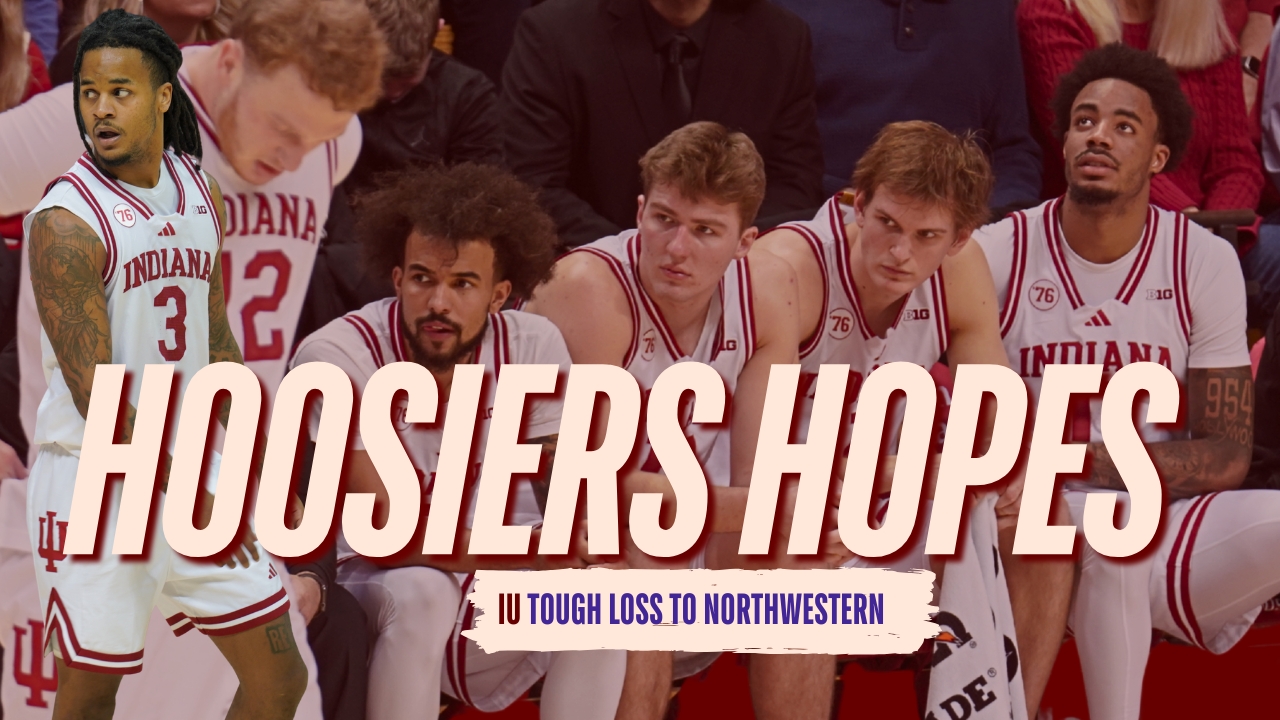
Indiana's Tourney Hopes Hanging by a Thread After Inexcusable Loss to Northwestern
The numbers should not have been possible. Indiana, playing at home inside Simon Skjodt Assembly Hall, led Northwestern by nine points at halftime. The Hoosiers were shooting 63 percent from the floor in the first half, had assisted on 14 of their 15 made baskets, and had the Big Ten's worst rebounding team on the ropes. Then the second half started, and everything that has plagued this program under first-year head coach Darian DeVries came flooding back.
Indiana fell to Northwestern 72-68 on Tuesday night, dropping to 17-11 on the season and 8-9 in Big Ten play. The loss was not just a bad result. It may be the moment that officially ended Indiana's first NCAA Tournament campaign since the 2022-23 season before it ever truly began.
The Drought That Told the Whole Story
Let's start with the statistic that defined this game, because it needs to be stated plainly and directly.
Indiana missed 11 consecutive field goal attempts spanning over nine minutes and 33 seconds of second-half game clock. Eleven straight missed shots. Nine minutes and thirty-three seconds without the ball going through the net from the floor. That is not a rough stretch. That is a program-level crisis playing out in real time on the biggest stage available.
Indiana was in the middle of a field goal drought that lasted 9:33 when Nick Martinelli struck with a go-ahead corner three-pointer with 2:59 remaining in the game. By the time Tayton Conerway finally ended the misery with a dunk, the game was essentially over. Northwestern had already seized control, and Martinelli had already delivered the knockout blows.
This was not a one-time occurrence. This is a pattern. The Hoosiers have squandered five second-half leads of nine or more points in the last two months. Two of those collapses resulted in losses that will likely define their season, including a blown 16-point lead against No. 10 Nebraska and now this disaster against a Northwestern team that entered the game with a 3-13 conference record and the Big Ten's worst rebounding margin.
Martinelli Did What Martinelli Does
To be fair about one piece of this game, Northwestern had a player who took over when it mattered. Nick Martinelli, the Big Ten's leading scorer, finished with 28 points and was held to just seven in the first half. The damage came entirely in the second half, where he erupted for 21 second-half points, one point off his season average, as Indiana went over nine minutes without a field goal and Northwestern inched closer to tying the game.
When Indiana desperately needed stops and buckets down the stretch, Martinelli scored nine consecutive Northwestern points to close the door. Northwestern got out to its biggest lead of the game, four at 65-61, and then Indiana's field goal drought ended with a Tayton Conerway lay-in. But it was too little, far too late.
A blown no-call on an attempted Tucker DeVries three-pointer with under five seconds left prevented the Hoosiers from having a chance to tie the game and Indiana lost at home 72-68. The missed call was infuriating, but Indiana had already left themselves in a position where a single blown whistle could end their season. That is on the coaching staff and the roster construction decisions that put them here.
Indiana is 25th in 3-point attempts/game but 341st in offensive rebounds/game.
— David Cobb (@DavidWCobb) February 25, 2026
Last night, IU had 1 second-chance point. ONE. Against Northwestern -- a bad rebounding team.
How do you get one second-chance point out of 18 misses from beyond the arc?https://t.co/yLHCSiDet3
The Conerway and Miles Problem: Talent Sitting While the Team Sinks
Here is where the real conversation needs to happen.
Tayton Conerway shot 6-for-6 from the field on Tuesday night. He finished with 14 points, three assists, a steal, and shot a perfect 100 percent from the floor including a three-pointer. He also ended the infamous 11-shot field goal drought with the game's biggest made basket. In the box score, every time Conerway touched the ball and had a look at the basket, the ball went in. Every single time.
His stats from Tuesday read like a cheat code: six field goal attempts, six makes, five of those shots coming inside the paint where he was unstoppable. And yet based on his assist count and foul trouble, it is clear his minutes were limited and tightly managed by a coaching staff that continues to go back to proven veterans regardless of how those veterans are performing in the moment.
Jasai Miles is the more glaring example. In a game Indiana had to have, Miles finished with three points on one shot attempt. One attempt. In a game that Indiana needed contributions from everyone on the roster, Miles was barely given a chance to do anything. There was a stretch earlier this season where it was reported that Indiana was undefeated when Miles played 10 or more meaningful minutes. Whether that exact record has shifted slightly as the season moved forward does not change the underlying logic. The data pointed directly at what Miles brings when he is allowed to play with freedom. The coaching staff looked at that information and continued doing things their way.
This is the core frustration with watching Indiana basketball in 2026. The coaching staff has identified a rotation and committed to it through results that clearly suggest a change is needed.
Enright, Dorn, and the One-Dimensional Problem
Conor Enright is a legitimate player. He runs the offense with a certain level of efficiency, he dishes the ball, and he holds things together in ways that do not always show up in box scores. Against Northwestern he finished with five assists. That is real value. But Enright also shot 0-for-1 from the field and finished with zero points while also committing three turnovers. In a game where Indiana went over nine minutes without scoring from the floor, having a player on the floor who brings absolutely nothing as a scoring threat is a luxury Indiana cannot afford. Defense can key in on four players when it knows the fifth one will never pull the trigger, and that is exactly what happens every time Enright is on the floor in crunch situations.
Nick Dorn is a different case. Dorn has had games this season where he has gotten hot from three-point range and looked like a legitimate offensive weapon. Those games are real and they happened. The problem is that the coaching staff has ridden those moments far past their expiration date. Against Northwestern, Dorn shot 2-for-7 and every single one of his seven attempts was a three-pointer. He does not create off the dribble. He does not get to the free throw line. He does not make plays in transition or put pressure on a defense in any way beyond standing in the corner and waiting for a catch-and-shoot opportunity. When that shot is not falling, and it was not falling against Northwestern with a critical 28.6 percent clip, he offers the offense essentially nothing. Yet the coaching staff trusts him with significant minutes in games that define Indiana's season.
Tucker DeVries shot 3-for-11 Tuesday night including 2-for-7 from three. He finished with 11 points and has been the featured option alongside Lamar Wilkerson all season. DeVries has ability and has shown it at times. But when both he and Wilkerson go cold simultaneously in the second half, Indiana has no other creators on the floor who have been given the freedom to bail the offense out.
That is a coaching decision. Not a talent decision.
The Path Forward Is Nearly Impossible
Indiana now sits at 17-11 overall and 8-9 in Big Ten play heading into a brutal finish. The defeat likely puts a fatal nail in Indiana's postseason hopes as they now need to beat Michigan State, Minnesota, and win at Ohio State to feel remotely confident in a bid. Michigan State comes to Bloomington ranked 13th in the country. Ohio State is fighting for their own tournament positioning. None of those games are wins Indiana can take for granted.
Lamar Wilkerson, whose career-best streak of six consecutive 20-point games was snapped after he went 0-for-9 from the floor in the second half, knows what this loss means for Indiana's tournament chances. "This hurt our resume," Wilkerson said, staring blankly at the floor of the Assembly Hall press room.
The résumé has been damaged beyond what three wins and a deep conference tournament run can realistically repair. Indiana needed this game. They had Northwestern exactly where they wanted them at halftime. And then the same second-half collapse that has haunted this team all year happened again.
The talent is on this roster to compete. Conerway proved that with a perfect shooting night in limited time. Miles has proven it in flashes all season. But a coaching staff that continues to go back to the same one-dimensional pieces during its worst offensive stretches is making this harder than it has to be.
Indiana's NCAA Tournament window in 2026 may have officially closed at around the 9-minute mark of the second half on Tuesday night, right around the time shot number seven of eleven straight misses clanged off the rim and Nick Martinelli started walking the ball up the court with that look in his eyes.
The Hoosiers built a 13-point lead and gave it all back. They have now done that five times in two months. At some point, the story stops being about bad luck and starts being about decisions.
Follow BallerTube for continuing coverage of Indiana basketball and recruiting news throughout the country.
1043

14-Year Rivalry Renewed, Old Problems Resurface: Indiana's Depth Crisis Exposed in Kentucky Collapse
14-Year Rivalry Renewed, Old Problems Resurface: Indiana's Depth Crisis Exposed in Kentucky Collapse
Hoosiers' 72-60 loss raises uncomfortable questions about bench utilization as second-half meltdown reveals paper-thin rotation
LEXINGTON, Ky. — The rivalry hadn't been played in 14 years. The result felt all too familiar.
Indiana watched a seven-point halftime lead evaporate into a 12-point defeat Saturday night at Rupp Arena, falling 72-60 to Kentucky in a second-half collapse that exposed glaring questions about coach Darian DeVries' rotation management and the Hoosiers' alarming lack of depth.
The two programs last met in regular-season play on December 10, 2011. More than 5,000 days later, the renewal of this border rivalry instead became a referendum on Indiana's ability to compete when adversity strikes — and whether DeVries trusts anyone beyond his top seven players.
The Stat That Says Everything
Let that sink in for a moment: Indiana had more turnovers (18) than field goals made (15).
Read it again. 18 turnovers. 15 made baskets. In a game at Rupp Arena against a Kentucky team that entered 6-4 with zero high-major wins.
That's not basketball. That's a train wreck.
Hoosiers at the half! pic.twitter.com/UejM3jrJAr
— Indiana Basketball (@IndianaMBB) December 14, 2025
The Second-Half Implosion
Indiana led 49-42 with 14:18 remaining when everything fell apart. A 17-2 Kentucky run flipped the script entirely, and the Hoosiers never recovered. By the time the dust settled, Indiana had shot just 27.3% in the second half with 12 turnovers, finishing with a season-low 34.1% from the field for the game.
The offensive collapse was stunning for a team that scored 113 points against Penn State just days earlier. Indiana made just 15 total field goals for the entire game and went 4-for-24 from three-point range, a season-low 16.7%.
Senior guard Tayton Conerway, who was solid in the first half with seven points and zero turnovers, committed four of Indiana's 12 second-half turnovers in just 11 minutes. Tucker DeVries and Lamar Wilkerson each scored 15 points to lead Indiana, but both struggled with efficiency as Kentucky's length disrupted every passing lane.
Multiple possessions saw Indiana ballhandlers leave their feet on drives with nowhere to go, leading to panicked, careless turnovers that fueled Kentucky's transition offense.
The Foul Trouble That Changed Everything
Wilkerson's fourth foul at the 17:58 mark proved catastrophic. Indiana led 42-35 at that moment. By the time Wilkerson reentered with 9:30 left, Kentucky had seized the lead and momentum.
What happened during those eight minutes exposed Indiana's most uncomfortable truth: When starters struggle or sit, there's virtually no one else.
Indiana was plagued by foul trouble throughout, with Reed Bailey and Lamar Wilkerson each picking up three fouls in the first half alone. Sam Alexis, Conor Enright, and Tayton Conerway were each called for two fouls apiece.
Yet DeVries rode the same tight rotation he's used all season. At one point during a crucial stretch, Kentucky scored on five straight Indiana possessions — all turnovers. The Hoosiers went from up seven to down three in barely over two minutes, and the game was effectively over.
KENTUCKY BEATS INDIANA FOR THEIR BEST WIN OF THE SEASON! 😼 pic.twitter.com/oifZeDJ4wO
— College Basketball Report (@CBKReport) December 14, 2025
The Depth Question No One Wants to Answer
Here's where it gets uncomfortable: Indiana brought in one of the nation's top-10 transfer portal classes according to 247Sports. The roster is filled with talent that, on paper, should provide options when the starters hit rough patches.
Junior guard Jasai Miles, a 6-foot-6 athletic wing who averaged 15.4 points and 6.8 rebounds per game at North Florida last season, has played just 8 minutes per game through 11 games. Against Kentucky, he logged one minute — zero points, zero rebounds, zero impact.
Miles was projected in preseason scouting reports as a potential "sparkplug off the bench" who could provide perimeter shooting, rebounding from the wing position, and defensive versatility. Instead, he's barely seen the floor, averaging 1.8 points per game — a precipitous drop from being the leading scorer on a team that attempted the highest volume of three-pointers in college basketball last season.
But Miles isn't the only one collecting splinters. Freshman center Andrej Acimovic, a 6-foot-10 Bosnian big man, hasn't cracked the rotation despite Indiana's well-documented rebounding struggles. Kentucky outscored Indiana 18-6 in second-chance points, grabbing 14 offensive rebounds — nine of which came in the second half.
The Indiana Daily Student noted in early November that "as the team struggled to secure defensive rebounds, that could signal a lack of faith in freshman center Andrej Acimovic" despite his size advantage.
Freshman forward Trent Sisley, who scored 23 points in an exhibition and was praised for his versatility at 6-foot-8, has seen inconsistent minutes. Aleksa Ristic and other depth pieces remain largely unused.
When Depth Becomes a Luxury You Can't Afford
The question isn't whether Indiana's starters are talented. They clearly are. The question is what happens when they aren't playing well — or when foul trouble, fatigue, or injury forces adjustments.
Saturday's answer was grim.
Indiana's carelessness with the ball was the fuel Kentucky needed. The Hoosiers coughed up 18 turnovers — a season-high — finishing with a turnover percentage of 26.9. Most of the mistakes were self-inflicted rather than forced by Kentucky's pressure.
Think about that. Indiana made 15 field goals and committed 18 turnovers. They literally gave the ball away more often than they scored with it.
Kentucky capitalized ruthlessly, scoring 23 points off Indiana's turnovers while committing just one turnover in the entire second half. The Wildcats won the points-off-turnovers battle 23-6, accounting for nearly the entire margin of victory.
When starters struggle this badly, the obvious solution is to inject energy and fresh legs from the bench. DeVries didn't — or perhaps couldn't, given his apparent lack of trust in his reserves.
"We like the way the roster came together," DeVries said after assembling the transfer portal class last spring. "We added a lot of quality shooters, which is a priority for us. We were also able to bring in good positional size and great depth."
That depth hasn't materialized on the court.
A Troubling Pattern Emerges
This isn't an isolated incident. Indiana is now 2-2 in high-major non-conference games, beating Marquette and Kansas State but losing to Louisville and Kentucky — games where they had opportunities to build resume wins but couldn't close.
The losses share common threads: second-half collapses, inability to handle length and athleticism, and a rotation that shrinks when the game tightens rather than expands to find answers.
The rivalry with Kentucky hadn't been renewed in regular season since 2011, offering DeVries a chance at an early-tenure, fanbase-convincing signature win. Instead, the Hoosiers watched it disintegrate, much like their second-half offense.
Indiana had a 7-point halftime lead. They had Kentucky on the ropes. Then they proceeded to commit 12 second-half turnovers while making just 15 total field goals for the entire 40 minutes.
That's not a depth problem. That's an execution crisis. But depth could have helped solve it — if DeVries trusted his bench enough to use it.
The Reality Check
Indiana entered the season with optimism after Darian DeVries' arrival from West Virginia, while previously at Drake, he built a program known for offensive efficiency and player development. The transfer portal haul was celebrated. The pieces seemed to fit.
But high-major basketball at Rupp Arena is different than mid-major success at Drake. And building depth isn't just about recruiting talented players — it's about trusting them enough to play them when games get tight.
Kentucky entered Saturday with a 6-4 record and hadn't beaten a high-major opponent all season. The Wildcats were ripe for the taking. Instead, they exposed every crack in Indiana's foundation.
With conference play approaching and the schedule about to intensify, Indiana faces an uncomfortable reality: Seven-man rotations work until they don't. And when they don't, you need a bench you trust.
Right now, DeVries doesn't seem to have one — or at least doesn't believe he does.
What Happens Next
The Hoosiers (8-3) return home Saturday to face Chicago State, a game that should offer a chance to experiment with extended rotations and rebuild confidence. Whether DeVries uses that opportunity to develop his bench or continues riding his starters into the ground will tell us everything about Indiana's ceiling this season.
More importantly, it will answer the question every Indiana fan is asking after Saturday's debacle: If your starters are committing more turnovers than they're making baskets, and you have a former 15-points-per-game scorer sitting on the bench watching helplessly, what exactly are you saving him for?
The rivalry with Kentucky is back after 14 years. The questions about Indiana's depth — and their refusal to use it — aren't new at all.
They're just getting louder.

1101
All Videos


There is no data in this list.
All news
LMU Falls to Cal by One in Preseason Scrimmage, but Lions Show Promise Behind Jasai Miles and Mazi Mosley
Loyola Marymount University's new-look basketball team showed flashes of its potential against California, controlling much of the contest before falling by a single point in a preseason scrimmage. Despite the loss, the Lions demonstrated why their Power Four additions could make them a dangerous team in the West Coast Conference.
For Loyola Marymount, the biggest takeaway from its preseason matchup against Cal wasn't necessarily the final score. It was the opportunity to evaluate how a revamped roster featuring transfers Jasai Miles from Indiana and Mazi Mosley from LSU could compete against Power Four opposition.
LMU led for much of the game before Cal rallied to secure a one-point victory.
The Lions showed encouraging signs, particularly on the defensive end and on the glass, but their offensive execution revealed areas that will need improvement before conference play begins.
The biggest concern? Ball movement.
Too Many Forced Shots, Not Enough Offensive Movement
One of the most noticeable issues with LMU's offense was the tendency for the ball to stick in the hands of the first offensive player initiating a possession.
Rather than consistently moving the defense through passing, penetration, and kick-outs, the Lions occasionally settled into possessions featuring forced shots.
That approach can make an offense predictable, particularly against disciplined defensive teams.
LMU has the personnel to create advantages off the dribble, but those advantages become more dangerous when the ball moves quickly after the initial penetration.
Driving into the paint, forcing defensive rotations, and kicking the ball out to open shooters should create more efficient scoring opportunities.
The Lions don't necessarily need more isolation basketball. They need better offensive connectivity.
And with their collection of talented transfers, that improvement could significantly raise their ceiling.
Jasai Miles Makes His Presence Felt Defensively and on the Glass
Indiana transfer Jasai Miles provided one of the more encouraging individual performances for LMU.
Miles' defensive activity and rebounding stood out throughout the contest, giving the Lions a physical presence capable of impacting possessions without needing to dominate the basketball offensively.
His ability to pursue rebounds from the guard position could become one of LMU's biggest advantages in WCC competition.
Miles has the potential to establish himself among the conference's best rebounding guards if he continues demonstrating that level of effort and positioning.
Equally important is his defensive versatility.
For a team hoping to compete against the WCC's strongest programs, having a guard who can defend, rebound, and contribute in multiple areas is extremely valuable.
Miles demonstrated those qualities against Cal.
However, his most important offensive opportunity may have come on the game's final possession.
The Final Possession Told the Story
With LMU trailing by one point in the closing moments, the Lions had an opportunity to steal the victory.
Miles was left wide open in the corner.
But the basketball never found him.
It was a possession that summarized one of LMU's biggest offensive concerns throughout the scrimmage.
Against quality opponents, recognizing and delivering the ball to open shooters is essential.
The final possession illustrated why improved court awareness, spacing, and ball movement must become priorities.
LMU had an opportunity to generate a quality look, but the offense failed to capitalize on the defensive opening.
These are the types of details that often determine close games.
For a team with postseason ambitions, correcting those mistakes early could make a significant difference.
Mazi Mosley Adds Another Dimension to LMU's Backcourt
LSU transfer Mazi Mosley is another important piece of LMU's revamped roster.
The 6-foot-5 sophomore brings Power Four experience and additional size to the Lions' perimeter rotation.
Mosley's offensive development and ability to operate within LMU's system will be important as the season progresses.
With Miles and Mosley joining the program, LMU has upgraded its perimeter personnel and added players accustomed to competing against high-level opposition.
The challenge now is turning that individual talent into a cohesive offensive unit.
LMU needs its guards to recognize when to attack, when to move the ball, and when to create opportunities for teammates.
The Lions have enough talent to generate quality shots. Their success will depend on consistently finding them.
What Does This Mean for LMU's WCC Championship Aspirations?
Despite the one-point loss, there are reasons for optimism.
LMU competed with an ACC opponent and, based on the flow of the scrimmage, demonstrated an ability to control stretches of the game.
The defensive effort and rebounding from Miles were particularly encouraging.
But competing with a Power Four opponent in October is different from consistently winning conference games.
If LMU hopes to challenge the WCC's top programs, offensive execution must improve.
The Lions need more purposeful ball movement, better penetration-and-kick opportunities, and stronger late-game decision-making.
Those improvements are achievable, particularly for a team still developing chemistry with several new contributors.
A Promising Start, but Work Remains
Ultimately, LMU's preseason loss to Cal should be viewed as a useful early evaluation rather than a major setback.
The Lions showed they can compete against quality opposition.
Miles demonstrated the defensive toughness and rebounding ability that could make him one of the WCC's most impactful guards.
Mosley's arrival provides additional offensive potential.
And the roster has enough talent to make LMU an intriguing team entering the 2026–27 season.
The biggest question is whether the Lions can develop the offensive chemistry necessary to maximize those pieces.
LMU has the personnel to make noise in the WCC. Now it needs to make the ball move as effectively as its players can.
325
531
401
Live now
Past streams
All Albums


Aubreigh Pumphrey-Solomon Visits Cousin Jasai Miles at Indiana University After EYBL Run 4 Roses
shoecircuit
853
SUPREME TEAM Pulls Off INSANE Comeback vs Indiana Basketball | Full Game Highlights
collegegametape
654
Jasai Miles Knocks Down Clutch Three in Big Win Over Purdue
collegegametape
929
Indiana is still a basketball school btw #hoosiers #collegebasketba...
Ballergram
736
The Hoosier were dunking everything tonight #indiana #hoosiers #baske...
Ballergram
1.2K
Jasai miles and one #and1 #fyp #strong #basketball
Ballergram
901

#indiana #hoosier #iubb #jasaimiles #mbb #northflorida #transfer
Ballergram
822

@jasaimiles is the swiss army knife that Darian Devries and Indiana n...
Ballergram
788

Jasai Miles put him on a poster #ncaabasketball #collegebasketball ...
Ballergram
1.1K

Jasai Miles took flight in Indiana’s 98-51 win over Alabama A&M #co...
Ballergram
1.3K

North Florida’s Stack Shallow Pick & Roll: Perfection in Motion
Ballergram
5.0K

Jasai Miles’ Top Plays vs. Georgia Southern
Ballerithm
3.0K
There is no data in this list.