






About
Your subscription greatly helps collegegametape develop his athletic career, and you have full access to his exclusive content.
0
collegegametape
122
collegegametape
112
collegegametape
141
collegegametape
564
collegegametape
558
collegegametape
593
1211
1386
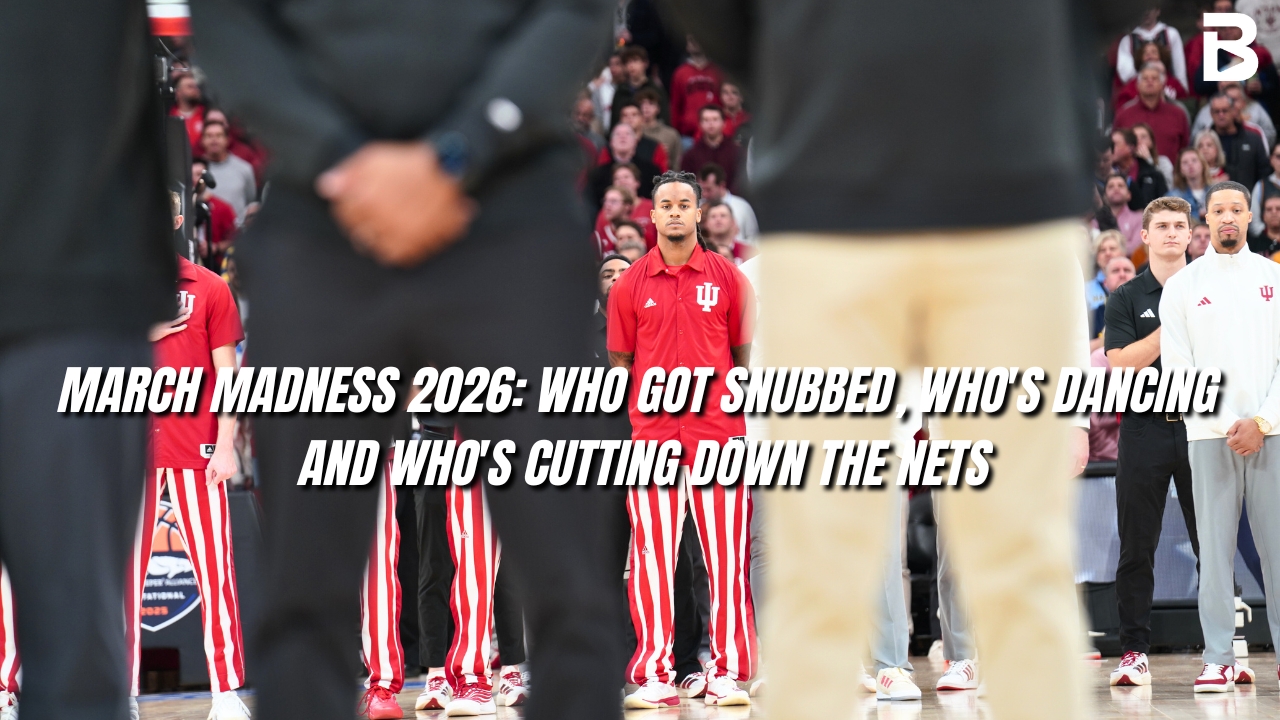
March Madness 2026: Who Got Snubbed, Who's Dancing, and Who's Cutting Down the Nets
The bracket is set. The Selection Sunday show is over. And just like every year, there are coaches losing sleep, fanbases furious, and 68 teams that got exactly what they wanted. The 2026 NCAA Tournament is here, and before the first whistle blows on Tuesday night in Dayton, we need to talk about the teams that got left out, the teams nobody is watching, and the ones with a real shot at Indianapolis.
Every year the committee leaves somebody at home who probably should have made the trip. This year was no different.
Auburn (17-16, SEC)
This one stings the most, and Auburn head coach Steven Pearl made sure everyone knew it. The Tigers played the third-toughest schedule in the country per KenPom. They beat Florida in Gainesville, which almost nobody did this season. They beat St. John's, Arkansas, and Kentucky. Pearl went to the podium in Nashville and laid out his case point by point, and honestly, it was a strong one. The problem is the committee has never given an at-large bid to a team with that many losses, and 17-16 just does not look good on paper regardless of strength of schedule. The Tigers lost to Tennessee in the SEC Tournament quarterfinals, which cost them their best chance at an automatic bid, and after that their fate was in the committee's hands. Those hands were not kind. Auburn stays home.
This one has a different story. The Hoosiers were safely in the field at one point. Then they lost six of their last seven games and watched everything unravel. By the time they got to the Big Ten Tournament, they needed to win and did not. The damage was done. Indiana had good wins over Purdue, UCLA, and Wisconsin, but finished 3-10 in Quadrant 1 games, and that number is the one that ended their season. It is now the first time Indiana has missed the NCAA Tournament since 2019, snapping a five-year streak.
Oklahoma (SEC)
Porter Moser's program has been fighting the same battle for years. The Sooners went on a nine-game losing streak in early February and fell below .500. They made a strong late push and reached the SEC Tournament quarterfinals, but the committee has a rule they do not put in writing: no team with that many losses. Oklahoma has now missed the tournament four out of five seasons under Moser.
San Diego State
Coming in with high expectations and returning eight players from their last tournament team, the Aztecs looked loaded on paper. The season just never clicked. They dropped a double-overtime home game to Troy in nonconference play, could not pile up enough Quadrant 1 wins, and despite finishing second in the Mountain West and reaching their conference title game, they ended up with only three Q1 wins. That is not enough when the bubble is as crowded as it was this year. Bid stealers like VCU out of the A-10 and Akron out of the MAC ate into the at-large spots and San Diego State paid the price.
New Mexico and Seton Hall
New Mexico's story was decided in seconds, by all accounts a tournament-week collapse that erased their at-large case. Seton Hall made a late run, nearly beat UConn, and pushed St. John's in the Big East Tournament, but 21-12 in a down Big East year was not enough. The Pirates are now two straight years out of the Dance.
Indiana and Belmont have reportedly decided to decline NIT invitations this year after missing out, which tells you everything about how these programs felt heading into Selection Sunday.
NEW: NCAA Tournament odds to win the National Championship via @BetMGM🏆
— On3 (@On3) March 16, 2026
Who you got? 🤔https://t.co/Hw1DGQGlk0 pic.twitter.com/JqKQHdV98y
The committee handed out the top seeds to Duke (East), Arizona (West), Michigan (Midwest), and defending champion Florida (South). Here is how each region breaks down.
East Region: Duke's Toughest Road
Duke enters as the No. 1 overall seed with a 32-2 record, fresh off winning the ACC Tournament. Cameron Boozer is the frontrunner for national player of the year and a projected top-3 NBA Draft pick. The Blue Devils look like a championship program. The problem is the East may be the toughest region. UConn is the 2 seed with Dan Hurley chasing a third title in four years. Michigan State is the 3 seed with Tom Izzo, who always finds another gear in March. Kansas is the 4 seed with Darryn Peterson, who many consider the likely No. 1 pick in the 2026 NBA Draft. And St. John's is the 5 seed, playing under Rick Pitino, who already has two national championships and is hungry for a third. That is four Hall of Fame or future Hall of Fame coaches in one bracket. Duke also enters with injury concerns, as junior guard Caleb Foster fractured his foot against North Carolina and center Patrick Ngongba II has been out with foot soreness. Scheyer says both could return during the tournament, but Duke will not be at full strength when they tip off against 16-seed Siena.
Midwest Region: Michigan's to Lose
Michigan spent all 19 weeks in the AP Top 25 this season and finished 31-3. The Wolverines went 19-1 in Big Ten play and lead the conference in scoring at 87.3 points per game while shooting over 50 percent from the field. Yaxel Lendeborg is the Big Ten Player of the Year. The frontcourt combination of Lendeborg, Morez Johnson Jr., and 7-foot-3 center Aday Mara is unlike anything in the country. Iowa State is the 2 seed and could be the biggest threat to Michigan in this region. The Cyclones have Joshua Jefferson, a 6-foot-9 forward averaging nearly 17 points, 7-plus rebounds, and almost 5 assists per game. When Michigan and Iowa State potentially meet in Chicago, it should be a war.
West Region: Arizona's Moment
Arizona won the Big 12 Tournament, finished 32-2, and has waited years for this. The Wildcats have not made it past the Sweet Sixteen in more than a decade, and if there is ever a roster built to finally break through, this might be it. Purdue is the 2 seed, and someone quietly dropped $100,000 on the Boilermakers to make the Final Four. Gonzaga is the 3 seed and always dangerous in March.
South Region: The Gauntlet
Florida enters as the defending national champion with a 26-7 record. The Gators have arguably the best frontcourt in the country with Thomas Haugh, Alex Condon, and Rueben Chinyelu. But the South is brutal. Houston is the 2 seed, with guard Kingston Flemings among the best freshmen in the country, alongside veterans Milos Uzan and Emanuel Sharp. Illinois is the 3 seed and runs the No. 1 offense in America by KenPom efficiency metrics, led by freshman guard Keaton Wagler who went from an unheralded recruit to one of the most electrifying scorers in college basketball. A potential Florida-Houston Elite Eight rematch of last year's national title game would be one of the best games of the tournament. A potential Houston-Illinois Sweet Sixteen is the matchup every NBA scout is circling on their calendar, as Flemings and Wagler are both projected top-10 picks.
Duke (+300 to +330 at major books)
The Blue Devils are the betting favorite at most sportsbooks, which makes sense. A 32-2 record, the best player in the country, an ACC championship, and Jon Scheyer's program peaking at the right time. The only real questions are the injuries and the gauntlet they face in the East. Duke has been the pre-tournament favorite ten times overall, tying North Carolina for the most such appearances since 1979. The pre-tournament favorite has won eight of the last 20 tournaments. History is on their side.
Michigan (+325 to +360)
More money has been bet on Michigan at DraftKings than any other team this season. The Wolverines have the most handle of any team at the book. Bettors believe. The numbers are almost impossible to argue with. Michigan, Duke, and Arizona combined account for about 37 percent of all championship money wagered on DraftKings this season. The Wolverines have the size, depth, experience, and coaching to win six straight games in three weeks. If they stay healthy, they are the team to beat.
Arizona (+390 to +425)
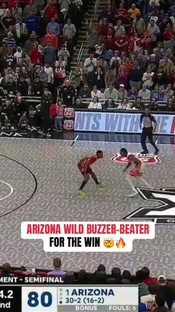
Arizona sat atop the national odds board as the top-ranked undefeated team before losing back-to-back games to Kansas and Texas Tech. Nine straight wins to close the season, including the Big 12 championship, rebuilt their momentum. This roster has the look of a team that can finally break through a decade of early exits.
Florida (+600 to +750)
The defending champion enters as a 1 seed in what many consider the toughest region. Florida beat Houston 65-63 last April in Indianapolis. They have the frontcourt, the defensive efficiency, and the tournament experience to do it again. The concern is they lost to Vanderbilt badly in the SEC Tournament and may now face that same Vanderbilt team in the Sweet 16 on Houston's home court.
Many people are not treating Houston as a sleeper because of how good they are. A No. 2 seed with a shot to play in their home building at Toyota Center in the Sweet 16, a stingy defense, and Flemings putting up the numbers of a future lottery pick. If the Cougars can survive the bracket and reach the Elite Eight, a Florida rematch is the tournament's most compelling storyline.
VCU (No. 11 seed, South Region)
VCU has won 16 of their last 17 games under first-year coach Phil Martelli Jr. They open against a North Carolina team without its best player, Caleb Wilson, who broke his thumb in February. The Tar Heels have gone 5-3 without Wilson but their ceiling dropped significantly when he went down. VCU is live for an upset.
Saint Louis (No. 9 seed, Midwest)
The Billikens shoot 27.2 threes per game and connect at 40.1 percent as a team. Four separate players shoot above 41 percent from three. In a tournament where one hot shooting night can end anyone's season, Saint Louis has the firepower to knock off a higher seed, and they may face a vulnerable Michigan team if things break right.
Akron (No. 12 seed, Midwest)
Three senior guards all shooting above 37 percent from three, in their third straight NCAA Tournament. John Groce has built a program that is built for March, and they draw a short-handed Texas Tech squad to open. Twelve seeds beat five seeds at a historic rate in this tournament. Akron is the pick.
This is one of the more wide-open fields in recent memory. You have a legitimate case for at least five or six teams cutting down the nets in Indianapolis on April 6. Duke has the best player and the best overall resume. Michigan has the best numbers in the country. Arizona has the most to prove. Florida has the experience of doing it once already.
The East Region is so deep that Duke might beat three or four tournament-caliber teams just to reach the Final Four. If they come out of that bracket healthy, they are probably the best story in college basketball this spring.
Cameron Boozer versus the world. That is the headline. Everything else is chaos.
First Four tips off Tuesday, March 17 in Dayton. The real madness starts Thursday. Get ready.
Follow BallerTube for recruiting coverage, athlete exposure, and the content that actually matters in the sports world.
379
March Madness Is Here, and It's Already Delivering Everything We Love About This Time of Year
It does not matter how many times you have been through it. When March comes, basketball changes. The stakes shift. The desperation is visible. Programs that spent four months building something play their final game with zero warning, and the ones still standing get to keep going. That is the deal.
This week delivered exactly what conference tournament week is supposed to deliver: a half-court heave that ended a season, a 12-win team ending a dynasty's grip on a regular-season title, first-time dancers from places nobody expected, coaches getting ejected in the final seconds, and the clock ticking toward Selection Sunday with bubble teams hanging on by a thread.
Here is everything that happened and why it matters.
The moment that announced this year's March arrived in a Patriot League quarterfinal between Lehigh and Holy Cross, two programs that finished at the bottom of their conference standings all season. What happened next had nothing to do with records.
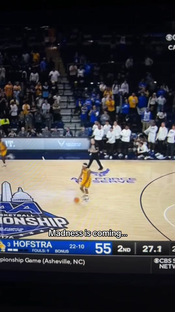
Holy Cross led 64-58 with 2:43 left when Tyler Boston hit two free throws, and things looked settled. But Lehigh scored the next six points to tie it, then took a two-point lead back and forth before Nasir Whitlock tied it again with a layup. Out of a timeout with 11 seconds left, Boston turned the ball over, giving Lehigh the ball with the length of the court to cover. Whitlock launched from half-court. It went in. Lehigh 69, Holy Cross 66. Season over.
That is the shot that opened conference tournament week for 2026. A program with nothing to lose, a kid at half court, a buzzer. That sequence plays out somewhere every year in March, and it never gets old.
The biggest story of the final weekend of the regular season did not come from a ranked matchup. It came from Milwaukee, where a Marquette team with 12 wins entered their home finale against the No. 4 team in the country.
Marquette's Ben Gold prevented UConn's Silas Demary Jr. from hitting a game-tying basket with 2 seconds remaining as the Golden Eagles upset the Huskies 68-62. Nigel James Jr. led Marquette with 19 points. UConn shot just 35.6% from the field and went 3-for-24 from three, an impossibly cold shooting night. The no-call on the final play angered UConn coach Danny Hurley enough to get him ejected, and Chase Ross iced the game with four free throws in the final second.
The loss handed St. John's the Big East regular-season title outright. UConn finished 27-4 and entered the Big East tournament as the No. 2 seed.
The optics here are everything. A team that went 7-13 in conference play sent the defending national champions into their tournament with a head coach ejected, a cold-shooting loss, and questions about seeding. That is exactly the kind of moment that makes March what it is.
Conference tournament week is where programs that spend most of the year flying under the radar get to write their most important chapters. Two of them did exactly that this week.
Tennessee State, coached by former Duke star Nolan Smith, defeated Morehead State 93-67 in the Ohio Valley Conference championship to punch their first NCAA Tournament ticket since 1994. That is 32 years. Three decades of players who put in work and did not get that moment. The team that finally made it did so behind leading scorer Aaron Nkrumah averaging 17.6 points per game, and they did it under a coach whose name carries its own weight in college basketball.
Queens University clinched their first ever NCAA Tournament appearance in their first year of eligibility, becoming only the fifth school since 1972 to achieve this feat after winning the ASUN championship. Their first year on the court at the Division I level and they are going to the Big Dance. That kind of thing does not happen, and then it does.
Northern Iowa also punched their ticket to the tournament for the first time since 2016, winning the Missouri Valley Conference title. The last time UNI went to the tournament, they stunned Texas on a half-court shot by Paul Jesperson. The kind of team that shows up with a chip and no fear.
Right now, with Selection Sunday set for March 15 on CBS, there is a group of teams that have spent the last week living and dying with every game result across the country.
Virginia Tech has been trying to talk its way into the bracket, keeping hope alive with wins over Wake Forest and Boston College while needing the ACC Tournament to complete the argument. George Mason shocked No. 25 Saint Louis in the regular-season finale, staying relevant. Wisconsin outlasted No. 15 Purdue 97-93 in a game that swung between both sides all night. Oklahoma beat Texas in overtime to keep their own tournament case breathing.
Indiana, which matters to this audience specifically, ended a four-game losing streak with the 77-47 blowout of Minnesota on Senior Night and is holding onto a bubble spot heading into the Big Ten Tournament. One more quality win could seal it.
Every result shifts something. Every loss potentially ends a season that took eight months to build. That is the weight that conference tournament week carries, and this year's version has been delivering from the jump.
The major conference tournaments tip off this week and run through next weekend, with the bracket reveal on March 15 capping the run-up to the actual tournament. The ACC starts Tuesday in Charlotte. The Big Ten closes on March 15 in Indianapolis. The Big East, SEC, Big 12, and every mid-major conference in between will have their own moments before the field is set.
The games that matter most over the next seven days are the ones where a team on the edge wins when it has to. One buzzer-beater can save a season. One cold shooting night in the wrong arena can end one that looked certain.
Nasir Whitlock already reminded everyone of that from half-court.
March Madness is not coming. It is here.
Selection Sunday is March 15 at 6 p.m. ET on CBS. The 2026 NCAA Tournament tips off March 17. Follow BallerTube for continued coverage throughout the postseason.

1622
Before the NBA: Lamar Wilkerson Bought His Mom a Cadillac on Senior Night and It Says Everything
The final buzzer sounded. Indiana 77, Minnesota 47. Senior Night at Simon Skjodt Assembly Hall was over, and the tears were starting to flow in Bloomington.
But Lamar Wilkerson was not done.
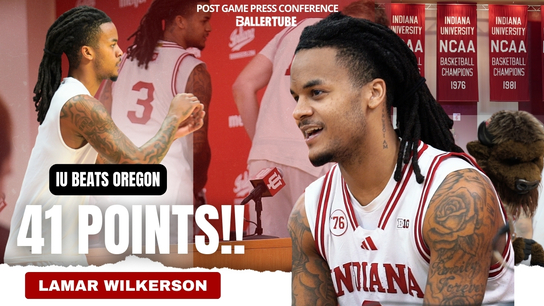
While his teammates and coaches processed the emotion of the night, Wilkerson quietly led his mother, Kizzy, to the parking garage. Waiting for her, bow on the hood, was a brand new Cadillac Escalade. Paid for with NIL dollars he earned by being one of the most electric scorers in college basketball this season.
Kizzy's reaction said everything words cannot.
"I did it out of love, man," Wilkerson said after the moment went viral. "I did it out of love."
That sentence carries a lot of weight when you know where Lamar Wilkerson came from.
He grew up in Ashdown, Arkansas, a small town in the southwest corner of the state where the population hovers just above four thousand people. He spent six years of his childhood living in a trailer. He learned to play basketball on a dirt road. Nothing about his path pointed toward the bright lights of a Big Ten arena.
He was not a high school recruit that schools were chasing. Nobody was putting him on a rankings list. After graduating from Ashdown High School, Wilkerson headed to Three Rivers College, a junior college in Poplar Bluff, Missouri, to prove he belonged at the next level. He averaged 16.7 points per game and shot over 40 percent from three, earning NJCAA All-America honorable mention recognition. That got him a Division I opportunity at Sam Houston State.
He did not arrive there as a star. He came off the bench his first year, averaging 7.4 points in 32 games. Patient. Working. Building.
By his junior season, Wilkerson had become one of the best guards in Conference USA, averaging 13.8 points and earning first-team all-conference honors. By his final year at Sam Houston, he was one of only 19 players in all of Division I to average 20 or more points per game. He shot 109 threes on 44.5 percent accuracy, a number that very few players at any level can match. He was one of just three players in the country to knock down at least 100 threes while shooting above 44 percent.
He entered the transfer portal that spring, and the entire country came calling.
“When she gave me life, she didn't have to love me, she didn't have to sacrifice her life to help me get to where I wanted to be.”
— Daniel Flick (@ByDanielFlick) March 5, 2026
Lamar Wilkerson views buying a 2026 Cadillac Escalade for his mon as a “small token” for all she’s done for him.#iubb:https://t.co/3js7uJmLHF
Here is where Wilkerson's story gets uncommon.
His first time in the portal, with schools offering serious money to pull him away from Sam Houston, he withdrew after less than two weeks. He went back. His Sam Houston coach, Chris Mudge, said Wilkerson was offered "a lot of money" by other programs. He passed on it because he was not finished with the people around him. He wanted to do something special for the university and for his teammates. He was not ready to leave his family behind for a check.
"He is valued and rooted in people," Mudge said.
That is a rare trait in modern college basketball. The portal era has reshaped everything, and there is nothing wrong with players seeking better opportunities and fair compensation. But Wilkerson's instinct was to look left and right before he looked up. That is who he is.
When he finally did enter the portal last spring, the decision came down to Indiana and Kentucky. The Wildcats wanted him badly. Coach Mark Pope made his pitch. But Kizzy stepped in during Wilkerson's visit to Lexington and told Pope that the Wilkersons are a praying family. They were not rushing anything.
Wilkerson chose Indiana. He chose to be part of building something, not just riding something that was already built.
"Hoosiers basketball is a big-time name," Wilkerson said at the time. "They haven't been where they wanted to be. I trust coach DeVries. And we could do this together. It's just gonna make my story better, his story better, and then Hoosier basketball will be back."
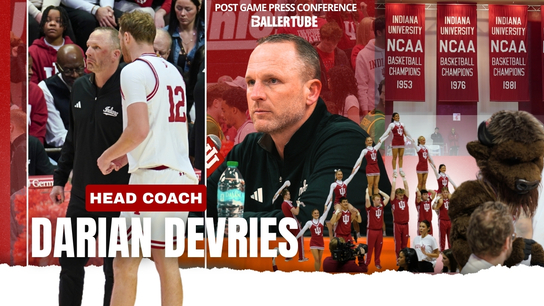
Indiana's first-year coach Darian DeVries leaned on Wilkerson immediately, and the sixth-year senior delivered. He became the Big Ten's second-leading scorer. He became only the second player in Indiana history to make 100 three-pointers in a single season, putting himself seven away from tying Steve Alford's all-time program record with games still to play. He averaged 21.3 points this season on 46 percent shooting and nearly 38 percent from deep.
On Senior Night, against a Minnesota defense that went zone to try to slow down the Hoosiers, Wilkerson went for 16 points on four made threes. He was second only to Sam Alexis, who put up a clinic of his own with 23 points. Indiana ended a four-game losing streak and kept its NCAA Tournament hopes alive with the 30-point victory.
DeVries said Wilkerson surprised him in ways beyond the scoring.
"His ability, at this level, to be able to get into the interior of the defense, get to his midrange, get a little more of his post-ups," the coach said. "He's been great."
NEW: Indiana guard Lamar Wilkerson gifted his mom a Cadillac Escalade after Senior Night with his NIL earnings❤️
— On3 NIL (@On3NIL) March 5, 2026
(via @ByDanielFlick)https://t.co/XmDse3PTNC pic.twitter.com/zmiTj5DxOG
The Cadillac Escalade in that parking garage is not a symbol of excess. It is a symbol of what college athletics can be when the system works the way it should.
Lamar Wilkerson grew up with nothing handed to him. His mother, Kizzy, was part of every step of this journey, from the trailer in Ashdown to the JUCO gym in Missouri to the recruiting trips where she pulled coaches aside and told them her family moves on faith and not on impulse. She was in that building on Senior Night watching her son play one of his best games of the year on the biggest stage of his college career.
And after the final buzzer, before the NBA, before the next chapter, before any of that, he walked her to the parking garage and showed her the car with the bow on the hood.
That is what this generation of athletes can do now. The NIL era is not perfect. The portal has created chaos across the sport. But there are moments like this one that remind you what was always possible when young people are given a fair shot at building something with the talent they worked to develop.
Wilkerson put it plainly himself back when he was coming out of high school with nobody watching: "Nothing was ever handed to me. I went JUCO, out of JUCO I went D1 and now we're here. So I've never had anything handed to me. And early in my life, my parents, my mom, my sisters, my siblings, they all showed me what hard work and dedication was. So it stuck with me."
He carried that. Through a dirt road in Arkansas. Through a junior college in Missouri. Through four years at Sam Houston State. Through one final season wearing candy stripes in front of 17,000 people.
And then he gave it back to the woman who helped him carry it the whole time.
Lamar Wilkerson is eligible for the 2026 NBA Draft. Indiana travels to Ohio State for the regular season finale Saturday at 5:30 p.m. ET on Big Ten Network.

587
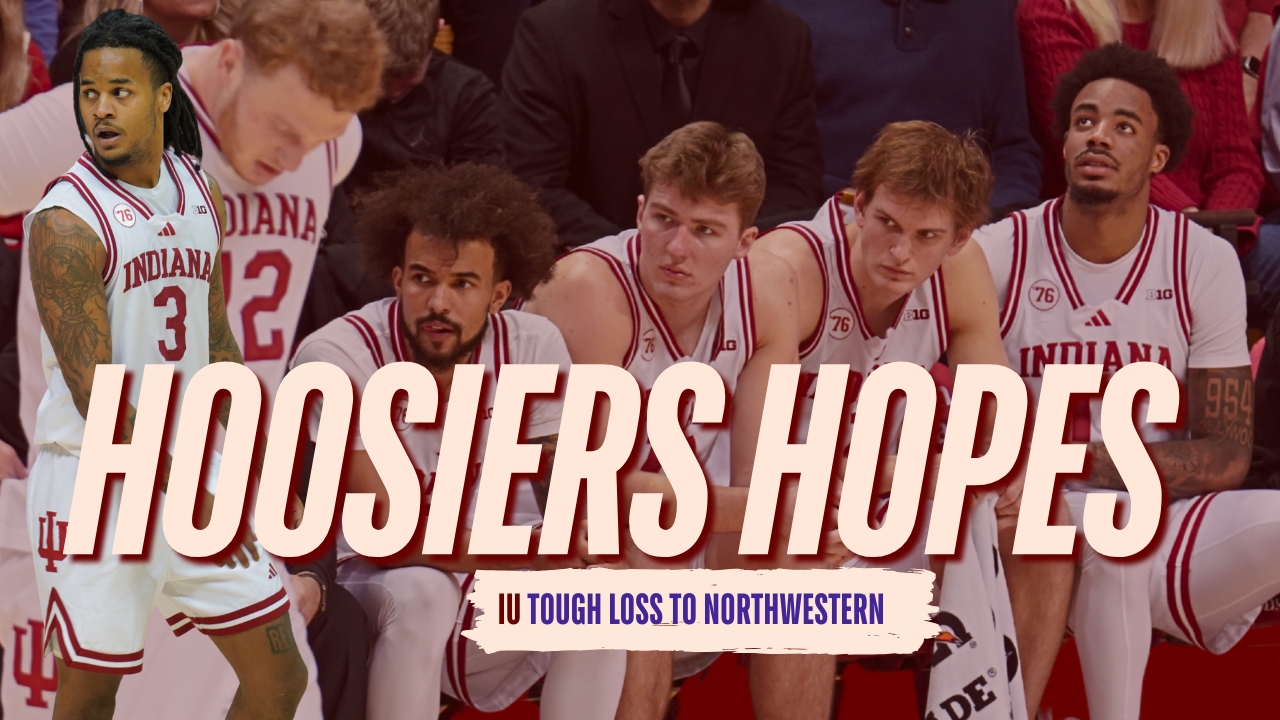
Indiana's Tourney Hopes Hanging by a Thread After Inexcusable Loss to Northwestern
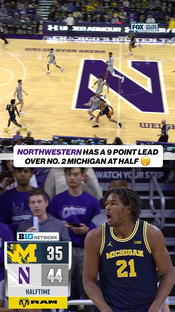
The numbers should not have been possible. Indiana, playing at home inside Simon Skjodt Assembly Hall, led Northwestern by nine points at halftime. The Hoosiers were shooting 63 percent from the floor in the first half, had assisted on 14 of their 15 made baskets, and had the Big Ten's worst rebounding team on the ropes. Then the second half started, and everything that has plagued this program under first-year head coach Darian DeVries came flooding back.
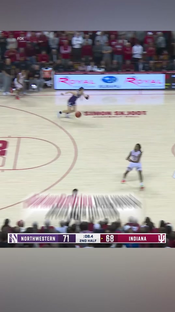
Indiana fell to Northwestern 72-68 on Tuesday night, dropping to 17-11 on the season and 8-9 in Big Ten play. The loss was not just a bad result. It may be the moment that officially ended Indiana's first NCAA Tournament campaign since the 2022-23 season before it ever truly began.
The Drought That Told the Whole Story
Let's start with the statistic that defined this game, because it needs to be stated plainly and directly.
Indiana missed 11 consecutive field goal attempts spanning over nine minutes and 33 seconds of second-half game clock. Eleven straight missed shots. Nine minutes and thirty-three seconds without the ball going through the net from the floor. That is not a rough stretch. That is a program-level crisis playing out in real time on the biggest stage available.
Indiana was in the middle of a field goal drought that lasted 9:33 when Nick Martinelli struck with a go-ahead corner three-pointer with 2:59 remaining in the game. By the time Tayton Conerway finally ended the misery with a dunk, the game was essentially over. Northwestern had already seized control, and Martinelli had already delivered the knockout blows.
This was not a one-time occurrence. This is a pattern. The Hoosiers have squandered five second-half leads of nine or more points in the last two months. Two of those collapses resulted in losses that will likely define their season, including a blown 16-point lead against No. 10 Nebraska and now this disaster against a Northwestern team that entered the game with a 3-13 conference record and the Big Ten's worst rebounding margin.
Martinelli Did What Martinelli Does
To be fair about one piece of this game, Northwestern had a player who took over when it mattered. Nick Martinelli, the Big Ten's leading scorer, finished with 28 points and was held to just seven in the first half. The damage came entirely in the second half, where he erupted for 21 second-half points, one point off his season average, as Indiana went over nine minutes without a field goal and Northwestern inched closer to tying the game.
When Indiana desperately needed stops and buckets down the stretch, Martinelli scored nine consecutive Northwestern points to close the door. Northwestern got out to its biggest lead of the game, four at 65-61, and then Indiana's field goal drought ended with a Tayton Conerway lay-in. But it was too little, far too late.
A blown no-call on an attempted Tucker DeVries three-pointer with under five seconds left prevented the Hoosiers from having a chance to tie the game and Indiana lost at home 72-68. The missed call was infuriating, but Indiana had already left themselves in a position where a single blown whistle could end their season. That is on the coaching staff and the roster construction decisions that put them here.
Indiana is 25th in 3-point attempts/game but 341st in offensive rebounds/game.
— David Cobb (@DavidWCobb) February 25, 2026
Last night, IU had 1 second-chance point. ONE. Against Northwestern -- a bad rebounding team.
How do you get one second-chance point out of 18 misses from beyond the arc?https://t.co/yLHCSiDet3
The Conerway and Miles Problem: Talent Sitting While the Team Sinks
Here is where the real conversation needs to happen.
Tayton Conerway shot 6-for-6 from the field on Tuesday night. He finished with 14 points, three assists, a steal, and shot a perfect 100 percent from the floor including a three-pointer. He also ended the infamous 11-shot field goal drought with the game's biggest made basket. In the box score, every time Conerway touched the ball and had a look at the basket, the ball went in. Every single time.
His stats from Tuesday read like a cheat code: six field goal attempts, six makes, five of those shots coming inside the paint where he was unstoppable. And yet based on his assist count and foul trouble, it is clear his minutes were limited and tightly managed by a coaching staff that continues to go back to proven veterans regardless of how those veterans are performing in the moment.
Jasai Miles is the more glaring example. In a game Indiana had to have, Miles finished with three points on one shot attempt. One attempt. In a game that Indiana needed contributions from everyone on the roster, Miles was barely given a chance to do anything. There was a stretch earlier this season where it was reported that Indiana was undefeated when Miles played 10 or more meaningful minutes. Whether that exact record has shifted slightly as the season moved forward does not change the underlying logic. The data pointed directly at what Miles brings when he is allowed to play with freedom. The coaching staff looked at that information and continued doing things their way.
This is the core frustration with watching Indiana basketball in 2026. The coaching staff has identified a rotation and committed to it through results that clearly suggest a change is needed.
Enright, Dorn, and the One-Dimensional Problem
Conor Enright is a legitimate player. He runs the offense with a certain level of efficiency, he dishes the ball, and he holds things together in ways that do not always show up in box scores. Against Northwestern he finished with five assists. That is real value. But Enright also shot 0-for-1 from the field and finished with zero points while also committing three turnovers. In a game where Indiana went over nine minutes without scoring from the floor, having a player on the floor who brings absolutely nothing as a scoring threat is a luxury Indiana cannot afford. Defense can key in on four players when it knows the fifth one will never pull the trigger, and that is exactly what happens every time Enright is on the floor in crunch situations.
Nick Dorn is a different case. Dorn has had games this season where he has gotten hot from three-point range and looked like a legitimate offensive weapon. Those games are real and they happened. The problem is that the coaching staff has ridden those moments far past their expiration date. Against Northwestern, Dorn shot 2-for-7 and every single one of his seven attempts was a three-pointer. He does not create off the dribble. He does not get to the free throw line. He does not make plays in transition or put pressure on a defense in any way beyond standing in the corner and waiting for a catch-and-shoot opportunity. When that shot is not falling, and it was not falling against Northwestern with a critical 28.6 percent clip, he offers the offense essentially nothing. Yet the coaching staff trusts him with significant minutes in games that define Indiana's season.
Tucker DeVries shot 3-for-11 Tuesday night including 2-for-7 from three. He finished with 11 points and has been the featured option alongside Lamar Wilkerson all season. DeVries has ability and has shown it at times. But when both he and Wilkerson go cold simultaneously in the second half, Indiana has no other creators on the floor who have been given the freedom to bail the offense out.
That is a coaching decision. Not a talent decision.
The Path Forward Is Nearly Impossible
Indiana now sits at 17-11 overall and 8-9 in Big Ten play heading into a brutal finish. The defeat likely puts a fatal nail in Indiana's postseason hopes as they now need to beat Michigan State, Minnesota, and win at Ohio State to feel remotely confident in a bid. Michigan State comes to Bloomington ranked 13th in the country. Ohio State is fighting for their own tournament positioning. None of those games are wins Indiana can take for granted.
Lamar Wilkerson, whose career-best streak of six consecutive 20-point games was snapped after he went 0-for-9 from the floor in the second half, knows what this loss means for Indiana's tournament chances. "This hurt our resume," Wilkerson said, staring blankly at the floor of the Assembly Hall press room.
The résumé has been damaged beyond what three wins and a deep conference tournament run can realistically repair. Indiana needed this game. They had Northwestern exactly where they wanted them at halftime. And then the same second-half collapse that has haunted this team all year happened again.
The talent is on this roster to compete. Conerway proved that with a perfect shooting night in limited time. Miles has proven it in flashes all season. But a coaching staff that continues to go back to the same one-dimensional pieces during its worst offensive stretches is making this harder than it has to be.
Indiana's NCAA Tournament window in 2026 may have officially closed at around the 9-minute mark of the second half on Tuesday night, right around the time shot number seven of eleven straight misses clanged off the rim and Nick Martinelli started walking the ball up the court with that look in his eyes.
The Hoosiers built a 13-point lead and gave it all back. They have now done that five times in two months. At some point, the story stops being about bad luck and starts being about decisions.
Follow BallerTube for continuing coverage of Indiana basketball and recruiting news throughout the country.
789
1211
1386
March Madness 2026: Who Got Snubbed, Who's Dancing, and Who's Cutting Down the Nets
The bracket is set. The Selection Sunday show is over. And just like every year, there are coaches losing sleep, fanbases furious, and 68 teams that got exactly what they wanted. The 2026 NCAA Tournament is here, and before the first whistle blows on Tuesday night in Dayton, we need to talk about the teams that got left out, the teams nobody is watching, and the ones with a real shot at Indianapolis.
Every year the committee leaves somebody at home who probably should have made the trip. This year was no different.
Auburn (17-16, SEC)
This one stings the most, and Auburn head coach Steven Pearl made sure everyone knew it. The Tigers played the third-toughest schedule in the country per KenPom. They beat Florida in Gainesville, which almost nobody did this season. They beat St. John's, Arkansas, and Kentucky. Pearl went to the podium in Nashville and laid out his case point by point, and honestly, it was a strong one. The problem is the committee has never given an at-large bid to a team with that many losses, and 17-16 just does not look good on paper regardless of strength of schedule. The Tigers lost to Tennessee in the SEC Tournament quarterfinals, which cost them their best chance at an automatic bid, and after that their fate was in the committee's hands. Those hands were not kind. Auburn stays home.
This one has a different story. The Hoosiers were safely in the field at one point. Then they lost six of their last seven games and watched everything unravel. By the time they got to the Big Ten Tournament, they needed to win and did not. The damage was done. Indiana had good wins over Purdue, UCLA, and Wisconsin, but finished 3-10 in Quadrant 1 games, and that number is the one that ended their season. It is now the first time Indiana has missed the NCAA Tournament since 2019, snapping a five-year streak.
Oklahoma (SEC)
Porter Moser's program has been fighting the same battle for years. The Sooners went on a nine-game losing streak in early February and fell below .500. They made a strong late push and reached the SEC Tournament quarterfinals, but the committee has a rule they do not put in writing: no team with that many losses. Oklahoma has now missed the tournament four out of five seasons under Moser.
San Diego State
Coming in with high expectations and returning eight players from their last tournament team, the Aztecs looked loaded on paper. The season just never clicked. They dropped a double-overtime home game to Troy in nonconference play, could not pile up enough Quadrant 1 wins, and despite finishing second in the Mountain West and reaching their conference title game, they ended up with only three Q1 wins. That is not enough when the bubble is as crowded as it was this year. Bid stealers like VCU out of the A-10 and Akron out of the MAC ate into the at-large spots and San Diego State paid the price.
New Mexico and Seton Hall
New Mexico's story was decided in seconds, by all accounts a tournament-week collapse that erased their at-large case. Seton Hall made a late run, nearly beat UConn, and pushed St. John's in the Big East Tournament, but 21-12 in a down Big East year was not enough. The Pirates are now two straight years out of the Dance.
Indiana and Belmont have reportedly decided to decline NIT invitations this year after missing out, which tells you everything about how these programs felt heading into Selection Sunday.
NEW: NCAA Tournament odds to win the National Championship via @BetMGM🏆
— On3 (@On3) March 16, 2026
Who you got? 🤔https://t.co/Hw1DGQGlk0 pic.twitter.com/JqKQHdV98y
The committee handed out the top seeds to Duke (East), Arizona (West), Michigan (Midwest), and defending champion Florida (South). Here is how each region breaks down.
East Region: Duke's Toughest Road
Duke enters as the No. 1 overall seed with a 32-2 record, fresh off winning the ACC Tournament. Cameron Boozer is the frontrunner for national player of the year and a projected top-3 NBA Draft pick. The Blue Devils look like a championship program. The problem is the East may be the toughest region. UConn is the 2 seed with Dan Hurley chasing a third title in four years. Michigan State is the 3 seed with Tom Izzo, who always finds another gear in March. Kansas is the 4 seed with Darryn Peterson, who many consider the likely No. 1 pick in the 2026 NBA Draft. And St. John's is the 5 seed, playing under Rick Pitino, who already has two national championships and is hungry for a third. That is four Hall of Fame or future Hall of Fame coaches in one bracket. Duke also enters with injury concerns, as junior guard Caleb Foster fractured his foot against North Carolina and center Patrick Ngongba II has been out with foot soreness. Scheyer says both could return during the tournament, but Duke will not be at full strength when they tip off against 16-seed Siena.
Midwest Region: Michigan's to Lose
Michigan spent all 19 weeks in the AP Top 25 this season and finished 31-3. The Wolverines went 19-1 in Big Ten play and lead the conference in scoring at 87.3 points per game while shooting over 50 percent from the field. Yaxel Lendeborg is the Big Ten Player of the Year. The frontcourt combination of Lendeborg, Morez Johnson Jr., and 7-foot-3 center Aday Mara is unlike anything in the country. Iowa State is the 2 seed and could be the biggest threat to Michigan in this region. The Cyclones have Joshua Jefferson, a 6-foot-9 forward averaging nearly 17 points, 7-plus rebounds, and almost 5 assists per game. When Michigan and Iowa State potentially meet in Chicago, it should be a war.
West Region: Arizona's Moment
Arizona won the Big 12 Tournament, finished 32-2, and has waited years for this. The Wildcats have not made it past the Sweet Sixteen in more than a decade, and if there is ever a roster built to finally break through, this might be it. Purdue is the 2 seed, and someone quietly dropped $100,000 on the Boilermakers to make the Final Four. Gonzaga is the 3 seed and always dangerous in March.
South Region: The Gauntlet
Florida enters as the defending national champion with a 26-7 record. The Gators have arguably the best frontcourt in the country with Thomas Haugh, Alex Condon, and Rueben Chinyelu. But the South is brutal. Houston is the 2 seed, with guard Kingston Flemings among the best freshmen in the country, alongside veterans Milos Uzan and Emanuel Sharp. Illinois is the 3 seed and runs the No. 1 offense in America by KenPom efficiency metrics, led by freshman guard Keaton Wagler who went from an unheralded recruit to one of the most electrifying scorers in college basketball. A potential Florida-Houston Elite Eight rematch of last year's national title game would be one of the best games of the tournament. A potential Houston-Illinois Sweet Sixteen is the matchup every NBA scout is circling on their calendar, as Flemings and Wagler are both projected top-10 picks.
Duke (+300 to +330 at major books)
The Blue Devils are the betting favorite at most sportsbooks, which makes sense. A 32-2 record, the best player in the country, an ACC championship, and Jon Scheyer's program peaking at the right time. The only real questions are the injuries and the gauntlet they face in the East. Duke has been the pre-tournament favorite ten times overall, tying North Carolina for the most such appearances since 1979. The pre-tournament favorite has won eight of the last 20 tournaments. History is on their side.
Michigan (+325 to +360)
More money has been bet on Michigan at DraftKings than any other team this season. The Wolverines have the most handle of any team at the book. Bettors believe. The numbers are almost impossible to argue with. Michigan, Duke, and Arizona combined account for about 37 percent of all championship money wagered on DraftKings this season. The Wolverines have the size, depth, experience, and coaching to win six straight games in three weeks. If they stay healthy, they are the team to beat.
Arizona (+390 to +425)
Arizona sat atop the national odds board as the top-ranked undefeated team before losing back-to-back games to Kansas and Texas Tech. Nine straight wins to close the season, including the Big 12 championship, rebuilt their momentum. This roster has the look of a team that can finally break through a decade of early exits.
Florida (+600 to +750)
The defending champion enters as a 1 seed in what many consider the toughest region. Florida beat Houston 65-63 last April in Indianapolis. They have the frontcourt, the defensive efficiency, and the tournament experience to do it again. The concern is they lost to Vanderbilt badly in the SEC Tournament and may now face that same Vanderbilt team in the Sweet 16 on Houston's home court.
Many people are not treating Houston as a sleeper because of how good they are. A No. 2 seed with a shot to play in their home building at Toyota Center in the Sweet 16, a stingy defense, and Flemings putting up the numbers of a future lottery pick. If the Cougars can survive the bracket and reach the Elite Eight, a Florida rematch is the tournament's most compelling storyline.
VCU (No. 11 seed, South Region)
VCU has won 16 of their last 17 games under first-year coach Phil Martelli Jr. They open against a North Carolina team without its best player, Caleb Wilson, who broke his thumb in February. The Tar Heels have gone 5-3 without Wilson but their ceiling dropped significantly when he went down. VCU is live for an upset.
Saint Louis (No. 9 seed, Midwest)
The Billikens shoot 27.2 threes per game and connect at 40.1 percent as a team. Four separate players shoot above 41 percent from three. In a tournament where one hot shooting night can end anyone's season, Saint Louis has the firepower to knock off a higher seed, and they may face a vulnerable Michigan team if things break right.
Akron (No. 12 seed, Midwest)
Three senior guards all shooting above 37 percent from three, in their third straight NCAA Tournament. John Groce has built a program that is built for March, and they draw a short-handed Texas Tech squad to open. Twelve seeds beat five seeds at a historic rate in this tournament. Akron is the pick.
This is one of the more wide-open fields in recent memory. You have a legitimate case for at least five or six teams cutting down the nets in Indianapolis on April 6. Duke has the best player and the best overall resume. Michigan has the best numbers in the country. Arizona has the most to prove. Florida has the experience of doing it once already.
The East Region is so deep that Duke might beat three or four tournament-caliber teams just to reach the Final Four. If they come out of that bracket healthy, they are probably the best story in college basketball this spring.
Cameron Boozer versus the world. That is the headline. Everything else is chaos.
First Four tips off Tuesday, March 17 in Dayton. The real madness starts Thursday. Get ready.
Follow BallerTube for recruiting coverage, athlete exposure, and the content that actually matters in the sports world.
379
collegegametape
122
collegegametape
112
collegegametape
141
collegegametape
564
collegegametape
558
collegegametape
593
collegegametape
922
collegegametape
548
collegegametape
766
collegegametape
575
collegegametape
583
collegegametape
669