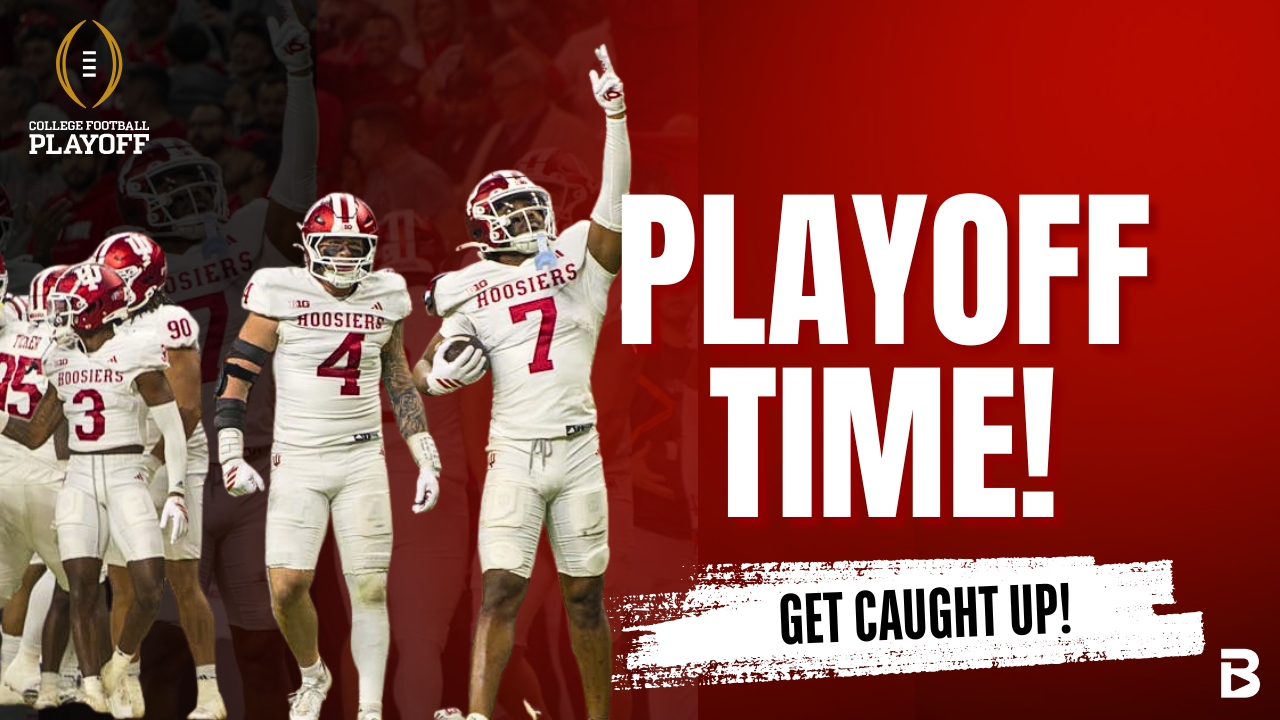
The 2025 college football regular season didn’t tiptoe to the finish line—it blew up on contact.
Conference titles flipped expectations, the first full 12-team College Football Playoff bracket is set, and one of the sport’s blue-blood brands, Notre Dame, responded to a playoff snub by doing something almost unheard of in the money era:
They said “no” to a bowl game.
For BallerTube news readers, here’s the full state of play: conference champions, who made the playoff, who got left standing outside the velvet rope, and why Notre Dame chose to shut it down rather than play in Orlando.
The Bracket Is Set: The 12 Teams Still Alive for a National Title
The 2025–26 College Football Playoff field is locked. Under the new format, 12 teams are in: the five highest-ranked conference champions plus seven at-large bids. The seeding looks like this:
-
Indiana (13–0, Big Ten champion)
-
Ohio State (12–1, Big Ten at-large)
-
Georgia (12–1, SEC champion)
-
Texas Tech (12–1, Big 12 champion)
-
Oregon (11–1, Big Ten at-large)
-
Ole Miss (11–1, SEC at-large)
-
Texas A&M (11–1, SEC at-large)
-
Oklahoma (10–2, SEC at-large)
-
Alabama (10–3, SEC at-large)
-
Miami (FL) (10–2, ACC at-large)
-
Tulane (11–2, American champion)
-
James Madison (12–1, Sun Belt champion)
Indiana, Georgia, Texas Tech, Tulane and James Madison are the five auto-bid conference champions. The rest fight their way in on résumé and reputation.
THE 12-TEAM CFP BRACKET IS SET‼️
— ESPN (@espn) December 7, 2025
Did your team make the cut? 🤔@CFBPlayoff pic.twitter.com/tkdTkChBrg
Conference Champions: Who Cashed In, Who Got Shut Out
Big Ten: Indiana Breaks Through
Indiana didn’t just have a cute season; they ran the table. The Hoosiers went 13–0 with a Big Ten title and jumped Ohio State for the No. 1 overall seed in the final rankings.
They’re the kind of story the 12-team format was supposed to unlock—programs that can actually finish.
SEC: Georgia Back on the Throne
In Atlanta, Georgia handled Alabama 28–7 in the SEC Championship Game, controlling the game from the jump and reasserting themselves as the league’s top dog.
That win locked Georgia into the No. 3 seed as a conference champion, while Alabama slid into the bracket as a 10–3 at-large.
Big 12: Texas Tech’s Payday Moment
Texas Tech routed BYU 34–7 for the Big 12 title, forcing multiple turnovers and turning a high-spend roster into a very real return on investment. It’s their first outright conference title since the 1950s and it came with a playoff bye as the No. 4 seed.
If you’re looking for the “we bet on ourselves and it worked” storyline, the Red Raiders are it.
American: Tulane Forces Their Way In
Tulane beat North Texas 34–21 in the American Conference title game, leaning on defense, turnovers and a 100+ yard rushing performance to grab the league crown and the final conference-champion playoff slot.
They land as the No. 11 seed, but in a 12-team field, that’s all you need—a ticket to the dance.
Sun Belt: James Madison Kicks the Door Down
James Madison capped an 8–0 Sun Belt run and an 11-game win streak by beating Troy 31–14 in the conference championship.
They end up as the No. 12 seed, but their inclusion is huge: the Sun Belt has a team in the CFP for the first time ever.
ACC: The Champion That Still Got Locked Out
The ACC is where the chaos really hit.
Duke, sitting on multiple losses, upset 10-win Virginia in the ACC Championship Game. That shock result blew up the league’s playoff path: Duke’s profile wasn’t strong enough to rise into the top five conference champions, and their ranking still trailed James Madison and Tulane.
The fallout:
-
The ACC champion stayed out of the playoff entirely.
-
Miami, which didn’t even make the title game, slid in instead as an at-large at No. 10 thanks in part to its head-to-head win over Notre Dame.
For a power conference to produce a champion that misses a 12-team playoff while a league mate sneaks in as an at-large is exactly the kind of structural weirdness that has coaches and ADs fuming.
Who’s In: Quick Read on the Main Contenders
-
Indiana (1) – Perfect record, Big Ten champs, and a Heisman finalist at QB. They’re the clear “can this be a new power?” storyline this winter.
-
Ohio State (2) – One loss, a top-two résumé, and the vibe of a team that still thinks it’s the big boss in the Big Ten even without the league title.
-
Georgia (3) – Title contenders until proven otherwise. Defense, depth, and another SEC crown say they’re not going anywhere.
-
Texas Tech (4) – The NIL era, weaponized. Money spent, trophy raised, playoff bye secured.
-
Oregon, Ole Miss, Texas A&M, Oklahoma, Alabama – The at-large core. All dangerous, all battle-tested, all capable of knocking out a higher seed in a one-game setting.
-
Miami (10) – The lightning rod. Their Week 1 win over Notre Dame turned into the single most emotionally charged tiebreaker of the season.
-
Tulane (11) & James Madison (12) – The outsiders who earned it the hard way. Conference titles, double-digit wins, and now a shot at the giants.
Who’s Out: The Snubs and Near-Misses
The most talked-about omission is obvious:
Notre Dame: 10 Wins, 0 Playoff, 0 Bowl
Notre Dame finished 10–2, riding a 10-game win streak after an 0–2 start that included losses to Miami and Texas A&M.
They reached the final weekend ranked No. 10, but when the committee slotted Miami at No. 10 and dropped Notre Dame to No. 11, the Irish landed just outside the playoff cut line, overtaken by the same Hurricanes that beat them in September.
In the new system, conference champions get the automatic paths. Notre Dame, still an independent in football, doesn’t have that safety net. This time, it cost them a spot in the bracket.
Other notable “out” teams include:
-
Texas (9–3) – A strong year, but not enough to elbow into the at-large mess.
-
Vanderbilt, Utah, USC, Arizona, Michigan – All top-25 teams, all watching the playoff from home like everyone else.
But none hit the emotional nerve quite like Notre Dame.
This video describes Notre Dame the past 40 years pic.twitter.com/RxPRqq3zIS
— MattBeGreat (@mattbegreatyt) December 7, 2025
Why Notre Dame Declined a Bowl Game
Once the Irish saw the final CFP rankings and realized they were on the wrong side of the line, the next shoe dropped:
Notre Dame declined an invitation to play in the Pop-Tarts Bowl in Orlando and announced it would not play in any bowl game this postseason.
The Stated Reasons
From reporting and public comments:
-
The team and administration felt a combination of shock and anger at being left out of the playoff despite a long winning streak and top-10 profile.
-
Notre Dame AD Pete Bevacqua described the mood as a “gut punch” and suggested that the process and the way rankings were rolled out had misled players into believing a playoff spot was likely if they just kept winning.
-
Practically, a bowl with no playoff stakes in front of a roster full of NFL decisions, portal questions and emotional burnout simply didn’t feel worth it to them.
The ACC Factor: A Relationship on Fire
This isn’t just about the bracket; it’s about politics.
Notre Dame plays five ACC opponents a year and is a full conference member in most other sports. But Bevacqua publicly blasted the ACC after the league’s official channels heavily promoted Miami’s résumé—especially that Week 1 win over Notre Dame—while the Irish were still lobbying for a playoff bid.
He accused the ACC of causing “permanent damage” to its relationship with Notre Dame by openly pushing a rival’s case over a longtime partner.
The short version:
-
Notre Dame felt snubbed by the committee.
-
They felt undercut by a conference they partially align with but don’t fully join.
-
They decided there was no upside in showing up for what would effectively be a consolation game.
In their place, Georgia Tech slides into the Pop-Tarts Bowl to face BYU.
What It All Means for the New 12-Team Era
This first fully operational 12-team playoff is already giving college football exactly what it promised—and exactly what everyone feared.
1. Conference Titles Still Matter, But Not Equally
-
Indiana, Georgia, Texas Tech, Tulane, James Madison all proved you can play your way in by winning your league.
-
The ACC, on the other hand, got burned: a messy title game produced a champion (Duke) with a weaker profile than multiple at-large contenders, and the league still sent Miami instead of its champion.
The message: the wrong champion at the wrong time can actually weaken a league’s playoff case.
2. Independence Comes With a Cost
Notre Dame’s situation is Exhibit A.
With auto-bids tied to conference titles, an independent has zero margin for error:
-
Lose to the wrong teams early (Miami, Texas A&M),
-
Watch those same teams benefit at your expense in December,
-
Then hope the committee likes your story more than somebody else’s.
This year, the Irish played that game and lost.
3. The “Respect” Economy Is Real
Bowl games are still money-makers, but they’re starting to look like optional content for programs that believe they’ve been wronged or are focused on next year.
Notre Dame just sent a message that a New Year’s-ish bowl without playoff stakes isn’t enough of a prize for a team that thinks it should be in the main bracket.
Expect more teams—especially those with coaching changes, opt-outs and playoff expectations—to make similar business decisions in the future.
4. Group-of-Six Teams Have a Real Path
Tulane and James Madison aren’t filler; they’re conference champs with double-digit wins and real résumés.
If they catch a big brand on a bad day in December, the entire bracket—and the power balance narrative—changes overnight.
What’s Next
From here:
-
The first-round playoff games kick off December 19–20 on campus sites, with matchups like Oklahoma vs. Alabama and Texas A&M vs. Miami already carrying storylines for days.
-
Quarterfinals move to the traditional New Year’s Six bowls, then semifinals, then the national title in Miami Gardens in January.
-
Notre Dame, meanwhile, will watch from home, already turning its energy toward a 2026 season where new rules will make top-12 ranked teams guaranteed playoff access and reduce the odds of a repeat snub.
For BallerTube readers, that’s the landscape:
-
Conference kings crowned.
-
Twelve teams still chasing a ring.
-
A blue-blood so angry it shut down its season on principle.
The playoff era just got bigger. It also just got messier—and that’s exactly why everybody’s still watching.