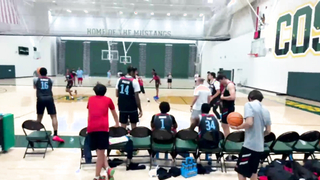
A growing shift toward athlete-owned media is quietly changing the way families approach recruiting, exposure, and opportunity in youth and high-school sports.
On a Saturday night in Chicago, a high-school guard finished one of the best games of his career.
Twenty-nine points.
Seven rebounds.
Four assists.
But by Sunday morning, the gym was empty, the lights were off, and the moment — like so many youth sports moments — had already passed.
Except this one hadn’t.
By the time his teammates were getting dressed for church, his performance had already been uploaded, tagged, archived, and watched by coaches hours away.
This is the new reality of youth athletics.
Games no longer end at the buzzer.
They continue online.
And that shift is quietly reshaping the sports economy from the bottom up.
For years, exposure meant showcases and tournament circuits. Parents and athletes learned geography mattered. If you didn’t play in the “right gym,” you simply didn’t get seen.
But today, visibility doesn’t depend on who’s sitting row three.
It depends on whether your performance exists online — permanently.
Platforms like BallerTube are emerging as digital homes for athletes looking to preserve and publish their careers, not just clips. Instead of scattering film across social media, athletes are building centralized profiles where games, highlights, stats, and updates live together — accessible at any time.
Highlight reels used to open doors.
— BallerPost (@BallerPost) December 10, 2025
Now they disappear just as fast.
Why today’s athletes need more than edits to get recruited:https://t.co/38iPluXf7g pic.twitter.com/eseJPu6VKC
“It’s not about who’s yelling loudest in the stands anymore,” says a Midwest college assistant coach who recruits three states heavily. “It’s about who I can find again when I’m back at my desk.”
That line matters.
Recruiting has become less about discovery and more about efficiency. Coaches are overwhelmed by clips that can’t be followed up on. Names without context. Links without structure.
What stops them from continuing isn’t talent.
It’s friction.
“Half the time I like a player, I just can’t get back to them,” the coach said. “There’s no system. It’s DMs, Google links, Instagram posts … I move on if it’s hard.”
That is why the platforms that simplify access — not just posting — are winning adoption.
Instead of chasing visibility, athletes are learning to manage it.
And that discipline has consequences.
Players who document consistently are getting revisited. Players who treat their profile like a living resume stay top-of-mind.
The rest disappear.
At the youth and high-school level, this digital shift has also changed how families invest.
Camps and circuits still matter. But so does infrastructure.
A strong showing now means nothing if it vanishes on Sunday night.
“You don’t realize how fast a season disappears,” one parent in Georgia said. “My son had his best year and I realized we had no organized proof of it anywhere.”
Across the country, more programs are mandating player pages. Some teams are building media departments. Others are allowing families to livestream games and archive footage instead of relying on third-party companies.
The idea isn’t production value.
It’s control.
Visibility is becoming part of development the same way strength training is.
And the athletes who understand that early are quietly gaining leverage.
The shift is subtle — but permanent.
Because when athletic careers move online, geography stops mattering.
And when access becomes universal, opportunity stops belonging only to the loudest gym.
It belongs to the athlete who stayed visible after the gym went dark.