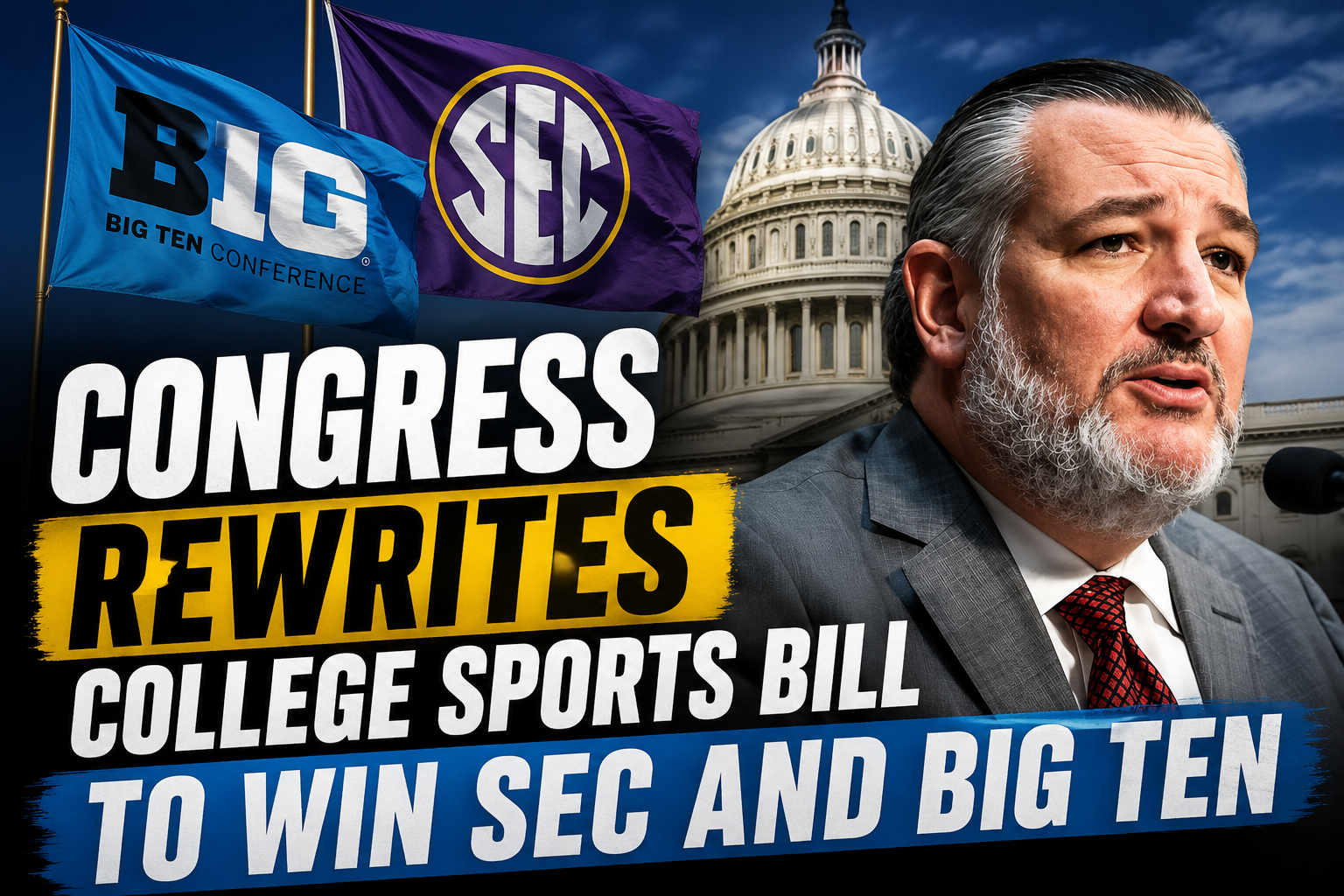
The Protect College Sports Act probably has the 60 Senate votes it needs. What it does not have is the SEC and the Big Ten, and that is the whole problem.
Sen. Eric Schmitt of Missouri said this week that supporters "probably have 60 votes" for the bill, the threshold to clear the upper chamber. He also called the next two weeks critical. Both things can be true, because the two conferences with the most money and the most leverage in college athletics still oppose the legislation as written.
Why the SEC and Big Ten Oppose the Protect College Sports Act
Leaders from both conferences have met directly with the bill's lead sponsors, Sen. Ted Cruz of Texas and Sen. Maria Cantwell of Washington, to negotiate changes. That is not a courtesy meeting. It is the two most powerful leagues in the sport telling the authors what it would take to get their names behind it.
SEC commissioner Greg Sankey has pointed at one section in particular, the provision letting athletes file civil lawsuits in certain cases. His argument is that the language as drafted would generate more litigation rather than less, which is the opposite of what a stability bill is supposed to do.
That objection matters more than it might sound. The entire pitch for federal legislation has been that it ends the cycle of lawsuits that has rewritten college sports over the past five years. A bill that invites new litigation is a harder sell to the schools it is meant to protect.
Sixty Votes Is the Floor, Not the Target
Sixty gets it through the Senate. Sponsors want more.
The stated goal is to pass with better than a two thirds majority, and the reason is entirely about the House. A bill that limps out of the Senate on a bare minimum arrives in the other chamber looking beatable. One that clears with a lopsided margin arrives looking inevitable. Senators are counting votes they do not strictly need because the margin is the message.
What Federal Rules Would Mean Below the College Level
Here is the part that gets lost in the Capitol Hill coverage. Whatever Congress settles on will not stay inside college athletics.
State high school associations have been writing their own NIL rules in a vacuum, which is why a high school athlete in Florida can sign an endorsement deal and one in Texas cannot. A federal framework at the college level becomes the template those associations reach for, and it becomes the standard agents cite when they walk into a high school gym. The rules being argued over in Washington will reach sophomores who have never heard of the Protect College Sports Act.
Yahoo Sports reported on the rewrite effort, and Sports Business Journal and the Associated Press both confirmed Schmitt's vote count.
Schmitt's two week window closes in early August. Watch whether Cruz and Cantwell produce revised language on the civil suit provision, because that is the specific sentence standing between this bill and SEC support. More NIL and college sports policy coverage on BallerTube.