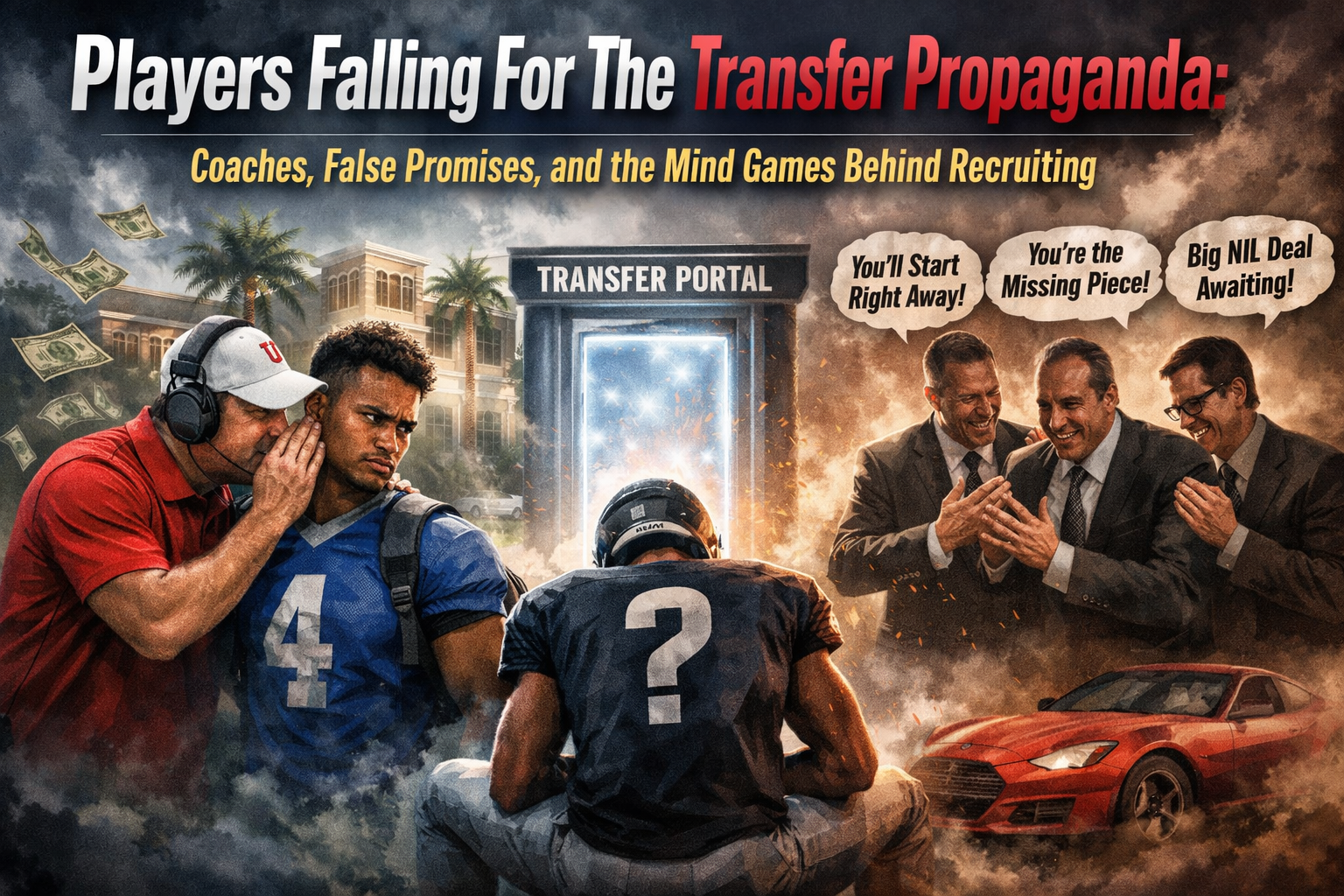
Let’s call it for what it is: transfer propaganda. Too many players are making life-changing judgments based on what they’re being advised, not what’s actually true.
The Sales Promo vs. The Facts
Every year, certain players enter the portal thinking a better situation is waiting. And every year, coaches are prepared with the same script:
- “You’ll fit perfectly in our system.”
- “We need you to come in and start right away.”
- “You’re exactly what we need.”
The words sound sweet to the ears. It feels good. And for a player looking for a new beginning, it’s easy to believe the script.
But here are the facts: coaches are recruiting for their own needs, not yours. That “perfect fit” speech can turn into a clogged depth roster overnight. That “starting role” speech can vanish after one bad game. That “system built for you” speech can unexpectedly change once another recruit commits.
Players aren’t being lied to outright all the time, but they’re absolutely not being told the full truth. Remember: a half-truth is still a lie.
👉 For an example of how transfer hype can explode, see The $10 Million QB: How Darian Mensah’s Transfer from Duke to Miami Created College Football’s Biggest NIL Controversy.
Mind Games in Recruiting
This is where things get serious. Recruiting today isn’t just about talent evaluation—it’s psychological. Coaches and programs understand how to sell a dream, especially to players who feel unnoticed, underused, or looked down on at their current school.
The coaches operate on the players’ emotions:
- Frustration (“You deserve better than where you are.”)
- Ego (“You’re too good to be on the bench at times.”)
- Urgency (“If you don’t commit now, this opportunity is gone.”)
That’s not recruiting—that’s persuasion.
Read carefully, young players. Especially those without powerful guidance, it’s easy to fall into the pitfall of thinking the next move is automatically the best move. Be guided by wisdom, not by feelings or what sounds good at the moment.
Players need to realize they are not the only ones being recruited. Someone else is. Another player is. And another player, etc.
Coaches are constantly misleading players. They might tell three different players: “You are what we need” for the same position. By the time those players arrive on campus, only one (or none) will get the opportunity they were promised.
The Portal Isn’t a Reset Button
Every move comes with consequences:
- Learning a new system
- Building trust with a new coaching staff
- Competing against players who were already recruited and developed there
- Risking your reputation as someone who can’t stay put
What happens if things don’t work out again? Now you’re labeled as a “frequent transfer,” which raises red flags for future programs.
Who Is Really Giving These Players Advice?
This is where the conversation needs to change direction.
Too often, decisions are being influenced by:
- People chasing exposure instead of development
- Third parties who profit from movement and hype
- Social media narratives that glorify transferring without showing the full picture
Players need real guidance—people who will tell them the truth, not just what they want to hear. Because not every situation demands leaving. Sometimes real growth comes from staying, developing, and earning your spot.
👉 Read more about transfer implications in The NCAA’s New Era: What the $2.8 Billion Settlement Means for Scholarships, Rosters, and Athlete Opportunity.
How Players Can Protect Themselves
If you’re considering entering the portal, you need to move with intelligence:
- Ask Specific Questions
Don’t settle for promises. Ask: - Who is currently in my position?
- Who else are you recruiting?
- What does my role look like realistically?
- Follow the Program Track Record
Look at what the program actually does—not what they say. How have transfers been used in the past? - Talk to Former Players
They’ll give you the real story, not the recruiting version. - Separate Emotion From Decision
Discouragement can lead to impulsive moves. Take time to evaluate your situation clearly.
The transfer portal isn’t the problem—the misuse of the transfer portal is the issue.
There are real opportunities out there, but they’re mixed in with false hope, manipulation, and sales speech that don’t always have the player’s best interest at heart.
At the end of the day, this may be rough, but no coach—high school or college—will care about your career more than you do.
So don’t fall for the propaganda. Make decisions based on truth, not false promises.