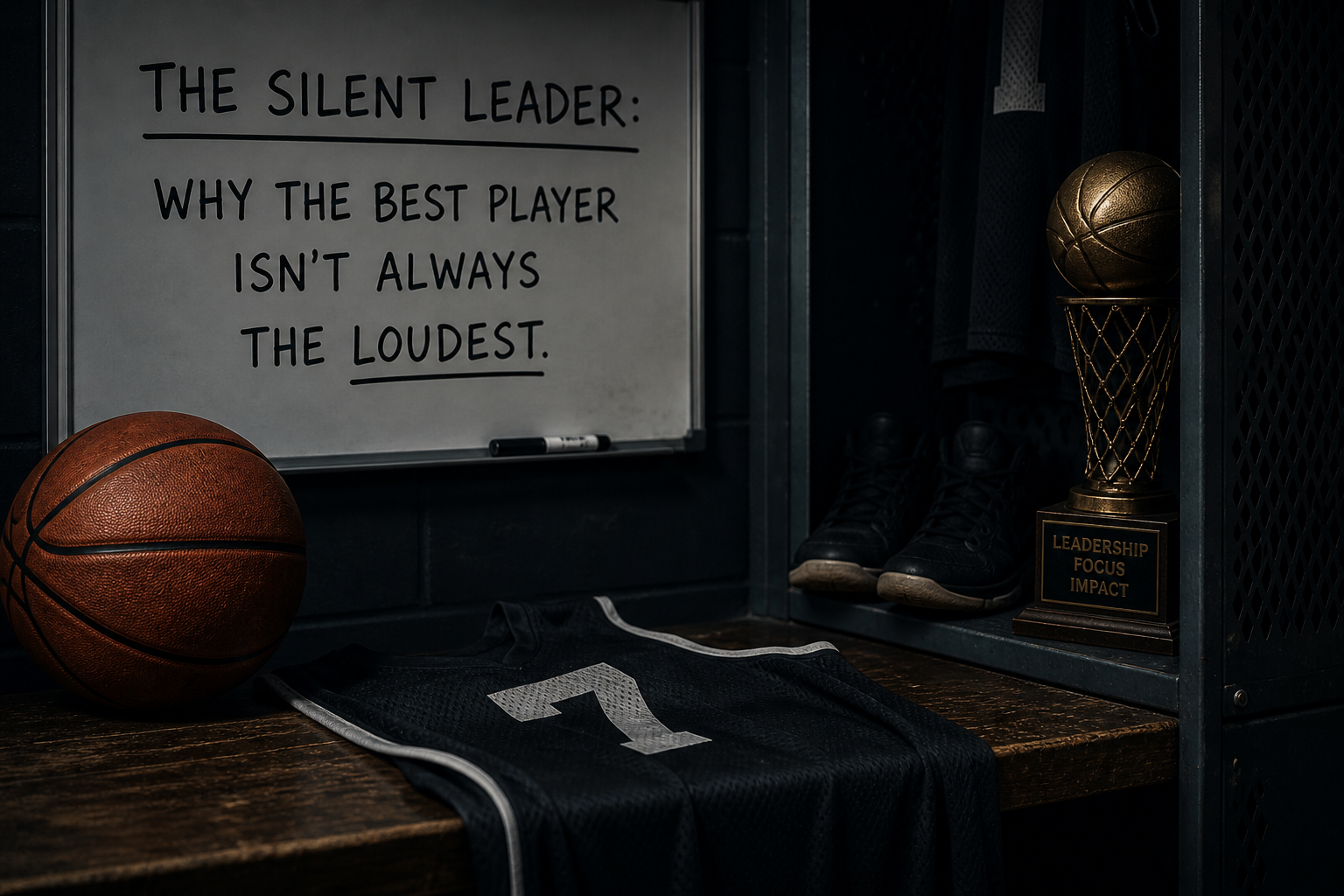
In sports, leadership is often imagined as something you can hear before you can see. It’s the voice in the huddle, the player clapping loudly after a mistake, the one shouting instructions or firing up teammates before a big moment. That image is everywhere—from youth leagues to the highest levels of competition.
But that version of leadership, while valuable, is only one type.
Some of the most impactful leaders in sports don’t say much at all. They don’t dominate conversations or command attention with their voice. Instead, they lead in a way that’s quieter, steadier, and often more powerful over time.
They let their actions do the talking.
And more often than not, people listen.
Leadership Isn’t One-Size-Fits-All
One of the biggest misconceptions in sports is that leadership has a specific look or personality. Many athletes grow up believing that if they aren’t naturally vocal or outgoing, they can’t be leaders. That idea holds a lot of players back.
The truth is, leadership isn’t about personality—it’s about impact.
Some leaders are loud and expressive. They bring energy, emotion, and urgency to every moment. Others are more reserved. They observe, process, and act with intention. Both styles can be effective, but neither guarantees real leadership on its own.
What separates true leaders from the rest isn’t how they sound—it’s how they show up.
Consistency, accountability, and trust matter far more than volume.
The Power of Showing, Not Telling
Silent leaders build their reputation through what they do every day.
They don’t need to remind people to work hard because they’re already doing it. They don’t need to demand focus because they live in it. They don’t need to call out effort because they embody it.
They’re the ones who arrive early and stay late.
They take practice seriously, even when no one is watching. They repeat drills until they get them right. They pay attention to details that others overlook.
Over time, that standard becomes contagious.
Teammates start to notice—not because they’re being told to, but because the example is undeniable. When someone consistently does things the right way, it naturally raises the level of everyone around them.
That’s influence in its purest form.
Trust Is Earned in Silence
There’s a unique kind of trust that comes with being a quiet leader.
When someone rarely speaks but consistently delivers, their words carry weight. They don’t waste energy on empty talk or emotional reactions. So when they do say something, it matters.
Teammates listen differently.
A quiet leader might not be the one speaking the most in a huddle, but when they offer a suggestion, encouragement, or correction, it lands. That’s because their credibility has already been built through their actions.
Trust isn’t created through speeches—it’s created through reliability.
Being dependable, focused, and composed day after day creates a foundation that words alone can’t match.
Emotional Control: The Hidden Advantage
One of the most overlooked aspects of leadership is emotional stability.
Sports are emotional by nature. There are highs, lows, momentum swings, pressure moments, and unexpected adversity. In those situations, how a player responds can affect the entire team.
Silent leaders tend to have a strong advantage here.
They don’t ride the emotional rollercoaster. They stay grounded.
When things go wrong, they don’t panic. When things go right, they don’t lose focus. They maintain a steady presence that helps the team stay locked in, regardless of the situation.
That calmness spreads.
When teammates see someone who isn’t shaken by mistakes or pressure, it creates a sense of security. It reinforces the idea that the moment isn’t too big and the situation is still manageable.
Composure becomes contagious.
And in tight games or high-stakes moments, that can make all the difference.
https://www.ballertube.com/news/453/the-giant-finds-his-stage-olivier-rioux-commits-to-uc-irvine-and-a-fresh-start/?tag_ids=40362,26051,30742,34339
Coaches Notice More Than You Think
While fans and spectators often gravitate toward vocal leaders, coaches tend to value something different.
They pay close attention to habits, body language, effort, and response to adversity. They notice who is locked in during practice, who listens, who adjusts, and who can be counted on in critical moments.
Silent leaders often stand out in these areas.
They don’t need constant reminders. They don’t require emotional management. They show up prepared, focused, and ready to execute the plan.
That reliability builds trust with coaches.
And when coaches trust a player, it leads to more opportunities—more minutes, more responsibility, and more influence within the team.
It’s not always flashy, but it’s effective.
Leading Without the Spotlight
One of the defining traits of silent leaders is that they don’t chase attention.
They’re not concerned with being recognized as the leader. They’re focused on doing what’s best for the team.
That mindset shows up in small but important ways.
They make the extra pass instead of forcing a shot. They rotate on defense without hesitation. They communicate when needed, but they don’t overdo it. They focus on execution rather than recognition.
These actions might not always appear in the box score, but they directly contribute to winning.
And teammates see it.
Over time, respect grows—not because of what’s said, but because of what’s consistently done.
The Influence of Consistency
Consistency is the foundation of silent leadership.
Anyone can have a good game. Anyone can bring energy for a moment. But doing the right things every day, regardless of circumstances, is what sets leaders apart.
Silent leaders don’t fluctuate based on mood or external factors.
They bring the same focus to practice as they do to games. They prepare the same way whether they’re starting or coming off the bench. They maintain their habits even when things aren’t going their way.
That consistency creates stability within a team.
When teammates know what to expect from someone, it builds confidence. It removes uncertainty and strengthens trust.
And in team sports, trust is everything.
Not Everyone Needs to Be Loud
There’s a common pressure in sports for players to “be more vocal.” While communication is important, it’s often misunderstood.
Being vocal doesn’t automatically make someone a leader.
In fact, forced leadership—where a player tries to act in a way that isn’t natural—can come across as inauthentic. Teammates can sense when something isn’t genuine.
Silent leaders don’t try to be someone they’re not.
They understand their strengths and lead in a way that aligns with who they are. When they speak, it’s intentional. When they act, it’s consistent.
That authenticity makes their leadership more effective.
Because people don’t just hear them—they believe them.
The Balance Between Voice and Action
It’s important to recognize that silent leadership doesn’t mean never speaking.
Communication still matters. Encouragement, accountability, and clarity are all essential parts of a team environment.
The difference is in how and when those things are delivered.
Silent leaders don’t rely on constant talking to prove their leadership. They choose their moments carefully. They speak when it adds value, not just to fill space.
And because their actions already align with their words, those moments carry more impact.
It’s a balance—one that prioritizes substance over noise.
https://www.cbssports.com/high-school/basketball/news/highlights-recap-tyran-stokes-scores-31-in-debut-at-rainier-beach-leads-nationally-ranked-vikings-to-81-60-win/
Developing Silent Leadership
For players who aren’t naturally vocal, this style of leadership can be empowering.
It shows that you don’t need to change your personality to lead effectively. You don’t need to be the loudest voice or the most outgoing presence.
Instead, focus on controllables:
Show up consistently.
Work hard when no one is watching.
Stay disciplined in your habits.
Respond to adversity with composure.
Support your teammates through your actions.
Over time, these behaviors build credibility.
And credibility leads to influence.
The Long-Term Impact
Silent leaders often have a lasting effect on teams, even after they’re gone.
Their habits become part of the culture. Their approach to preparation, effort, and composure sets a standard that others continue to follow.
They may not always get the most recognition, but their impact runs deep.
Teammates remember how they carried themselves. Coaches remember how reliable they were. Programs benefit from the example they set.
That’s the kind of leadership that extends beyond a single season.
Final Thought
Leadership isn’t about being the loudest person in the room.
It’s about being the most dependable.
It’s about showing up every day with the right mindset, putting in the work, and staying composed when it matters most.
Some leaders speak loudly.
Others don’t need to speak much at all.
Because everything they do already says enough.