In sports, injuries are part of the game. Every athlete knows the risk the moment they step on the court, field, or track. But knowing injuries can happen and actually living through one are two completely different experiences. For athletes, especially those who love competing more than anything, an injury can feel like the world suddenly stopping.
One day you are practicing, traveling, training, and preparing for games. The next day you are sitting on the bench, watching everyone else continue without you. The hardest part is not always the physical pain. Sometimes it is the mental battle that comes after.
A comeback after injury is more than healing bones, muscles, or ligaments. It is about rebuilding confidence, trust, discipline, and belief in yourself. It is about learning patience in a world that constantly pushes athletes to move fast. And for many players, the comeback becomes one of the defining moments of their career.
The Moment Everything Changes
Most injuries happen unexpectedly. Sometimes it is a bad landing after a rebound. Sometimes it is a cut during practice. Sometimes it is overuse after years of nonstop basketball. One second everything feels normal, and the next second an athlete realizes something is wrong.
For competitors, the immediate reaction is usually denial.
Athletes are conditioned to fight through pain. They are taught toughness from a young age. Many players try to walk it off or convince themselves it is not serious. But deep down, most athletes know when something feels different.
Then comes the diagnosis.
Hearing words like torn ACL, fractured ankle, torn Achilles, or season-ending injury can hit athletes harder than people realize. It is not just medical terminology. To athletes, it sounds like missed opportunities, lost momentum, and uncertainty.
For younger athletes, injuries can feel even heavier because so much pressure surrounds recruiting, scholarships, rankings, and exposure. Many players begin asking themselves difficult questions immediately.
Will coaches still recruit me?
Will I lose my spot?
Will I come back the same player?
Those thoughts can quickly become overwhelming.
The Mental Battle Nobody Sees
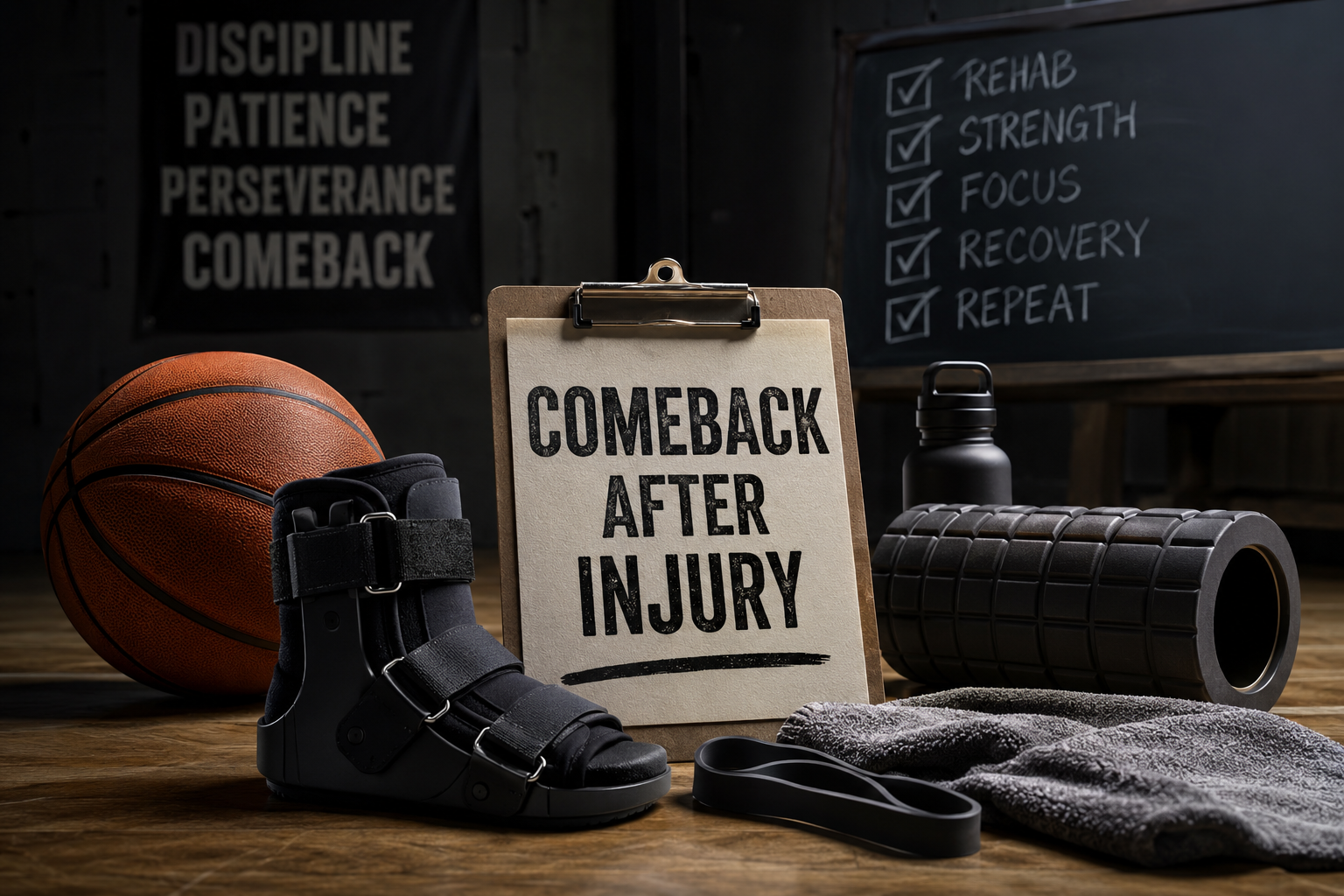
Fans usually only see the visible part of recovery. They see the brace, crutches, rehab videos, or return-to-play announcement. What they do not see are the lonely days behind the scenes.
Recovery can feel isolating.
Athletes spend years building routines around practices, workouts, team travel, and games. Once injured, those routines disappear overnight. Instead of competing with teammates, athletes suddenly spend hours in training rooms or physical therapy sessions.
That shift can affect confidence and identity.
For many players, sports are not just something they do. Basketball becomes who they are. When the game is temporarily taken away, some athletes struggle emotionally because they no longer feel connected to the version of themselves they recognize.
The mental side of recovery is often harder than the physical side.
There are days when progress feels slow. Days when pain returns unexpectedly. Days when athletes compare themselves to healthy teammates and wonder if they will ever regain their explosiveness or rhythm.
Fear also becomes real.
Even after doctors clear players physically, the mind can still hesitate. An athlete may fear cutting hard, landing awkwardly, or taking contact again. Confidence does not instantly return the moment rehab ends.
It has to be rebuilt over time.
Learning Patience
One of the biggest lessons injuries teach athletes is patience.
Most competitors hate slowing down. Athletes are wired to constantly improve, train, and compete. Recovery forces them to understand that healing cannot always be rushed.
That can be frustrating.
Some players try to return too early because they miss the game. Others feel pressure from outside voices asking when they will be back. Social media only adds to that pressure because athletes constantly see everyone else competing while they sit out.
But successful recoveries usually happen when athletes commit fully to the process instead of focusing only on the return date.
Every rehab session matters.
Every stretch matters.
Every strengthening exercise matters.
The athletes who embrace the process instead of fighting it often come back mentally stronger than before.
Patience does not mean weakness. It means understanding long-term success matters more than temporary frustration.
Finding Motivation Again
During recovery, motivation can disappear quickly if athletes are not careful.
It is easy to stay motivated when games are happening every week and teammates are cheering you on. It becomes harder when progress feels repetitive and invisible.
Rehab is not glamorous.
Most recovery days are quiet and repetitive. Athletes repeat the same exercises over and over again hoping for small improvements. There are no crowds applauding during physical therapy sessions. No highlight clips. No recognition.
That is why self-discipline becomes critical.
The athletes who successfully return are usually the ones who learn how to motivate themselves internally. They stop focusing only on the final comeback and begin celebrating small victories.
Walking without pain.
Jumping again.
Running again.
Cutting again.
Each small step matters because recovery is built one day at a time.
Support systems also become important during this stage. Family members, coaches, trainers, teammates, and friends can help athletes stay mentally locked in during difficult periods. Sometimes a simple conversation or encouragement can completely shift an athlete’s mindset.
https://www.ballertube.com/news/487/basketball-bloodlines-2028-guard-tj-laing-ariche-is-next-up/?tag_ids=27315,40500,40499,24564,40498,24560,191,40497,38465,40496,40495,40494,22439,40493,40492
Watching the Game From the Sideline
Being unable to play changes how athletes see the game.
When injured players sit on the bench, they often begin noticing details they missed before. They study spacing, leadership, communication, and decision-making from a different perspective.
Some athletes actually grow mentally during injury recovery because they are forced to slow down and observe.
The game becomes less about personal stats and more about understanding the overall flow of basketball.
Injured athletes also gain appreciation for things they once took for granted.
Warmups.
Practices.
Team bus rides.
Simple movement.
Competing.
Sometimes athletes do not realize how much they love the game until they temporarily lose access to it.
That appreciation can completely change their mindset once they return.
The Fear of Returning
Returning to competition is exciting, but it is also terrifying for many athletes.
People often assume athletes feel only happiness when they return after injury. In reality, many players experience nervousness and fear during their first games back.
They wonder if their body will respond correctly.
They question whether they still move the same.
They worry about reinjury.
The first hard cut or aggressive contact can become a major mental hurdle. Even elite athletes deal with those emotions.
Confidence after injury is not automatic. It grows through repetition and trust.
Athletes slowly rebuild belief in their bodies every practice and every game. Over time, hesitation fades and instincts return naturally.
Some players come back stronger physically because rehab forces them to improve areas they previously ignored. Others return smarter because they now understand the importance of recovery, rest, flexibility, and body maintenance.
In many cases, the comeback creates a more complete athlete.
Growth Beyond Basketball
Injuries can teach life lessons that extend far beyond sports.
Athletes who experience setbacks often develop stronger resilience, discipline, and emotional maturity. They learn how to handle adversity, disappointment, and uncertainty in ways many people never experience at a young age.
That growth matters.
Basketball careers eventually end for everyone, but the mindset developed through difficult moments lasts forever.
Players who overcome injuries often become stronger leaders because they understand struggle firsthand. They become more supportive teammates. They gain empathy for others going through challenges.
Sometimes the injury changes an athlete’s perspective completely.
Instead of taking opportunities for granted, they begin approaching each game with gratitude and purpose.
The Role of Coaches and Support Systems
The people surrounding injured athletes play a major role in recovery.
Good coaches understand injured players still need to feel connected to the team. Even when athletes cannot compete physically, they should still feel valued emotionally.
Some coaches unintentionally isolate injured players by focusing only on healthy athletes. Others intentionally involve injured players in film sessions, leadership roles, and team communication.
That support matters more than people realize.
Parents also play a critical role during recovery, especially with younger athletes. Sometimes athletes already place enough pressure on themselves. They do not need additional stress from outside expectations.
The best support systems provide encouragement without rushing the process.
Trainers and medical staff are equally important because trust between athlete and recovery team helps build confidence. Honest communication creates better outcomes than unrealistic promises.
Recovery is rarely linear. There are setbacks, frustrations, and difficult days. Strong support systems help athletes navigate those moments.
Social Media Pressure
Modern athletes face additional pressure because of social media.
Today, injuries are publicly discussed immediately. Fans, coaches, scouts, and followers constantly ask questions about recovery timelines and return dates.
That attention can become mentally exhausting.
Some athletes feel pressure to post rehab videos constantly to prove they are working hard. Others compare their recovery progress to other athletes online.
Comparison during recovery can be dangerous.
Every injury is different.
Every body heals differently.
The focus should remain on long-term health instead of social media perception.
Athletes who stay mentally grounded during recovery often handle the process better than those consumed by outside noise.
https://www.cbssports.com/womens-college-basketball/news/oliviyah-edwards-commits-south-carolina/
The Best Comebacks Are Built Quietly
Most great comeback stories are not dramatic overnight transformations.
They are built quietly.
Early mornings in rehab.
Late nights icing sore muscles.
Hours spent strengthening weak areas.
Moments of frustration nobody else sees.
The public usually only notices the final result when athletes return to the spotlight. But the real comeback happens long before the first game back.
It happens during the days athletes choose not to quit.
That is what makes comeback stories powerful.
They reveal character.
Talent may open doors in sports, but resilience determines how athletes respond when adversity hits.
Redefining Success
Sometimes athletes return exactly the same after injury. Sometimes they do not.
But success after injury should not always be measured only by statistics or athleticism.
For some athletes, success means simply returning to the game they love.
For others, it means overcoming fear.
Some athletes discover new roles, new strengths, or new leadership abilities during recovery.
An injury may temporarily interrupt a career, but it does not automatically define the future.
Many athletes eventually realize their toughest moments helped shape them into stronger competitors and stronger people.
Conclusion
A comeback after injury is one of the hardest journeys in sports. It tests athletes physically, mentally, and emotionally. Recovery requires patience, discipline, trust, and resilience long before results become visible.
The process is rarely easy.
There are setbacks, frustrations, doubts, and fears that many people never see. But there is also growth that comes from adversity. Athletes often discover strength within themselves they did not know existed until the game was taken away temporarily.
Every comeback story carries meaning because it represents perseverance.
It represents choosing to continue despite pain, uncertainty, and obstacles.
And when athletes finally return to the court, field, or competition floor, the moment means more because they understand exactly what it took to get there.
Sometimes the comeback is bigger than the sport itself.
Sometimes it becomes proof that setbacks do not have to be endings.