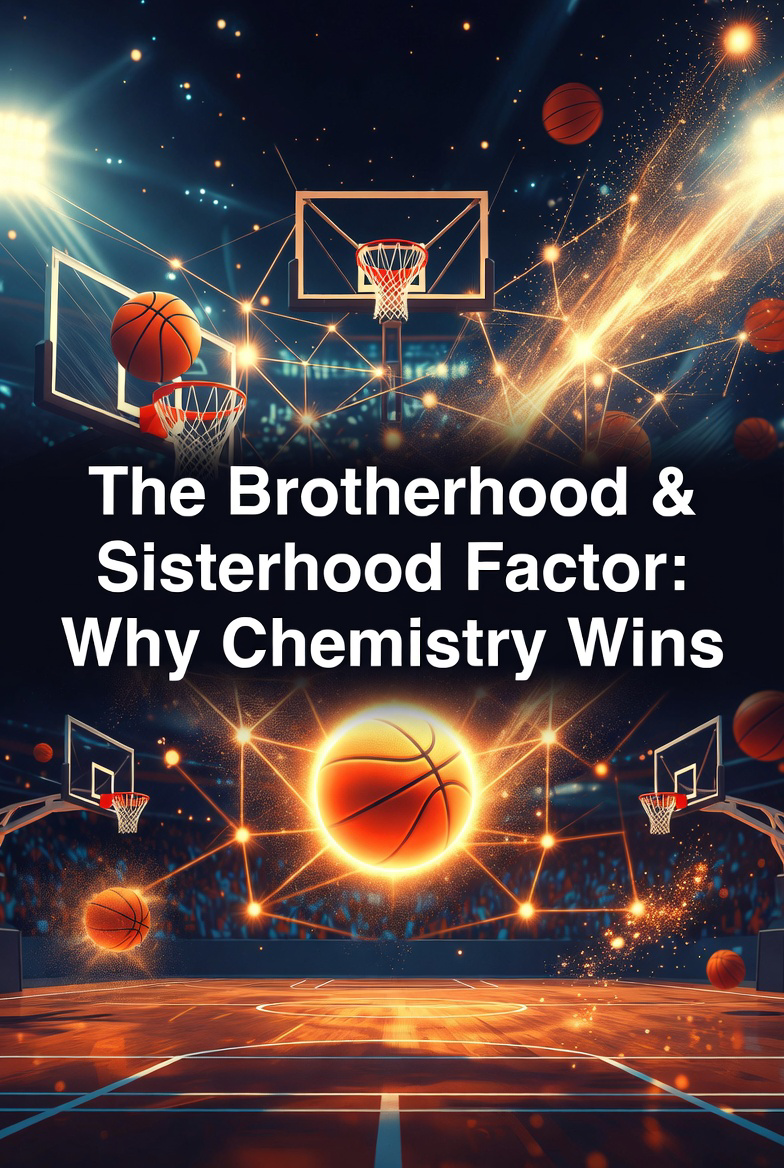
Talent Gets Attention Chemistry Wins Championships
Every basketball season starts with excitement around talent. Rankings dominate conversations. Social media clips flood timelines. Coaches and fans debate who has the deepest roster, the most athletic player, or the highest-scoring star. But when the season reaches its toughest moments, pure talent alone rarely carries teams to championships.
What separates winning programs from talented but inconsistent ones is usually chemistry.
The brotherhood and sisterhood factor is real. It is the invisible connection that transforms individuals into a true team. It cannot always be measured in points, rebounds, or assists, but it shows up in every important possession, every difficult practice, and every moment adversity hits.
Teams with strong chemistry play harder for each other. They trust one another. They communicate better. They sacrifice personal recognition for team success. Most importantly, they stay connected when games become uncomfortable.
Basketball has always been more than skill. It is a relationship sport. Five players must think, react, communicate, and compete together in real time. One selfish decision can break possessions apart. One disconnected player can ruin defensive rotations. One bad attitude can quietly destroy locker room culture.
On the other hand, one united group can overcome almost anything.
That is why chemistry wins.
Brotherhood and Sisterhood Cannot Be Faked
Some teams try to create chemistry through slogans, matching gear, or social media content. While those things can help build identity, real chemistry goes much deeper.
True brotherhood and sisterhood are built through shared experiences.
They grow during difficult conditioning sessions. They develop through long road trips, tough losses, exhausting practices, and honest conversations. Trust is created when players consistently show up for one another — not only during victories, but during adversity.
Players know when relationships are authentic.
A connected team celebrates each other genuinely. Players support teammates who are struggling. Bench players stay engaged. Stars encourage role players. Coaches communicate honestly. Accountability exists without disrespect.
Chemistry is not about everybody being best friends. It is about mutual investment.
The strongest teams often have different personalities, backgrounds, and playing styles. What connects them is commitment to something larger than themselves.
That is the difference.
Selfish Basketball Always Has a Ceiling
One of the biggest problems in modern basketball is the growing focus on individual exposure over collective success.
Many young players are taught to build personal brands before learning how to build winning habits. Statistics become more important than execution. Highlight plays matter more than defensive rotations. Some players would rather score 30 points in a loss than contribute quietly in a win.
Eventually, selfish basketball gets exposed.
Good teams attack selfishness immediately because selfish habits weaken chemistry. Players stop trusting one another when they feel teammates are chasing attention instead of making winning plays.
The ball stops moving. Defensive communication disappears. Frustration builds. Finger-pointing starts.
Winning basketball requires sacrifice.
Sometimes the best player must trust teammates more. Sometimes a role player must accept fewer shots. Sometimes a scorer must defend harder. Sometimes a player has to celebrate another teammate’s success without jealousy.
Those sacrifices are difficult for immature teams.
But championship teams understand that personal success eventually grows through team success.
The Best Teams Hold Each Other Accountable
Chemistry is not just positivity. Real brotherhood and sisterhood include accountability.
Strong teams challenge one another.
Players on connected teams are willing to have uncomfortable conversations because they care about standards. They do not allow selfish habits, laziness, or negativity to continue unchecked.
Accountability looks different depending on the team.
Sometimes it is a teammate demanding better defensive effort during practice. Sometimes it is a player encouraging another teammate after a mistake. Sometimes it is leaders setting examples through consistency rather than speeches.
The key is trust.
Without trust, accountability feels personal. With trust, accountability feels necessary.
Players accept correction more easily when they know teammates genuinely care about them. That emotional connection allows teams to grow without falling apart under pressure.
Many talented teams fail because nobody is willing to speak honestly. Everyone avoids conflict to keep temporary peace. Eventually, problems grow until they damage the season.
Connected teams address problems early.
That is why chemistry matters.
Adversity Reveals Real Team Culture
Every team looks connected when winning.
The true identity of a team appears during adversity.
How does the team respond after losing two games in a row? What happens when a starter gets injured? How do players react when shots stop falling? Does the bench stay engaged? Do players encourage each other or blame one another?
Those moments expose culture immediately.
Teams built only on talent often collapse during difficult stretches because they lack emotional stability. Frustration turns into division. Confidence disappears. Players begin protecting themselves instead of helping the group.
Meanwhile, teams with strong chemistry stay together.
They trust the work. They communicate better under pressure. They stay emotionally connected when situations become uncomfortable.
That unity becomes a competitive advantage.
Basketball seasons are long. No team dominates every game. Every program experiences injuries, tough losses, distractions, and fatigue. Chemistry becomes the foundation that keeps teams steady through difficult moments.
Championship teams are rarely perfect. They are simply more connected.
https://www.ballertube.com/news/500/the-ncaa-can-t-keep-up-with-its-own-rules-rj-luis-jr-commits-to-lsu-and-the-internet-loses-its-mind/?tag_ids=34914,145,167,21554,40520
Leadership Shapes Team Chemistry
Every successful team has leaders who protect the culture.
Leadership is not always about being the loudest player. Some leaders lead through energy. Others lead through discipline, communication, or work ethic.
The best leaders make teammates feel valued.
They encourage younger players. They hold standards consistently. They bring positive energy daily. Most importantly, they put team success before personal attention.
Poor leadership destroys chemistry quickly.
When leaders complain constantly, ignore accountability, or create divisions inside the locker room, younger players often follow those behaviors. Negativity spreads faster than people realize.
Great leadership creates emotional security.
Players compete harder when they know teammates support them. Confidence grows when mistakes are met with teaching instead of humiliation. Teams improve faster when communication stays honest and constructive.
Coaches matter tremendously here as well.
Programs with healthy cultures usually have coaches who create environments based on trust, discipline, and clarity. Players understand expectations. Communication stays consistent. Everyone feels connected to the mission.
Culture starts at the top but survives through the players.
Role Players Often Determine Championships
One of the clearest signs of strong chemistry is how teams treat role players.
Championship teams value every player.
The players who dive on the floor, defend multiple positions, rebound, communicate, and sacrifice statistics often become the emotional backbone of winning programs. Those players may not receive headlines, but teammates understand their importance.
Chemistry grows when every player feels respected.
Teams fail when only stars receive recognition. Role players eventually disengage when they feel invisible. Energy drops. Trust weakens.
Great teams understand that everybody contributes differently.
Some players score. Some defend. Some provide leadership. Some bring intensity during practice. Some create energy from the bench.
When players embrace their roles without resentment, chemistry becomes powerful.
That acceptance only happens when trust exists inside the program.
Girls and Boys Basketball Both Thrive on Connection
The brotherhood and sisterhood factor applies equally across boys and girls basketball.
Some of the strongest chemistry in basketball exists within girls programs because many teams prioritize communication, connection, and accountability exceptionally well. Teams that genuinely support one another emotionally often compete with greater resilience and discipline.
Boys basketball also thrives when players develop authentic brotherhood.
The strongest boys programs usually have players who compete aggressively while remaining deeply connected off the court. They protect each other. They celebrate each other. They challenge each other honestly.
Connection matters in every environment.
AAU teams, high school programs, prep schools, and college programs all experience the same truth: talent attracts attention, but chemistry sustains winning.
The teams that stay connected longest usually survive deepest into the season.
https://www.cbssports.com/nba/news/nba-draft-koa-peat-stay-or-go-decision-combine/
Social Media Cannot Replace Real Relationships
Modern basketball culture sometimes confuses visibility with connection.
Teams post photos together. Players repost graphics. Everyone looks united online. But social media chemistry and real chemistry are completely different things.
Real chemistry shows up in difficult moments nobody sees.
It appears during early-morning workouts. It shows during film sessions after tough losses. It matters during hostile road games when communication becomes essential.
Relationships built only around image eventually crack under pressure.
Teams built on authentic trust stay connected regardless of outside noise.
This generation faces constant distractions. Recruiting attention, rankings, exposure, and social media comparisons can quietly create jealousy or insecurity inside teams. That is why strong locker room culture matters more now than ever.
Players who genuinely care about one another become harder to divide.
Why Chemistry Still Matters Most
Basketball continues evolving. The game becomes faster, more skilled, and more positionless every year. Training improves. Exposure expands. Talent levels rise.
But one thing never changes.
Connected teams win.
Chemistry affects communication, effort, trust, resilience, sacrifice, and accountability. It influences every possession even when people cannot clearly see it.
The brotherhood and sisterhood factor is not motivational fluff. It is competitive reality.
Teams that genuinely love competing together usually maximize their talent more effectively. Players trust one another during pressure moments. Coaches can push harder because relationships are stronger. Adversity becomes easier to survive.
That connection creates consistency.
And consistency wins championships.
At the highest levels of basketball, talent differences are often smaller than people think. The emotional and mental side of the game becomes the separator. Teams that stay united longest usually stand out when the season matters most.
Basketball has always been about more than individual greatness.
The game rewards connection.
It rewards sacrifice.
It rewards trust.
And in the end, chemistry still wins.