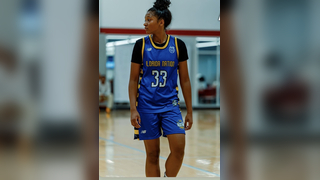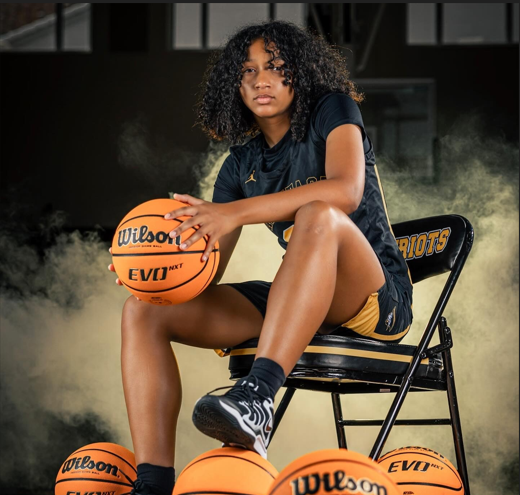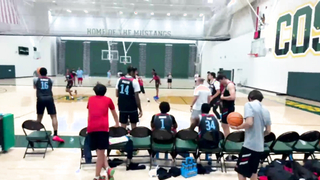
Jordyn Wong is part of a very early wave of youth basketball prospects growing up in a game that is more structured, more competitive, and more skill-driven at younger ages than ever before. Coming out of Akron, Ohio—a city with a strong basketball identity and a long history of producing tough, disciplined players—Wong is beginning her journey through grassroots basketball with Legends U Basketball.
At the Class of 2031 level, development is not about finished skill sets or polished scouting reports. It’s about habits, coordination, early confidence, and learning how to compete within organized systems. Jordyn is in the phase where every rep matters more than every result, and every mistake becomes part of her learning curve.
This profile breaks down her early development path, environment, skill tendencies, mental approach, and long-term growth potential as she continues building her game.
Growing Up in Akron’s Basketball Environment
Akron, Ohio has always had a strong basketball identity built on toughness, effort, and competitive pride. For young players like Jordyn, that environment matters. Even before formal systems and structured play, the culture around the game influences how players approach competition.
In cities like Akron, basketball is often introduced early through:
- School gym programs
- Local youth leagues
- Community training sessions
- Pickup-style competitive environments
For a young player, this mix of structured and unstructured play is important. It teaches adaptability—how to play within rules, but also how to think creatively when the game breaks down.
For Jordyn Wong, this foundation is where her basketball habits are being shaped. At this stage, she is not just learning how to play—but how to think within the game.
Key early development themes in this environment include:
- Learning spacing without being over-coached
- Developing comfort with contact
- Understanding basic team concepts
- Building confidence through repetition
These are not flashy skills, but they are essential building blocks for long-term growth.
Early Development Stage: Learning the Game the Right Way
At the Class of 2031 level, most players are still developing coordination, decision-making, and consistency. The focus is not specialization—it is general skill expansion.
For Jordyn Wong, this stage is about building a foundation across multiple areas:
- Ball control
- Basic passing reads
- Finishing near the rim
- Defensive awareness
- Movement without the ball
The most important aspect of this stage is repetition. Skills at this age are not defined by complexity but by consistency.
A player who can:
- Dribble without losing control
- Make simple decisions under pressure
- Stay active defensively
- And respond to coaching quickly
…is already building a strong developmental base.
Wong’s early path reflects that kind of foundation-first approach rather than a highlight-driven identity.
Role of Legends U Basketball in Her Growth
Playing with Legends U Basketball gives Wong exposure to structured team environments that differ from local recreational play. Even at younger age levels, travel basketball introduces:
- Higher pace competition
- More disciplined coaching systems
- Constant adjustment to new teammates
- Exposure to different playing styles
These experiences are important because they force young players to adapt quickly.
For Jordyn, this environment is helping her learn:
- How to stay composed when the game speeds up
- How to follow structured offensive and defensive concepts
- How to communicate with teammates
- How to respond to coaching instruction in real time
One of the biggest challenges for young players is transferring skills from practice to games. Legends U Basketball provides that bridge by putting her in competitive settings where execution matters.
The key takeaway from this stage is not performance—it is adaptation.
Developing Guard Foundations
While it is too early to define a full position identity, Jordyn Wong is showing early guard-related development patterns. At this stage, “guard development” is not about advanced ball screens or complex reads—it is about comfort handling the ball and staying engaged in the flow of play.
Early Ball Handling Development
Ball handling at this level is focused on:
- Keeping control under light pressure
- Using both hands comfortably
- Avoiding unnecessary turnovers
- Learning basic direction changes
The goal is stability first—creativity comes later.
Transition Awareness
One of the first real “guard traits” that appears in young players is transition awareness. This includes:
- Pushing the ball up the floor
- Looking ahead rather than dribbling in place
- Learning when to slow down or speed up
Wong’s early development includes these foundational instincts.
Confidence with Responsibility
Even in youth basketball, some players naturally step into ball-handling roles. That responsibility helps accelerate learning because every possession requires decision-making.
https://www.ballertube.com/news/325/the-mcdonald-s-all-american-game-2026-elite-high-school-basketball-s-ultimate-honor/
Skill Development Priorities Moving Forward
For a player at this stage, development is about layering skills over time rather than rushing advanced techniques.
1. Ball Security Under Pressure
As competition improves, defensive pressure increases. Jordyn’s growth will depend heavily on:
- Protecting the ball with her body
- Avoiding unnecessary dribbles
- Learning to escape pressure safely
2. Finishing Consistency
Finishing is one of the most important early indicators of long-term scoring ability. This includes:
- Layups with both hands
- Finishing through contact
- Using the backboard effectively
- Staying balanced at the rim
3. Shooting Form Development
At this age, shooting is not about range—it is about mechanics:
- Balanced stance
- Smooth release
- Repetition of form
- Confidence on short-range shots first
4. Defensive Habits
Defense is often overlooked in youth development, but it builds long-term value:
- Staying in a defensive stance
- Moving feet instead of reaching
- Learning help-side positioning
- Competing without fouling unnecessarily
Basketball IQ: Learning the Language of the Game
One of the most important long-term developments for any young player is basketball IQ. At the Class of 2031 stage, this is still very early, but it begins with simple concepts.
For Jordyn Wong, this includes learning:
- When to pass versus when to dribble
- How spacing affects teammates
- How to react when plays break down
- How to recognize defensive pressure
Basketball IQ grows through exposure. Every game adds experience, and every mistake adds understanding.
Players who develop strong early IQ foundations tend to adjust faster as competition levels rise.
Mental Approach and Competitiveness
At young ages, mentality often separates players more than skill. Talent is still developing across the board, but mindset determines how quickly players improve.
For Wong, key mental traits being developed include:
- Staying engaged even after mistakes
- Responding positively to coaching
- Competing consistently regardless of score
- Learning to handle pressure situations calmly
The most important habit at this stage is resilience. Young players who can stay mentally present after errors tend to improve faster over time.
Training Environment and Daily Growth Habits
While games are where development is measured, practice is where it is built.
For a player like Jordyn Wong, development typically comes from:
- Repetitive ball-handling drills
- Basic shooting form work
- Defensive footwork training
- Small-sided games (1v1, 2v2, 3v3)
- Controlled scrimmage environments
At this stage, the focus is not intensity alone—it is repetition with purpose.
The best long-term development comes from:
- Doing fundamentals correctly
- Repeating them consistently
- Slowly adding complexity over time
Wong’s current stage is about building that structure.
Role Within Team Structure
On grassroots teams at this level, roles are fluid and still developing. However, players often begin to show tendencies that define how they contribute.
For Jordyn, her role likely includes:
- Supporting ball handling responsibilities
- Staying active without the ball
- Playing disciplined team defense
- Making simple, correct decisions
The goal is not dominance—it is reliability and learning how to contribute in multiple ways.
Long-Term Development Outlook
It is important to approach Class of 2031 prospects with perspective. At this stage, players are still in the earliest phase of athletic and skill development.
For Jordyn Wong, long-term projection depends on several factors:
- Continued exposure to competitive environments
- Consistent skill development habits
- Physical growth over time
- Ability to adjust as competition increases
What can be observed now is not a ceiling—but a direction.
And that direction is shaped more by consistency than by early performance.
https://www.cbssports.com/college-basketball/news/top-mid-majors-next-miami-ohio/
Development Philosophy: Building, Not Rushing
One of the biggest challenges in youth basketball today is over-evaluation too early. Players are often labeled before their foundation is fully developed.
For Jordyn, the most important approach is:
- Focus on fundamentals
- Stay consistent in training
- Embrace learning moments
- Avoid rushing skill progression
Long-term success in basketball rarely comes from early dominance. It comes from steady improvement over time.
Final Outlook
Jordyn Wong is at the beginning of her basketball journey, developing within the structure of Legends U Basketball and the competitive environment of Akron, Ohio.
At this stage, there are no final labels or conclusions—only development patterns and growth habits. What matters most is not where she is now, but how she continues to build.
Her future will be shaped by repetition, learning speed, effort, and consistency. And like many young players in the early stages of their careers, the most important trait she can carry forward is simple: a willingness to keep improving every time she steps on the court.