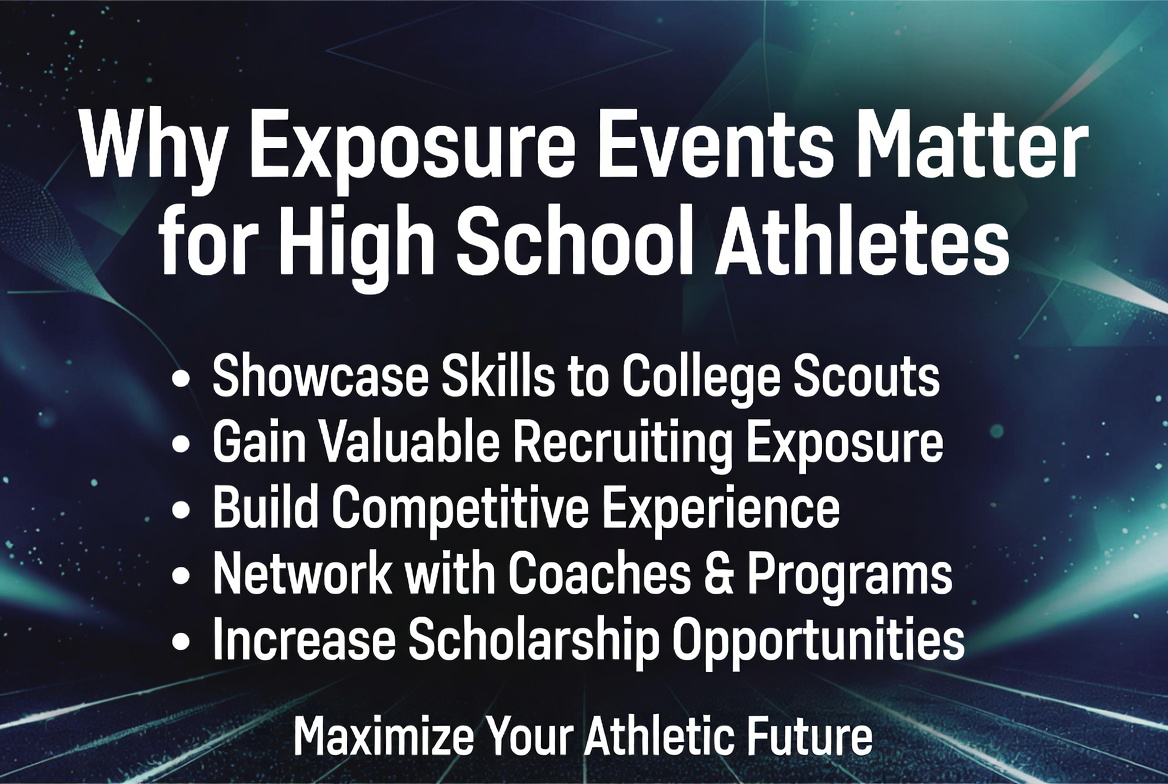
In today’s recruiting landscape, talent alone is no longer enough.
Every year, thousands of high school athletes work tirelessly in the gym, weight room, and classroom hoping their dedication will eventually lead to college opportunities. While hard work remains the foundation of success, one reality continues to shape modern recruiting: coaches cannot recruit athletes they never see.
This is where exposure events become incredibly important.
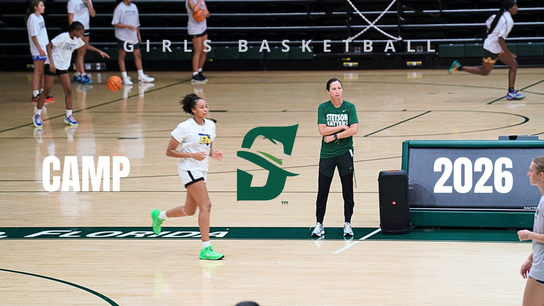
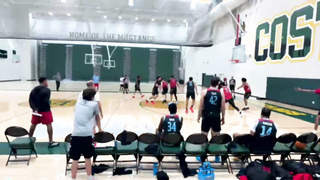
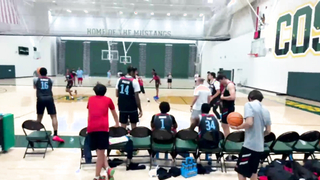
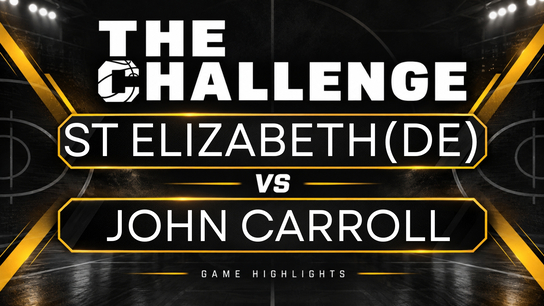
From basketball showcases and NCAA-certified events to football camps, volleyball tournaments, soccer showcases, and multi-sport recruiting combines, exposure events have become a major part of the recruiting process. These events create opportunities for athletes to compete in front of college coaches, scouts, media outlets, and recruiting services that can help open doors to the next level.
Many athletes view exposure events simply as another tournament on the schedule. In reality, they can be much more than that. They can become the place where an athlete earns their first scholarship offer, receives interest from a college coach, gains valuable recruiting feedback, or establishes relationships that impact their future.
The best exposure events do not magically create opportunities. Instead, they provide a platform for athletes to showcase the opportunities they have earned through years of preparation.
Exposure Creates Opportunity
One of the biggest challenges in recruiting is visibility.
College coaches have limited time and limited budgets. They cannot travel to every high school game across the country. As a result, they often attend events where they can evaluate dozens or even hundreds of prospects in a single location.
For athletes, this means exposure events bring decision-makers together in one place.
Instead of hoping a coach happens to attend a random game during the season, athletes can compete in environments specifically designed to attract recruiters.
A single weekend can place an athlete in front of multiple college programs from various levels including NCAA Division I, Division II, Division III, NAIA, and junior colleges.
Without exposure, even talented athletes can go unnoticed.
Competition Reveals True Ability
Exposure events often feature some of the best athletes from different regions, states, and sometimes countries.
This level of competition provides a more accurate measurement of where an athlete stands compared to their peers.
Dominating local competition is impressive, but college coaches want to see how prospects perform against other elite athletes.
Can they defend a highly-ranked player?
Can they handle physicality?
Can they execute under pressure?
Can they make winning plays when the talent level increases?
Exposure events provide answers to those questions.
Athletes who rise to the occasion often separate themselves from the crowd and gain attention from recruiters.
Athletes Learn How They Compare
One underrated benefit of exposure events is self-evaluation.
Many athletes leave these events with a clearer understanding of their strengths and weaknesses.
Perhaps they realize their athleticism is already college-ready.
Maybe they discover they need to improve their conditioning, shooting consistency, ball-handling, speed, strength, or decision-making.
That feedback is valuable.
Recruiting is not just about being discovered. It is also about understanding where improvement is needed.
The best athletes use exposure events as opportunities to learn and grow rather than simply seeking recognition.
Building Relationships with College Coaches
Recruiting is built on relationships.
Exposure events often provide opportunities for athletes to interact with college coaches before, during, and after competition.
While performance remains the most important factor, coaches also evaluate character, communication skills, maturity, body language, and overall professionalism.
Athletes who conduct themselves well can leave lasting impressions.
Simple actions matter:
- Being respectful
- Showing leadership
- Supporting teammates
- Listening to instruction
- Maintaining positive body language
- Competing with energy and effort
Coaches are not only recruiting talent. They are recruiting people.
Exposure events allow athletes to demonstrate both.
https://www.ballertube.com/news/517/more-than-a-game-day-the-real-academic-cost-when-young-athletes-miss-school-for-basketball-tournaments/?tag_ids=37189,36024,10711,30984,38916,4240,30144,12608,23
The Importance of Being Seen Multiple Times
One great performance is helpful.
Multiple great performances are powerful.
College coaches rarely make recruiting decisions based on a single game or event. They want consistency.
Exposure events create multiple opportunities throughout the year for coaches to evaluate prospects.
An athlete may catch a coach’s attention during one event and then solidify that interest during future events.
Repeated exposure builds trust.
When coaches repeatedly see strong performances against quality competition, confidence in the athlete increases.
Media Coverage Matters
Today’s recruiting environment extends beyond college coaches.
Media outlets, scouting services, recruiting analysts, photographers, videographers, and social media creators attend many exposure events.
A strong performance can lead to:
- Recruiting articles
- Player spotlights
- Social media recognition
- Rankings consideration
- Highlight features
- Interview opportunities
While media attention should never become the primary goal, it can increase visibility and help athletes reach a broader audience.
Many recruiting conversations begin because a player’s performance was highlighted by media coverage.
Exposure Helps Athletes Discover New Opportunities
Not every athlete will play at the Division I level.
That is perfectly okay.
There are thousands of college opportunities available across multiple levels.
Exposure events help athletes connect with programs that fit their abilities, goals, academics, and future aspirations.
Sometimes athletes arrive focused on one level and leave with a better understanding of where they truly fit.
Finding the right fit often matters more than finding the biggest name.
The right fit can lead to more playing time, stronger development, and a better overall college experience.
Academic Opportunities Can Follow Athletic Exposure
Athletic exposure often creates academic opportunities as well.
Many colleges use athletics as a pathway to attract strong students.
Coaches frequently ask about:
- GPA
- Test scores
- Academic rigor
- Class rank
- Graduation plans
Athletes who excel both academically and athletically often become more attractive recruits.
Exposure events can help college programs identify student-athletes who represent excellence in both areas.
This is one reason athletes should always prioritize their education alongside sports.
Confidence Can Grow Through Competition
Competing against high-level talent can be intimidating.
However, exposure events often help athletes build confidence.
When athletes realize they can compete successfully against top prospects, their belief grows.
Confidence developed through meaningful competition often translates back to the high school season.
Athletes begin trusting their preparation.
They understand their abilities.
They gain experience performing under pressure.
Those experiences can positively impact future performances.
Coaches Evaluate More Than Statistics
Many athletes believe recruiting revolves around points scored, goals recorded, or statistics accumulated.
In reality, coaches often evaluate much more.
Exposure events reveal qualities such as:
- Effort
- Toughness
- Coachability
- Leadership
- Communication
- Decision-making
- Competitive spirit
- Team-first mentality
An athlete may score twenty points, but poor body language could hurt their recruitment.
Another athlete may score eight points while defending at a high level, communicating constantly, and helping their team win.
College coaches notice those details.
Exposure events allow those qualities to become visible.
Learning How Recruiting Works
For many families, recruiting can seem confusing.
Exposure events often provide educational opportunities.
Athletes and parents gain insight into:
- College recruiting timelines
- Scholarship opportunities
- Eligibility requirements
- Communication strategies
- Recruiting expectations
The more families understand the recruiting process, the better prepared they become for future decisions.
Knowledge is an advantage.
Exposure events frequently provide access to information that can help athletes navigate the journey more effectively.
https://www.cbssports.com/college-basketball/news/acc-basketball-rankings-tiers-duke-louisville/
The Value of Networking
Sports are filled with relationships.
Exposure events create opportunities to connect with:
- Coaches
- Scouts
- Trainers
- Recruiting coordinators
- Event directors
- Media members
- Other athletes
Networking is often overlooked, but it can be valuable.
The sports world is smaller than many people realize.
Positive interactions can lead to future opportunities, recommendations, and connections.
Athletes who build strong reputations often benefit from those relationships throughout their careers.
Exposure Rewards Preparation
Many athletes attend events expecting instant results.
The reality is that exposure amplifies preparation.
Athletes who have invested in skill development, strength training, conditioning, academics, and character development tend to benefit the most.
Exposure does not replace development.
Exposure reveals development.
The athletes who stand out are usually the ones who have consistently worked behind the scenes long before arriving at the event.
Social Media and Exposure Work Together
Modern recruiting extends beyond the court, field, or track.
Social media allows athletes to continue building visibility after an event ends.
Highlights, interviews, photos, and recruiting updates can help maintain momentum generated during exposure events.
When used professionally, social media can support recruiting efforts.
However, athletes should remember that social media cannot replace performance.
Exposure creates interest.
Performance sustains it.
The strongest recruiting profiles combine both.
Maximizing Exposure Event Opportunities
Athletes should approach exposure events with intentionality.
Some important habits include:
Arrive Prepared
Preparation begins before the event.
Athletes should prioritize:
- Conditioning
- Skill work
- Recovery
- Nutrition
- Mental preparation
Be a Great Teammate
Coaches pay attention to interactions.
Encouraging teammates and displaying leadership can leave positive impressions.
Play the Right Way
Trying to impress coaches by forcing shots or chasing statistics often backfires.
Winning basketball, smart decisions, and team-oriented play typically attract more attention.
Maintain Professionalism
Every interaction matters.
Athletes should demonstrate maturity, respect, and accountability throughout the event.
Follow Up
If coaches express interest, athletes should communicate professionally and continue building those relationships.
Exposure Is a Tool, Not a Guarantee
One of the biggest misconceptions in recruiting is that attending an exposure event guarantees scholarships or offers.
It does not.
Exposure creates opportunities, but athletes must still earn those opportunities through performance, academics, character, and consistency.
The event itself is simply a platform.
What athletes do on that platform determines the outcome.
Understanding this mindset helps athletes focus on what they can control rather than chasing unrealistic expectations.
Final Thoughts
Exposure events have become an important part of modern recruiting because they connect athletes with opportunities that may not otherwise exist.
They provide visibility, competition, evaluation, education, networking, and relationship-building opportunities that can significantly impact an athlete’s future.
Most importantly, they give hardworking student-athletes a chance to showcase the countless hours spent developing their skills.
For high school athletes pursuing college opportunities, exposure events are not about chasing attention. They are about creating opportunities for the right people to see the work, dedication, and potential that already exists.
When preparation meets exposure, doors begin to open.
And for many student-athletes, that opportunity can become the first step toward achieving their dreams.