
For years, few topics in basketball have sparked more debate than AAU basketball.
Ask a college coach, parent, trainer, or former player about AAU, and you’ll likely hear strong opinions. Some believe AAU basketball is the most important pathway to college recruiting and player exposure. Others argue that it places too much emphasis on games and rankings while taking attention away from skill development.
The truth lies somewhere in the middle.
AAU basketball has become one of the most influential forces in the modern basketball landscape. It provides opportunities that previous generations of athletes never had. At the same time, it presents challenges that players and families must learn to navigate.
Understanding the real value of AAU basketball requires looking beyond the highlights, social media posts, and tournament championships.
At its best, AAU basketball can create life-changing opportunities. But maximizing those opportunities requires purpose, preparation, and perspective.
What Is AAU Basketball?
AAU stands for Amateur Athletic Union, an organization that has existed for more than a century.
Today, however, the term “AAU basketball” is often used broadly to describe competitive travel basketball played outside the traditional high school season.
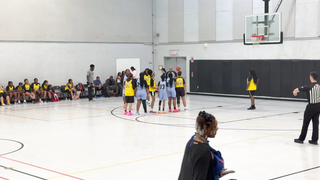
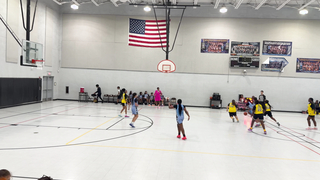
Athletes typically join club teams that compete during the spring and summer months. These teams travel to tournaments, showcases, and exposure events throughout the country.
Many of the nation’s top prospects participate in AAU circuits that attract college coaches, recruiting analysts, and media coverage.
For many players, AAU becomes an important extension of their basketball development.
It provides additional opportunities to compete, improve, and gain visibility.
The Exposure Factor
One of the biggest advantages of AAU basketball is exposure.
In today’s recruiting environment, visibility matters.
A talented athlete can dominate at the local level and still go unnoticed if the right people never see them play.
AAU events help bridge that gap.
During major tournament weekends, hundreds of college coaches may attend a single event.
Players can compete against elite competition while showcasing their abilities in front of decision-makers from every level of college basketball.
This exposure is particularly important for athletes who attend smaller schools or compete in regions that receive less recruiting attention.
AAU allows those players to perform on a larger stage.
For many athletes, their first meaningful recruiting conversations begin during AAU season.
Competition Accelerates Growth
Another major benefit of AAU basketball is the level of competition.
Players often face opponents they would never encounter during their high school season.
Instead of competing against familiar teams, athletes may face nationally ranked prospects, elite programs, and future collegiate players.
This level of competition can be uncomfortable at first.
But discomfort often fuels growth.
Athletes quickly learn where they stand and what areas require improvement.
Weaknesses become easier to identify.
Strengths are tested against better competition.
The experience forces players to adapt, improve, and mature.
Growth rarely happens when athletes consistently dominate weaker opponents.
AAU creates opportunities to be challenged.
Learning Different Styles of Play
One overlooked benefit of AAU basketball is exposure to different playing styles.
Basketball looks different across regions.
Some teams emphasize pace and transition offense.
Others focus on half-court execution.
Some rely heavily on athleticism.
Others prioritize skill and spacing.
AAU competition exposes players to a wide variety of systems and philosophies.
This experience expands basketball IQ.
Athletes learn how to adjust to different opponents, game plans, and situations.
Adaptability becomes a valuable skill as players advance through higher levels of competition.
Building Relationships
Basketball is ultimately a relationship-driven sport.
AAU provides opportunities to build meaningful connections with:
- Coaches
- Trainers
- Teammates
- College recruiters
- Media members
- Event organizers
Many lifelong friendships begin during AAU seasons.
Players often develop relationships with teammates from different schools, cities, and backgrounds.
These connections can create opportunities both on and off the court.
The basketball world is smaller than many people realize.
Relationships matter.
AAU provides countless opportunities to build them.
https://www.ballertube.com/news/520/history-keeps-finding-her-caitlin-clark-sets-another-wnba-record-as-playoff-pressure-starts-to-build/?tag_ids=9253,36748,25847,38147,12825,25858,23643,5203
Playing With High-Level Teammates
High school players typically compete alongside classmates and local athletes.
AAU teams often bring together talented players from multiple schools.
This creates unique learning opportunities.
Athletes can observe how other successful players prepare, communicate, and compete.
They gain exposure to different skill sets and approaches.
Competing alongside strong teammates often raises expectations.
Players learn how to contribute within talented groups rather than carrying entire teams on their own.
This experience closely resembles what many athletes encounter at the collegiate level.
Recruiting Opportunities
Recruiting remains one of the primary reasons families invest in AAU basketball.
The reality is that many college coaches rely heavily on spring and summer evaluations.
AAU events provide opportunities for coaches to watch multiple prospects in a single location.
This efficiency makes tournaments attractive recruiting destinations.
For athletes seeking college opportunities, AAU often becomes a critical component of exposure.
However, there is an important distinction.
AAU creates opportunities.
It does not guarantee recruitment.
Simply attending tournaments does not automatically result in scholarship offers.
Performance still matters.
Development still matters.
Character still matters.
Exposure opens doors.
Athletes must walk through them.
The Misconception About Rankings
One of the biggest misunderstandings surrounding AAU basketball involves rankings.
Many players become overly focused on national rankings, social media attention, and recruiting hype.
While recognition can be exciting, rankings are not the ultimate goal.
College coaches are evaluating much more than online lists.
They are looking for:
- Consistency
- Coachability
- Leadership
- Effort
- Basketball IQ
- Character
- Long-term potential
Athletes who focus exclusively on rankings often lose sight of development.
The best players prioritize improvement rather than validation.
Recognition often follows growth.
Not the other way around.
The Importance of Skill Development
AAU basketball should complement development, not replace it.
One common criticism of AAU is that athletes spend too much time playing games and not enough time improving skills.
There is some truth to that concern.
Playing games alone does not guarantee development.
Athletes must continue investing time in:
- Shooting
- Ball handling
- Footwork
- Finishing
- Strength training
- Conditioning
- Film study
The most successful players use AAU competition to test skills they have developed during training.
Games reveal strengths and weaknesses.
The offseason provides opportunities to improve them.
Both are necessary.
Why Coaches Value Consistency
College coaches evaluate much more than statistics.
Anyone can have a great game.
What separates prospects is consistency.
AAU tournaments often involve multiple games across several days.
This format allows coaches to observe athletes in various situations.
How does a player respond after a poor performance?
How do they compete when tired?
How do they interact with teammates?
How do they handle adversity?
These observations often reveal more than a box score.
Consistency remains one of the most valuable traits in recruiting.
The Financial Reality
AAU basketball can be expensive.
Travel costs, tournament fees, uniforms, hotels, and transportation can place significant financial demands on families.
This reality creates challenges for many athletes.
Families should carefully evaluate programs before making commitments.
The most expensive option is not always the best option.
A strong fit often matters more than a famous name.
Questions worth asking include:
- Will my child receive meaningful playing time?
- Does the coaching staff prioritize development?
- What events does the team attend?
- How does the organization support recruiting?
Choosing the right environment is often more important than chasing prestige.
https://www.cbssports.com/college-basketball/news/big-ten-basketball-rankings-tiers/
Team Success Versus Individual Development
AAU basketball creates an interesting balance between team goals and individual growth.
Winning matters.
Competition matters.
But long-term development should remain the priority.
Athletes sometimes sacrifice growth in pursuit of short-term success.
For example, a player may avoid expanding their skill set because they are comfortable in a limited role.
Development requires risk.
Players need opportunities to learn, make mistakes, and improve.
The best AAU environments create space for both competition and development.
Character Still Matters
In an era dominated by highlights and social media, character remains one of the most important factors in recruiting.
Coaches constantly evaluate behavior.
They watch how athletes interact with:
- Officials
- Coaches
- Parents
- Teammates
- Opponents
Talent may attract attention.
Character often determines opportunities.
Athletes who demonstrate maturity, accountability, and professionalism consistently leave positive impressions.
These qualities become especially important as recruiting advances.
The Role of Parents
Parents play an important role in the AAU experience.
Support is valuable.
Perspective is essential.
Families should focus on helping athletes:
- Enjoy the process
- Continue developing
- Handle adversity
- Maintain academic success
- Build positive relationships
The recruiting journey is rarely linear.
Patience is critical.
Not every tournament will produce scholarship offers.
Not every season will go perfectly.
Long-term growth remains the ultimate objective.
What Success Really Looks Like
Success in AAU basketball is often misunderstood.
Many people define success by:
- Championships
- Rankings
- Offers
- Social media attention
While those accomplishments can be meaningful, they are not the only indicators of progress.
True success may look like:
- Improved confidence
- Better decision-making
- Expanded skill development
- Increased leadership
- Stronger work habits
- Academic growth
- Personal maturity
Basketball development extends beyond trophies and recognition.
The lessons learned often carry into future careers, relationships, and life experiences.
Final Thoughts
AAU basketball has become one of the most influential platforms in the sport.
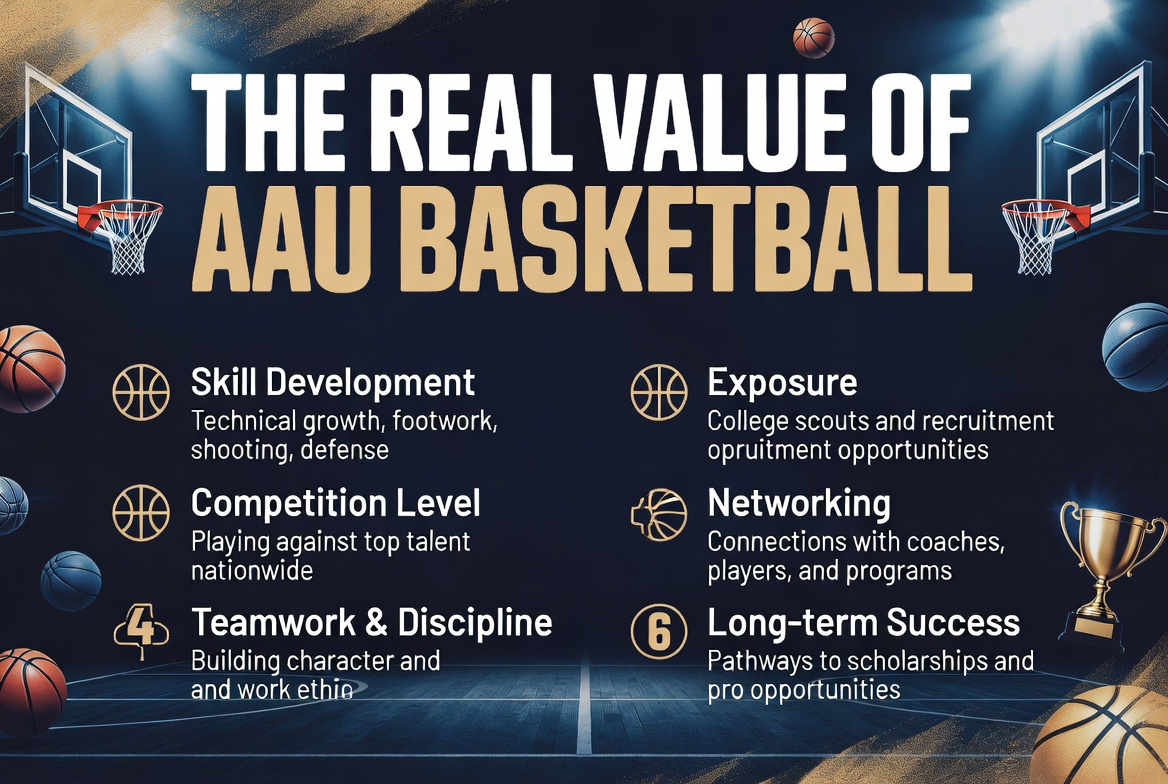
It provides exposure, competition, relationships, and recruiting opportunities that can help athletes reach the next level.
At the same time, its true value extends beyond scholarship offers and tournament championships.
The best AAU experiences help athletes grow as players, teammates, leaders, and young adults.
Exposure matters.
Competition matters.
Recruiting matters.
But development remains the foundation.
When approached with the right mindset, AAU basketball becomes much more than a spring and summer activity.
It becomes a platform for growth, opportunity, and preparation for the challenges that lie ahead.
The athletes who benefit most are not necessarily those with the most followers, rankings, or highlights.
They are the ones who use every practice, every tournament, and every opportunity to become a little better than they were the day before.
That is the real value of AAU basketball.