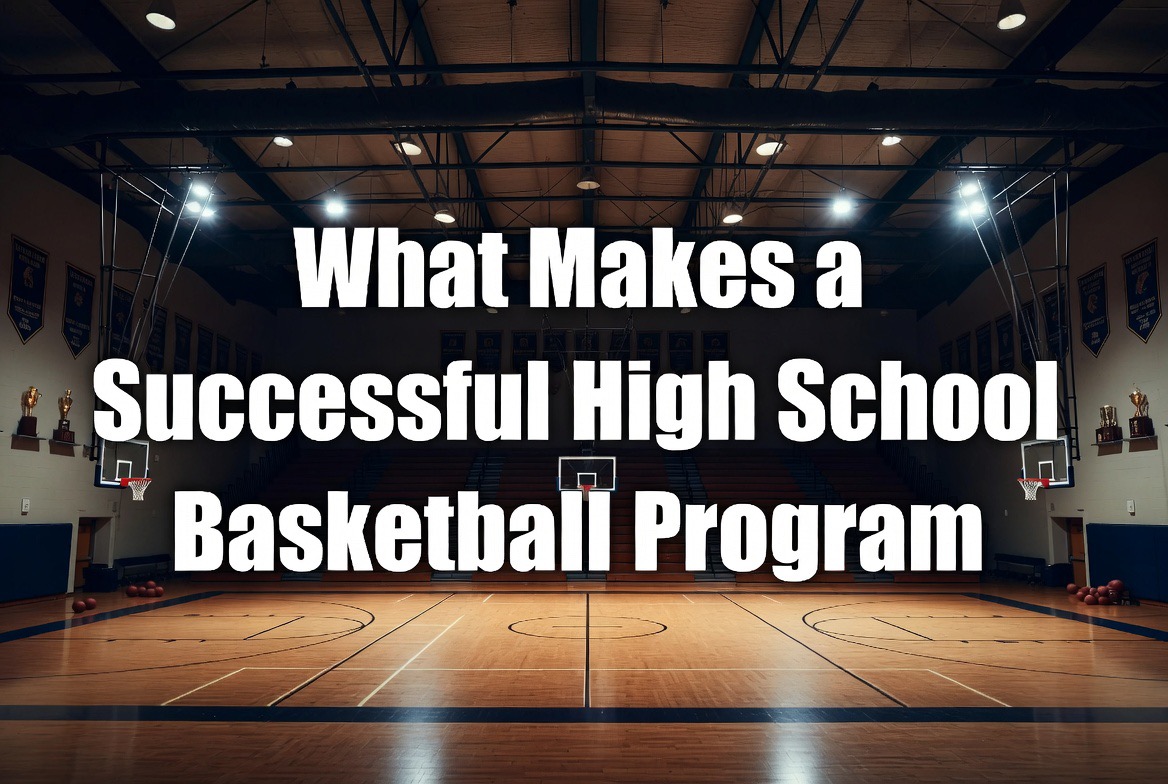
A successful high school basketball program is not built overnight. It is not just about winning games, having a star player, or making a playoff run. Real success runs deeper. It is about culture, consistency, development, accountability, relationships, and a shared vision that carries through every level of the program.
When you look at programs that stay successful year after year, they all have similar foundations. They may run different systems or come from different communities, but the core ingredients stay the same. Below is a breakdown of what truly makes a high school basketball program successful, along with key topics that matter inside and outside the gym.
1. Culture is the Foundation of Everything
The most important part of any program is culture. Culture is what the program stands for when nobody is watching. It is how players behave in the hallway, how they treat teachers, how they respond to adversity, and how they compete in practice.
A strong culture is not built on speeches—it is built on daily habits.
Successful programs have standards that do not change based on talent. Players know what is expected, and coaches hold everyone accountable equally. There is no “star treatment.” Everyone is part of the same system.
When culture is strong, everything else becomes easier:
- Practices are more focused
- Players compete harder
- Discipline issues decrease
- Team chemistry improves
Culture is the invisible engine that drives everything else.
2. Coaching Stability and Clear Leadership
Successful programs usually have consistent leadership. Whether it is one head coach or a staff that has been together for years, stability matters.
Players need to know:
- Who is in charge
- What the expectations are
- What the program identity is
Great coaching is not just about X’s and O’s. It is about teaching life skills, building trust, and creating structure.
A strong coaching staff does three things well:
- Teaches the game clearly
- Holds players accountable consistently
- Develops relationships that go beyond basketball
Players will play harder for coaches they trust and respect. That relationship is everything.
3. Player Development Over Recruitment of Talent
At the high school level, the best programs are not always the most talented on day one—they are the best at developing talent.
Player development includes:
- Skill training (ball handling, shooting, finishing)
- Basketball IQ (reading defenses, spacing, decision-making)
- Strength and conditioning
- Mental toughness and confidence
Programs that focus on development turn average players into impact players. More importantly, they create long-term success because players grow inside the system instead of depending on outside talent.
The goal is not just to win with talent—it is to build talent.
4. Accountability Creates Winning Habits
Accountability is one of the hardest parts of coaching but also one of the most important.
In successful programs, players are held accountable for:
- Effort in practice
- Attendance and punctuality
- Academic performance
- Body language
- Respect toward teammates and coaches
Accountability does not mean negativity. It means clarity. Players know the consequences and understand the standard.
Teams without accountability often struggle with inconsistency. Teams with accountability develop discipline that carries into pressure situations.
5. Practice Culture and Competitive Environment
Games are won in practice long before tip-off.
Successful programs create practices that are:
- Competitive
- Fast-paced
- Purpose-driven
- Game-like
Players are pushed daily. Scrimmages matter. Every rep matters. Coaches create an environment where players have to earn everything.
When practice is harder than the game, players become mentally and physically prepared for any situation.
A strong practice culture also builds toughness. Teams learn how to compete, not just play.
6. Player Roles and Buy-In
One of the biggest challenges in high school basketball is getting players to accept roles.
Not everyone will be the leading scorer. Not everyone will start. But every role matters.
Successful programs have players who understand:
- Starters set the tone
- Bench players change momentum
- Defensive specialists matter
- Rebounders and screeners win games
When players buy into roles, the team becomes greater than the individual parts.
Unsuccessful programs often struggle with ego and role confusion. Successful programs eliminate that issue early.
7. Strength of Schedule and Competitive Exposure
Great programs do not avoid competition—they seek it.
Playing tough opponents helps teams:
- Build toughness
- Learn from losses
- Prepare for playoffs
- Gain respect from colleges and scouts
Exposure also matters. Programs that compete in tournaments, showcases, and high-level events give players opportunities to be seen and recruited.
But exposure alone is not enough. You must be competitive while being seen.
https://www.ballertube.com/news/513/no-mercy-in-detroit-how-the-cleveland-cavaliers-ended-the-pistons-cinderella-run-in-a-game-7-blowout/?tag_ids=8711,6007,40501,272,1303,156,538,1190,13
8. Academic Standards and Character Development
Basketball programs do not operate in isolation. Schools care about academics and behavior because they reflect the program.
Successful programs emphasize:
- Academic eligibility
- Classroom behavior
- Attendance
- Character off the court
Players represent more than themselves—they represent their school and community.
Programs that consistently produce good students and good citizens tend to build long-term trust with administration and families.
9. Communication and Trust Within the Program
Communication is a hidden strength of great programs.
Players need to know:
- Where they stand
- How they can improve
- What is expected of them
Coaches who communicate clearly reduce confusion and frustration.
Trust is built when communication is honest, even when it is uncomfortable. Players respect truth more than false encouragement.
Strong programs also encourage communication between players. Leadership comes from within the team, not just from coaches.
10. Leadership From Players, Not Just Coaches
Every successful program has player leadership.
Team leaders:
- Set the tone in practice
- Hold teammates accountable
- Communicate with coaches
- Stay composed under pressure
Leadership is not just about being the best player. Sometimes it is the hardest worker, the loudest communicator, or the most disciplined.
Programs that rely only on coaches for leadership often struggle when adversity hits. Player-led teams are more resilient.
11. Strength and Conditioning Commitment
Modern basketball requires athleticism. Successful programs invest in strength and conditioning.
This includes:
- Speed and agility training
- Weight room development
- Injury prevention
- Endurance building
Teams that are physically prepared often outperform more skilled teams that are not conditioned.
Late in games, conditioning becomes the difference between winning and losing.
12. Program Identity and Playing Style
Every strong program has an identity. You can often recognize it without even knowing the team.
Identity could be:
- Defensive pressure and toughness
- Fast-paced offense
- Disciplined half-court execution
- Rebounding and physicality
The key is consistency. Players must understand how the program plays and commit to it fully.
Identity creates confidence because players know what to expect and how to succeed within the system.
13. Family and Community Support
Successful programs often have strong community involvement.
When families, students, and alumni support the program:
- Games feel more meaningful
- Players feel pride representing the school
- Attendance increases
- Energy in the gym improves
Community support also helps with program growth and stability. It creates pride that extends beyond the court.
14. Development Pathway for Athletes
Great programs show players a pathway for growth.
This includes:
- Freshman to varsity development plans
- Off-season training programs
- Film study habits
- College recruiting guidance
Players need to see that improvement is not random—it is structured.
When athletes believe in the pathway, they commit more fully to the program.
https://www.cbssports.com/nba/news/2026-nba-mock-draft-wizards-select-darryn-peterson-at-no-1-kings-and-thunder-make-trades-to-move-up/
15. Handling Adversity and Failure
No team goes undefeated. What separates good programs from great ones is how they respond to adversity.
Successful programs:
- Do not panic after losses
- Learn from mistakes
- Stay unified under pressure
- Refuse to blame individuals
Adversity reveals culture. Strong programs stay together. Weak programs fall apart.
16. Off-Season Commitment
Championship programs are not built during the season—they are built in the off-season.
Off-season success includes:
- Skill development workouts
- Team chemistry building
- Strength training
- Competing in leagues and tournaments
Players who commit in the off-season improve faster and create separation.
Programs that stay active year-round maintain momentum and development.
17. College Exposure and Recruiting Structure
For many high school players, the goal is to play at the next level. Successful programs understand this and support it.
This includes:
- Creating highlight film
- Promoting players properly
- Communicating with college coaches
- Attending exposure events
Programs that help athletes reach college opportunities build trust and attract future talent.
18. Discipline and Structure in Daily Operations
Structure keeps everything organized:
- Practice times are consistent
- Expectations are clear
- Team rules are enforced
- Travel and game preparation are organized
Discipline in small things leads to discipline in big moments.
Conclusion
A successful high school basketball program is not defined by one season or one group of players. It is defined by consistency, culture, and commitment to development.
Winning is a result—not the foundation.
The real foundation includes:
- Strong culture
- Consistent coaching
- Player development
- Accountability
- Leadership
- Structure
- Community support
When all of these pieces come together, success becomes repeatable. Programs stop chasing wins and start building something that lasts.
That is what separates average programs from truly successful ones.