
College basketball has always evolved.
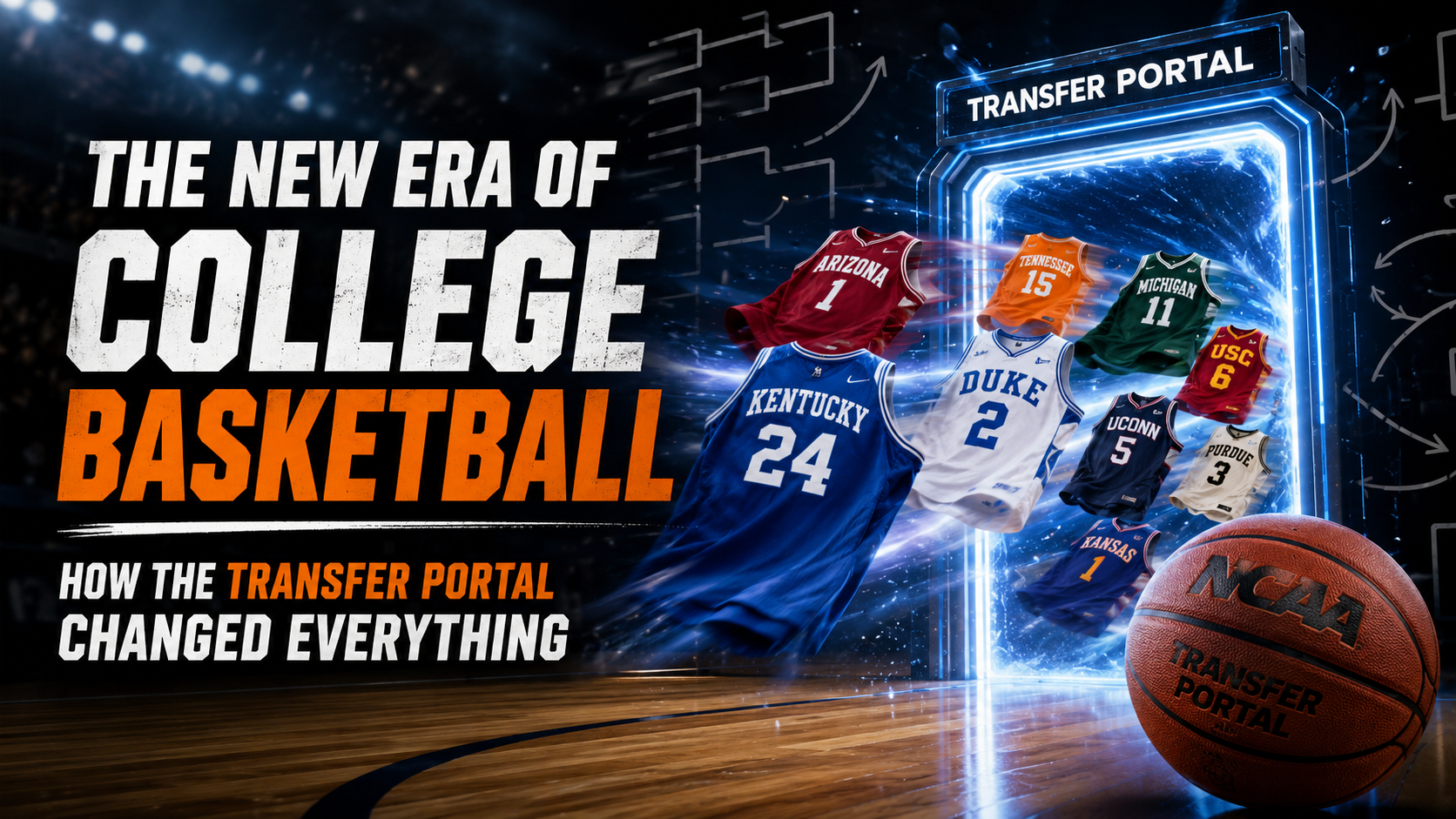
The game has changed through rule adjustments, television exposure, conference realignment, recruiting battles, and advances in player development. Yet few changes have impacted the sport as dramatically as the transfer portal.
In just a few years, the transfer portal has transformed the landscape of college basketball. What was once a sport built around four-year player development has become one centered on movement, flexibility, and immediate results. Rosters can look completely different from one season to the next. Programs can rise from the bottom of a conference to championship contention in a single offseason. Coaches spend as much time recruiting experienced college players as they do high school prospects.
Whether someone loves the changes or dislikes them, one thing is undeniable: college basketball entered a new era the moment the transfer portal became a major factor.
The Rise of the Transfer Portal
For decades, transferring schools was difficult.
Players often had to sit out a season before becoming eligible to compete. That waiting period discouraged movement and encouraged athletes to stay where they originally signed.
The transfer portal changed that process.
Instead of navigating complicated transfer procedures, players gained a more transparent way to explore opportunities. Combined with relaxed transfer rules and immediate eligibility in many situations, athletes suddenly had more freedom than ever before.
The result was predictable.
Player movement exploded.
Every offseason became a period of roster reshuffling. Thousands of players entered the portal looking for better opportunities, larger roles, improved fits, stronger programs, or different environments.
What began as a tool for player mobility quickly became one of the most influential forces in college basketball.
Why Players Are Leaving More Often
The reasons players transfer vary greatly.
Some athletes want more playing time. Others seek a better relationship with coaches. Some desire a system that better matches their skills. Others simply want a fresh start.
A highly ranked recruit who expected to start immediately may discover that college basketball is more challenging than anticipated. Rather than waiting multiple years for a larger role, the portal provides another option.
For veteran players, transferring can create opportunities to compete at a higher level.
A standout player at a smaller school may enter the portal hoping to join a nationally recognized program and play against elite competition.
The portal has empowered players to take greater control of their careers.
That freedom has become one of the defining characteristics of modern college basketball.
Coaches Recruit Two Different Markets
The recruiting calendar looks very different today.
In the past, coaching staffs focused heavily on high school recruiting. Success often depended on identifying talent years before prospects arrived on campus.
Now coaches recruit two separate groups:
- High school players.
- Transfer portal players.
In many cases, the transfer portal receives equal or greater attention.
Why?
Because proven college production carries less uncertainty.
A coach evaluating a transfer guard can watch hundreds of college possessions. They can analyze statistics, understand strengths and weaknesses, and determine how that player might fit into a system.
With high school recruits, projection remains a major part of the process.
As a result, many programs prioritize experienced transfers who can help immediately.
The recruiting game has become faster, more aggressive, and far more complex.
The End of Traditional Roster Building
There was once a common formula for building successful teams.
Freshmen arrived and learned.
Sophomores improved.
Juniors emerged into larger roles.
Seniors became leaders.
The best programs developed players over multiple seasons.
While that model still exists in some places, it is no longer the norm.
Today, coaches cannot assume a player will remain in the program for four years. In some cases, they cannot assume a player will remain for two years.
This uncertainty has fundamentally changed roster management.
Programs must prepare for departures every offseason. Even players receiving significant minutes may choose to transfer.
As a result, coaches constantly balance long-term development with short-term roster needs.
The traditional rebuilding process has largely disappeared.
https://www.ballertube.com/news/302/why-your-kid-s-basketball-highlights-shouldn-t-be-behind-a-paywall-even-if-you-re-making-money/
Instant Turnarounds Have Become Possible
One of the biggest benefits of the transfer portal is speed.
Programs no longer need three or four recruiting classes to improve.
A strong transfer class can transform a team overnight.
A coach taking over a struggling program can add experienced players who already understand college basketball. Instead of waiting years for freshmen to mature, the roster can become competitive almost immediately.
This has created more parity across the sport.
Programs that recruit strategically in the portal can close talent gaps faster than ever before.
Fans have witnessed teams go from losing records to conference contenders within a single offseason.
The portal has made dramatic turnarounds possible.
The Impact on High School Recruiting
Perhaps no group has felt the impact more than high school prospects.
College coaches have limited scholarships and limited roster spots. When experienced transfers become available, some coaches prefer those players over incoming freshmen.
The reasoning is understandable.
A transfer who has already succeeded at the college level often represents a safer investment.
As a result, some high school recruits find fewer opportunities than they would have received a decade ago.
This has forced many prospects to adapt.
Some attend junior colleges.
Some begin their careers at lower levels and later transfer upward.
Others remain patient while searching for the right fit.
High school recruiting still matters greatly, but it no longer dominates roster construction the way it once did.
Team Chemistry in a One-Year World
Talent wins games.
Chemistry wins important games.
One challenge facing modern coaches is building team chemistry quickly.
When multiple transfers arrive every offseason, players often have limited experience together. Coaches must establish roles, expectations, leadership structures, and trust within a short period.
That process can be difficult.
A roster full of talented players does not automatically become a great team.
Successful programs understand this reality.
They recruit not only talent but also character, leadership, and fit.
The best coaches create environments where players connect rapidly despite coming from different backgrounds and previous programs.
In today’s game, chemistry may be more valuable than ever.
Winners in the Transfer Portal Era
Certain groups have benefited tremendously from the portal.
Players
Athletes enjoy increased freedom and flexibility.
They can seek better opportunities, improve their situations, and take greater ownership of their careers.
Coaches Who Adapt Quickly
Some coaches have embraced the portal and developed systems specifically designed to evaluate and recruit transfers.
These programs often reload faster than competitors.
Mid-Major Stars
Outstanding players from smaller programs now have opportunities to compete on bigger stages.
Strong performances can open doors that might not have existed previously.
Fans of Competitive Basketball
The portal has increased parity and unpredictability.
More programs can improve rapidly, creating excitement across the sport.
Challenges Created by the Portal
Not every consequence has been positive.
The transfer portal presents challenges for everyone involved.
https://www.cbssports.com/college-basketball/news/diamond-cup-kentucky-unc-kansas-michigan-uconn-college-basketball-in-season-tournament/
Roster Instability
Coaches face uncertainty every offseason.
Planning for the future becomes difficult when player movement remains unpredictable.
Reduced Continuity
Fans often develop strong connections with players who remain in programs for several years.
Frequent transfers can make it harder to build those long-term relationships.
Recruiting Pressure
Coaches essentially recruit year-round.
Between high school prospects, transfers, and retaining current players, the workload has increased dramatically.
Development Concerns
Some observers worry that players may transfer too quickly rather than working through challenges and continuing their growth within a program.
These concerns continue to generate debate throughout college basketball.
Fans Are Experiencing a Different Sport
College basketball traditionally thrived on familiarity.
Fans watched players develop over several seasons. They celebrated growth, leadership, and loyalty.
Today’s environment feels different.
A player who becomes a fan favorite one season might be playing elsewhere the next year.
Entire starting lineups can disappear in a matter of months.
For some fans, this creates frustration.
For others, it creates excitement.
Every offseason feels like free agency. Roster construction becomes a year-round storyline. Social media discussions continue long after the final game ends.
The fan experience has evolved alongside the sport itself.
Coaching Has Changed Forever
The transfer portal has expanded the responsibilities of coaches.
X’s and O’s still matter.
Player development still matters.
Recruiting still matters.
But modern coaches must also function as roster managers.
Retention has become a critical skill.
Keeping talented players may be just as important as recruiting new ones.
Successful coaches communicate effectively, build strong relationships, and create environments where players want to stay.
The job now extends far beyond practices and game preparation.
Managing a roster has become a year-round challenge.
The Future of College Basketball
The transfer portal is no longer a trend.
It is part of the foundation of modern college basketball.
Future adjustments may alter specific rules, timelines, or procedures, but player movement is unlikely to disappear. Athletes have experienced greater freedom, and programs have adjusted their strategies accordingly.
The most successful teams moving forward will likely strike a balance.
They will recruit talented high school players.
They will develop athletes already in the program.
They will use the transfer portal strategically.
Most importantly, they will create cultures strong enough to keep players invested and committed.
College basketball has always rewarded adaptation.
That remains true today.
Final Thoughts
The transfer portal changed college basketball in ways few could have predicted.
It reshaped recruiting, accelerated roster turnover, increased player freedom, and created new opportunities across every level of the sport. Programs can rebuild faster. Players can pursue better fits. Coaches must constantly adapt.
The era of patiently waiting four years for a recruiting class to mature has largely been replaced by a faster, more fluid model.
Some miss the old system. Others embrace the new one.
Regardless of opinion, the reality is clear: the transfer portal has permanently altered college basketball. The programs that understand how to navigate this new environment will continue to thrive, while those that resist change risk being left behind.
The game remains the same between the lines, but everything around it has changed. That is the defining story of college basketball’s new era.