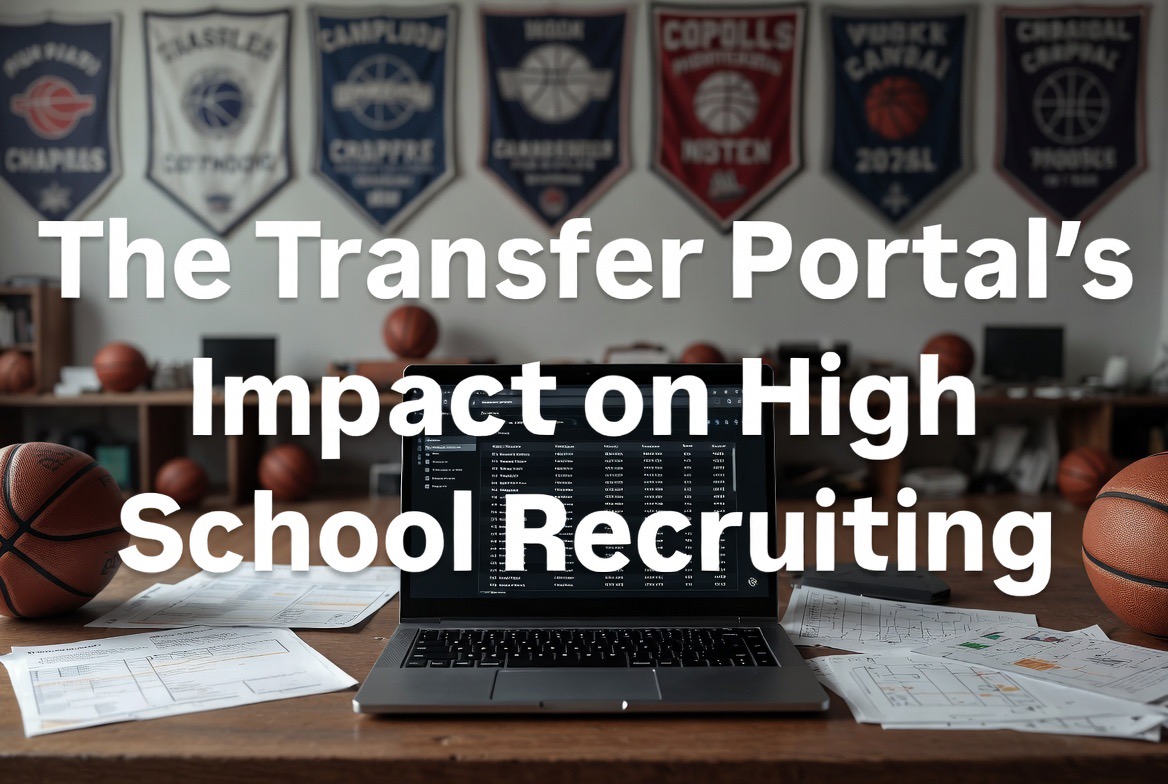
Introduction: A New Reality in Basketball
For decades, the recruiting process followed a fairly predictable path. College coaches spent years evaluating high school prospects, building relationships with families, attending games, and projecting what a player might become at the next level. Recruiting was largely centered around identifying potential and investing in long-term development.
Today, that landscape looks very different.
The emergence of the transfer portal has fundamentally changed college basketball recruiting. While the portal was designed to give student-athletes more freedom and flexibility, it has also created an entirely new marketplace for talent. Every offseason, thousands of college players enter the portal looking for new opportunities, giving coaches immediate access to experienced athletes who have already proven they can compete at the collegiate level.
As a result, high school recruiting has become more challenging than ever. High school athletes are no longer competing solely against their peers for roster spots and scholarships. They are competing against transfers, junior college players, and international prospects who often bring years of experience and production.
The opportunities still exist, but the path has changed. Understanding how the transfer portal affects recruiting is essential for players, parents, coaches, and programs trying to navigate today’s basketball landscape.
Understanding the Transfer Portal
At its core, the transfer portal allows college athletes to explore opportunities with other programs while maintaining eligibility under NCAA guidelines. What started as a system designed to provide athletes with more control over their careers has evolved into one of the most influential forces in college athletics.
Each year, coaches now spend a significant amount of time monitoring the portal. Instead of focusing exclusively on incoming high school classes, many programs divide their recruiting efforts between high school prospects and experienced college players seeking new homes.
For coaches under pressure to win games immediately, the portal provides an attractive solution. Rather than waiting two or three years for a freshman to develop, they can recruit a player who has already competed against college-level competition.
That reality has shifted recruiting priorities across the country.
Experience Often Wins Over Potential
One of the biggest changes caused by the transfer portal is the growing preference for experience.
In previous eras, coaches frequently recruited players based on long-term upside. They evaluated athleticism, work ethic, skill development, and potential future growth. The question was often, “How good can this player become?”
Today, many programs ask a different question:
“How much can this player help us win right now?”
Transfer players offer advantages that are difficult to ignore. They have already experienced college practices, college strength programs, travel schedules, and high-level competition. Coaches have film, statistics, and game performances that provide a clearer picture of what the player can contribute.
A high school player may eventually become the better athlete, but a transfer player often represents less risk and more immediate certainty.
In a results-driven environment, certainty frequently wins.
The Decline of Long-Term Development
Another major impact of the portal is the shrinking development window for incoming freshmen.
Years ago, coaches could afford patience. Players often spent their freshman and sophomore seasons learning systems, improving physically, and adjusting to the speed of the college game. Development was viewed as a long-term investment.
Today, patience is becoming increasingly rare.
If a young player struggles, coaches know there may be experienced alternatives available through the portal the following offseason. This has accelerated expectations for incoming recruits.
Freshmen are now expected to:
- Be physically prepared
- Understand complex systems quickly
- Compete defensively from day one
- Earn playing time immediately
This creates additional pressure on high school athletes entering college. The adjustment period still exists, but the margin for error has become much smaller.
https://www.ballertube.com/news/262/why-you-shouldn-t-play-zone-defense-in-youth-basketball-the-long-term-cost-of-short-term-wins/
Recruiting Never Stops
The transfer portal has transformed recruiting into a year-round process.
In the past, recruiting calendars followed a more structured schedule. Coaches focused heavily on high school evaluations during specific periods and built recruiting classes accordingly.
Now, recruiting is continuous.
College staffs are simultaneously evaluating:
- High school players
- Transfer portal entrants
- Junior college prospects
- International athletes
- Returning players on their own roster
Because of this, many recruiting decisions take longer than they once did. Coaches may hold scholarship offers until they have a clearer understanding of what talent becomes available through the portal.
For high school players, this can create uncertainty. Opportunities that once came early in the recruiting cycle may now develop much later.
The recruiting process has become more fluid and less predictable.
High School Players Are Competing in a Larger Marketplace
The transfer portal has dramatically expanded the recruiting pool.
A scholarship that previously might have gone to a high school senior could now be awarded to:
- A Division I starter seeking a new opportunity
- A junior college standout
- An experienced role player from another conference
- An international prospect with professional experience
This does not mean high school athletes cannot earn scholarships. It simply means the competition is stronger than ever.
Players must find ways to separate themselves.
Talent alone is often no longer enough. Coaches are looking for athletes who can fill specific needs and provide value immediately.
The players who understand their role and embrace it tend to gain attention faster.
Why Development Programs Matter More Than Ever
As recruiting becomes increasingly competitive, the importance of player development continues to grow.
College coaches want athletes who arrive prepared.
Programs that consistently produce college-ready players have become highly valuable recruiting pipelines because they reduce uncertainty for coaches.
Today’s recruits are expected to possess:
- Strong basketball fundamentals
- High basketball IQ
- Physical readiness
- Consistent work habits
- Competitive toughness
Strength training, film study, skill development, nutrition, and mental preparation all play major roles in modern recruiting.
Players who develop these habits before college often transition more smoothly and become more attractive to recruiters.
The days of relying solely on athletic ability are fading. Complete player development has become essential.
Exposure Matters More Than Ever
The transfer portal has made visibility increasingly important.
Because coaches spend significant time evaluating transfers, they have fewer opportunities to discover unknown high school players. As a result, exposure events, showcase tournaments, and competitive schedules have become critical parts of the recruiting process.
Players who consistently compete against strong competition gain valuable opportunities to be evaluated.
Exposure does not guarantee scholarships, but lack of exposure can severely limit recruiting opportunities.
Athletes must actively place themselves in environments where coaches can evaluate them against quality competition.
In today’s recruiting world, being talented is important. Being seen is equally important.
The Growing Importance of Defining a Role
One of the most effective ways for high school athletes to stand out is by clearly defining their role.
Many players describe themselves as complete players who can do everything on the floor. While versatility is valuable, coaches often recruit players to fill specific needs.
Questions coaches frequently ask include:
- Can this player consistently shoot?
- Can this player defend multiple positions?
- Can this player create offense?
- Can this player rebound at a high level?
- Can this player impact winning without scoring?
Athletes who clearly demonstrate a specific strength often become easier to recruit.
A player known as an elite defender or knockdown shooter may attract more attention than a player who tries to showcase every aspect of their game.
Role clarity creates recruiting value.
The Influence of NIL
The rise of Name, Image, and Likeness opportunities has added another layer to recruiting.
While basketball ability remains the primary factor, visibility and marketability have become increasingly relevant.
Transfer players often bring advantages such as:
- Established social media followings
- Recognizable names
- Proven production
- Existing fan engagement
This can increase their value in recruiting conversations.
For high school athletes, NIL highlights the importance of building a positive personal brand. Character, professionalism, communication skills, and online presence all contribute to how athletes are perceived.
Players who represent themselves well both on and off the court often create additional opportunities.
The Expansion of Junior College and International Recruiting
The transfer portal has also accelerated recruiting activity in other talent pools.
Junior college and international players continue to attract attention because they often bring maturity and experience.
Many of these athletes are:
- Older
- Physically stronger
- More experienced
- Better prepared for immediate competition
As a result, scholarship opportunities are now being distributed across multiple recruiting channels.
This increased competition requires high school athletes to be even more prepared when entering the recruiting process.
The talent pool is larger than ever before.
How High School Coaches Are Adapting
High school coaches have been forced to adapt alongside the recruiting landscape.
Successful programs now focus heavily on preparing athletes for the realities of modern recruiting.
This includes:
- Creating exposure opportunities
- Promoting athletes through social media
- Building college relationships
- Emphasizing strength and conditioning
- Teaching advanced basketball concepts
High school coaches increasingly serve as recruiters, mentors, evaluators, and advocates for their players.
Their role extends far beyond wins and losses.
Programs that consistently help athletes navigate recruiting often produce stronger long-term outcomes.
https://www.cbssports.com/high-school/basketball/news/high-school-basketball-new-team-takes-over-top-spot-in-maxpreps-top-25-for-fourth-time-in-2025-26/
What Parents Need to Understand
Parents also play an important role in this evolving environment.
Many families still approach recruiting with expectations based on how the process worked years ago. However, today’s recruiting landscape operates differently.
Patience is important.
Recruiting timelines vary significantly. Scholarship offers may arrive later. Communication may fluctuate. Coaches may evaluate multiple recruiting options before making decisions.
Families should focus on factors they can control:
- Academic performance
- Skill development
- Character
- Work ethic
- Exposure opportunities
Athletes who continue improving tend to create opportunities regardless of external circumstances.
The Future of Recruiting
The transfer portal is not a temporary trend. It has permanently altered college basketball recruiting.
Future recruiting classes will likely continue to reflect a balance between:
- High school prospects
- Transfer players
- Junior college athletes
- International recruits
Programs will continue searching for the right combination of immediate contributors and long-term developmental players.
The challenge for coaches will be balancing short-term success with sustainable program building.
The challenge for players will be proving they can provide value in an increasingly competitive marketplace.
Conclusion: Adaptation Defines Success
The transfer portal has transformed high school recruiting in ways few people could have imagined a decade ago.
It has increased competition, expanded recruiting pools, accelerated roster turnover, and changed how coaches evaluate talent. Experience often carries more weight than potential, and immediate impact frequently influences recruiting decisions.
Yet opportunities still exist.
Talented, disciplined, and prepared athletes continue to earn scholarships and find success. The difference is that today’s players must compete in a system that values readiness, production, and adaptability more than ever before.
High school recruiting is not disappearing.
It is evolving.
The athletes who embrace development, seek meaningful exposure, define their roles, and remain committed to growth will continue to stand out.
In the modern recruiting landscape, talent opens the door. Preparation keeps it open.
And those who adapt to the new reality will position themselves for the greatest opportunities moving forward.