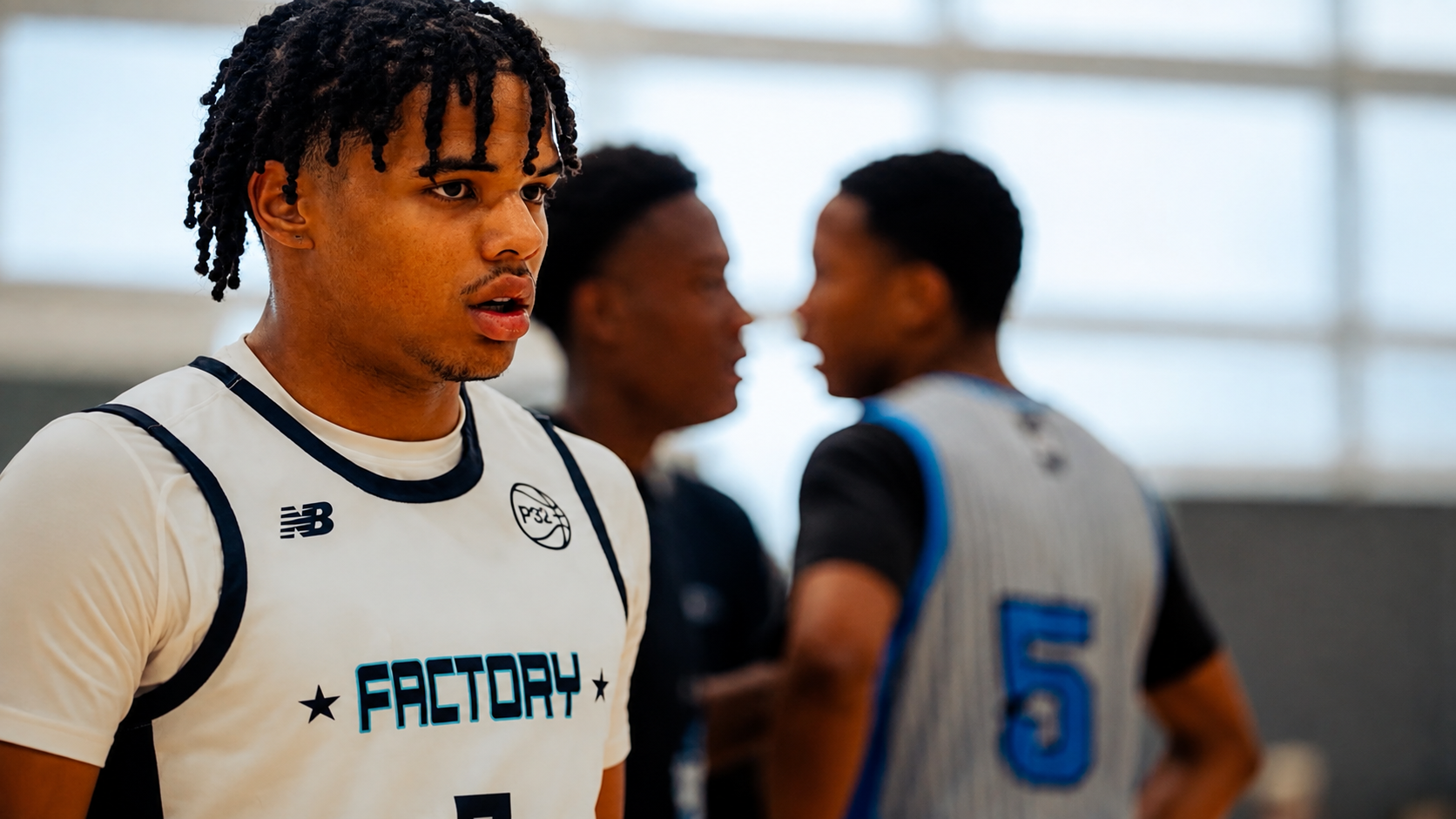
For young basketball players, development is about much more than what happens during a game. The work put in behind the scenes often becomes the foundation for what eventually shows up on the court. For Class of 2028 prospect Xander Mitchell, that process is already underway.
Mitchell is a student-athlete at Sandra Day O’Connor High School in Arizona, where he is continuing to develop as a versatile guard and small forward. Listed at 6-foot-4 and 208 pounds, Mitchell has the physical frame to continue growing into a strong presence on the basketball court.
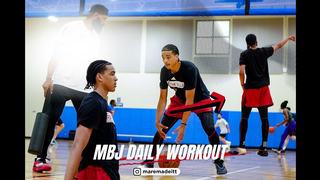
What stands out about his current journey is the emphasis on development. His recent training work, including upper-body workouts, is another example of a young player understanding that becoming a better basketball player requires commitment away from the spotlight.
A Young Prospect With Plenty of Time to Develop
Being a member of the Class of 2028 means Mitchell still has important years ahead of him. That makes this stage of his basketball journey especially important.
Players at this age have an opportunity that should never be overlooked: time.
Time allows an athlete to build strength, improve basketball skills, become more comfortable physically, learn how to handle different situations, and develop the mental side of the game.
Mitchell’s current size gives him an interesting foundation. At 6-foot-4 and 208 pounds, he already possesses a physical profile that can allow him to compete in multiple areas. As his skill set continues to mature, his versatility could become an important part of his identity as a player.
The goal is not to rush the process. The goal is to continue improving each season.
The Importance of Strength Training
Basketball has become an increasingly physical sport. Guards need strength to handle pressure, forwards need strength to battle around the basket, and every player needs a strong foundation to protect the ball, absorb contact, and maintain balance.
Mitchell’s recent upper-body training is a small look into that larger development process.
Strength training should not replace basketball skill development, but it can complement it. A stronger athlete can potentially become more effective when attacking the basket, defending, rebounding, creating space, and competing through physical contact.
For a player with Mitchell’s size, developing functional strength can also help him maximize his versatility.
The key is consistency.
One workout does not transform an athlete. One practice does not create a complete player. Development happens through repeated effort over months and years.
That is why training habits established early can become so valuable.
https://www.cbssports.com/college-basketball/news/transfer-portal-five-for-five-tracker-grades/
A Versatile Guard/Forward
Mitchell’s listed position as a shooting guard/small forward gives him an opportunity to develop multiple aspects of his game.
Modern basketball continues to reward players who can do more than one thing.
A guard who can defend multiple positions becomes valuable. A forward who can handle the ball becomes valuable. A player who can make decisions, move without the ball, communicate defensively, and play within a team becomes even more valuable.
For Mitchell, continuing to develop that versatility should be a major part of his journey.
At 6-foot-4, he has the potential to be comfortable operating in different roles depending on what his team needs. One night may require him to defend a bigger wing. Another may require him to handle the ball. Another may require him to attack the glass, make the extra pass, or provide energy defensively.
Learning how to impact a game without always having the ball is also an important part of becoming a complete player.
Development Is About More Than Numbers
It is easy to look at a basketball profile and immediately focus on height, weight, position, or statistics.
Those details matter, but they do not tell the entire story.
The development of a young athlete should also be measured by habits.
Is the player becoming more disciplined?
Is he learning how to respond to coaching?
Is he becoming stronger?
Is he improving his decision-making?
Is he becoming a better teammate?
Is he taking care of his academics?
Is he learning how to handle adversity?
Those questions can become just as important as points, rebounds, or highlights.
Mitchell’s profile lists a 3.30 GPA, showing that his development extends beyond basketball. For a student-athlete working toward the college level, academics should remain an important part of the overall picture.
Basketball can open doors, but preparation helps determine whether an athlete is ready to walk through them.
The Class of 2028 Journey
The Class of 2028 is still several years away from college basketball decisions becoming immediate. That makes this a period for building rather than worrying about the finish line.
There will be plenty of time for recruiting conversations, evaluations, tournaments, camps, visits, and opportunities.
Right now, the focus should be on becoming the best version of the player Mitchell can become.
Every season provides another opportunity.
Freshman development can lead to sophomore confidence. Sophomore growth can lead to junior exposure. Junior development can create opportunities for the next level.
Nothing is guaranteed, but consistent preparation gives a player a better chance to take advantage of opportunities when they arrive.
https://www.ballertube.com/news/639/two-former-nba-players-48-hours-and-a-debate-the-wnba-did-not-ask-for/?tag_ids=257,40757,33414,2886,25847,39884,5203
Learning From Every Workout
Training sessions can teach athletes lessons that extend beyond the weight room.
Showing up when you are tired teaches discipline.
Finishing a difficult workout teaches perseverance.
Listening to a trainer or coach teaches accountability.
Returning the next day teaches consistency.
These lessons can eventually translate to basketball.
There will be games when shots are not falling. There will be practices when a player struggles. There will be moments when another athlete gets an opportunity that someone else wanted.
The players who learn how to continue working through those moments often give themselves the best chance to keep progressing.
For Mitchell, the current training stage is about building that mindset while he continues developing physically and technically.
Preparing for the Demands of High-Level Basketball
As Mitchell progresses through high school basketball, the game will continue to become faster and more demanding.
The competition will become stronger.
Defenders will become more athletic.
Players will become more physical.
Coaches will expect better decision-making.
That is why preparation cannot wait until the recruiting process becomes serious.
The foundation has to be built now.
For a player listed as a shooting guard/small forward, continuing to develop ball handling, shooting, finishing, defensive footwork, rebounding, passing, and overall basketball IQ can help create a well-rounded game.
The physical work can support those skills.
The mental work can separate them.
The Role of Consistency
Consistency may be one of the most underrated qualities in athlete development.
Anybody can have a great day.
Anybody can have a great workout.
Anybody can post a highlight.
The challenge is doing the work when nobody is watching.
That is where long-term development begins.
Mitchell’s recent training post may only show a small moment, but moments like that are part of a much larger journey. A player does not become a college prospect from one workout. He builds toward that goal through hundreds of practices, workouts, games, conversations, corrections, successes, and failures.
The process takes patience.
Representing Sandra Day O’Connor High School
Playing for Sandra Day O’Connor High School gives Mitchell an environment in which he can continue competing, learning, and developing.
High school basketball provides young athletes with experiences that cannot always be replicated through individual training.
Playing in organized competition teaches players how to communicate with teammates, follow a system, respond to coaching, deal with pressure, and compete when things do not go according to plan.
Those experiences can help shape a player’s identity.
For Mitchell, every season at the high school level represents another opportunity to show growth.
The goal should be to look back each year and recognize a better player than the year before.
Building a Complete Student-Athlete
One of the most important parts of Mitchell’s journey will be maintaining balance.
Basketball is important, but so are academics, character, relationships, responsibility, and personal growth.
His 3.30 GPA provides a foundation academically, and continuing to prioritize the classroom can help keep future opportunities open.
College coaches are not simply evaluating athletes.
They are evaluating young people.
They want to know whether a player can handle responsibility, respond to coaching, work with teammates, represent a program, and manage the demands of being a student-athlete.
Developing those qualities now can pay dividends later.
What Comes Next for Xander Mitchell?
The next chapter of Mitchell’s journey will be about continued development.
There is no need to rush the process.
At this stage, the focus should remain on improving the fundamentals, getting stronger, becoming more consistent, learning from coaches, competing against quality competition, and continuing to grow academically.
His size gives him a strong starting point.
His position gives him room to develop versatility.
His class year gives him time.
The biggest question is what he does with that time.
If Mitchell continues approaching his development with discipline and purpose, the next several years can become an important period in his basketball journey.
Every workout can be an investment.
Every practice can be a lesson.
Every game can provide feedback.
Every challenge can become an opportunity to grow.
The Bigger Picture
Xander Mitchell is still early in his basketball journey, and that is exactly what makes his development worth watching.
The Class of 2028 prospect from Sandra Day O’Connor High School has a physical foundation, academic foundation, and plenty of time to continue developing his game.
His recent upper-body work is a reminder that progress is built through effort.
The basketball world will eventually see the results of that work through competition, but the foundation is being created long before the spotlight arrives.
For Mitchell, the mission is simple: keep working, keep learning, keep improving, and stay committed to the process.
There will be bigger games ahead.
There will be tougher competition ahead.
There will be recruiting opportunities ahead.
But before all of that comes preparation.
And for a young player with years of development still in front of him, preparation may be the most important part of the journey.