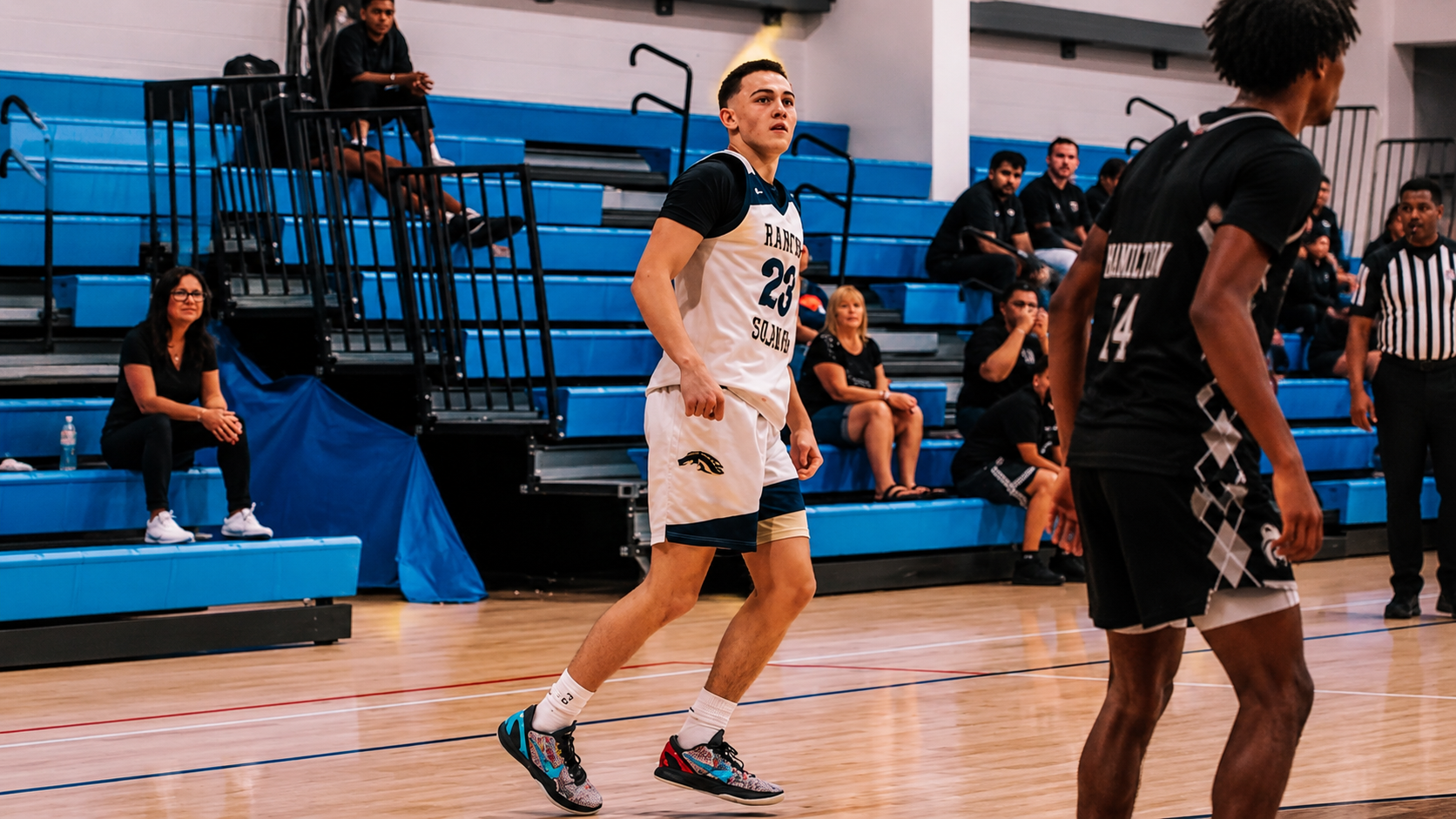
In the world of high school basketball, development is often just as important as recognition. Players are constantly working to improve their skills, become more confident, understand the game at a deeper level, and prepare themselves for the opportunities that can come later. The foundation is already there.
Listed at 6’3” and 175 pounds, Bauer has good size for a guard and is continuing to develop his game. He attends Rancho Solano Preparatory School and currently carries a 3.2 GPA. That combination of basketball development and academics is a part of his story as he works toward becoming a more complete student-athlete.
The Early Part of the Journey
Being a 2028 prospect means Bauer still has valuable time to grow before the college recruiting process reaches its most important stages. That time should be viewed as an opportunity rather than a reason to rush. Every workout, practice, game, and conversation with coaches can become part of the foundation for what comes next.
For young guards, development is rarely about becoming a finished player overnight. It is about stacking good days together. A player can improve his ball handling one week, his shooting the next, and his decision-making over the course of a season. Over time, those small improvements can become major changes in the way a player performs on the court.
Bauer’s profile reflects a player who is still writing that story. His size gives him a foundation to work from, while his age gives him room to add strength, skill, confidence, and experience. The next several seasons can be important in determining what type of guard he ultimately becomes.
Working on the Craft
One of the clearest parts of Bauer’s journey is his willingness to spend time developing his game. His social media profile shows him training, including a workout with BLav. Training sessions can be valuable because they give players an environment where they can focus on specific areas instead of simply playing games.
For a guard, individual development can include ball security, shooting mechanics, footwork, passing, finishing, change of pace, defensive movement, and reading different situations. The goal is not simply to collect drills. The goal is to turn those drills into habits that show up naturally during competition.
The best development happens when a player understands why he is doing something. A guard who works on his handle should know how that handle helps him create space. A guard who works on his jumper should understand how footwork and balance affect consistency. A player working on finishing should learn how to use angles, timing, strength, and both hands.
That mindset can help Bauer continue building his identity as a player. At his size, becoming comfortable handling the ball, making decisions, and playing multiple guard roles could be valuable as his competition becomes stronger.
Competing With Confidence
Confidence is another major part of a young player’s development. Confidence does not mean believing that every shot will go in or that every possession will be perfect. It means being willing to make a decision, learn from mistakes, and stay engaged when things do not go according to plan.
For guards, confidence often affects every part of the game. A confident ball handler can attack pressure instead of avoiding it. A confident shooter can stay ready when the ball moves around the perimeter. A confident passer can make the extra play rather than forcing a difficult shot.
Bauer’s challenge moving forward will be to continue turning training into game confidence. Workouts can provide repetition, but live competition provides the tests. Defenders move differently. Passing lanes close faster. Coaches demand better decisions. The pace becomes more physical and unpredictable.
Those experiences are important. A young guard should not be discouraged by mistakes during that process. Turnovers, missed shots, defensive breakdowns, and difficult games can all become teaching moments when a player responds the right way.
https://www.ballertube.com/news/633/peaches-points-and-the-next-generation-inside-the-2026-nike-eybl-peach-jam/?tag_ids=64,4075,25986,40997,3554,40998,27283,41002,35506,40999,160,10435,2886,28824
The Importance of Size
At 6’3”, Bauer has physical tools that can give him flexibility in the backcourt. Size can help a guard see over smaller defenders, contest shots, defend multiple positions, and finish through contact as he becomes stronger.
However, size alone does not determine a player’s future. The next step is learning how to maximize it. That means developing functional strength, improving footwork, becoming quicker laterally, and learning how to use his body without losing balance or control.
As Bauer gets older, his physical development will naturally become another part of his basketball journey. Strength and conditioning should support his skills rather than replace them. A stronger guard still needs to handle the ball. A faster guard still needs to make the correct read. A bigger guard still needs to defend with discipline.
If Bauer continues developing his physical tools alongside his basketball skills, his size could become an important part of his identity on both ends of the court.
Academics Matter
Basketball may be a major part of Bauer’s journey, but being a student-athlete means the classroom matters too. His current 3.2 GPA shows that academics are part of the equation.
College coaches evaluate more than what happens between the lines. Academic responsibility can help demonstrate maturity, consistency, and the ability to manage multiple responsibilities. For a young prospect, maintaining or improving his GPA can become another way to prepare for the future.
There is also a practical side to academic preparation. The recruiting process can open doors, but athletes need to be academically prepared to take advantage of those opportunities. Strong habits in the classroom can help reduce stress later and give a player more options when college conversations become serious.
For Bauer, continuing to take school seriously should remain a priority alongside basketball development. The goal is not simply to become a better basketball player. It is to become a student-athlete who is prepared for whatever opportunity comes next.
Building a Recruiting Profile
As a 2028 prospect, Bauer has time to build a recruiting profile that accurately represents who he is as a player. That process should be gradual and authentic.
A strong recruiting profile can include updated measurements, academic information, game film, training clips, schedules, contact information, and evidence of improvement. But the most important piece is still what happens on the court.
Recruiting is about evaluation. Coaches want to understand how a player thinks, competes, responds to coaching, and fits into a team. A highlight clip can introduce a prospect, but complete game film and live evaluation can provide a much clearer picture.
That is why Bauer should continue focusing on development rather than chasing attention. If his game improves, his confidence grows, and his body of work becomes stronger, the recruiting conversation can develop naturally.
https://www.cbssports.com/college-basketball/news/college-basketballs-five-for-five-transfer-portal-winners-losers/
The Role of Rancho Solano Preparatory School
Bauer’s time at Rancho Solano Preparatory School can be an important part of his development. School basketball provides more than games. It gives young players opportunities to learn team concepts, compete against different styles, build relationships with coaches, and understand what it means to contribute to a program.
Every season brings different responsibilities. Sometimes a player is asked to score. Other times he may need to defend, rebound, make plays, communicate, or simply provide energy. Learning how to impact a game without needing the ball is an important lesson for any guard.
For Bauer, continuing to become a reliable teammate can be just as important as improving individual statistics. College basketball is built around players who can make winning plays within a team structure.
The Next Phase
The next few years could be significant for Bauer. As he moves through high school, he will have opportunities to add strength, improve his skill level, compete at higher levels, and learn more about what college basketball requires.
His development should be measured over time. One workout does not define a player. One game does not define a player. Neither does one recruiting conversation.
What matters is the pattern.
Does he keep working? Does he respond to coaching? Does he take care of the classroom? Does he become a better teammate? Does he learn from difficult games? Does he continue building his body and skill set?
Those are the questions that can shape his trajectory.
Staying Consistent
Another important part of Bauer’s development will be consistency. Basketball development is not something that happens only during the season. The players who continue working during the offseason often give themselves an opportunity to return stronger and more prepared. For Bauer, that can mean continuing to sharpen his shooting, ball handling, conditioning, defensive technique, and overall understanding of the game.
Consistency also means taking care of the small things. Showing up on time, listening to coaches, encouraging teammates, staying focused in school, and maintaining a positive attitude can all contribute to long-term growth. These habits may not always appear on a stat sheet, but they can help shape the type of player and person Bauer becomes.
As his high school career continues, every season will provide another opportunity to learn, compete, and improve. The goal should remain simple: become better than he was yesterday and continue building toward his future.
A Guard With Room to Grow
Jack Bauer is not presented as a finished product, and that is exactly what makes the 2028 class exciting. Young players have time to develop identities, correct weaknesses, discover strengths, and grow into their potential.
At 6’3”, with a current 3.2 GPA and a commitment to continued training, Bauer has a foundation to build upon. His work now can help determine what opportunities become available later.
The biggest message for Bauer should be simple: keep developing.
Keep working on the details. Keep learning the game. Keep competing. Keep taking academics seriously. Keep listening to coaches and trainers. Keep finding ways to become more consistent.
The recruiting world will eventually pay attention to the players who show sustained growth, but the foundation is built long before the offers arrive.
For now, Bauer’s journey is about preparation. It is about becoming stronger, more skilled, more confident, and more complete with every season. If he continues approaching his development with purpose, the next chapter of his basketball story could be one worth watching.
The road from a young high school guard to a college prospect is not created by one highlight or one workout. It is built through thousands of decisions, repetitions, setbacks, adjustments, and moments of growth.
Jack Bauer is at the beginning of that road. The opportunity ahead is to keep moving forward.