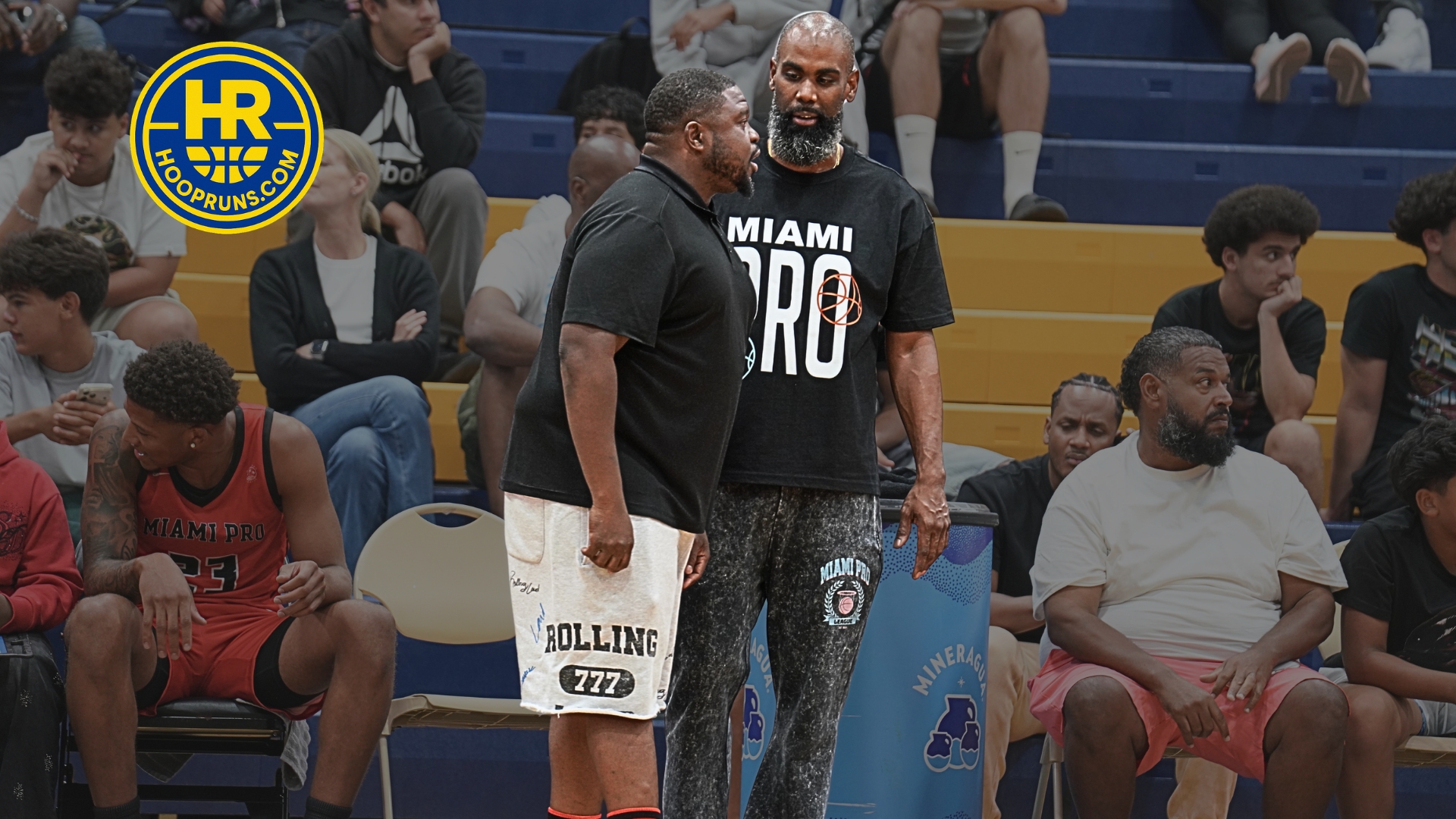
When Kyle Davis founded the Miami Pro League in 2013, the idea wasn't simply to organize another summer basketball tournament. Davis saw an opportunity to create something Miami was missing: a place where NBA players, overseas professionals and talented local hoopers could compete in the same gym while the community experienced high-level basketball up close.
The concept started modestly. One account of the league's formation describes Davis gathering friends at a home in Miami's Country Walk community and laying out his idea while everyone sat together in a garage. The goal was to build something for Miami's basketball community. By 2015, Miami Pro League was already listed among certified summer basketball leagues, with Davis identified as its commissioner.
Building Something He Wanted as a Kid
Davis' motivation appears to go deeper than simply operating a successful basketball event. He has repeatedly talked about creating an experience for Miami's youth that wasn't available to him growing up.
In discussing the league, Davis has said that one of his greatest sources of pride is giving young people in Miami something to anticipate every summer. He has also recalled wishing as a kid that he could have watched Miami basketball stars such as Tim Hardaway and Alonzo Mourning in this type of intimate summer environment.
That community-first approach helped establish the league's identity. Instead of separating professional basketball from the local basketball scene, Miami Pro brought those worlds together. A local player could potentially share a court with someone from the NBA or a high-level international league, while kids sitting nearby could see professional athletes in a completely different environment than an NBA arena.
Miami itself became part of Davis' strategy. The city is already a major offseason destination for professional athletes, and Davis recognized that instead of trying to convince players to spend their summers somewhere new, Miami Pro could create elite competition where many players were already training and spending time.
Social Media Changed the League's Reach
Davis also understood relatively early that the value of a pro-am wasn't limited to the people sitting inside the gym.
When discussing how Miami Pro consistently attracted recognizable players, Davis credited a combination of social media and organic word of mouth with creating buzz around the league.
That strategy became increasingly valuable as basketball highlights became a major part of social media culture. A big performance no longer disappeared when the gym emptied. Highlights could circulate nationally, giving the league exposure well beyond South Florida.
The names eventually followed. The NBA has documented appearances from players including Bam Adebayo, Donovan Mitchell, Collin Sexton and Victor Oladipo, while Miami Pro has continued positioning itself as a meeting point for NBA, G League, overseas and emerging players.
In 2023, the league reached another important milestone when Miami Pro games were streamed through NBA digital platforms. Selected highlights were also distributed through NBA social and digital channels, while replays became available through NBA.com and the NBA App.
For something that began as an idea discussed in a garage, reaching the NBA's own distribution ecosystem represented significant validation.
Miami Pro Has Become More Than a Pro-Am
The evolution of Miami Pro also shows how independent basketball properties are changing.
A successful summer league can now be much more than games on a schedule. Every matchup produces digital content. Every recognizable player creates potential audience growth. Sponsors gain access to basketball fans, while streaming and social media allow an event in Miami to reach people anywhere.
Miami Pro has already experimented with that broader model. In 2023, the league announced a partnership with social platform CheckN designed to provide fans with additional access to games, players, content and sponsor offers. Davis said at the time that he believed Miami Pro already had an elite on-court product and wanted to improve the experience surrounding it.
That is an important distinction. Davis wasn't only thinking about who played in the games. He was thinking about how people experience the Miami Pro League as a brand.
What Is a Property Like Miami Pro Actually Worth?
There isn't enough public financial information to responsibly assign Miami Pro League a specific valuation or estimate what Davis personally earns from it. But the league has built assets that have real value: more than a decade of brand recognition, relationships throughout professional basketball, an established position in the Miami market, recurring events, sponsorship opportunities and a product that has already demonstrated it can be distributed by the NBA. The larger opportunity is potentially in combining the live event with sponsorship, media rights, branded content, merchandise and year-round digital programming. In sports, creating the event is one thing; creating a property that people immediately associate with a city and a particular time of year is considerably harder.
The Legacy Davis Is Building
Perhaps Davis' biggest accomplishment is that Miami Pro League feels connected to its city.
There are older and more historically recognized summer basketball institutions around the country, including New York's legendary playground leagues and Los Angeles' Drew League. Miami Pro did not have generations of history to inherit. Davis and his team had to build their own identity.
And they did it by leaning into what Miami already had.
The players were here. The trainers were here. The fans were here. Professional athletes were spending their summers here. Young players wanted somewhere to watch and learn from them.
Davis simply created a place where all of those pieces could meet.
More than a decade after its founding, that original concept remains the foundation of Miami Pro League. The names have become bigger, the highlights travel farther and the distribution has become more sophisticated, but the motivation Davis has described remains remarkably similar: give Miami great basketball, showcase its culture and give the next generation something to look forward to every summer.