South Florida has never had a shortage of girls basketball talent. The harder question has always been where that talent is developing, which programs are putting young players in the right environments, and who is beginning to separate themselves in an increasingly crowded grassroots basketball market.
The latest Rising Blue Star Skills Camp standouts provide an interesting snapshot.
Twelve Florida prospects were recognized following the Miami stop. Of those 12, five currently play with Florida Nation, four play with Miami Suns, one with Miramar Miracle, while Grazia Martin and Riley Wilkerson appear to be between club situations at the moment.
For an established organization like Miami Suns, having multiple players recognized is hardly surprising. The Suns have been part of the South Florida girls basketball landscape for years. What stands out is Florida Nation having the largest representation of any single program on the list while still in Year 1 of building its program.
That deserves some context, particularly because of who is doing the evaluating.
Why Blue Star Recognition Carries Weight
Blue Star isn't a new social-media ranking page that appeared during the current explosion of youth basketball content.
Its history in girls basketball stretches back more than four decades. Blue Star says its original Invitational Camps began in 1981, with its scouting operation developing into what it describes as the longest-running girls scouting service serving the college basketball community. Its network includes coaches across Division I, Division II, Division III, NAIA and junior-college basketball.
The names that have passed through the Blue Star system help explain its reputation. Blue Star cites former participants including Candace Parker, Skylar Diggins and Breanna Stewart, along with an extensive list of future college and professional players. It says roughly 70% of the top female high school players over its history have participated in its programming.
The organization has also developed a pathway for identifying talent before many players become nationally known.
Rising Blue Star regional camps are part of that identification process. Players can progress from regional events toward opportunities such as Blue Star Skills Academy and, for younger elite prospects, the invitation-only Blue Star 30. Blue Star says its evaluators, media staff and experienced travel directors contribute to that identification process.
And Blue Star's track record at the younger ages is notable. The organization reports that, across a recent two-year period, 10 of 12 players selected to one USA Basketball U16 roster and eight of 12 on a U17 roster had previously been Blue Star 30 selections.
View this post on Instagram
That doesn't mean every Rising Blue Star standout will become a Division I prospect. Development at these ages is far too unpredictable for that.
But it does mean being recognized puts a player's name into an evaluation ecosystem that has been identifying girls basketball talent for decades.
Five Florida Nation Players Make the List
That makes Florida Nation's representation particularly noteworthy.
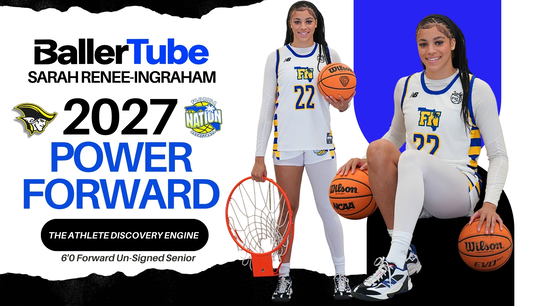
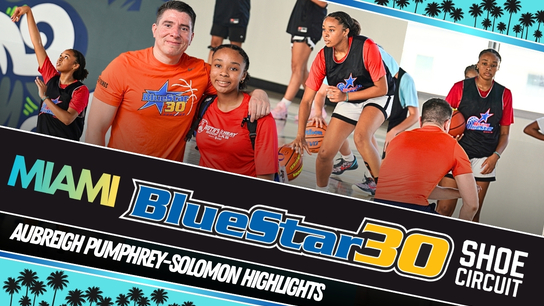
Shiloh Archambault-Tiger (2031), Carly Lewis (2032), Armani McFadden (2032), Aubreigh Pumphrey-Solomon (2029) and Taylen Williams (2032) give Florida Nation five of the 12 Florida players recognized from the Miami camp.
Miami Suns accounted for four, Miramar Miracle had one, while Martin and Wilkerson round out the group without an apparent settled club destination at this point.
For Florida Nation, the number matters less as a claim of superiority over another program and more as an early indicator that its developmental approach is producing players who are getting noticed independently.
That's an important distinction.
Programs can promote their own athletes. Coaches can tell families how talented their roster is. Social media can make almost anyone look like a prospect.
Independent recognition carries a different value because the evaluation comes from outside the organization.
And when five players from the same first-year program emerge from the same regional evaluation as standouts, it becomes difficult to dismiss it as one exceptional player simply carrying a roster.
The Younger Classes May Be the Bigger Story
Perhaps the most encouraging part for Florida Nation is when these players are being recognized.
Three of the five are from the classes of 2031 or 2032.
That matters for a program attempting to build something sustainable. A successful grassroots organization isn't simply measured by assembling a strong 17U roster for one summer. Long-term strength comes from identifying and developing players early enough that they grow within the program.
Blue Star itself is built around that concept.
Its Rising Blue Star system evaluates younger players regionally, while Blue Star 30 has become an invitation-only national environment largely focused on emerging middle-school talent. The 2026 Blue Star 30 included drills, individual competition, 3-on-3, classroom discussions and traditional 5-on-5 competition rather than simply stacking another weekend of tournament games.
That makes recognition of Florida Nation's younger athletes particularly relevant.
These aren't simply players nearing the end of their recruiting journeys. Several are near the beginning.
What It Says About Florida Nation
Five names on one camp's standout list don't establish a program's long-term position in South Florida basketball. That will require years of development, retention, competition and ultimately seeing where these athletes go.
But Year 1 programs aren't supposed to have all the answers yet.
They're supposed to provide evidence that what they're building might work.
For Florida Nation, having more players represented among these 12 Florida Rising Blue Star standouts than any other individual program is one of those early pieces of evidence.
It suggests that the talent inside the gym is being recognized outside of it.
And perhaps more importantly, Florida Nation's representation isn't concentrated in one class. The recognized players stretch from 2029 through 2032, giving the program young talent that can potentially develop together over multiple seasons.
The Miami Suns' four selections reinforce what has already been known about one of the region's established basketball pipelines. Florida Nation's five tell a different story: a new organization is beginning to place its name beside programs that have been doing this much longer, and in bigger numbers.
There is a tremendous distance between being identified as a promising young player and eventually becoming a high-level college prospect. Blue Star recognition isn't a scholarship offer, and it shouldn't be treated as one.
But recruiting starts with identification.
For decades, Blue Star has built part of its reputation on identifying talented girls basketball players early, placing them in increasingly competitive environments and continuing to evaluate them as they develop.
For five Florida Nation athletes to enter that conversation during the program's first year doesn't tell us where Florida Nation will ultimately sit in South Florida's basketball hierarchy.
It does, however, give us another meaningful indication that the program's foundation is one of the most solid in the region.