BallerTube Sports News | October 9, 2026
High school basketball is undergoing one of the most significant transformations in its history, and the events of the past several weeks have made one thing increasingly clear: the traditional high school basketball model is no longer the only pathway to national relevance.
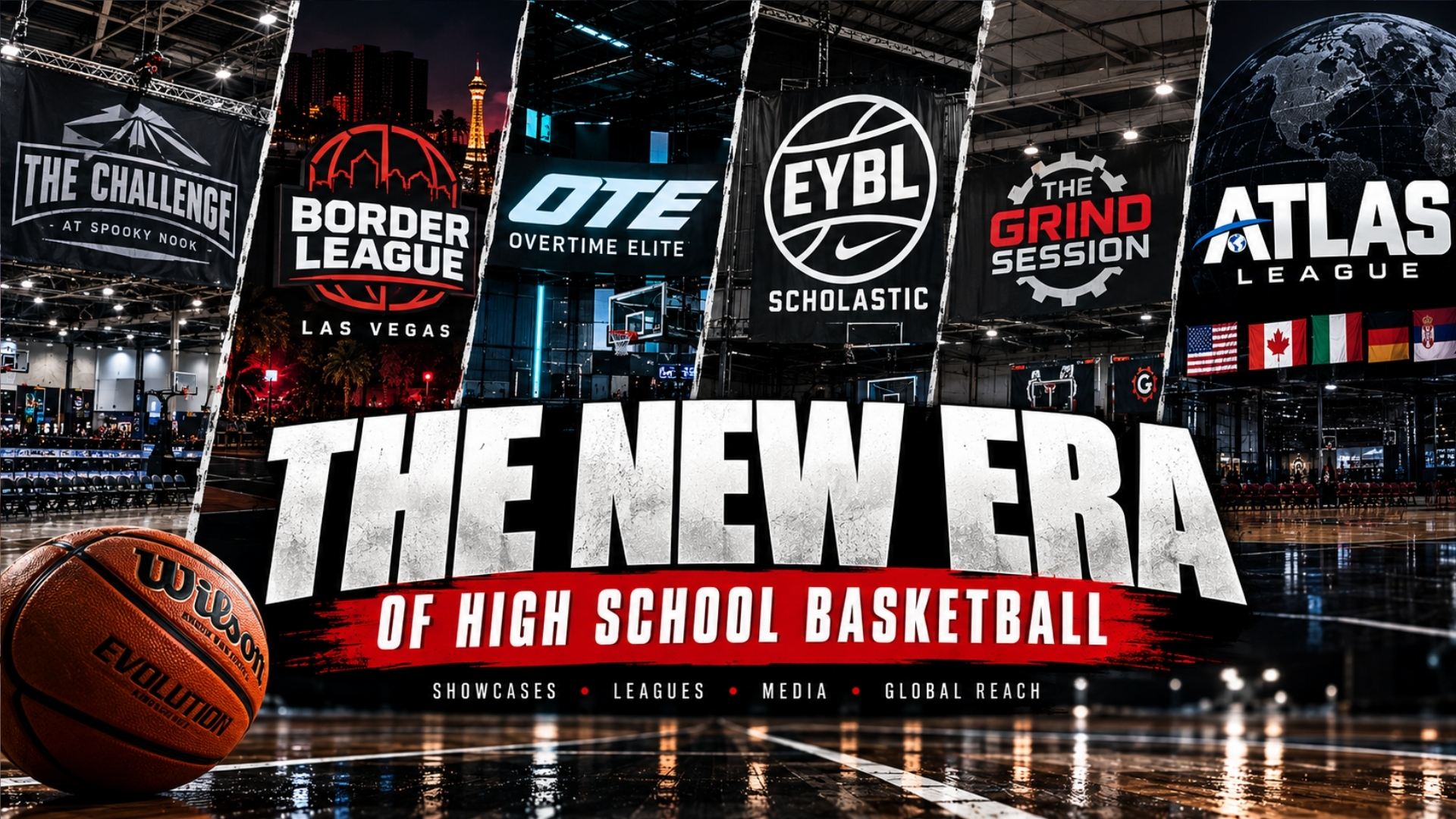
From The Challenge at Spooky Nook to Border League in Las Vegas, the expanding influence of Overtime Elite, Nike's EYBL Scholastic and the Grind Session, and now the introduction of the international ATLAS League, elite scholastic basketball is rapidly developing into an entirely different industry.
These competitions may operate under different formats, but they share a common objective: bringing together elite talent, creating high-profile matchups and building platforms capable of attracting national audiences, college recruiters, sponsors and media companies.
What was once primarily a school-based sport organized around local rivalries, conference championships and state tournaments is increasingly becoming a national, and now international, marketplace.
The question is no longer simply which high school has the best basketball team.
It's who controls the talent, the competition, the exposure and ultimately the business surrounding the next generation of basketball stars.
National Showcases Are Becoming the New Center of High School Basketball
The recent emergence and continued growth of national showcase events illustrate how much the high school basketball calendar has changed.
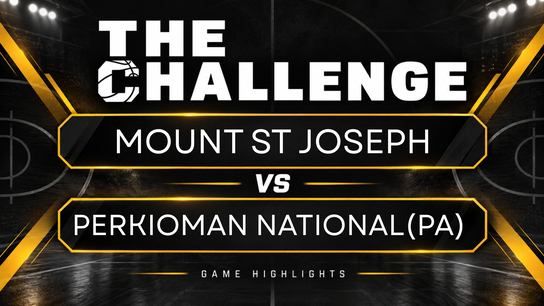
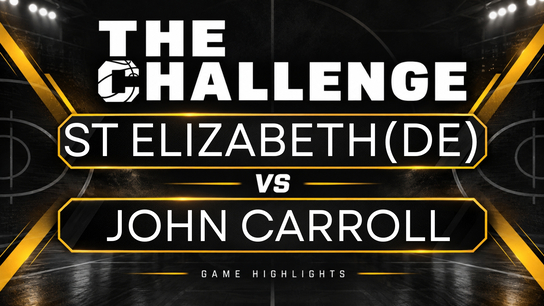
Events such as The Challenge at Spooky Nook and Border League have become important gathering points for nationally recognized programs, highly ranked prospects, recruiting analysts and basketball media.
Rather than waiting for the traditional high school season to produce compelling matchups, event organizers are bringing elite programs together in centralized locations and creating national-level competition before many local schedules have even begun.
Border League, in particular, has demonstrated how a high school basketball event can evolve into a recognizable sports property. Its combination of nationally ranked programs, multiple competition divisions, prominent prospects and media exposure creates an environment that resembles a major grassroots basketball event more than a conventional high school tournament.
The Challenge represents another example of the growing demand for nationally relevant matchups between established prep programs.
For elite prospects, these events offer an opportunity to compete against highly regarded opponents in front of recruiters and media outlets that might otherwise never attend their local high school games.
A strong performance against a nationally ranked program can generate attention far beyond the athlete's hometown.
That doesn't mean state championships or traditional school rivalries have lost their importance. But for players pursuing major college opportunities, the most valuable exposure increasingly comes from competing on stages that attract national audiences.
And that shift is changing how elite programs build their schedules.
The Rise of Two Different High School Basketball Economies
Perhaps the most important development is the widening separation between traditional high school basketball and the elite prep basketball marketplace.
The traditional system remains centered around school districts, state athletic associations, regional conferences and state championships. Its primary purpose is to provide organized scholastic competition for student-athletes representing their schools.
The emerging elite system operates differently.
Independent academies and nationally recognized prep programs increasingly recruit players from across the country, travel extensively, participate in privately organized competitions and build their schedules around exposure and player development.
These programs are becoming part of a larger basketball economy involving footwear companies, media organizations, private investors, recruiting services and commercial sponsors.
The distinction is significant.
A traditional high school team might build its season around winning a district championship and advancing through the state playoffs.
An elite academy might build its season around national rankings, matchups against other top programs, televised showcases, international competition and preparing players for high-major college basketball.
Both models can provide meaningful opportunities for athletes, but they increasingly serve different purposes.
As more money and attention flow into the elite marketplace, the gap between the two systems could continue to grow.
EYBL Scholastic, Overtime Elite and the Grind Session Changed the Model
The development of organized national basketball platforms helped lay the foundation for the current transformation.
Nike's EYBL Scholastic brought together nationally recognized prep programs under a branded competition structure, extending the influence of Nike's grassroots basketball ecosystem into the school-year calendar.
The conference demonstrated how an established footwear brand could connect elite scholastic competition with recruiting exposure, recognizable teams and national media distribution.
Overtime Elite introduced a different approach, combining high-level competition with player development, athlete branding, digital content and sports entertainment.
Its model showed that elite teenage basketball players could become recognizable media personalities while still developing toward college and professional opportunities.
The Grind Session has also played a major role in the national prep landscape, creating a competition platform that brings together independent academies and international talent across multiple events.
Each organization helped move elite basketball away from a purely regional model.
Now, the arrival of ATLAS suggests that the next phase could be even more ambitious.
ATLAS Takes Elite High School Basketball Global
Announced October 8, the new ATLAS League brings together 11 programs from the United States, Canada and Europe, including IMG Academy, Prolific Prep, SPIRE Academy, Sunrise Christian Academy and DME Academy.
The international membership includes Orangeville Prep of Canada, Mega Basket of Serbia, Orange1 Bassano and Pallacanestro Varese of Italy, OrangeAcademy Ulm of Germany and Žalgiris of Lithuania.
Operated by WorldStage Sports, ATLAS is scheduled to begin November 11 in Bradenton, Florida, with additional competition in Miami, Italy, Lithuania, Ohio and Arizona before its inaugural playoffs in Toronto in March 2027.
The league represents an important development because it is not simply inviting international teams to participate in an American showcase.
It is attempting to establish an international basketball competition in which American prep academies and European development programs compete within the same league structure.
That creates opportunities for American prospects to experience different styles of basketball while providing international players with direct access to American recruiting networks.
It also introduces new commercial possibilities.
An international league featuring recognizable basketball academies could potentially attract sponsors, streaming partners and audiences across several basketball markets.
ATLAS has not officially announced adidas as a league-wide sponsor, although the presence of adidas-connected programs such as SPIRE Academy makes the footwear landscape an intriguing storyline.
With Nike already established through EYBL Scholastic and adidas competing aggressively in grassroots basketball through its 3SSB circuit, the battle for influence over elite young basketball talent could become even more competitive.
The introduction of ATLAS also gives established prep programs another option when determining where to compete, potentially shifting the balance of power among existing leagues.
High School Basketball Is Adopting the AAU Circuit Model
One of the most interesting aspects of this transformation is how closely elite scholastic basketball is beginning to resemble the grassroots basketball circuit.
AAU basketball became an important recruiting environment by concentrating top prospects at major events, allowing college coaches and recruiting analysts to evaluate numerous athletes in one location.
That model created value for event organizers, footwear companies, media outlets and recruiting services.
Now a similar structure is developing during the high school season.
National showcases bring together elite programs for high-profile weekends. Scholastic leagues organize recurring matchups between nationally recognized teams. Independent academies travel across the country, and international competitions are expanding the geographic reach of the sport.
The result is a basketball calendar that increasingly operates year-round.
For top prospects, the distinction between grassroots basketball and school-year competition is becoming less significant from an exposure standpoint.
Both environments now offer opportunities to compete against elite opponents, build recruiting profiles and develop recognizable personal brands.
That creates additional opportunities for athletes, but it also means the competition for visibility is becoming more intense.
The Next Major Battle Is for Media Rights and Content
While much of the attention surrounding these leagues focuses on players and matchups, the bigger business opportunity may be in media.
For years, youth basketball generated revenue primarily through tournament registration fees, camps, sponsorships, apparel partnerships and recruiting-related services.
Those revenue streams remain important, but elite basketball competitions are increasingly being developed as media properties.
A nationally recognized league offers something valuable to broadcasters and digital platforms: consistent programming, recognizable teams, compelling athletes and recurring storylines.
Rather than broadcasting isolated high school games, media companies can potentially distribute entire seasons, league standings, championship events, player features and original programming.
Border League has already demonstrated the value of bringing national media attention to high school basketball events.
Overtime Elite has built a substantial part of its identity around digital content and athlete storytelling.
EYBL Scholastic has benefited from national broadcast exposure, while ATLAS now introduces the possibility of international basketball content reaching audiences across multiple countries.
The business potential includes streaming subscriptions, advertising, sponsorships, licensing, event ticketing and merchandise.
But there is another important consideration.
As leagues become more commercially sophisticated, the rights to broadcast games and distribute highlights could become increasingly valuable.
Organizations that control those rights may have a significant advantage over platforms that depend entirely on third-party content.
For emerging sports media companies, the opportunity may lie not only in broadcasting games, but also in building the infrastructure that connects athletes, teams, leagues, schedules, highlights and recruiting information across the increasingly fragmented basketball landscape.
Recruiting Is Becoming More Global and More Digital
The expansion of national and international competition is also changing how basketball prospects are evaluated.
College coaches are no longer limited to discovering players through local high school games, summer tournaments and traditional recruiting services.
Video platforms, digital scouting databases, national showcases and international events provide additional opportunities to evaluate athletes from virtually anywhere.
ATLAS could accelerate that trend by allowing American and international prospects to compete directly against common opponents.
Instead of comparing players exclusively through separate domestic and overseas scouting environments, evaluators will have more opportunities to assess how those athletes perform against one another.
At the same time, the growing volume of basketball content is making digital player profiles increasingly important.
Game film, highlights, statistics, schedules and historical performances can collectively provide a more complete picture of an athlete's development.
A player's recruiting identity is becoming something that extends beyond a school roster or a ranking on a recruiting website.
It is increasingly becoming a digital record of their basketball career.
However, more content does not automatically guarantee more exposure.
Athletes competing for nationally recognized academies may benefit from established media relationships and large audiences, while equally talented players at smaller schools could struggle to receive comparable attention.
That imbalance creates both a challenge for the sport and an opportunity for platforms designed to make athlete discovery more accessible.
Girls Basketball Could Be the Next Major Growth Market
While many of the most prominent developments in elite scholastic leagues have centered on boys basketball, girls basketball represents another significant opportunity.
The growing popularity of women's basketball has demonstrated the commercial potential of female athletes, while major grassroots circuits and national showcases continue producing highly recruited prospects.
Yet the school-year competition landscape for elite girls basketball has not developed the same concentration of nationally branded league properties seen on the boys side.
That could change.
A nationally organized girls scholastic competition featuring recognizable programs, consistent scheduling, media coverage and championship events could provide additional exposure opportunities while creating an attractive product for sponsors and streaming platforms.
The potential is particularly interesting because girls basketball already has a strong foundation of nationally competitive travel programs, established recruiting services and athletes building significant digital audiences.
As the business surrounding elite basketball expands, it would be surprising if investors, event operators and media organizations did not pursue more opportunities in the girls game.
The next major innovation in scholastic basketball may not necessarily come from another boys league.
It could come from an organization that successfully builds a scalable national media and competition platform around elite girls basketball.
Consolidation May Be the Next Phase
Although the emergence of additional leagues creates excitement, it also raises questions about how many major competitions the elite basketball marketplace can sustain.
There are only so many nationally recognized programs, elite prospects, major sponsors and premium media distribution opportunities available.
As more organizations compete for those resources, the market could eventually experience consolidation.
Some leagues may expand through additional membership and investment. Others could lose programs to competing organizations or shift toward different business models.
Footwear partnerships may influence which programs participate in certain competitions, while media distribution agreements could become important factors in determining league value.
The situation increasingly resembles other emerging sports markets in which multiple organizations compete to establish dominant brands before the industry eventually settles into a smaller number of leading properties.
That doesn't necessarily mean one organization will control all of elite high school basketball.
Different models can coexist.
But the current expansion is unlikely to continue indefinitely without some degree of realignment.
Where Does Traditional High School Basketball Fit?
Despite the growth of elite academies and national leagues, traditional high school basketball is not disappearing.
For the overwhelming majority of student-athletes, representing their school, competing against local rivals and pursuing state championships will remain central to the experience.
Those traditions still carry considerable importance within communities.
The challenge is ensuring that the growth of the elite marketplace does not create an environment where meaningful recruiting exposure becomes increasingly concentrated among a relatively small number of nationally recognized programs.
Not every talented athlete can attend IMG Academy, Prolific Prep or another major basketball institution.
Not every family can afford extensive travel or relocation.
And not every player develops early enough to attract attention from elite academies.
That is why accessible competition, local scouting, independent media coverage and open athlete discovery platforms will remain important.
The future of basketball development should not depend exclusively on whether an athlete belongs to a nationally branded program.
The growth of elite leagues creates more opportunities, but the sport will also need systems that help talented players outside those leagues get discovered.
The Future of High School Basketball: A Global Sports Industry
The next five years could bring even more dramatic changes to elite scholastic basketball.
National and international leagues are likely to continue competing for prominent programs. Footwear companies may expand their investments in school-year competition. Media rights could become more valuable as leagues build consistent audiences, and athletes may gain additional opportunities to develop their personal brands before reaching college.
At the same time, the industry could experience significant realignment as competing organizations attempt to establish sustainable business models.
The distinction between traditional high school basketball, elite prep academies and grassroots competition may become increasingly blurred.
For athletes, that could mean more opportunities to compete against high-level opponents and reach national audiences.
For coaches and recruiters, it could mean access to more comprehensive information and increasingly competitive evaluation environments.
For sponsors and media companies, it creates an emerging marketplace built around recognizable young athletes, year-round competition and passionate basketball audiences.
But perhaps the biggest change is philosophical.
High school basketball is no longer being viewed exclusively as a developmental stage before college.
At the elite level, it is increasingly being treated as a valuable sports product in its own right.
The Challenge, Border League, EYBL Scholastic, Overtime Elite, the Grind Session and now ATLAS are not simply adding games to the calendar. They are helping redefine the structure, economics and global reach of scholastic basketball.
The traditional high school game will remain an essential part of the sport.
But at the highest level, a new basketball economy is emerging, one where competition, recruiting, media and commercial opportunities are becoming deeply interconnected.
And as more organizations enter the marketplace, the most important question may no longer be who has the best team.
It may be who builds the platform that defines the next generation of basketball.