






BallerTube | Sports Recruiting & Highlight Video Platform for Athletes

College Football Junky Highlights, Videos and Stats

College Football Junky

College Football Junky

Sports Media
.
College Football
45 Profile Views
157 Videos
Follow For Free

Are you sure you want to cancel your College Football Junky subscription?

Your subscription greatly helps College Football Junky develop his athletic career, and you have full access to his exclusive content.

Subscribe to premium
to see more exclusive content from College Football Junky and support him.

24 Exclusive videos

Subscribe to premium
to see more exclusive content from College Football Junky and support this athlete.

157 Exclusive videos

Highlights

See All

Videos

See All

Videos

See All

News

See All

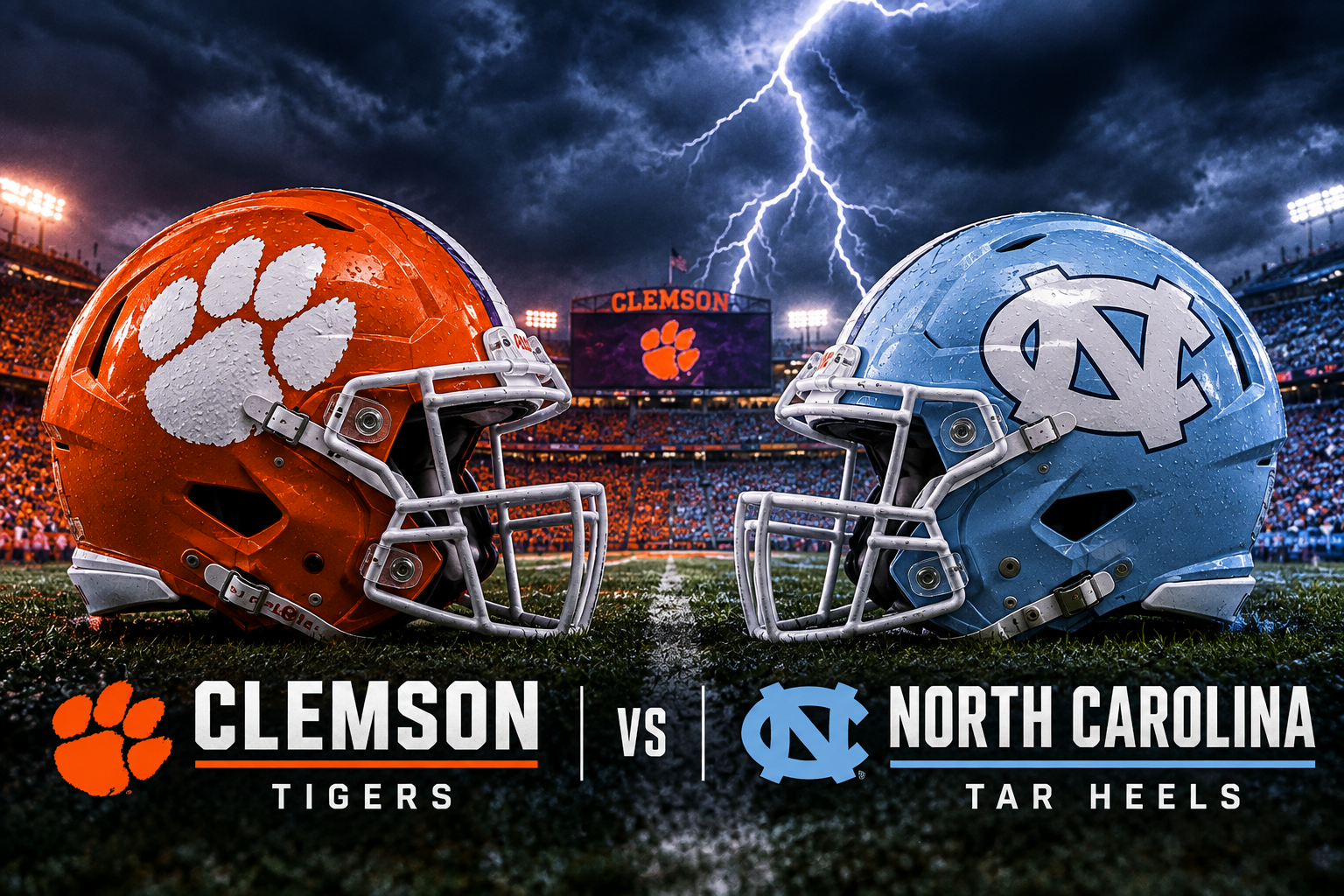
Clemson vs. North Carolina: The Momentum Had Already Shifted Before the Lightning Delay


Clemson 28, North Carolina 20.


The final score makes this look like a Clemson comeback that happened in the final eight minutes. The reality was more complicated. North Carolina controlled the opening half, but Clemson had already begun changing the game well before the lightning delay interrupted the fourth quarter.

UNC opened the ACC matchup with a 17-3 lead, scoring touchdowns on its first possession and a 75-yard drive in the first quarter. Benjamin Hall caught a 15-yard touchdown from Billy Edwards Jr., and Aeron Burrell added a 33-yard field goal in the second quarter.

Then Clemson started chipping away.

The Tigers closed the first half with an 18-play, 88-yard drive that ended with a field goal, cutting the deficit to 17-6. That possession mattered because Clemson wasn't simply waiting for something to happen. It was sustaining drives and forcing North Carolina's defense to stay on the field.

The third quarter made the momentum shift even clearer.

Clemson intercepted Edwards at the UNC 2-yard line, and although the Tar Heels immediately forced another field goal, the Tigers continued getting points. Later in the quarter, freshman quarterback Tait Reynolds connected with Christian Bentancur on a 27-yard touchdown, completing a 92-yard drive. Clemson was suddenly within 17-15.

That is important context before discussing the weather.

The Lightning Delay Didn't Create Clemson's Momentum

With 8:11 remaining, North Carolina was driving inside Clemson territory when lightning stopped play.

The delay lasted 2 hours and 28 minutes, a Clemson Memorial Stadium record. When the game stopped, UNC was leading 17-15 and had the ball at the Clemson 7-yard line, facing second-and-goal.

This is where the game becomes fascinating.

The delay unquestionably came at an enormous moment for North Carolina. The Tar Heels had a chance to turn a five-point lead into a much larger advantage.

But saying the delay caused Clemson's comeback doesn't tell the whole story.

Clemson had already cut a 14-point deficit to two points.

The Tigers had scored 9 points in the third quarter, had created turnovers and had put together a 92-yard touchdown drive. The momentum was already moving.

The weather interruption simply stopped both teams at a critical moment.

When they returned, UNC couldn't finish the drive.

Two runs by Demon June gained three yards, and Burrell converted a 22-yard field goal, putting North Carolina ahead 20-15 with 6:34 remaining.

Three points kept Clemson within one possession.

And Clemson immediately attacked.

Gideon Davidson Changed the Game

Clemson needed only four plays and 68 yards.

Gideon Davidson broke through for a 45-yard run, putting Clemson inside the UNC 10. Two plays later, the sophomore running back scored on an eight-yard touchdown run.

Clemson led 21-20.

Davidson finished with 105 rushing yards on 16 carries, while Clemson finished with 401 total yards, including 186 rushing yards. Reynolds completed 20 of 29 passes for 215 yards and a touchdown in his first career start.

That's why the fourth quarter can't simply be reduced to the weather delay.

Clemson's offense had already found another gear.

Then Came the Fourth-and-Short Decision

This is where the discussion around North Carolina's play-calling becomes legitimate.

After Clemson took its first lead, UNC had another opportunity to respond. Instead, the Tar Heels failed to convert on fourth down, turning the ball over to Clemson.

The Tigers immediately turned that possession into another touchdown.

Tyler Brown broke a 34-yard touchdown run, pushing Clemson's lead to 28-20 with one minute remaining.

The fourth-down decision will naturally receive attention because of the situation: North Carolina needed to sustain the drive, and the failed conversion gave Clemson another possession while the Tigers had completely seized control.

But there is a bigger point here.

North Carolina had multiple chances to stop the comeback.

The Tar Heels had a 17-3 lead.

They still led 17-15 entering the fourth quarter.

They had the ball at the Clemson 7-yard line when the lightning delay began.

They came back from the delay still leading 20-15.

And after Clemson went ahead 21-20, UNC still had another possession.

Clemson simply kept winning the next important moment.

The 25-3 Run Tells the Story

The most revealing statistic might be the simplest one.

After North Carolina went ahead 17-3, Clemson outscored UNC 25-3 over the remainder of the game. The Tigers scored 22 second-half points while North Carolina managed only three.

That's not a weather-delay statistic.

That's a football statistic.

The lightning delay became one of the defining images of the afternoon because of its timing, but Clemson's comeback was already developing before the skies opened.

The Tigers had established the run. Davidson eventually surpassed 100 yards. Reynolds settled into his first start. Clemson's defense created turnovers and repeatedly kept UNC from turning opportunities into touchdowns.

And when the game reached its decisive stretch, Clemson made the explosive plays.

A 45-yard run.

An eight-yard touchdown.

A fourth-down stop.

A 34-yard touchdown.

An interception to finish it.

That's how a 17-3 North Carolina lead became a 28-20 Clemson victory.

UNC's Missed Opportunities Will Be the Bigger Conversation

For North Carolina, the frustrating part isn't simply that the lightning delay interrupted its rhythm.

It's that the Tar Heels still had opportunities after the interruption.

They could have scored seven instead of three from the Clemson 7.

They could have answered after Clemson took the 21-20 lead.

They could have converted the critical fourth down and kept possession.

Instead, Clemson took advantage of each opening.

So the better way to describe this game isn't "the rain delay cost North Carolina."

The more accurate story is that Clemson had already begun taking control before the delay, the delay arrived at the worst possible moment for UNC, and North Carolina failed to regain control once play resumed.

That's what makes this Clemson vs. North Carolina game worth remembering.

It wasn't one play.

It wasn't just the weather.

It was a game that changed gradually, then suddenly.


Clemson vs. North Carolina: The Momentum Had Already Shifted Before the Lightning Delay

192

College Football Chaos: Who’s In, Who’s Out, and Why Notre Dame Just Walked Away

The 2025 college football regular season didn’t tiptoe to the finish line—it blew up on contact.

Conference titles flipped expectations, the first full 12-team College Football Playoff bracket is set, and one of the sport’s blue-blood brands, Notre Dame, responded to a playoff snub by doing something almost unheard of in the money era:

They said “no” to a bowl game.

For BallerTube news readers, here’s the full state of play: conference champions, who made the playoff, who got left standing outside the velvet rope, and why Notre Dame chose to shut it down rather than play in Orlando.


The Bracket Is Set: The 12 Teams Still Alive for a National Title

The 2025–26 College Football Playoff field is locked. Under the new format, 12 teams are in: the five highest-ranked conference champions plus seven at-large bids. The seeding looks like this:

  1. Indiana (13–0, Big Ten champion)

  2. Ohio State (12–1, Big Ten at-large)

  3. Georgia (12–1, SEC champion)

  4. Texas Tech (12–1, Big 12 champion)

  5. Oregon (11–1, Big Ten at-large)

  6. Ole Miss (11–1, SEC at-large)

  7. Texas A&M (11–1, SEC at-large)

  8. Oklahoma (10–2, SEC at-large)

  9. Alabama (10–3, SEC at-large)

  10. Miami (FL) (10–2, ACC at-large)

  11. Tulane (11–2, American champion)

  12. James Madison (12–1, Sun Belt champion)

Indiana, Georgia, Texas Tech, Tulane and James Madison are the five auto-bid conference champions. The rest fight their way in on résumé and reputation.


THE 12-TEAM CFP BRACKET IS SET‼️

Did your team make the cut? 🤔@CFBPlayoff
pic.twitter.com/tkdTkChBrg

— ESPN (@espn) December 7, 2025


Conference Champions: Who Cashed In, Who Got Shut Out

Big Ten: Indiana Breaks Through

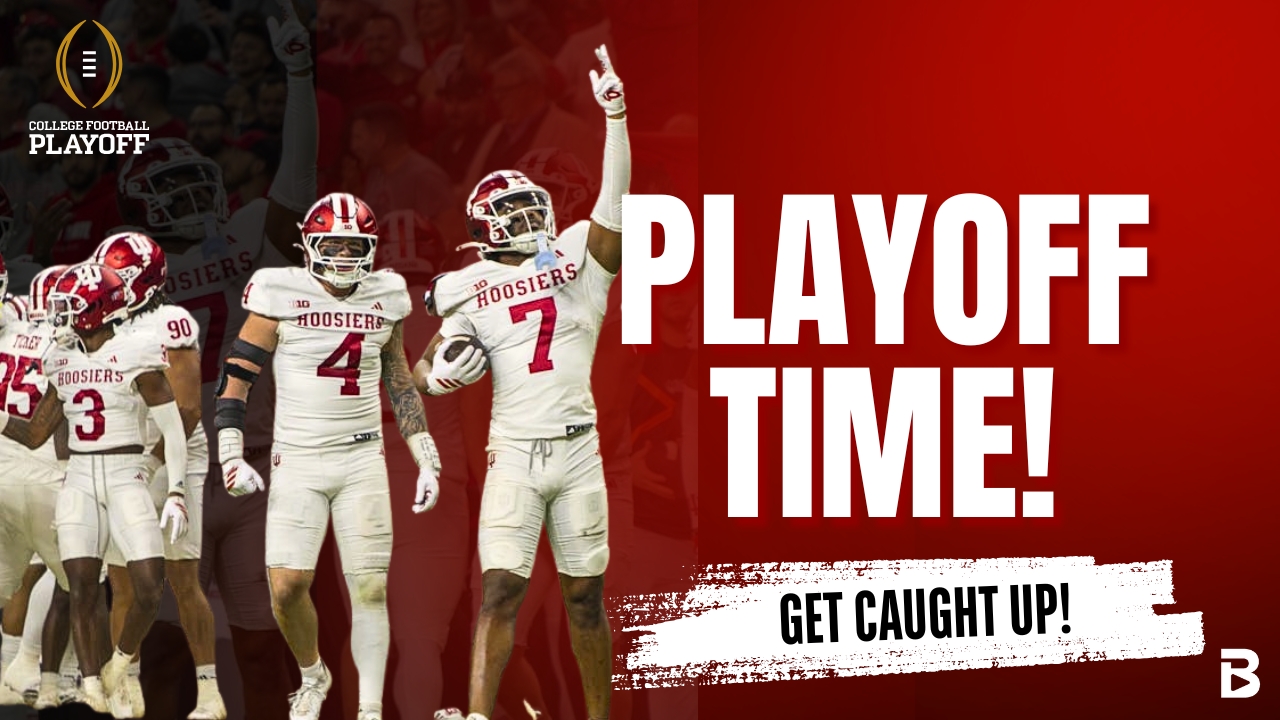
Indiana didn’t just have a cute season; they ran the table. The Hoosiers went 13–0 with a Big Ten title and jumped Ohio State for the No. 1 overall seed in the final rankings.

They’re the kind of story the 12-team format was supposed to unlock—programs that can actually finish.

SEC: Georgia Back on the Throne

In Atlanta, Georgia handled Alabama 28–7 in the SEC Championship Game, controlling the game from the jump and reasserting themselves as the league’s top dog.

That win locked Georgia into the No. 3 seed as a conference champion, while Alabama slid into the bracket as a 10–3 at-large.

Big 12: Texas Tech’s Payday Moment

Texas Tech routed BYU 34–7 for the Big 12 title, forcing multiple turnovers and turning a high-spend roster into a very real return on investment. It’s their first outright conference title since the 1950s and it came with a playoff bye as the No. 4 seed.

If you’re looking for the “we bet on ourselves and it worked” storyline, the Red Raiders are it.

American: Tulane Forces Their Way In

Tulane beat North Texas 34–21 in the American Conference title game, leaning on defense, turnovers and a 100+ yard rushing performance to grab the league crown and the final conference-champion playoff slot.

They land as the No. 11 seed, but in a 12-team field, that’s all you need—a ticket to the dance.

Sun Belt: James Madison Kicks the Door Down

James Madison capped an 8–0 Sun Belt run and an 11-game win streak by beating Troy 31–14 in the conference championship.

They end up as the No. 12 seed, but their inclusion is huge: the Sun Belt has a team in the CFP for the first time ever.

ACC: The Champion That Still Got Locked Out

The ACC is where the chaos really hit.

Duke, sitting on multiple losses, upset 10-win Virginia in the ACC Championship Game. That shock result blew up the league’s playoff path: Duke’s profile wasn’t strong enough to rise into the top five conference champions, and their ranking still trailed James Madison and Tulane.

The fallout:

  • The ACC champion stayed out of the playoff entirely.

  • Miami, which didn’t even make the title game, slid in instead as an at-large at No. 10 thanks in part to its head-to-head win over Notre Dame.

For a power conference to produce a champion that misses a 12-team playoff while a league mate sneaks in as an at-large is exactly the kind of structural weirdness that has coaches and ADs fuming.


Who’s In: Quick Read on the Main Contenders

  • Indiana (1) – Perfect record, Big Ten champs, and a Heisman finalist at QB. They’re the clear “can this be a new power?” storyline this winter.

  • Ohio State (2) – One loss, a top-two résumé, and the vibe of a team that still thinks it’s the big boss in the Big Ten even without the league title.

  • Georgia (3) – Title contenders until proven otherwise. Defense, depth, and another SEC crown say they’re not going anywhere.

  • Texas Tech (4) – The NIL era, weaponized. Money spent, trophy raised, playoff bye secured.

  • Oregon, Ole Miss, Texas A&M, Oklahoma, Alabama – The at-large core. All dangerous, all battle-tested, all capable of knocking out a higher seed in a one-game setting.

  • Miami (10) – The lightning rod. Their Week 1 win over Notre Dame turned into the single most emotionally charged tiebreaker of the season.

  • Tulane (11) & James Madison (12) – The outsiders who earned it the hard way. Conference titles, double-digit wins, and now a shot at the giants.


Who’s Out: The Snubs and Near-Misses

The most talked-about omission is obvious:

Notre Dame: 10 Wins, 0 Playoff, 0 Bowl

Notre Dame finished 10–2, riding a 10-game win streak after an 0–2 start that included losses to Miami and Texas A&M.

They reached the final weekend ranked No. 10, but when the committee slotted Miami at No. 10 and dropped Notre Dame to No. 11, the Irish landed just outside the playoff cut line, overtaken by the same Hurricanes that beat them in September.

In the new system, conference champions get the automatic paths. Notre Dame, still an independent in football, doesn’t have that safety net. This time, it cost them a spot in the bracket.

Other notable “out” teams include:

  • Texas (9–3) – A strong year, but not enough to elbow into the at-large mess.

  • Vanderbilt, Utah, USC, Arizona, Michigan – All top-25 teams, all watching the playoff from home like everyone else.

But none hit the emotional nerve quite like Notre Dame.


This video describes Notre Dame the past 40 years pic.twitter.com/RxPRqq3zIS

— MattBeGreat (@mattbegreatyt) December 7, 2025


Why Notre Dame Declined a Bowl Game

Once the Irish saw the final CFP rankings and realized they were on the wrong side of the line, the next shoe dropped:

Notre Dame declined an invitation to play in the Pop-Tarts Bowl in Orlando and announced it would not play in any bowl game this postseason.

The Stated Reasons

From reporting and public comments:

  • The team and administration felt a combination of shock and anger at being left out of the playoff despite a long winning streak and top-10 profile.

  • Notre Dame AD Pete Bevacqua described the mood as a “gut punch” and suggested that the process and the way rankings were rolled out had misled players into believing a playoff spot was likely if they just kept winning.

  • Practically, a bowl with no playoff stakes in front of a roster full of NFL decisions, portal questions and emotional burnout simply didn’t feel worth it to them.

The ACC Factor: A Relationship on Fire

This isn’t just about the bracket; it’s about politics.

Notre Dame plays five ACC opponents a year and is a full conference member in most other sports. But Bevacqua publicly blasted the ACC after the league’s official channels heavily promoted Miami’s résumé—especially that Week 1 win over Notre Dame—while the Irish were still lobbying for a playoff bid.

He accused the ACC of causing “permanent damage” to its relationship with Notre Dame by openly pushing a rival’s case over a longtime partner.

The short version:

  • Notre Dame felt snubbed by the committee.

  • They felt undercut by a conference they partially align with but don’t fully join.

  • They decided there was no upside in showing up for what would effectively be a consolation game.

In their place, Georgia Tech slides into the Pop-Tarts Bowl to face BYU.


What It All Means for the New 12-Team Era

This first fully operational 12-team playoff is already giving college football exactly what it promised—and exactly what everyone feared.

1. Conference Titles Still Matter, But Not Equally

  • Indiana, Georgia, Texas Tech, Tulane, James Madison all proved you can play your way in by winning your league.

  • The ACC, on the other hand, got burned: a messy title game produced a champion (Duke) with a weaker profile than multiple at-large contenders, and the league still sent Miami instead of its champion.

The message: the wrong champion at the wrong time can actually weaken a league’s playoff case.

2. Independence Comes With a Cost

Notre Dame’s situation is Exhibit A.

With auto-bids tied to conference titles, an independent has zero margin for error:

  • Lose to the wrong teams early (Miami, Texas A&M),

  • Watch those same teams benefit at your expense in December,

  • Then hope the committee likes your story more than somebody else’s.

This year, the Irish played that game and lost.

3. The “Respect” Economy Is Real

Bowl games are still money-makers, but they’re starting to look like optional content for programs that believe they’ve been wronged or are focused on next year.

Notre Dame just sent a message that a New Year’s-ish bowl without playoff stakes isn’t enough of a prize for a team that thinks it should be in the main bracket.

Expect more teams—especially those with coaching changes, opt-outs and playoff expectations—to make similar business decisions in the future.

4. Group-of-Six Teams Have a Real Path

Tulane and James Madison aren’t filler; they’re conference champs with double-digit wins and real résumés.

If they catch a big brand on a bad day in December, the entire bracket—and the power balance narrative—changes overnight.


What’s Next

From here:

  • The first-round playoff games kick off December 19–20 on campus sites, with matchups like Oklahoma vs. Alabama and Texas A&M vs. Miami already carrying storylines for days.

  • Quarterfinals move to the traditional New Year’s Six bowls, then semifinals, then the national title in Miami Gardens in January.

  • Notre Dame, meanwhile, will watch from home, already turning its energy toward a 2026 season where new rules will make top-12 ranked teams guaranteed playoff access and reduce the odds of a repeat snub.

For BallerTube readers, that’s the landscape:

  • Conference kings crowned.

  • Twelve teams still chasing a ring.

  • A blue-blood so angry it shut down its season on principle.

The playoff era just got bigger. It also just got messier—and that’s exactly why everybody’s still watching.
College Football Chaos: Who’s In, Who’s Out, and Why Notre Dame Just Walked Away

494

Curt Cignetti’s New Deal: Indiana’s Big Bet on a Rising Coach

The Headlines & the Numbers

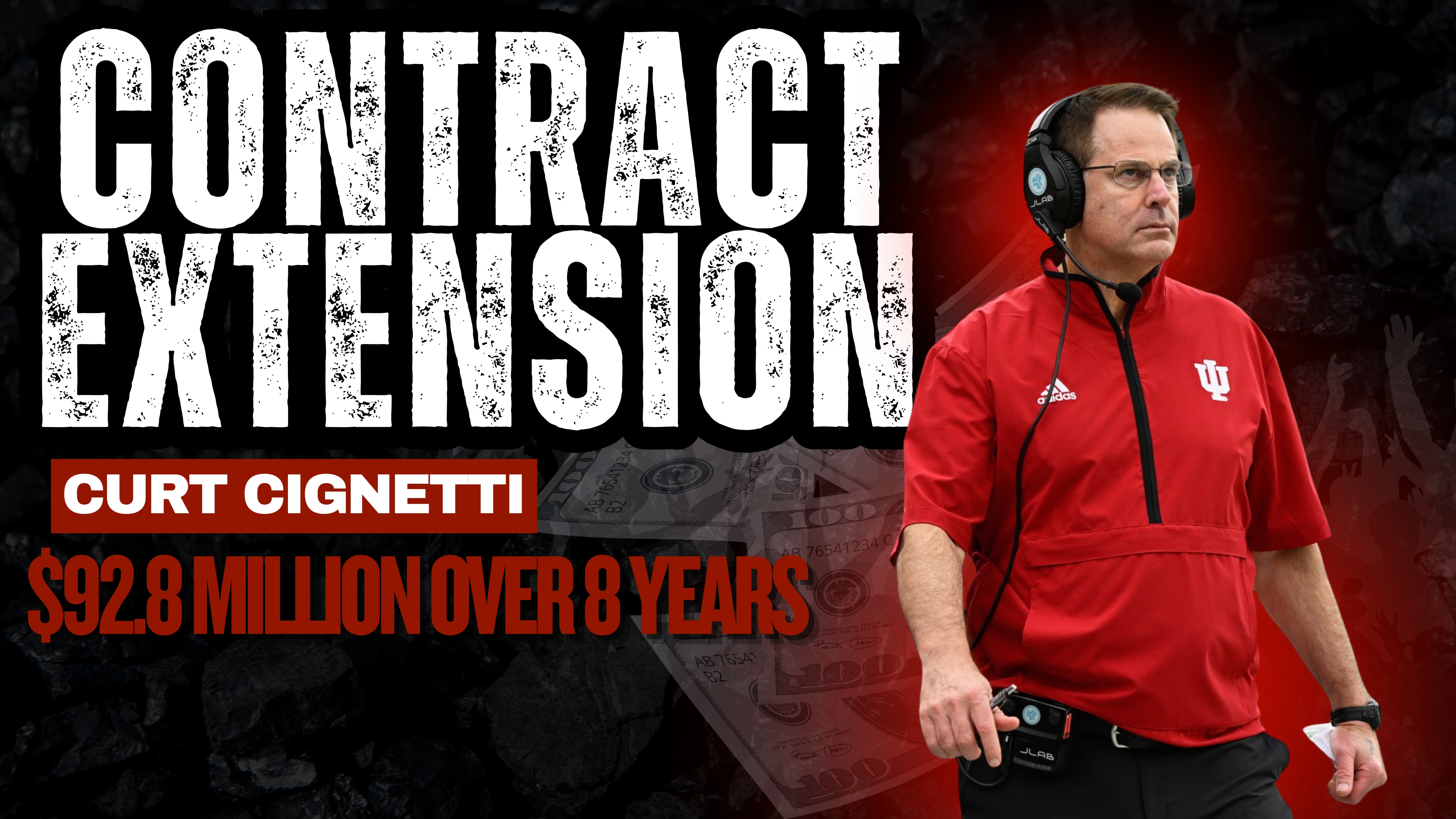
Indiana University has announced an eight-year extension for head football coach Curt Cignetti, reportedly worth nearly $93 million, or about $11.6 million annually. New York Post+3AP News+3Reuters+3
This deal pushes his contract through November 2033 and cements Indiana’s commitment to Cignetti as the long-term face of their revival. AP News+2Reuters+2

In short: IU is signaling, “We believe in this resurgence, and we want stability at the helm.”


Why Indiana Did It — The Momentum Was Too Big to Ignore

1. Rapid Turnaround

When Cignetti arrived (from James Madison), Indiana was not thought of as a contender. But under him, the Hoosiers quickly charted a new course:

  • He’s compiled a 17-2 record since taking over (including Big Ten play success). Reuters+1

  • In 2024, Indiana reached the College Football Playoff for the first time in school history. AP News+3Reuters+3The Crimson Quarry+3

  • In 2025, the Hoosiers grabbed marquee wins (such as a road upset at Oregon) and soared to a No. 3 national ranking, the highest in program history. Reuters+2AP News+2

That kind of rise in just over a season creates urgency: other programs will circle him, recruits will demand consistency, and institutional support needs affirmation.

2. Retention & Stability

Coaches are mobile now — especially after quick successes. Indiana likely feared losing him to a bigger program if they didn’t act.
By giving him a long, lucrative deal, Indiana is trying to lock in continuity — for recruiting, culture, and facilities.

3. Institutional Messaging

The extension is more than just football. It sends a message to alumni, donors, and fans: Indiana is legitimately investing in football as a priority. It’s a statement that they want to compete at the highest level and that coaching will be rewarded when it works.


What’s Inside the Contract & Clauses to Watch

While the final $93 million figure is the headline, there are important structural details and contingencies to understand:

  • Under a prior extension (announced in late 2024), Cignetti’s contract was already 8 years through 2032 with an “average” number in the $8 million range, plus bonuses, and changes to buyouts and staff salary pools. Indiana University Athletics+4ESPN.com+4Football Scoop+4

  • The new 2025-2033 deal likely supersedes or augments that earlier version.

  • The contract reportedly includes retention bonuses, performance bonuses (for Big Ten wins, conference finishes, playoff appearances), and escalators. Football Scoop+2The Daily Hoosier+2

  • One intriguing clause: if Indiana reaches the College Football Playoff at any point under the contract, the guarantee level increases (i.e., the university must fully honor remaining value). Football Scoop

  • Buyout structure matters: as of the previously released MOU, if Cignetti resigns early, he owes Indiana a declining schedule (starting at $13 million, then $10 million, etc.). Football Scoop

  • If Indiana fires him “without cause,” in many years they owe him 85% of the remaining contract value. But if IU reaches see-above “Playoff clause,” the payout becomes 100%. The Daily Hoosier+1

  • The assistant & staff support pool is huge — Indiana committed $11 million annually for on-field staff, with Cignetti having discretion over allocation. That gives him more leverage in building and retaining his coaching team. The Daily Hoosier+1

Bottom line: This isn’t just a pay raise. It’s a structural package designed to protect Indiana, empower Cignetti, and align incentives.


Risks & Challenges

While the extension is bold, big contracts always come with caveats:

1. Heightened expectations

Once you get paid $93 million over eight years, the fan base, boosters, and media expect Big Ten championships, regular playoff appearances, and consistency. There’s less margin for error.

2. Program depth & sustainability

To justify this, Indiana must also deliver across recruiting, facilities, and year-to-year roster management. If the staff churns or recruiting falters, the window can close quickly.

3. Poaching or takeover risk

Even with hefty buyouts, if a Power 5 school with deep pockets really wants Cignetti, they might pay. It’s unlikely, but possible. The contract has to deter that effectively.

4. Buyout & termination liability

If Indiana ever wants to move on, the financial burden is heavy. Even with the 85% clause, paying out large sums while paying a new coach is a serious commitment.

5. Coaching plateau or regression

If the program regresses — or fails to sustain this breakthrough — critics will point to the extension as proof of overreach. He must deliver long term.


What This Means for Cignetti’s Legacy & Future

  • Stability = recruiting leverage. Prospects will see Indiana not as a “stepping stone” job, but as a place where a coach can build over time.

  • He’s now “on stage” nationally. This deal catapults him among the elite coaches. Success (or failure) here will define his reputation for the next decade.

  • He has the resources. With control over staff money and structural provisions, he can build the support system he needs.

  • But time is ticking. Big contracts don’t guarantee greatness — only opportunity. He needs to deliver.


Verdict

Indiana’s gamble on Cignetti is audacious, but it’s unavoidable in today’s college football climate. They struck while the iron was hot — when momentum, national perception, and on-field results aligned.
For Cignetti, this is the moment to show whether he can do more than surprise. He has to sustain, innovate, and elevate. If he succeeds, this extension could anchor Indiana as a perennial contender. If not, it will be studied as a cautionary overcommitment.

Curt Cignetti’s New Deal: Indiana’s Big Bet on a Rising Coach

1082

All Videos

There is no data in this list.

All news

Clemson vs. North Carolina: The Momentum Had Already Shifted Before the Lightning Delay


Clemson 28, North Carolina 20.


The final score makes this look like a Clemson comeback that happened in the final eight minutes. The reality was more complicated. North Carolina controlled the opening half, but Clemson had already begun changing the game well before the lightning delay interrupted the fourth quarter.

UNC opened the ACC matchup with a 17-3 lead, scoring touchdowns on its first possession and a 75-yard drive in the first quarter. Benjamin Hall caught a 15-yard touchdown from Billy Edwards Jr., and Aeron Burrell added a 33-yard field goal in the second quarter.

Then Clemson started chipping away.

The Tigers closed the first half with an 18-play, 88-yard drive that ended with a field goal, cutting the deficit to 17-6. That possession mattered because Clemson wasn't simply waiting for something to happen. It was sustaining drives and forcing North Carolina's defense to stay on the field.

The third quarter made the momentum shift even clearer.

Clemson intercepted Edwards at the UNC 2-yard line, and although the Tar Heels immediately forced another field goal, the Tigers continued getting points. Later in the quarter, freshman quarterback Tait Reynolds connected with Christian Bentancur on a 27-yard touchdown, completing a 92-yard drive. Clemson was suddenly within 17-15.

That is important context before discussing the weather.

The Lightning Delay Didn't Create Clemson's Momentum

With 8:11 remaining, North Carolina was driving inside Clemson territory when lightning stopped play.

The delay lasted 2 hours and 28 minutes, a Clemson Memorial Stadium record. When the game stopped, UNC was leading 17-15 and had the ball at the Clemson 7-yard line, facing second-and-goal.

This is where the game becomes fascinating.

The delay unquestionably came at an enormous moment for North Carolina. The Tar Heels had a chance to turn a five-point lead into a much larger advantage.

But saying the delay caused Clemson's comeback doesn't tell the whole story.

Clemson had already cut a 14-point deficit to two points.

The Tigers had scored 9 points in the third quarter, had created turnovers and had put together a 92-yard touchdown drive. The momentum was already moving.

The weather interruption simply stopped both teams at a critical moment.

When they returned, UNC couldn't finish the drive.

Two runs by Demon June gained three yards, and Burrell converted a 22-yard field goal, putting North Carolina ahead 20-15 with 6:34 remaining.

Three points kept Clemson within one possession.

And Clemson immediately attacked.

Gideon Davidson Changed the Game

Clemson needed only four plays and 68 yards.

Gideon Davidson broke through for a 45-yard run, putting Clemson inside the UNC 10. Two plays later, the sophomore running back scored on an eight-yard touchdown run.

Clemson led 21-20.

Davidson finished with 105 rushing yards on 16 carries, while Clemson finished with 401 total yards, including 186 rushing yards. Reynolds completed 20 of 29 passes for 215 yards and a touchdown in his first career start.

That's why the fourth quarter can't simply be reduced to the weather delay.

Clemson's offense had already found another gear.

Then Came the Fourth-and-Short Decision

This is where the discussion around North Carolina's play-calling becomes legitimate.

After Clemson took its first lead, UNC had another opportunity to respond. Instead, the Tar Heels failed to convert on fourth down, turning the ball over to Clemson.

The Tigers immediately turned that possession into another touchdown.

Tyler Brown broke a 34-yard touchdown run, pushing Clemson's lead to 28-20 with one minute remaining.

The fourth-down decision will naturally receive attention because of the situation: North Carolina needed to sustain the drive, and the failed conversion gave Clemson another possession while the Tigers had completely seized control.

But there is a bigger point here.

North Carolina had multiple chances to stop the comeback.

The Tar Heels had a 17-3 lead.

They still led 17-15 entering the fourth quarter.

They had the ball at the Clemson 7-yard line when the lightning delay began.

They came back from the delay still leading 20-15.

And after Clemson went ahead 21-20, UNC still had another possession.

Clemson simply kept winning the next important moment.

The 25-3 Run Tells the Story

The most revealing statistic might be the simplest one.

After North Carolina went ahead 17-3, Clemson outscored UNC 25-3 over the remainder of the game. The Tigers scored 22 second-half points while North Carolina managed only three.

That's not a weather-delay statistic.

That's a football statistic.

The lightning delay became one of the defining images of the afternoon because of its timing, but Clemson's comeback was already developing before the skies opened.

The Tigers had established the run. Davidson eventually surpassed 100 yards. Reynolds settled into his first start. Clemson's defense created turnovers and repeatedly kept UNC from turning opportunities into touchdowns.

And when the game reached its decisive stretch, Clemson made the explosive plays.

A 45-yard run.

An eight-yard touchdown.

A fourth-down stop.

A 34-yard touchdown.

An interception to finish it.

That's how a 17-3 North Carolina lead became a 28-20 Clemson victory.

UNC's Missed Opportunities Will Be the Bigger Conversation

For North Carolina, the frustrating part isn't simply that the lightning delay interrupted its rhythm.

It's that the Tar Heels still had opportunities after the interruption.

They could have scored seven instead of three from the Clemson 7.

They could have answered after Clemson took the 21-20 lead.

They could have converted the critical fourth down and kept possession.

Instead, Clemson took advantage of each opening.

So the better way to describe this game isn't "the rain delay cost North Carolina."

The more accurate story is that Clemson had already begun taking control before the delay, the delay arrived at the worst possible moment for UNC, and North Carolina failed to regain control once play resumed.

That's what makes this Clemson vs. North Carolina game worth remembering.

It wasn't one play.

It wasn't just the weather.

It was a game that changed gradually, then suddenly.


Clemson vs. North Carolina: The Momentum Had Already Shifted Before the Lightning Delay

192

All Albums

There is no data in this list.