BallerTube | Sports Recruiting & Highlight Video Platform for Athletes

Need4Speed Highlights, Videos and Stats

Need4Speed

Need4Speed

Sports Media
.
65 Profile Views
0 Videos
Follow For Free

Are you sure you want to cancel your Need4Speed subscription?

Your subscription greatly helps Need4Speed develop his athletic career, and you have full access to his exclusive content.

Subscribe to premium
to see more exclusive content from Need4Speed and support him.

24 Exclusive videos

Subscribe to premium
to see more exclusive content from Need4Speed and support this athlete.

0 Exclusive videos

News

See All

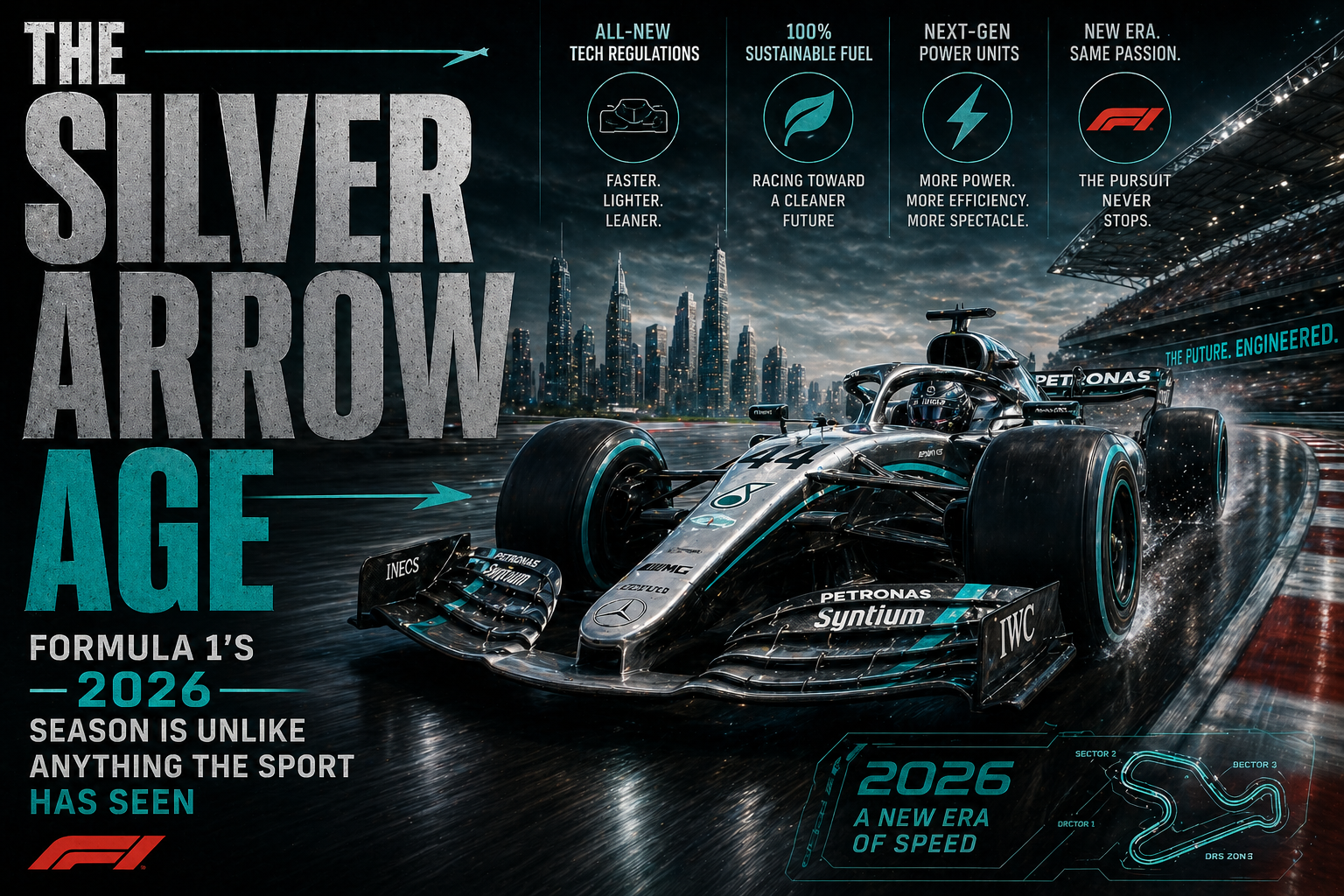
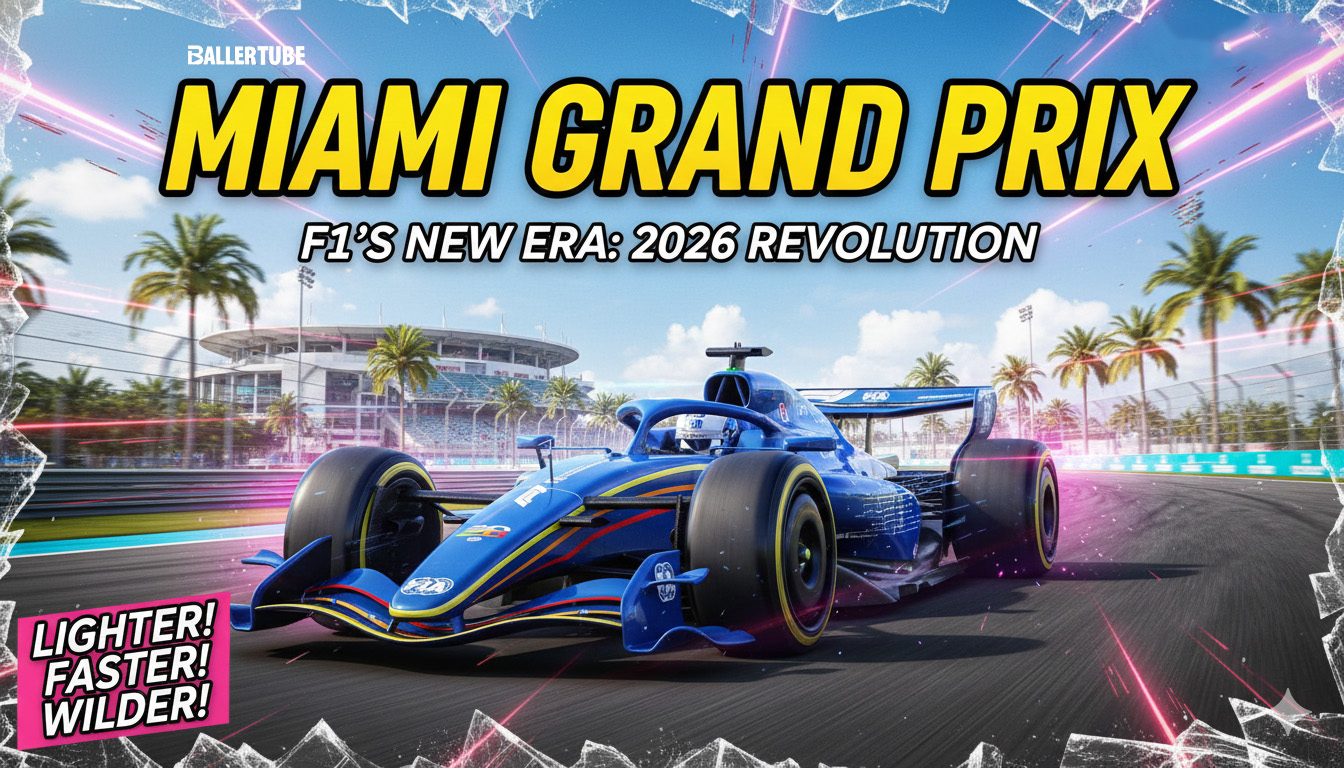
F1's American Ascent: Why the 2026 'Nimble Car' Revolution is Miami's New Turbo Boost

The 2025 Formula 1 season, which saw Lando Norris clinch the World Championship, wasn't just a classic on-track battle—it was the final act before the sport's biggest reset in decades. For Miami, the U.S. racing hub that has become synonymous with F1's American dream, these changes are not just technical rules. They are the key to unlocking the next phase of Formula 1's explosive growth in America.

The Numbers Don't Lie: F1's American Revolution

Formula 1 has officially wrapped its final season on ESPN by obliterating every expectation, setting an all-time U.S. single-season viewership record with an average of 1.3 million viewers per race. This isn't just growth—it's a cultural shift. The numbers represent a staggering 135% increase in average viewership since F1 returned to ESPN in 2018.

Consider these milestones:

Record-Setting Season: Sixteen of the 24 races in 2025 set individual event viewership records, proving that F1's appeal isn't concentrated in a handful of marquee events but distributed across the calendar.

Final High Note: The season-ending Abu Dhabi Grand Prix, which crowned Norris champion, drew an average of 1.5 million viewers and peaked at 1.8 million as the championship was decided.

This monumental growth proves F1 has successfully shed its "niche European sport" status in the States. The driving force? Three races in favorable U.S. time zones—Austin, Las Vegas, and Miami—that have made the sport accessible to American audiences who previously would have needed to wake at dawn to catch the action.

Miami's Wake-Up Call: The Plateau Problem

As a Miami native, the energy of race week is unmatched. The roar of engines echoing off Biscayne Bay, the transformation of Hard Rock Stadium into a high-speed circuit, the fusion of South Florida's party culture with motorsport's elegance—it's intoxicating. However, the data reveals a critical insight that should concern organizers: Miami, Singapore, and Brazil were the only three races in 2025 that did not show year-over-year viewership growth.

While the 2025 Miami Grand Prix still drew a robust audience of around 2.2 million viewers, the lack of annual increase—especially after the 2024 race set the all-time record—suggests the novelty phase is over. The initial curiosity that drove massive audiences to tune in has been satisfied. Now, Miami faces a more demanding audience: fans who understand the sport and demand compelling racing, not just spectacle.

The pressure is on for the Miami Grand Prix to deliver high-action, unpredictable events to keep the record-setting U.S. audience engaged. Fortunately, the solution is already being engineered in wind tunnels and on computer simulations across Europe.

The answer to maintaining excitement in South Florida lies in the 2026 Technical Regulations.


In with the new, out with the old!

Here’s a sneak peek at what the 2026 cars will look like, as the 2025 cars take to the track for the final time.#FIA #F126 pic.twitter.com/eWJIijZ7qC

— FIA (@fia) December 7, 2025

The 2026 Revolution: Engineering Drama Back Into F1

The upcoming 2026 rules represent the biggest technical reset Formula 1 has seen in over a decade, introducing the 'Nimble Car' concept that will fundamentally transform how the Miami race—and every race—is driven.

Lighter, Faster, More Agile

Cars will shed 30 kilograms, dropping to a minimum weight of 768kg. This might seem modest, but in a sport where teams spend millions to remove grams, it's revolutionary. The result creates a more agile machine designed to "dance through corners" rather than bulldoze through them, demanding more driver skill and creating more opportunities for mistakes and heroic recoveries—the ingredients of memorable racing.

The 50/50 Power Split: A New Strategic Battlefield

The power unit undergoes its most dramatic evolution since the hybrid era began in 2014. The 2026 regulations mandate a 50% Internal Combustion Engine and 50% electrical power split, with electrical output from the battery nearly tripling from 120kW to 350kW. To achieve this, engineers are removing the complex MGU-H (Motor Generator Unit-Heat) system, simplifying the engine architecture while dramatically increasing the importance of energy management.

This new power split transforms energy management from a background calculation into the key strategic battle. Drivers and engineers will need to make constant decisions about when to deploy electrical power, creating a chess match at 200 mph that television broadcasts can showcase to audiences.

View this post on Instagram

A post shared by The Race (@wearetherace)

Active Aerodynamics: Two Cars in One

Perhaps most visibly, 2026 introduces Active Aerodynamics through movable front and rear wings. Cars can switch between two distinct configurations:

Z-Mode (high-downforce) optimizes cornering performance, allowing cars to attack technical sections like Miami's chicane complex with maximum grip.

X-Mode (low-drag) delivers straight-line speed and efficiency, crucial for Miami's long run down the back straight alongside the stadium.

Unlike the current DRS system, which only works when following another car, Active Aero provides efficiency and speed regardless of track position, potentially eliminating the "dirty air" problem that has plagued modern F1.

Manual Override: The Real Overtaking Tool

While Active Aero handles efficiency, actual overtaking gets its own dedicated system called Manual Override, which replaces DRS. When a chasing car closes to within one second of the car ahead, the pursuing driver gains access to an on-demand burst of battery power—essentially a push-to-pass system borrowed from IndyCar's playbook.

This is designed to reward racecraft and driving skill rather than providing an automatic overtaking button. A driver must position their car correctly, time the deployment perfectly, and still complete the pass through superior technique. The system promises more sustained, wheel-to-wheel overtaking moves rather than the DRS "fly-by" passes that have become predictable in recent seasons.

Why This Matters for Miami

Miami's circuit layout, with its combination of tight technical sections and high-speed straights, is tailor-made to showcase these 2026 innovations. The Active Aero system will be fully exploited as drivers toggle between Z-Mode through the tight stadium section and X-Mode down the lengthy straights. The Manual Override system should create multiple overtaking opportunities at key braking zones, particularly into Turn 11 and the final chicane—the very corners where passing has been most difficult under current regulations.

For the American audience that has embraced Formula 1, the 2026 regulations promise a more dynamic, unpredictable show. The technical complexity adds strategic depth for hardcore fans, while the increased overtaking potential and driver skill demands create more exciting racing for casual viewers. It's the perfect formula—pun intended—for sustaining F1's growth trajectory in the United States.

The 2026 Miami Grand Prix will showcase these fundamentally different machines under the South Florida sun, promising a dramatic new chapter for the sport's fastest-growing market. The novelty phase may be over, but the next era of compelling, competitive racing is just beginning.

For Miami, the message is clear: the future isn't about being the flashiest race on the calendar. It's about delivering the best racing. With the 2026 technical regulations, the sport is giving the Magic City exactly the tools it needs to reclaim its momentum and prove that F1's American ascent is far from over—it's just shifting into a higher gear.
F1's American Ascent: Why the 2026 'Nimble Car' Revolution is Miami's New Turbo Boost

702

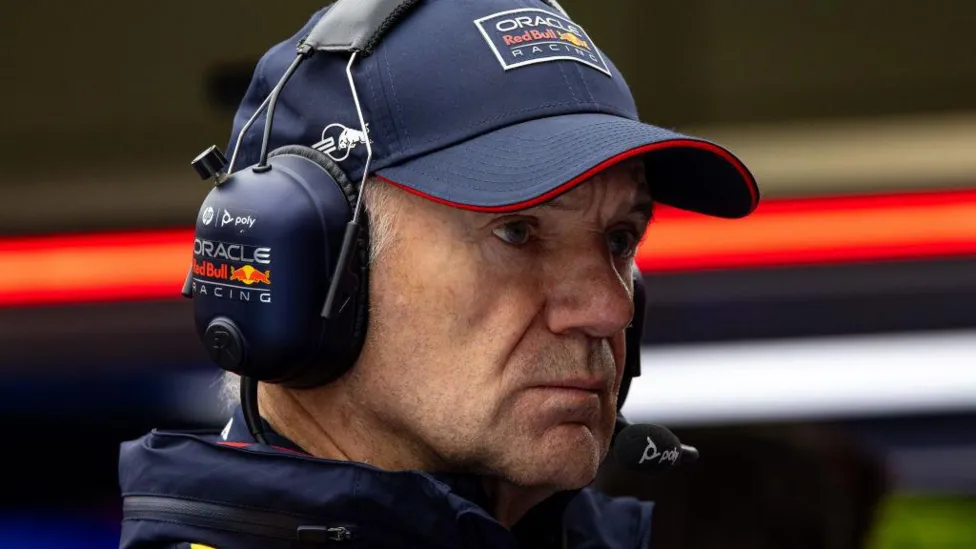
Adrian Newey's Future in Formula 1: Aston Martin Rumors and Eddie Jordan's Silence

Adrian Newey, one of the most influential figures in Formula 1 design, has been at the center of speculation regarding his future in the sport. Rumors have surfaced suggesting that Newey could be joining Aston Martin in 2025, following his departure from Red Bull. However, Eddie Jordan, Newey's manager and a former F1 team owner, has remained tight-lipped about these reports, refusing to confirm or deny any potential move.
Newey, who has been with Red Bull since 2006, is credited with playing a crucial role in the team’s dominance, including their multiple Constructors' and Drivers' Championships. His expertise in aerodynamics and car design has made him a highly sought-after figure in F1, and any team securing his services would significantly bolster their prospects.
The rumors intensified after Newey announced he would be stepping back from his role at Red Bull to focus on other projects, including the development of the RB17 hypercar. This has led to speculation that his next move could involve a return to a team where he could have a more hands-on role in car development, with Aston Martin emerging as a possible destination.
Eddie Jordan’s comments, or lack thereof, have done little to quell the speculation. On his podcast, co-host David Coulthard, a former F1 driver who has worked closely with Newey, tried to extract more information about the designer’s future. Jordan responded evasively, stating that he genuinely does not know what Newey’s plans are and emphasized that Newey is a private person who will make his own decisions when the time is right.
Jordan did acknowledge Newey’s incredible talent and contribution to the sport, calling him “super, super talented” and “iconic.” He also mentioned that wherever Newey decides to go, it will be a “massive boost” for that team, further fueling interest in where the legendary designer might end up.
As the F1 world watches closely, the potential move of Adrian Newey to Aston Martin, or any other team, could have significant implications for the 2025 season and beyond. With Aston Martin’s recent improvements and their ambition to become championship contenders, adding a figure like Newey to their roster could be the final piece in their puzzle.
While the rumors are swirling, and Eddie Jordan has neither confirmed nor denied them, the future of Adrian Newey remains a hot topic in F1 circles. Fans and teams alike will be eagerly awaiting any official announcements regarding his next move. 
Adrian Newey's Future in Formula 1: Aston Martin Rumors and Eddie Jordan's Silence

2637

All Videos

There is no data in this list.

All news

F1's American Ascent: Why the 2026 'Nimble Car' Revolution is Miami's New Turbo Boost

The 2025 Formula 1 season, which saw Lando Norris clinch the World Championship, wasn't just a classic on-track battle—it was the final act before the sport's biggest reset in decades. For Miami, the U.S. racing hub that has become synonymous with F1's American dream, these changes are not just technical rules. They are the key to unlocking the next phase of Formula 1's explosive growth in America.

The Numbers Don't Lie: F1's American Revolution

Formula 1 has officially wrapped its final season on ESPN by obliterating every expectation, setting an all-time U.S. single-season viewership record with an average of 1.3 million viewers per race. This isn't just growth—it's a cultural shift. The numbers represent a staggering 135% increase in average viewership since F1 returned to ESPN in 2018.

Consider these milestones:

Record-Setting Season: Sixteen of the 24 races in 2025 set individual event viewership records, proving that F1's appeal isn't concentrated in a handful of marquee events but distributed across the calendar.

Final High Note: The season-ending Abu Dhabi Grand Prix, which crowned Norris champion, drew an average of 1.5 million viewers and peaked at 1.8 million as the championship was decided.

This monumental growth proves F1 has successfully shed its "niche European sport" status in the States. The driving force? Three races in favorable U.S. time zones—Austin, Las Vegas, and Miami—that have made the sport accessible to American audiences who previously would have needed to wake at dawn to catch the action.

Miami's Wake-Up Call: The Plateau Problem

As a Miami native, the energy of race week is unmatched. The roar of engines echoing off Biscayne Bay, the transformation of Hard Rock Stadium into a high-speed circuit, the fusion of South Florida's party culture with motorsport's elegance—it's intoxicating. However, the data reveals a critical insight that should concern organizers: Miami, Singapore, and Brazil were the only three races in 2025 that did not show year-over-year viewership growth.

While the 2025 Miami Grand Prix still drew a robust audience of around 2.2 million viewers, the lack of annual increase—especially after the 2024 race set the all-time record—suggests the novelty phase is over. The initial curiosity that drove massive audiences to tune in has been satisfied. Now, Miami faces a more demanding audience: fans who understand the sport and demand compelling racing, not just spectacle.

The pressure is on for the Miami Grand Prix to deliver high-action, unpredictable events to keep the record-setting U.S. audience engaged. Fortunately, the solution is already being engineered in wind tunnels and on computer simulations across Europe.

The answer to maintaining excitement in South Florida lies in the 2026 Technical Regulations.


In with the new, out with the old!

Here’s a sneak peek at what the 2026 cars will look like, as the 2025 cars take to the track for the final time.#FIA #F126 pic.twitter.com/eWJIijZ7qC

— FIA (@fia) December 7, 2025

The 2026 Revolution: Engineering Drama Back Into F1

The upcoming 2026 rules represent the biggest technical reset Formula 1 has seen in over a decade, introducing the 'Nimble Car' concept that will fundamentally transform how the Miami race—and every race—is driven.

Lighter, Faster, More Agile

Cars will shed 30 kilograms, dropping to a minimum weight of 768kg. This might seem modest, but in a sport where teams spend millions to remove grams, it's revolutionary. The result creates a more agile machine designed to "dance through corners" rather than bulldoze through them, demanding more driver skill and creating more opportunities for mistakes and heroic recoveries—the ingredients of memorable racing.

The 50/50 Power Split: A New Strategic Battlefield

The power unit undergoes its most dramatic evolution since the hybrid era began in 2014. The 2026 regulations mandate a 50% Internal Combustion Engine and 50% electrical power split, with electrical output from the battery nearly tripling from 120kW to 350kW. To achieve this, engineers are removing the complex MGU-H (Motor Generator Unit-Heat) system, simplifying the engine architecture while dramatically increasing the importance of energy management.

This new power split transforms energy management from a background calculation into the key strategic battle. Drivers and engineers will need to make constant decisions about when to deploy electrical power, creating a chess match at 200 mph that television broadcasts can showcase to audiences.

View this post on Instagram

A post shared by The Race (@wearetherace)

Active Aerodynamics: Two Cars in One

Perhaps most visibly, 2026 introduces Active Aerodynamics through movable front and rear wings. Cars can switch between two distinct configurations:

Z-Mode (high-downforce) optimizes cornering performance, allowing cars to attack technical sections like Miami's chicane complex with maximum grip.

X-Mode (low-drag) delivers straight-line speed and efficiency, crucial for Miami's long run down the back straight alongside the stadium.

Unlike the current DRS system, which only works when following another car, Active Aero provides efficiency and speed regardless of track position, potentially eliminating the "dirty air" problem that has plagued modern F1.

Manual Override: The Real Overtaking Tool

While Active Aero handles efficiency, actual overtaking gets its own dedicated system called Manual Override, which replaces DRS. When a chasing car closes to within one second of the car ahead, the pursuing driver gains access to an on-demand burst of battery power—essentially a push-to-pass system borrowed from IndyCar's playbook.

This is designed to reward racecraft and driving skill rather than providing an automatic overtaking button. A driver must position their car correctly, time the deployment perfectly, and still complete the pass through superior technique. The system promises more sustained, wheel-to-wheel overtaking moves rather than the DRS "fly-by" passes that have become predictable in recent seasons.

Why This Matters for Miami

Miami's circuit layout, with its combination of tight technical sections and high-speed straights, is tailor-made to showcase these 2026 innovations. The Active Aero system will be fully exploited as drivers toggle between Z-Mode through the tight stadium section and X-Mode down the lengthy straights. The Manual Override system should create multiple overtaking opportunities at key braking zones, particularly into Turn 11 and the final chicane—the very corners where passing has been most difficult under current regulations.

For the American audience that has embraced Formula 1, the 2026 regulations promise a more dynamic, unpredictable show. The technical complexity adds strategic depth for hardcore fans, while the increased overtaking potential and driver skill demands create more exciting racing for casual viewers. It's the perfect formula—pun intended—for sustaining F1's growth trajectory in the United States.

The 2026 Miami Grand Prix will showcase these fundamentally different machines under the South Florida sun, promising a dramatic new chapter for the sport's fastest-growing market. The novelty phase may be over, but the next era of compelling, competitive racing is just beginning.

For Miami, the message is clear: the future isn't about being the flashiest race on the calendar. It's about delivering the best racing. With the 2026 technical regulations, the sport is giving the Magic City exactly the tools it needs to reclaim its momentum and prove that F1's American ascent is far from over—it's just shifting into a higher gear.

F1's American Ascent: Why the 2026 'Nimble Car' Revolution is Miami's New Turbo Boost

702

Adrian Newey's Future in Formula 1: Aston Martin Rumors and Eddie Jordan's Silence

Adrian Newey, one of the most influential figures in Formula 1 design, has been at the center of speculation regarding his future in the sport. Rumors have surfaced suggesting that Newey could be joining Aston Martin in 2025, following his departure from Red Bull. However, Eddie Jordan, Newey's manager and a former F1 team owner, has remained tight-lipped about these reports, refusing to confirm or deny any potential move.
Newey, who has been with Red Bull since 2006, is credited with playing a crucial role in the team’s dominance, including their multiple Constructors' and Drivers' Championships. His expertise in aerodynamics and car design has made him a highly sought-after figure in F1, and any team securing his services would significantly bolster their prospects.
The rumors intensified after Newey announced he would be stepping back from his role at Red Bull to focus on other projects, including the development of the RB17 hypercar. This has led to speculation that his next move could involve a return to a team where he could have a more hands-on role in car development, with Aston Martin emerging as a possible destination.
Eddie Jordan’s comments, or lack thereof, have done little to quell the speculation. On his podcast, co-host David Coulthard, a former F1 driver who has worked closely with Newey, tried to extract more information about the designer’s future. Jordan responded evasively, stating that he genuinely does not know what Newey’s plans are and emphasized that Newey is a private person who will make his own decisions when the time is right.
Jordan did acknowledge Newey’s incredible talent and contribution to the sport, calling him “super, super talented” and “iconic.” He also mentioned that wherever Newey decides to go, it will be a “massive boost” for that team, further fueling interest in where the legendary designer might end up.
As the F1 world watches closely, the potential move of Adrian Newey to Aston Martin, or any other team, could have significant implications for the 2025 season and beyond. With Aston Martin’s recent improvements and their ambition to become championship contenders, adding a figure like Newey to their roster could be the final piece in their puzzle.
While the rumors are swirling, and Eddie Jordan has neither confirmed nor denied them, the future of Adrian Newey remains a hot topic in F1 circles. Fans and teams alike will be eagerly awaiting any official announcements regarding his next move. 
Adrian Newey's Future in Formula 1: Aston Martin Rumors and Eddie Jordan's Silence

2637

All Albums

There is no data in this list.