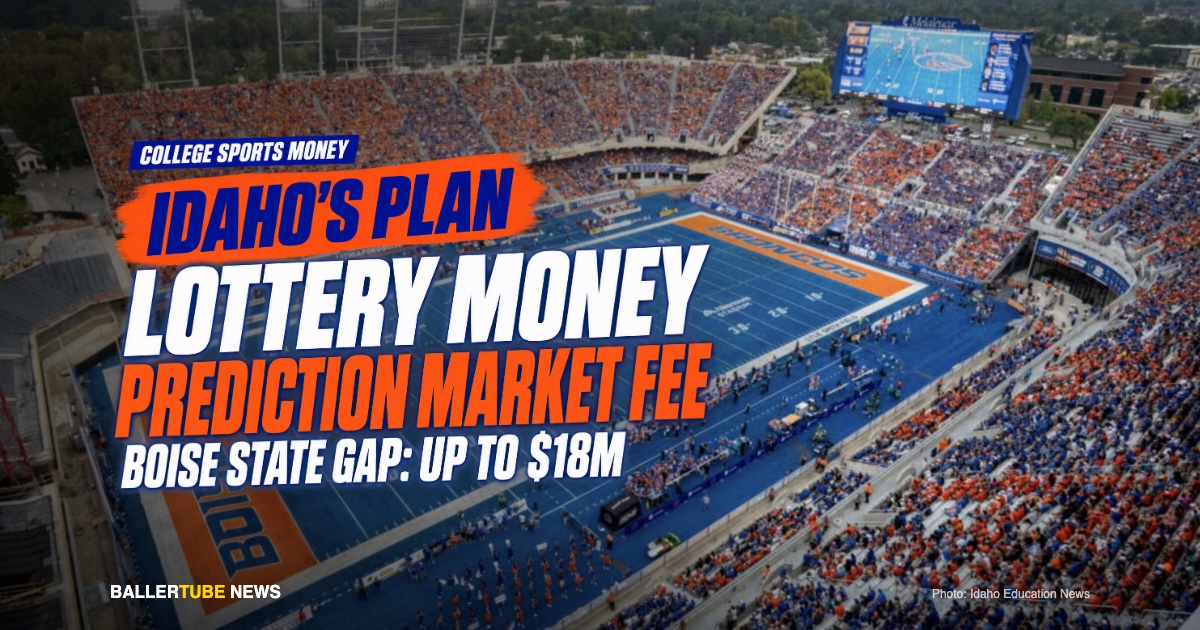

Idaho wants its colleges to keep competing, and its governor's working group has now said where the money might come from: the state lottery, a fee on sports bets placed on prediction markets, and land the universities already own.
The College Athletics Working Group, formed by Gov. Brad Little in June, released its eight-page report Wednesday with seven proposed solutions for Boise State, Idaho State, Lewis-Clark State and the University of Idaho, according to the governor's office and Idaho Education News.
Four New Revenue Ideas for Idaho College Athletics
The new money would come from four places. One is state lottery proceeds; this year's lottery payout was a record $90 million, all of it already committed to public schools and buildings. Another is a transaction fee on sports activity on prediction markets, and KTVB named Kalshi and Polymarket. The third is revenue from university-owned property, such as Boise State's East Stadium parking lot, which the school said in September it may develop. The last is legislation letting athletics departments capture some of the economic activity they generate.
The other three use existing money: letting schools temporarily keep interest earned on tuition and fee deposits, loans from the roughly $25.6 million Higher Education Stabilization Fund, and a faster approval process for athletics building projects. The report puts no dollar figure on any of them, and nothing is adopted until the Legislature or the State Board acts.
Boise State's Revenue-Sharing Shortfall
The pressure is clearest at Boise State. In August the State Board approved deficit spending to cover an athletics shortfall that could grow to $18 million, largely tied to revenue-sharing payments to athletes, per KTVB. Working group chair Cortney Liddiard called that spending a bridge that should not be repeated. "There is no single fix," he said.
Boise State President David Hahn said the university is carefully reviewing the report. The Legislature opens its 2027 session in January.