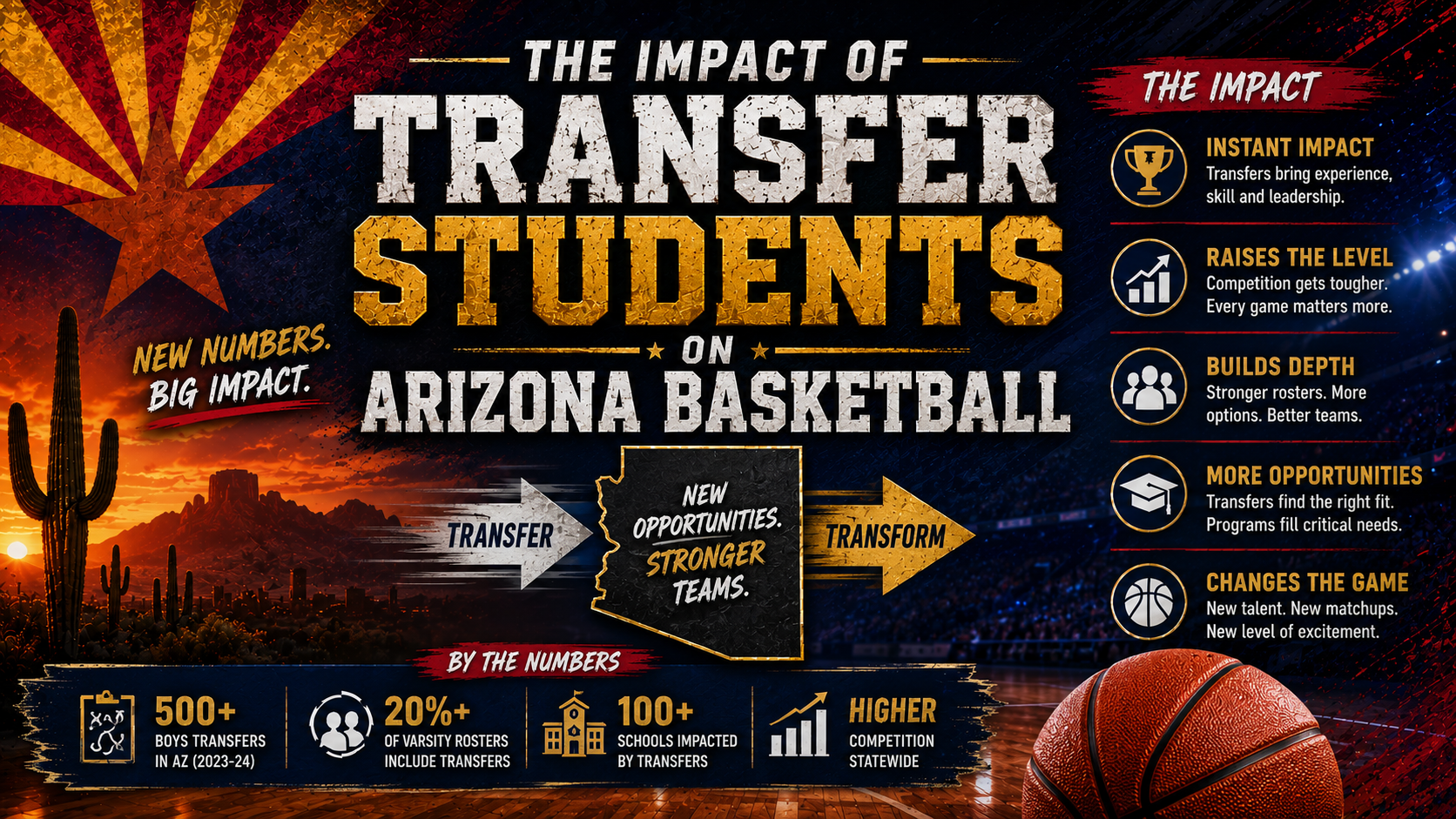
High school basketball in Arizona has changed dramatically over the last decade. While talent development, coaching, and community support remain the foundation of successful programs, another factor has become impossible to ignore—player movement.
Transfers have become one of the most discussed topics in Arizona basketball. Every offseason, social media buzzes with announcements of players changing schools, coaches adjusting rosters, and fans debating whether transfers help or hurt the game.
For some athletes, transferring offers a fresh start, better academic opportunities, stronger competition, or increased college exposure. For others, it raises questions about loyalty, competitive fairness, and the long-term health of local programs.
The reality is that transfers aren’t entirely good or bad. Their impact depends on the circumstances surrounding each move.
Here’s a closer look at how transfer students are reshaping Arizona high school basketball.
Why Are More Players Transferring?
The reasons behind transfers vary from family to family.
Some of the most common include:
- Coaching changes
- Family relocation
- Academic opportunities
- Better athletic development
- Increased college recruiting exposure
- More playing time
- Stronger competition
- Personal or family circumstances
Arizona’s basketball landscape has become increasingly competitive. Many players believe joining a nationally recognized program gives them the best chance to reach the next level.
At the same time, parents often look beyond basketball, considering academics, school culture, and long-term opportunities.
The Benefits of Player Movement
While transfers receive criticism, they can provide meaningful advantages for everyone involved.
Fresh Starts for Student-Athletes
Sometimes a player simply needs a new environment.
Perhaps they weren’t receiving playing time, struggled to fit into a system, or wanted a more competitive atmosphere. A transfer can reignite confidence and create opportunities that weren’t available before.
Athletes should have the chance to find the best educational and athletic fit for their future.
Better College Exposure
Programs that regularly compete against elite competition naturally attract college recruiters.
Playing alongside other Division I prospects often means more scouts attend games, more media coverage, and greater recruiting visibility.
For many athletes, transferring becomes part of their college recruiting strategy.
https://www.ballertube.com/news/333/the-point-god-s-farewell-chris-paul-retires-after-messy-ending-to-legendary-21-year-career/
Raising the Level of Competition
Elite transfers often elevate everyone around them.
Practices become more competitive.
Teammates improve.
Coaches introduce more advanced systems.
Opponents are challenged to improve as well.
In many ways, Arizona basketball has become stronger because talented players continue pushing one another.
The Challenges Transfers Create
Despite the benefits, transfers also create legitimate concerns.
Smaller Schools Can Lose Homegrown Talent
Programs invest years developing young athletes.
When a standout player transfers before reaching varsity stardom, coaches may feel like years of development disappeared overnight.
Smaller schools often struggle to replace elite talent.
Constant Roster Turnover
Building consistency becomes difficult when rosters change every season.
A team may return only a handful of players from one year to the next.
That makes long-term planning challenging.
Community Identity Changes
High school sports have traditionally been built around neighborhood pride.
Fans enjoy watching athletes develop from freshmen into seniors.
Frequent transfers can weaken those community connections.
Team Chemistry: The Hidden Factor
Talent alone doesn’t win championships.
Basketball remains one of the most chemistry-dependent sports.
Adding one or two talented transfers doesn’t automatically improve a team.
Players must:
- Learn new offensive systems
- Understand defensive rotations
- Build trust
- Accept new roles
- Develop communication
Some teams blend together immediately.
Others struggle despite having more talent than anyone else.
The best coaches understand that chemistry often determines postseason success.
When Transfers Strengthen Chemistry
Transfers can actually improve team culture when players arrive with the right mindset.
Successful transfers usually:
- Put winning before statistics.
- Embrace leadership without demanding it.
- Work hard in practice.
- Respect existing teammates.
- Accept coaching.
Those qualities often help teams improve faster than raw talent alone ever could.
https://www.cbssports.com/college-basketball/news/michigan-basketball-roster-transfer-portal-dusty-may/
When Transfers Hurt Chemistry
Problems arise when expectations don’t match reality.
Issues may include:
- Players expecting guaranteed minutes.
- Role confusion.
- Individual goals outweighing team success.
- Existing players feeling overlooked.
- Difficulty earning trust.
Championship teams usually solve these issues quickly.
Programs that don’t often experience internal frustration.
Competitive Balance Across Arizona
Perhaps the biggest debate involves competitive balance.
Some believe transfers create “super teams.”
Others argue every athlete deserves the freedom to attend the school that best fits their goals.
Both viewpoints have merit.
Arguments That Transfers Hurt Competitive Balance
Critics believe:
- Talent becomes concentrated at a handful of schools.
- Smaller programs struggle to compete.
- State championship races become less predictable.
- Recruiting perceptions influence decisions.
When multiple elite players join the same roster, the gap between contenders and everyone else can widen.
Arguments That Transfers Improve Competition
Supporters see it differently.
They believe:
- Better competition improves everyone.
- Elite teams prepare players for college.
- Coaches innovate to stay competitive.
- Players earn opportunities through hard work.
Arizona basketball has earned national recognition partly because of the concentration of elite talent.
Coaches’ Perspectives
Few people understand transfers better than coaches.
Most acknowledge that transfers are now part of modern high school basketball.
Still, their opinions vary.
Coaches Who Welcome Transfers
These coaches often focus on:
- Immediate roster improvement
- Additional leadership
- Greater depth
- Increased practice competition
- Expanded recruiting attention
They view transfers as opportunities rather than disruptions.
Coaches Who Prefer Long-Term Development
Others emphasize building programs through player development.
They enjoy watching athletes improve over four years.
For these coaches, relationships, continuity, and culture remain the program’s greatest strengths.
Transfers are accepted—but never expected.
Building Culture Despite Transfers
Strong programs succeed regardless of roster turnover.
Winning cultures usually share several characteristics:
- Clear expectations
- Accountability
- Strong leadership
- Consistent coaching
- Player development
- Family support
- Team-first mentality
Those values remain constant whether a roster includes zero transfers or several.
The Role of Parents
Parents often influence transfer decisions.
Their priorities may include:
- Academic excellence
- College exposure
- Coaching philosophy
- Safety
- School culture
- Travel opportunities
- Athletic development
The best decisions consider far more than basketball alone.
Social Media’s Influence
Social media has accelerated transfer conversations.
Announcements spread within minutes.
Highlight videos generate excitement.
Recruiting updates reach thousands instantly.
While this creates visibility for athletes, it also increases outside pressure.
Players now face public opinions long before stepping onto the court.
The NCAA Transfer Portal Effect
Although high school and college athletics operate under different rules, the popularity of the NCAA transfer portal has changed how many young athletes think about movement.
Today’s players see college stars transferring and succeeding.
As a result, changing schools has become more normalized than it was a generation ago.
Girls Basketball Is Seeing Similar Trends
Transfers are no longer limited to boys basketball.
Arizona girls basketball has experienced similar movement.
Elite players continue seeking:
- National schedules
- Stronger competition
- College recruiting exposure
- Development opportunities
As girls basketball grows statewide, player movement will likely remain part of the conversation.
How Coaches Can Successfully Integrate Transfers
Programs that consistently handle transfers well often follow a proven approach:
- Clearly define each player’s role.
- Encourage team-building before the season.
- Pair newcomers with veteran leaders.
- Establish accountability from day one.
- Focus on communication.
- Reinforce team goals over individual success.
These strategies help reduce friction and accelerate chemistry.
Looking Ahead
Transfer students will continue shaping Arizona basketball.
The challenge isn’t stopping player movement—it’s creating environments where transfers, returning players, coaches, and communities can all thrive.
Programs that combine talent with culture will remain successful regardless of roster changes.
At the same time, schools that prioritize player development, relationships, and long-term growth will continue producing successful teams and outstanding young adults.
In the end, championships aren’t won simply because talented players transfer in.
They’re won because individuals come together, sacrifice personal goals, trust one another, and commit to something bigger than themselves.
That has always been true in basketball—and it always will be.