The 6-foot-10 center is headed to St. John’s with a combination of size, intelligence and offensive versatility that resembles one of the most trusted big men from Rick Pitino’s championship past.
Rick Pitino has coached countless stars, elite athletes and future professionals during his legendary career. But some of his most valuable players were defined by more than scoring.
They understood how to play.
That was Mark Pope’s role on Kentucky’s 1996 national championship team. Nearly three decades later, Pitino may have found a modern version of his former captain in Reed Bailey.
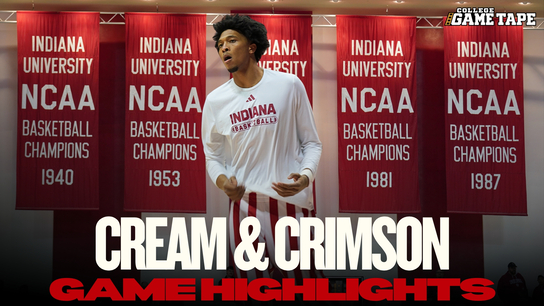
Bailey, a 6-foot-10 forward-center, is headed to St. John’s after previously playing at Davidson and Indiana. He brings the Red Storm an experienced frontcourt player who can score, pass, rebound and operate from several areas of the floor.
The comparison to Pope begins with their physical profiles. Both are 6-foot-10 big men with the intelligence and versatility to contribute without being limited to traditional post play.
Pope played two seasons for Pitino at Kentucky after transferring from Washington. As a senior, he averaged 7.6 points, 5.2 rebounds and one assist for a Kentucky team loaded with future NBA talent. Pope did not need to dominate the basketball. He defended, rebounded, moved the ball and provided the physical interior presence Kentucky needed.
View this post on Instagram
He was also the captain of a team featuring Tony Delk, Antoine Walker, Walter McCarty, Derek Anderson and Ron Mercer. That team finished 34–2 and defeated Syracuse to win the 1996 national championship.
Pitino has since described Pope as a selfless leader who helped keep Kentucky’s collection of talent together.
Bailey arrives at St. John’s with a more extensive offensive résumé.
During the 2024–25 season at Davidson, Bailey averaged 18.8 points, 6.1 rebounds and 3.8 assists. He shot 47.7 percent from the field, 41.5 percent from three-point range and 76.8 percent from the free-throw line.
He was one of only two Division I players listed at 6-foot-10 or taller to record at least 600 points, 200 rebounds and 100 assists that season. Bailey earned First-Team All-Atlantic 10 honors and was named the conference’s Most Improved Player.
Those numbers show why Bailey is more than another frontcourt body.
He can facilitate offense from the post, find cutters, attack mismatches and step outside the paint. His passing gives Pitino another potential connector who can keep the offense moving without requiring constant touches.
That is where the Pope comparison becomes legitimate.
Neither player fits the description of a one-dimensional center. Both understand spacing, ball movement and how to contribute within different offensive roles. Both have demonstrated the ability to step away from the basket, although Bailey has operated with significantly more offensive responsibility during his career.
Bailey also proved that he could adjust his role at Indiana.
After serving as Davidson’s offensive centerpiece, he averaged 8.3 points, 3.4 rebounds and 1.1 assists in 19.1 minutes per game for the Hoosiers. He shot 57 percent from the floor and led Indiana with 112 made free throws.
That willingness to adapt could become important under Pitino.
Pope’s value at Kentucky was never measured solely by his scoring average. He was surrounded by elite scorers and understood that winning required him to defend, rebound, communicate and make the correct play. Bailey will similarly enter a St. John’s program where his responsibilities could change depending on the lineup and opponent.
The two players are not identical.
Pope was a more proven rebounder and physical interior presence during his Kentucky career. Bailey has displayed more individual scoring and playmaking production, especially during his final season at Davidson. Bailey’s perimeter shooting has also varied between seasons, making his 41.5-percent junior season an encouraging part of his résumé rather than a guaranteed expectation.
Pitino has coached other skilled white big men since Pope, including former Louisville center David Padgett, a 6-foot-11 two-time All-Big East selection. He also coached 7-foot centers Jonathan Huffman and Matz Stockman at Louisville.
But Bailey’s combination of size, passing, shooting touch and offensive intelligence makes the Pope comparison especially compelling.
Pope became indispensable because he gave Pitino whatever the team required. He could score when necessary, but his greatest value came from understanding how all the pieces fit together.
Bailey now enters the same demanding system with an opportunity to establish his own role.
Calling him the second coming of Mark Pope before he plays his first game at St. John’s would be premature. But the foundation of the comparison is undeniable: another experienced 6-foot-10 big man with skill, intelligence, versatility and the potential to become one of Pitino’s most trusted frontcourt pieces.
Nearly 30 years after Pope helped Pitino cut down the nets at Kentucky, Reed Bailey will have an opportunity to write the next chapter of that basketball connection in New York.