For decades, sports media operated within a relatively defined ecosystem. Leagues produced the games, television networks controlled the broadcasts, newspapers and magazines controlled much of the written coverage, and athletes were largely dependent on those institutions to reach a mass audience. Even as social media disrupted that system, the basic relationship remained familiar: the athlete played, the media covered the athlete, and the audience consumed the finished product.
That relationship has changed dramatically.
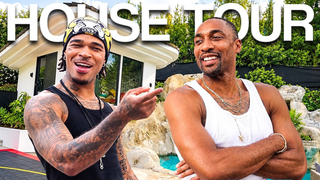
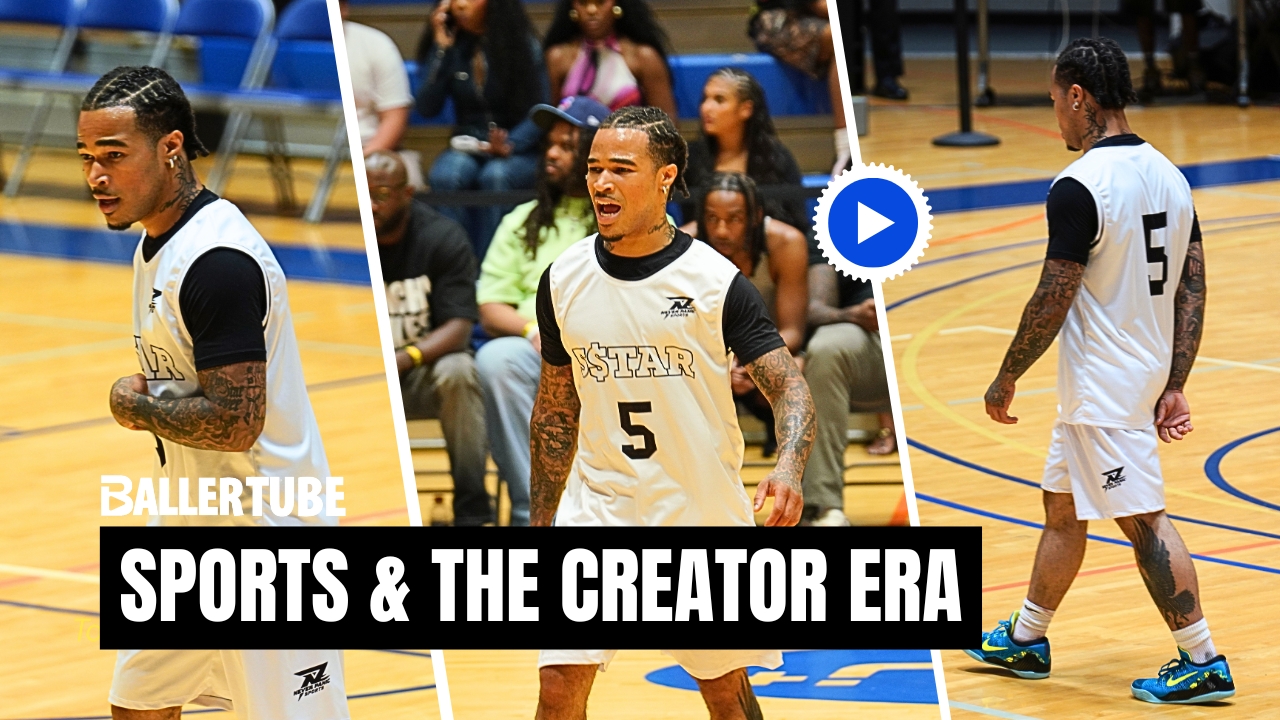
The rise of the modern content creator has created an entirely different pathway into sports culture, one where the person producing the content can also be the personality, participant, commentator, entertainer and distributor. Few creators illustrate that evolution better than PlaqueBoyMax. His importance isn't simply that he has become a prominent streamer or that basketball has become part of his content. It is that his career demonstrates how completely the boundaries between sports, music, entertainment and internet culture are beginning to disappear.
That is the larger story behind PlaqueBoyMax.
He represents a generation that doesn't necessarily separate entertainment into the categories that defined previous generations. To a younger audience, there is nothing unusual about watching a streamer play basketball, listening to an artist during the same broadcast, following an athlete on social media, watching a creator interview a professional player and then jumping into another livestream. These aren't separate experiences competing for attention. They are part of the same digital ecosystem.
And that may ultimately be one of the biggest changes sports media has ever faced.
FROM BROADCASTERS TO CREATORS
The traditional sports broadcast was built around authority and distance. The network determined what the audience would see, the commentators explained what was happening, and the production team controlled the presentation. It was highly polished, carefully scheduled and designed for mass consumption.
The creator economy operates according to almost the opposite philosophy.
The personality is the programming.
The audience doesn't necessarily arrive because a network has decided something is worth watching. They arrive because they have developed a relationship with the person creating the content. That relationship allows the creator to move between subjects without losing the audience. A creator can talk about music, play basketball, react to a game, interview an athlete, collaborate with another creator and return to gaming without having to convince a network executive that each individual segment deserves its own television program.
That flexibility is enormously powerful.
PlaqueBoyMax built his audience through streaming and music-oriented content, but his expansion into sports demonstrates why the creator model is so different from traditional media. He doesn't have to choose between being a music personality and a sports personality. His audience follows him across both worlds.
That is precisely what traditional media has historically struggled to do.
SPORTS BECOMES CONTENT, NOT JUST AN EVENT
Basketball has always been entertainment, but the internet has fundamentally changed how that entertainment can be packaged.
A traditional game might generate a two-hour broadcast, a box score, a few highlights and perhaps a postgame interview. In the creator economy, the same basketball event can generate hours of content before, during and after the game. The personalities involved become part of the story. The preparation becomes content. The competition becomes content. The reactions become content. The audience itself becomes part of the broadcast through the live chat.
PlaqueBoyMax's basketball content fits naturally into that environment. When creators compete against one another, the audience isn't simply evaluating who won. They're watching personalities interact, compete, talk trash, react to pressure and reveal a side of themselves that doesn't necessarily appear in a traditional interview.
That is one reason creator-driven sports can feel so different.
The competition becomes a vehicle for personality.
And personality is increasingly what drives digital audiences.
THE CREATOR DOESN'T HAVE TO BE AN ATHLETE
Perhaps the most interesting development is that this ecosystem doesn't require everyone involved to fit neatly into an existing category.
A professional athlete can become a creator.
A creator can become part of a sporting event.
A musician can participate in sports content.
A streamer can build a basketball audience.
A basketball player can build an audience that has nothing to do with traditional sports media.
That fluidity is becoming increasingly normal.
It also explains why the creator economy has become so important to professional sports organizations. The leagues still possess the games and the rights, but creators possess something extremely valuable: direct relationships with audiences that already trust them.
Instead of simply telling viewers what they should watch, creators can make audiences feel as though they are experiencing something alongside them.
That distinction is enormous.
THE END OF THE MIDDLEMAN?
This doesn't mean traditional sports media is disappearing. ESPN, TNT Sports, league networks, newspapers, magazines and established sports websites still have enormous influence and resources that individual creators cannot replicate.
But they no longer have exclusive control over the sports conversation.
That may be the most significant change.
A creator with a phone can document a basketball tournament that would have received virtually no mainstream coverage a decade ago. An athlete can build a following without ever appearing on television. A high-school player can have thousands of people watching their highlights before a national recruiting publication writes about them.
The gatekeepers still exist.
There are simply more gates now.
And that creates opportunities for athletes who historically might have been invisible to the broader sports audience.
THIS IS WHERE ATHLETE EXPOSURE CHANGES
For young athletes, the creator era may be even more consequential.
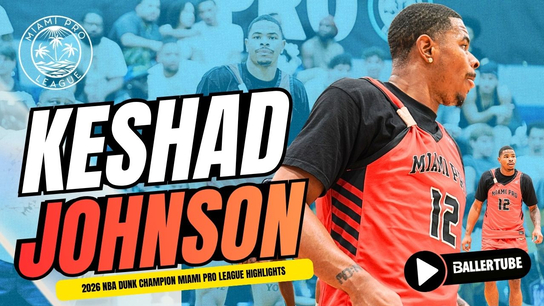
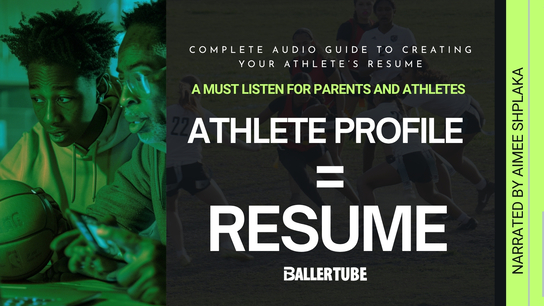
The sports résumé is no longer limited to statistics, newspaper clippings or a recruiting profile. An athlete's digital identity can now include full games, training sessions, interviews, highlights, tournament footage and appearances across different platforms.
That creates a new challenge as well as an opportunity.
There is an enormous amount of sports content being produced every day, but much of it disappears into individual phones, private social accounts or feeds where it has a short lifespan. The content exists, but it isn't necessarily organized into something that can function as a long-term athletic record.
That is one of the reasons the broader creator revolution matters to a platform like BallerTube.
The future of sports exposure shouldn't be limited to polished highlight videos. A legitimate digital sports résumé should be able to tell the entire story of an athlete: how they train, how they compete, how they perform over an entire game and how their career develops over time.
The creator economy is creating more sports content than ever.
The next challenge is making that content discoverable, organized and useful.
PLAQUEBOYMAX IS PART OF A MUCH BIGGER SHIFT
This is why reducing PlaqueBoyMax to simply being a successful streamer misses the point.
His career is a useful case study in what happens when a creator refuses to stay inside one category. Music led to streaming. Streaming created community. Community created opportunities. Sports became another avenue for competition and entertainment. Each piece feeds the others.
That model is increasingly becoming the blueprint for digital entertainment.
The most successful creators don't necessarily think in terms of television shows, sports programs, music programs or traditional media categories. They think in terms of audience. If the audience cares about them, the subject can change without the relationship disappearing.
Sports is particularly well positioned for this because competition naturally creates stories.
People want to know who won. They want to see what happened. They want personalities to clash. They want highlights. They want behind-the-scenes access. They want to debate performances. And now they want to experience those things with creators they already follow.
That creates an entirely new layer around the sport itself.
THE NEW SPORTS MEDIA IS ALREADY HERE
The biggest mistake would be to view this as a passing social-media trend.
The creator economy has already changed the economics and distribution of entertainment. Sports is simply one of the final major industries being forced to fully confront what that means.
The question is no longer whether creators belong in sports.
They already do.
The more important question is what happens when creators, athletes, teams, leagues and independent sports platforms all begin operating inside the same ecosystem.
That could produce a sports-media environment that looks almost nothing like the one that existed twenty years ago.
PlaqueBoyMax is not necessarily the future of sports media by himself. He is evidence of it.
He represents a generation that doesn't recognize the old boundaries between athlete and entertainer, broadcaster and participant, fan and creator. For that audience, sports doesn't have to arrive through a television network at a scheduled time. It can happen through a livestream, a creator, a phone, a tournament, a conversation or a community.
And perhaps that is the real new arena.
The competition is no longer just happening on the court. It is happening for attention, community and connection across the entire digital sports ecosystem.