

Upload a Video or Reel
Choose Below
Videos are full screen (16:9) and Reels are vertical videos (9:16)
Parent Playbook Highlights, Videos and Stats


Parent Playbook
Sports Media
.
45 Profile Views
3 Videos
About
Are you sure you want to cancel your Parent Playbook subscription?
Your subscription greatly helps Parent Playbook develop his athletic career, and you have full access to his exclusive content.
Parent Playbook
Bio
Parent Playbook
Empowering parents to be the ultimate support system for their young athletes. At Parent Playbook, we provide valuable resources, tips, and strategies to help you guide your child’s athletic journey. From understanding the basics of sports to navigating the complexities of youth athletics, our content is designed to make you an informed and confident sports parent. Whether you’re new to the world of youth sports or a seasoned veteran, Parent Playbook has something for everyone looking to enhance their child’s experience on and off the field.
Links
Info
Age:
0
Live now
Ended lives 6551



Videos
See AllNews
See All
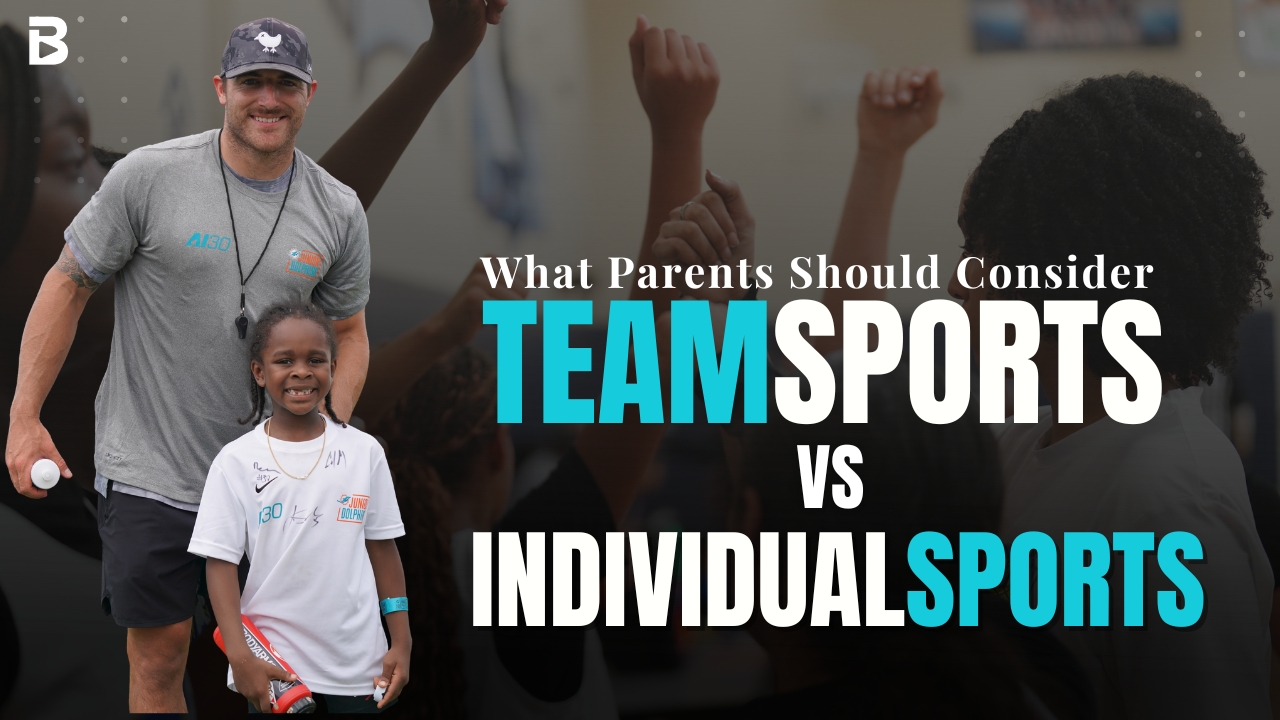
Team Sports vs Individual Sports: What Parents Should Know
Team Sports vs. Individual Sports: What Parents Should Consider First for Their Child’s Development
When parents are choosing which sport to introduce their child to, the decision is often driven by convenience, schedule, or family tradition. But the deeper impact of that choice goes far beyond wins and losses. Team sports and individual sports shape children differently, not just as athletes, but as people. Understanding how each environment influences identity, confidence, and problem-solving can help parents make a smarter, more thoughtful choice for their child’s long-term development.There is no universal “better” option between team and individual sports. Both offer valuable lessons and challenges. What matters most is how each environment affects a child’s personality, growth, and emotional development, and whether parents understand what their child truly needs at each stage.
Team sports teach children how to exist inside a system. From an early age, athletes learn that their role matters, but it is not the whole machine. They learn the importance of cooperation, communication, and accountability. A missed assignment does not just affect the individual, it impacts the entire group. This environment naturally teaches responsibility and social awareness. Children who grow up in team sports often develop a strong sense of loyalty and empathy because they see success as something that is earned together.
Team settings also help children learn how to navigate authority and different personalities. In a locker room, there are natural leaders and quieter contributors, outspoken personalities and reserved ones. Learning how to work with teammates who are different is a skill that carries directly into adulthood. Jobs, relationships, and leadership situations mirror this same dynamic. When coached well, team sports become a safe environment to practice real-world communication long before real-world consequences exist.
Team sports build connection.
— BallerPost (@BallerPost) December 10, 2025
Individual sports build independence.
Both shape your child in very different ways.
Parents should understand which one their athlete actually needs.https://t.co/sYh8AadeGT pic.twitter.com/usbArvnglf
However, team sports can sometimes dilute personal accountability. If a child has a bad game, the loss is shared. If they have a great one, the credit is split. Some children thrive in this environment and feel protected by it. Others struggle to fully develop their sense of personal agency. For certain personalities, teamwork can unintentionally become a place to hide rather than grow.
Individual sports, by contrast, place the responsibility squarely on the athlete. When a child wins, they know exactly why. When they lose, they must confront it directly. This environment builds mental toughness fast. There is no one else to blame and no one else to carry the result. Over time, this can develop an athlete who is deeply self-aware, disciplined, and resilient.
Individual sports also foster personal identity earlier. Athletes learn who they are when the pressure is on and nobody is coming to save them. This builds internal confidence instead of borrowed confidence. Instead of being defined by a jersey or team name, the child becomes defined by effort, preparation, and mindset. That sense of self can be powerful and long-lasting.
<iframe width="852" height="480" src="https://www.ballertube.com/video-embed/6536" frameborder="0" allowfullscreen></iframe>
At the same time, individual sports can be emotionally taxing for young children who are not mentally prepared for that load. When everything is on one person, failure can feel heavier and success can feel lonely. Without the right support system, children in individual sports may internalize defeat or place too much pressure on themselves. This is where parents play a critical role. An athlete in an individual sport must be coached emotionally just as much as physically.
When it comes to problem-solving, both paths teach different types of intelligence. Team sports train situational thinking, pattern recognition, communication, and adaptability inside moving systems. Individual sports train self-analysis, emotional regulation, tactical planning, and recovery from mistakes. One is external problem-solving. The other is internal.
For parents, the most important consideration is not which environment feels more impressive. It’s which environment fits the child. Some children need structure and social reinforcement to thrive. Others need freedom and responsibility to grow. Personality matters far more than prestige.
It’s also worth understanding that development does not need to be one-dimensional. Many athletes benefit from engaging in both team and individual sports at different stages. A child may build confidence and social skills in team sports early, then develop discipline and self-belief in individual sports later. The combination can be powerful.
Parents should avoid projecting their own unfinished dreams onto their children. The purpose of youth sports is not producing scholarship athletes. It is producing capable adults. Identity, confidence, and problem-solving skills will matter far longer than trophies on a shelf.
The best developmental path is the one that leaves a child stronger when the sport eventually ends.
Because every sports career ends.
The lessons are what remain.
729
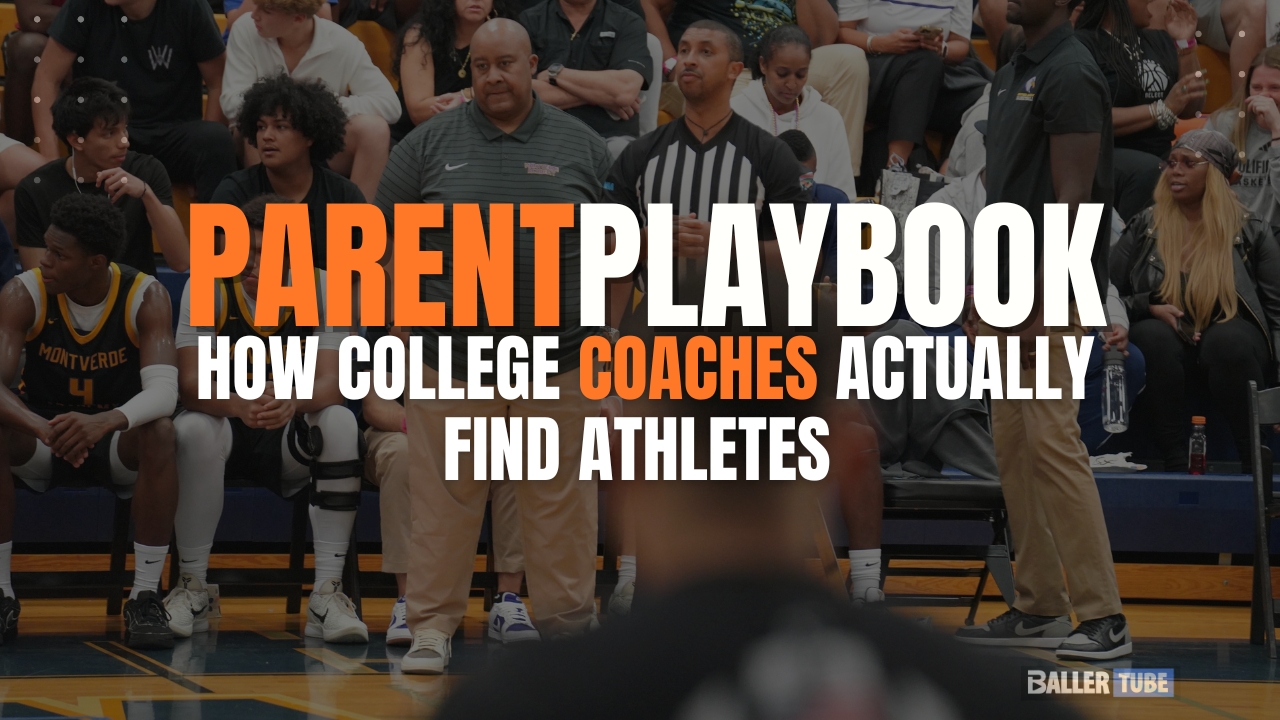
How College Coaches Actually Find Athletes (What Parents Need to Know)
One of the most common questions parents ask is: “How do college coaches actually find athletes?” The answer surprises most families because it isn’t based on social media fame or luck. Coaches aren’t scrolling Instagram hoping to stumble across a highlight. Recruiting today runs on systems, structure, relationships, and visibility — not chance.
College programs operate under limited time, tight windows, and extreme pressure to recruit efficiently. That means most athletes are not “discovered.” They are identified because they are easy to evaluate, easy to locate, and easy to track.
The families who understand that early are the ones who give their athletes a real advantage.
Recruiting Is Not About Being Seen Once — It’s About Being Seen Consistently
Parents often believe that one viral clip or one great performance is what gets attention. In reality, coaches recruit through repeated exposure over time. They track development, evaluate growth, and watch progression across seasons.
One good game never tells a coach enough. What they want to see is pattern, improvement, and reliability. Does an athlete perform consistently? Can they handle pressure? Do they compete when shots are not falling? These answers only come from consistent visibility, not from single moments.
This is why being “occasionally visible” often results in no recruiting traction at all. Coaches recruit from clarity, not chaos.
Coaches Don’t Discover Athletes — They Filter Them
At any given level, coaches are not short on athletic talent. What they are short on is time.
A college coach might evaluate hundreds of athletes for one roster spot. That means they don’t search randomly. They filter. They prioritize athletes who already live inside known systems:
-
Trusted coaches
-
Recruiting databases
-
Media platforms
-
Game film libraries
-
Verified athlete profiles
-
School programs
-
Circuit events
When an athlete exists in organized structure, coaches can access them. When they don’t, even great players slip through unnoticed.
Recruiting is not unfair. It’s systematic.
Most parents think college coaches “find” athletes on social media.
— BallerPost (@BallerPost) December 10, 2025
They don’t.
They filter them through systems.
If your athlete isn’t visible in those systems, they aren’t being seen.
(Read this.) 👇https://t.co/USivu3TREp pic.twitter.com/qaW7LzXAGV
The Brutal Truth: Talented But Invisible Is The Same As Ungifted
This is the hardest reality for parents to accept:
If a coach cannot find your athlete,
they cannot recruit your athlete.
Talent without accessibility becomes invisible talent.
When coaches click on a name and find:
-
no searchable profile
-
no real game footage
-
no contact information
-
scattered links
-
outdated stats
-
or nothing at all
They move forward with someone else.
Not because your child wasn’t good enough — but because they were impossible to evaluate.
Social Media Alone Is Not A Recruiting Strategy
Posting highlights is fine.
But it’s not a system.
Social platforms were never built for recruiting. They compress video, bury content, and prioritize entertainment over evaluation. Coaches don’t want to chase athletes through stories, bios, or DMs.
They want:
-
full games
-
player profiles
-
consistent timeline
-
reliable access
Social media can support recruiting — but it cannot run recruiting.
If your entire approach is “post and hope,” then you’re not recruiting.
You’re gambling.
What Actually Puts Athletes On A Coach’s Radar
Athletes who attract attention usually have three things in common.
First, they have organized film. Coaches want to see full games and structured highlight edits, not random clips stitched together.
Second, they have professional visibility. That means a real name, a real profile, and a central home where everything lives.
Third, they are easy to contact. If a coach can’t figure out how to reach an athlete or their family within seconds, interest dies quietly.
Recruiting is about friction.
Less friction = more opportunity.
Parents Make One Mistake Over and Over
Many families delay structure because “nothing is happening yet.”
That’s backwards.
Recruiting should be built before attention arrives — not after.
Waiting until offers appear is like building a house after guests arrive. By then, it’s too late to look prepared.
Early setup gives athletes:
-
organization
-
presence
-
credibility
-
continuity
-
control
Recruiting is built quietly.
and paid off loudly.
Parents Should Think Long-Term, Not Viral
Recruiting is not about hype.
It’s about positioning.
Athletes who get recruited often don’t go viral.
They get found.
Because they made it easy to be found.
Where Media Platforms Fit In
Platforms like BallerTube exist to give athletes something social media cannot:
a permanent home.
A place where:
-
film is structured
-
profiles are real
-
names are searchable
-
media archives
-
exposure compounds
-
relationships form
Not another social account.
A professional infrastructure.
Final Thought
The question isn’t:
“Is my child good enough?”
The question is:
“Is my child visible enough to be evaluated?”
Recruiting is not magic.
It’s preparation.
507
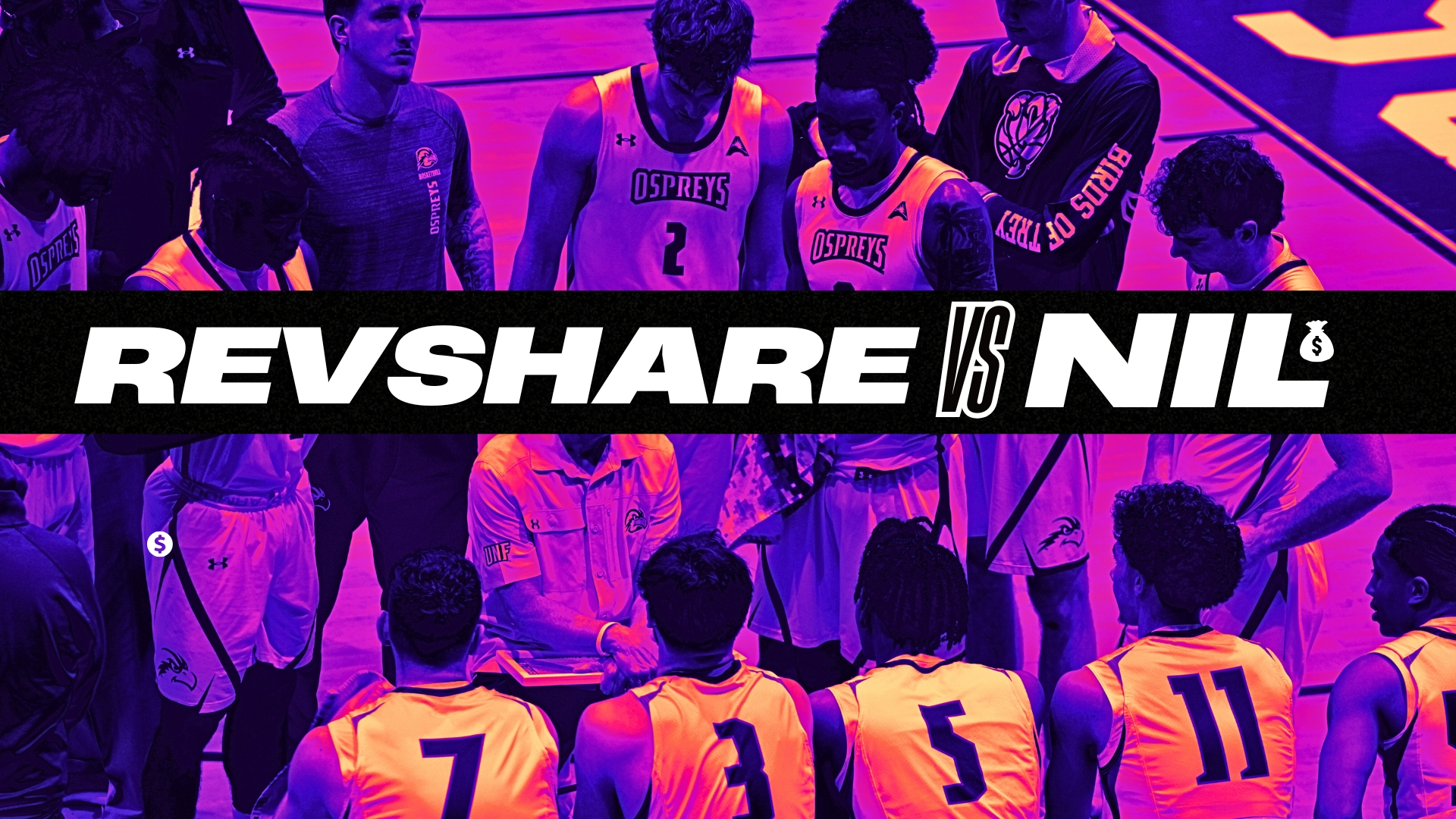
NIL vs. Rev Share: What Parents and Athletes Need to Know
There's a lot of talk about student-athletes making money. But if you're a parent, it can all sound confusing. Between "NIL" and "revenue sharing," how do you know what’s what—and how it helps your child?
This article breaks it down in plain language so you know exactly what to look for, what’s legal, and how your athlete can benefit from both.
What is NIL? (Name, Image, and Likeness) NIL means your child can earn money from their name, image, and likeness. That includes:
-
Brand sponsorships
-
Paid social media posts
-
Selling merchandise
-
Signing autographs
NIL is all about personal brand. Your child can negotiate deals with companies that want to be seen with their name.
What is Revenue Sharing? Revenue sharing is money paid directly from a college or university to the athlete.
This isn’t about social media or outside deals. It’s about schools giving athletes a portion of the money they make from:
-
TV contracts
-
Ticket sales
-
Sponsorship deals
In 2024, a major lawsuit forced the NCAA to agree to share revenue with players. Some schools now pay athletes directly—especially football and basketball players—because those sports bring in the most money.
NIL vs. Rev Share (Simple Chart)
| Thing | NIL | Revenue Sharing |
|---|---|---|
|
Who pays?
|
Outside companies (brands)
|
The school (college or university)
|
|
What it's based on
|
Your child's personal brand
|
Your child's performance & team sport
|
|
Who controls it?
|
The athlete
|
The school or team
|
|
When it started
|
2021
|
2024 (after lawsuit)
|
Why This Matters for Parents You don’t need to understand contracts to support your athlete. But knowing the difference between NIL and revenue sharing can help you:
-
Guide them to the right opportunities
-
Avoid scams or shady deals
-
Keep them eligible for school sports
How to Help Your Athlete Get Ready
-
Secure their name – Use Athlete.Name to lock down a domain like JaydenSmith.com
-
Create a personal website – Use BallerSites.com to build a sports resume online
-
Upload highlights – Post clips to BallerTube.com to showcase their talent
-
Understand your state’s NIL laws – Some high school athletes are now allowed to earn too
What's New in 2025
-
More states now allow high school athletes to earn NIL money
-
Schools are working on revenue share plans to start paying college players by 2025-2026
-
Federal lawmakers are trying to create one national NIL law
The bottom line? NIL and revenue sharing are both ways for your athlete to get paid. NIL is all about who they are. Rev share is about what they do for their team. Parents can help by getting their kids set up online, staying informed, and making sure they don’t miss out.
Start today at BallerTube.com
12705
7353
All Videos
There is no data in this list.
All news
Team Sports vs Individual Sports: What Parents Should Know
Team Sports vs. Individual Sports: What Parents Should Consider First for Their Child’s Development
When parents are choosing which sport to introduce their child to, the decision is often driven by convenience, schedule, or family tradition. But the deeper impact of that choice goes far beyond wins and losses. Team sports and individual sports shape children differently, not just as athletes, but as people. Understanding how each environment influences identity, confidence, and problem-solving can help parents make a smarter, more thoughtful choice for their child’s long-term development.There is no universal “better” option between team and individual sports. Both offer valuable lessons and challenges. What matters most is how each environment affects a child’s personality, growth, and emotional development, and whether parents understand what their child truly needs at each stage.
Team sports teach children how to exist inside a system. From an early age, athletes learn that their role matters, but it is not the whole machine. They learn the importance of cooperation, communication, and accountability. A missed assignment does not just affect the individual, it impacts the entire group. This environment naturally teaches responsibility and social awareness. Children who grow up in team sports often develop a strong sense of loyalty and empathy because they see success as something that is earned together.
Team settings also help children learn how to navigate authority and different personalities. In a locker room, there are natural leaders and quieter contributors, outspoken personalities and reserved ones. Learning how to work with teammates who are different is a skill that carries directly into adulthood. Jobs, relationships, and leadership situations mirror this same dynamic. When coached well, team sports become a safe environment to practice real-world communication long before real-world consequences exist.
Team sports build connection.
— BallerPost (@BallerPost) December 10, 2025
Individual sports build independence.
Both shape your child in very different ways.
Parents should understand which one their athlete actually needs.https://t.co/sYh8AadeGT pic.twitter.com/usbArvnglf
However, team sports can sometimes dilute personal accountability. If a child has a bad game, the loss is shared. If they have a great one, the credit is split. Some children thrive in this environment and feel protected by it. Others struggle to fully develop their sense of personal agency. For certain personalities, teamwork can unintentionally become a place to hide rather than grow.
Individual sports, by contrast, place the responsibility squarely on the athlete. When a child wins, they know exactly why. When they lose, they must confront it directly. This environment builds mental toughness fast. There is no one else to blame and no one else to carry the result. Over time, this can develop an athlete who is deeply self-aware, disciplined, and resilient.
Individual sports also foster personal identity earlier. Athletes learn who they are when the pressure is on and nobody is coming to save them. This builds internal confidence instead of borrowed confidence. Instead of being defined by a jersey or team name, the child becomes defined by effort, preparation, and mindset. That sense of self can be powerful and long-lasting.
<iframe width="852" height="480" src="https://www.ballertube.com/video-embed/6536" frameborder="0" allowfullscreen></iframe>
At the same time, individual sports can be emotionally taxing for young children who are not mentally prepared for that load. When everything is on one person, failure can feel heavier and success can feel lonely. Without the right support system, children in individual sports may internalize defeat or place too much pressure on themselves. This is where parents play a critical role. An athlete in an individual sport must be coached emotionally just as much as physically.
When it comes to problem-solving, both paths teach different types of intelligence. Team sports train situational thinking, pattern recognition, communication, and adaptability inside moving systems. Individual sports train self-analysis, emotional regulation, tactical planning, and recovery from mistakes. One is external problem-solving. The other is internal.
For parents, the most important consideration is not which environment feels more impressive. It’s which environment fits the child. Some children need structure and social reinforcement to thrive. Others need freedom and responsibility to grow. Personality matters far more than prestige.
It’s also worth understanding that development does not need to be one-dimensional. Many athletes benefit from engaging in both team and individual sports at different stages. A child may build confidence and social skills in team sports early, then develop discipline and self-belief in individual sports later. The combination can be powerful.
Parents should avoid projecting their own unfinished dreams onto their children. The purpose of youth sports is not producing scholarship athletes. It is producing capable adults. Identity, confidence, and problem-solving skills will matter far longer than trophies on a shelf.
The best developmental path is the one that leaves a child stronger when the sport eventually ends.
Because every sports career ends.
The lessons are what remain.
729
How College Coaches Actually Find Athletes (What Parents Need to Know)
One of the most common questions parents ask is: “How do college coaches actually find athletes?” The answer surprises most families because it isn’t based on social media fame or luck. Coaches aren’t scrolling Instagram hoping to stumble across a highlight. Recruiting today runs on systems, structure, relationships, and visibility — not chance.
College programs operate under limited time, tight windows, and extreme pressure to recruit efficiently. That means most athletes are not “discovered.” They are identified because they are easy to evaluate, easy to locate, and easy to track.
The families who understand that early are the ones who give their athletes a real advantage.
Recruiting Is Not About Being Seen Once — It’s About Being Seen Consistently
Parents often believe that one viral clip or one great performance is what gets attention. In reality, coaches recruit through repeated exposure over time. They track development, evaluate growth, and watch progression across seasons.
One good game never tells a coach enough. What they want to see is pattern, improvement, and reliability. Does an athlete perform consistently? Can they handle pressure? Do they compete when shots are not falling? These answers only come from consistent visibility, not from single moments.
This is why being “occasionally visible” often results in no recruiting traction at all. Coaches recruit from clarity, not chaos.
Coaches Don’t Discover Athletes — They Filter Them
At any given level, coaches are not short on athletic talent. What they are short on is time.
A college coach might evaluate hundreds of athletes for one roster spot. That means they don’t search randomly. They filter. They prioritize athletes who already live inside known systems:
-
Trusted coaches
-
Recruiting databases
-
Media platforms
-
Game film libraries
-
Verified athlete profiles
-
School programs
-
Circuit events
When an athlete exists in organized structure, coaches can access them. When they don’t, even great players slip through unnoticed.
Recruiting is not unfair. It’s systematic.
Most parents think college coaches “find” athletes on social media.
— BallerPost (@BallerPost) December 10, 2025
They don’t.
They filter them through systems.
If your athlete isn’t visible in those systems, they aren’t being seen.
(Read this.) 👇https://t.co/USivu3TREp pic.twitter.com/qaW7LzXAGV
The Brutal Truth: Talented But Invisible Is The Same As Ungifted
This is the hardest reality for parents to accept:
If a coach cannot find your athlete,
they cannot recruit your athlete.
Talent without accessibility becomes invisible talent.
When coaches click on a name and find:
-
no searchable profile
-
no real game footage
-
no contact information
-
scattered links
-
outdated stats
-
or nothing at all
They move forward with someone else.
Not because your child wasn’t good enough — but because they were impossible to evaluate.
Social Media Alone Is Not A Recruiting Strategy
Posting highlights is fine.
But it’s not a system.
Social platforms were never built for recruiting. They compress video, bury content, and prioritize entertainment over evaluation. Coaches don’t want to chase athletes through stories, bios, or DMs.
They want:
-
full games
-
player profiles
-
consistent timeline
-
reliable access
Social media can support recruiting — but it cannot run recruiting.
If your entire approach is “post and hope,” then you’re not recruiting.
You’re gambling.
What Actually Puts Athletes On A Coach’s Radar
Athletes who attract attention usually have three things in common.
First, they have organized film. Coaches want to see full games and structured highlight edits, not random clips stitched together.
Second, they have professional visibility. That means a real name, a real profile, and a central home where everything lives.
Third, they are easy to contact. If a coach can’t figure out how to reach an athlete or their family within seconds, interest dies quietly.
Recruiting is about friction.
Less friction = more opportunity.
Parents Make One Mistake Over and Over
Many families delay structure because “nothing is happening yet.”
That’s backwards.
Recruiting should be built before attention arrives — not after.
Waiting until offers appear is like building a house after guests arrive. By then, it’s too late to look prepared.
Early setup gives athletes:
-
organization
-
presence
-
credibility
-
continuity
-
control
Recruiting is built quietly.
and paid off loudly.
Parents Should Think Long-Term, Not Viral
Recruiting is not about hype.
It’s about positioning.
Athletes who get recruited often don’t go viral.
They get found.
Because they made it easy to be found.
Where Media Platforms Fit In
Platforms like BallerTube exist to give athletes something social media cannot:
a permanent home.
A place where:
-
film is structured
-
profiles are real
-
names are searchable
-
media archives
-
exposure compounds
-
relationships form
Not another social account.
A professional infrastructure.
Final Thought
The question isn’t:
“Is my child good enough?”
The question is:
“Is my child visible enough to be evaluated?”
Recruiting is not magic.
It’s preparation.
507
NIL vs. Rev Share: What Parents and Athletes Need to Know
There's a lot of talk about student-athletes making money. But if you're a parent, it can all sound confusing. Between "NIL" and "revenue sharing," how do you know what’s what—and how it helps your child?
This article breaks it down in plain language so you know exactly what to look for, what’s legal, and how your athlete can benefit from both.
What is NIL? (Name, Image, and Likeness) NIL means your child can earn money from their name, image, and likeness. That includes:
-
Brand sponsorships
-
Paid social media posts
-
Selling merchandise
-
Signing autographs
NIL is all about personal brand. Your child can negotiate deals with companies that want to be seen with their name.
What is Revenue Sharing? Revenue sharing is money paid directly from a college or university to the athlete.
This isn’t about social media or outside deals. It’s about schools giving athletes a portion of the money they make from:
-
TV contracts
-
Ticket sales
-
Sponsorship deals
In 2024, a major lawsuit forced the NCAA to agree to share revenue with players. Some schools now pay athletes directly—especially football and basketball players—because those sports bring in the most money.
NIL vs. Rev Share (Simple Chart)
| Thing | NIL | Revenue Sharing |
|---|---|---|
|
Who pays?
|
Outside companies (brands)
|
The school (college or university)
|
|
What it's based on
|
Your child's personal brand
|
Your child's performance & team sport
|
|
Who controls it?
|
The athlete
|
The school or team
|
|
When it started
|
2021
|
2024 (after lawsuit)
|
Why This Matters for Parents You don’t need to understand contracts to support your athlete. But knowing the difference between NIL and revenue sharing can help you:
-
Guide them to the right opportunities
-
Avoid scams or shady deals
-
Keep them eligible for school sports
How to Help Your Athlete Get Ready
-
Secure their name – Use Athlete.Name to lock down a domain like JaydenSmith.com
-
Create a personal website – Use BallerSites.com to build a sports resume online
-
Upload highlights – Post clips to BallerTube.com to showcase their talent
-
Understand your state’s NIL laws – Some high school athletes are now allowed to earn too
What's New in 2025
-
More states now allow high school athletes to earn NIL money
-
Schools are working on revenue share plans to start paying college players by 2025-2026
-
Federal lawmakers are trying to create one national NIL law
The bottom line? NIL and revenue sharing are both ways for your athlete to get paid. NIL is all about who they are. Rev share is about what they do for their team. Parents can help by getting their kids set up online, staying informed, and making sure they don’t miss out.
Start today at BallerTube.com
12705
Live now
Ended lives 6551
All Albums
There is no data in this list.