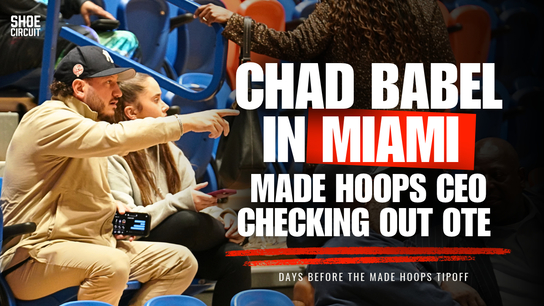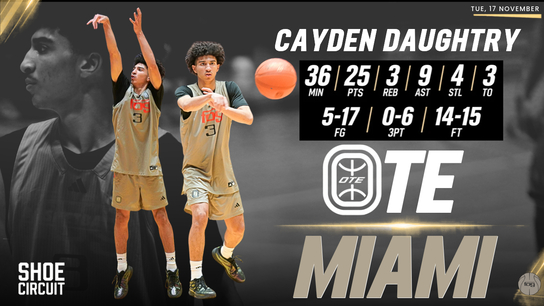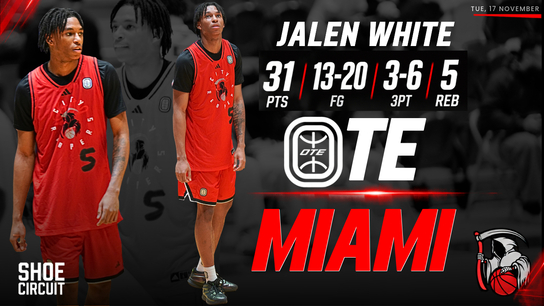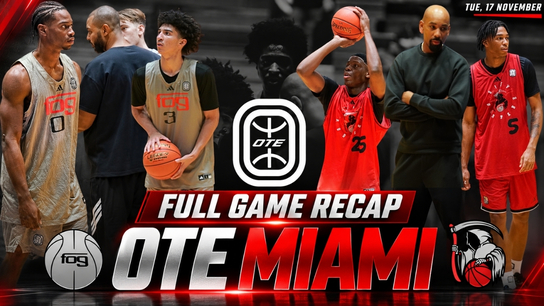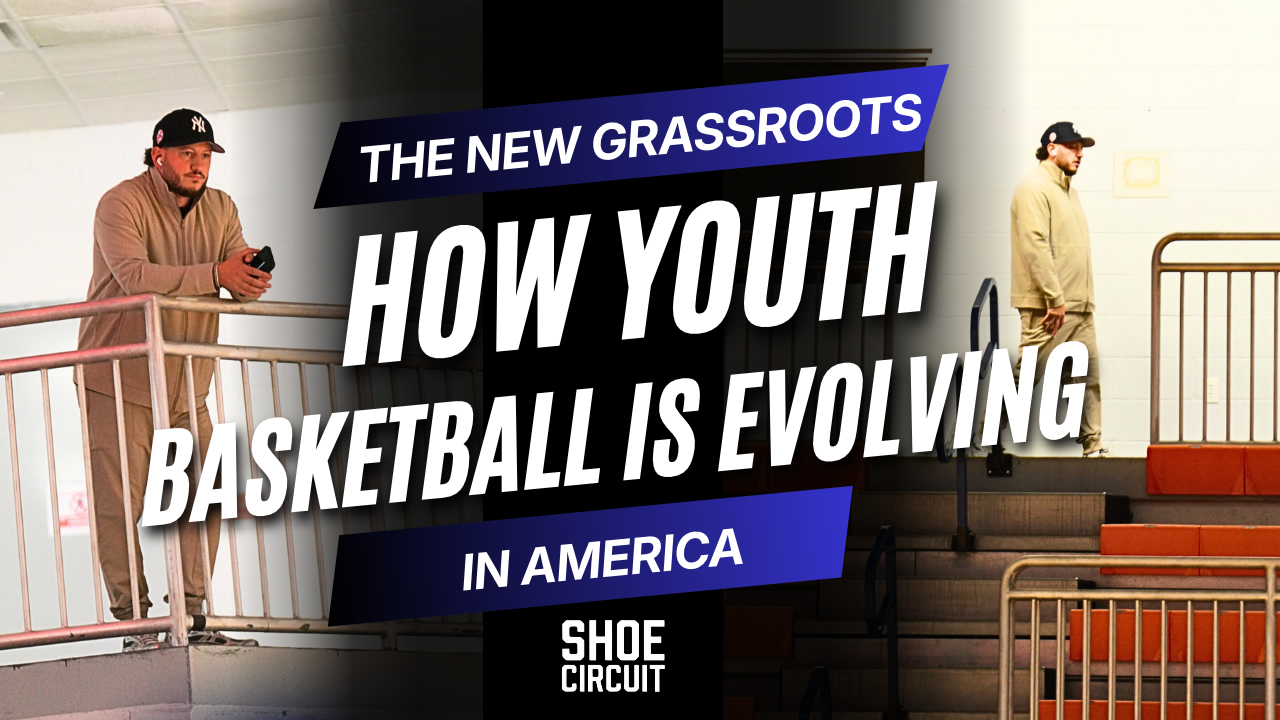

On Tuesday night in Miami Gardens, the most interesting person in the gym was not on the court. It was Chad Babel, founder and CEO of MADE Hoops, pacing the sideline with a phone to his ear while Overtime Elite played the first game of its two-night Miami stop.
The timing tells the story. Eight days earlier, MADE Hoops was named the official operating partner of the new Futures Basketball League, backed by LeBron James and Kevin Durant. Three days later, MADE's own Miami Tip-Off opens across town with IMG Academy, Prolific Prep, SPIRE Academy and Columbus. One city, one week, three different visions of where elite young basketball players should spend their time.
We don't know who Babel was talking to. But the question his presence raises is bigger than one phone call: elite youth basketball is splitting into a handful of power groups, each one collecting top talent. What happens to everyone they don't collect?
The new map
The top of the sport now runs through at least five organized groups, each with its own season, its own money and its own pitch to families.
A pro-style league; players sign with a team
Overtime, plus NBA owners and players as investors
Fall through winter
9 teams, ages 16 to 19
A national league of school programs
Nike
High school season
15 teams in 2026-27
The first international high school league
WorldStage Sports, with SPIRE, Prolific Prep and IMG among the members
November through February
11 programs from the US, Canada, Italy, Germany, Serbia and Lithuania
A spring and summer league paying players through NIL
LRMR (LeBron James, Maverick Carter), Boardroom (Kevin Durant, Rich Kleiman), Derrick Rose, Paolo Banchero, Gary Vaynerchuk, SC Holdings
April through August 2027
12 teams, 120 players, classes of 2028 to 2031
The largest independent grassroots event circuit
Founder Chad Babel; investors include LRMR and Boardroom
Year-round
125+ events, 100,000+ athletes a year
Then there are the shoe circuits: Nike's EYBL, adidas 3SSB and Under Armour's UAA, which still own the summer.
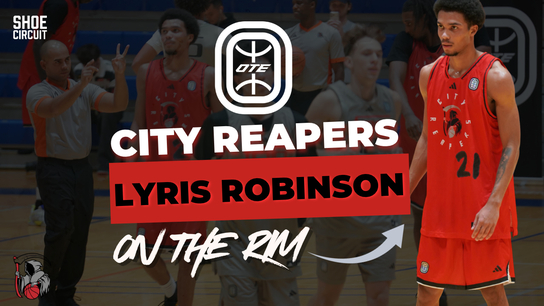
Look closely and the groups overlap. The same investors who bought into MADE Hoops in 2025 founded Futures in 2026, and MADE now runs Futures' games inside its existing events. MADE also partnered this fall with Rod Wave Elite, which plays in OTE. And the City Reapers who beat Fear of God on Tuesday started Jalen White, Lyris Robinson and Paul Osaruyi, who were teammates last season at CIA Bella Vista in the EYBL Scholastic playoffs. The talent moves between these groups. The power groups are rivals for players, but they share owners, venues and rosters.
Is Miami a dry run for Futures?
Not exactly, but it is an audition. The Miami Tip-Off runs Nov. 20 to 22 at Miami Senior High School: 14 games, school programs, high school season. Futures is a different product. It starts in April 2027, plays only in spring and summer, and is built for the classes of 2028 through 2031, not this year's seniors.
What the Tip-Off does test is the thing MADE was hired to do for Futures. The league plans to stage its games on grandstand courts inside events that already draw big youth basketball crowds. That is MADE's core business, and Miami is MADE's showcase weekend: national programs, a ticketed crowd and a TV-ready setting. Last year, top prospect Bruce Branch III reclassified live on NBA TV from this event.
There's another overlap. SPIRE, Prolific Prep and IMG are among the programs that launched ATLAS in October, and all three are in Miami this weekend. So a MADE event is hosting teams from a rival league, eight days after MADE signed on to run a third one. If Miami is a dry run for anything, it's for a future where one operator stages everyone's games.
The players on the outside
The power groups are built for a tiny slice of players. College basketball is built for a much bigger one.
Futures will carry 120 players across four classes, about 30 per graduating year. OTE has nine teams. The major ranking services stop around the top 100 to 150 per class. Meanwhile, about 540,000 boys play high school basketball each year, and there are roughly 5,800 Division I roster spots and 18,800 NCAA roster spots across all three divisions. That's before counting NAIA and junior college.
The NCAA's own estimate is that about 1.1% of high school boys reach Division I, and 3.6% reach any NCAA level. Most of the players who fill those rosters will never play in OTE, Futures, ATLAS or EYBL Scholastic. They come from public schools, regional AAU programs and independent events.
The new math makes things harder for them. Under the House settlement, Division I men's basketball rosters are capped at 15, and the transfer portal lets coaches fill spots with proven college players instead of high school prospects. For a 3-star kid outside the power groups, the spots are still there. Getting seen for them is the hard part.
NBA pipeline, or the next step in scouting?
Mostly the second. Even the groups built to look like pro leagues are now designed to send players to college first.
OTE launched in 2021 with six-figure salaries, which cost players their college eligibility. About a year later it added a scholarship track. Futures went further from day one: it pays players through NIL deals cleared by the College Sports Commission, so they keep their college eligibility. These leagues aren't trying to replace college. They're competing to be the place a prospect spends the years before it.
The NBA still drafts 60 players a year, and college is still where most of them come from. In the NCAA's last published count, former Division I players filled 83% of opening-day NBA roster spots. What the power groups change is how early and how closely a prospect gets watched. They offer better coaching, sports science, film, polished broadcasts and a cleaner path to NIL money. That's scouting and development as a business, not a shortcut past the steps.
College still covers gaps that no 16-year-old league can. Players get a strength program built for grown men, compete against 22-year-olds every night, and learn to play a defined role on a team that's trying to win. A five-star who dominates OTE still has to prove those things. A three-star who never played in a power group can prove them too.
Questions that still need answers
The bottom line
The power groups are real, they're well funded, and they will shape how the top 1% of players develop. But they're closer to a new layer of scouting than a direct line to the NBA, and they are not the whole sport. College basketball still has thousands of roster spots every year, and most will go to players no league invited.
That's why being seen still matters. BallerTube was courtside in Miami this week for OTE and will be there for the Tip-Off. We'll keep filming the players inside the power groups and the ones outside them, because a full game on tape doesn't care who sent the invitation.