Winning is supposed to be everything.
But what happens when you're winning championships and still reach a point where you need something different?
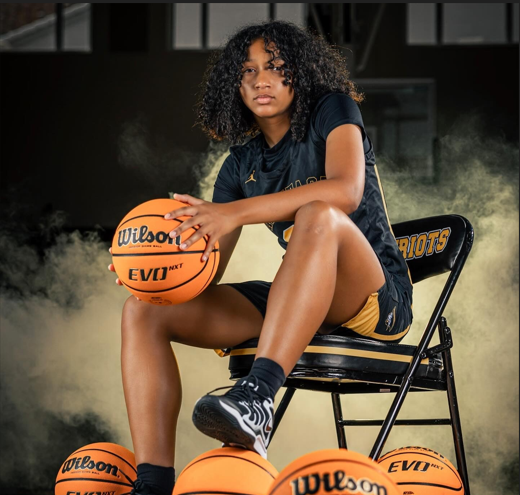
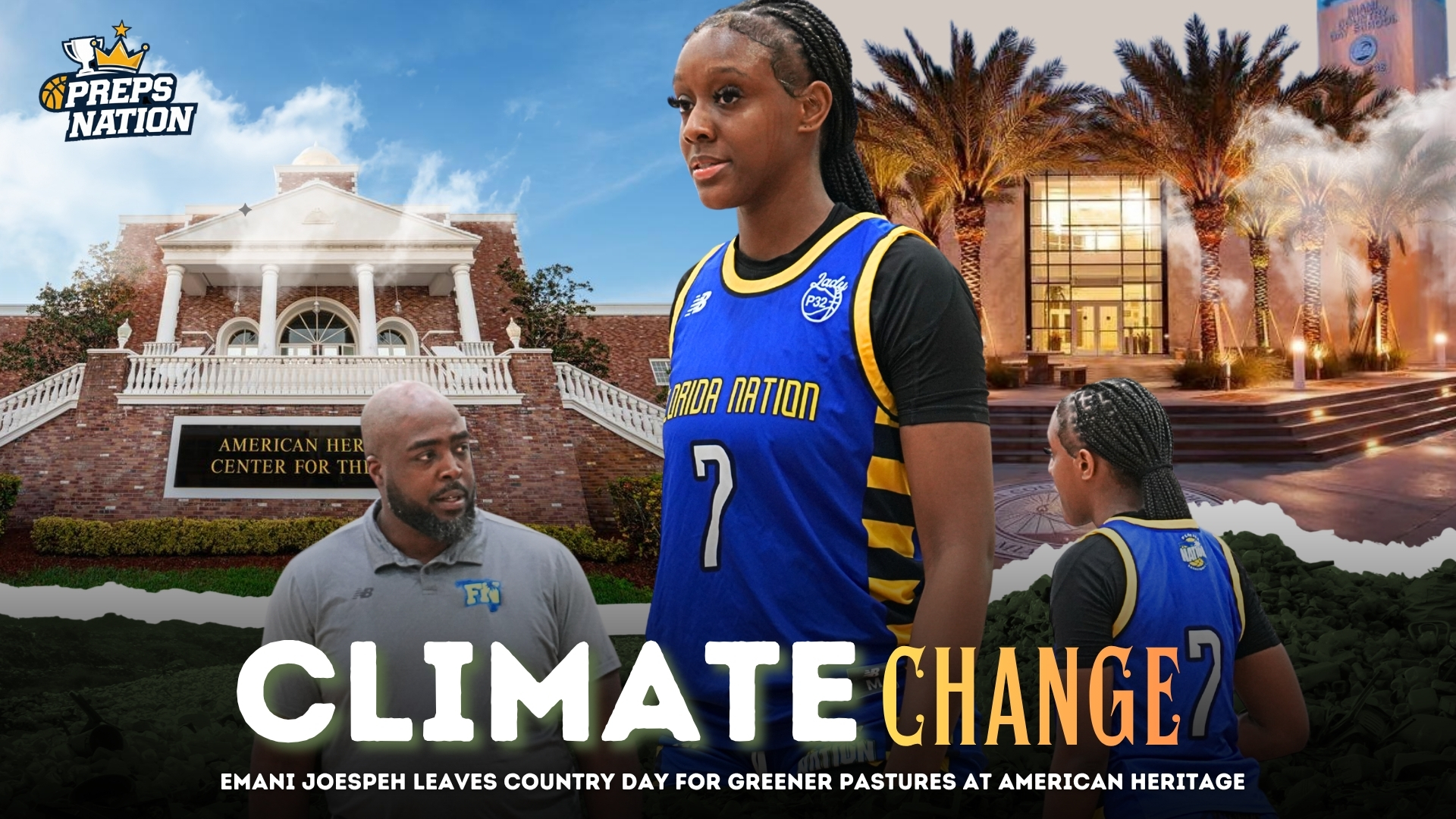
That may be the most interesting question surrounding Emani Joseph's move from Miami Country Day to American Heritage entering her junior season.
Joseph is leaving one of the most successful girls basketball programs in Florida. She has spent three varsity seasons inside Ochiel Swaby's Miami Country Day program, a run that coincided with three consecutive state championships.
Now she's walking away from that environment for a new opportunity at American Heritage.
And when you look beyond the surface, there are several basketball reasons why the move makes sense.
This isn't simply a story about one player changing schools.
It's a story about roles, exposure, AAU relationships and how increasingly calculated the final two years of a high school basketball career have become.
Three Years, Three Championships, But a Limited Role
Joseph has experienced something most high school players never will.
Winning.
And lots of it.
Miami Country Day has won three consecutive state championships, most recently finishing 28-2 and capturing the 2026 Class 2A championship under Swaby. The Spartans entered that championship game ranked No. 1 overall in Florida and No. 17 nationally by MaxPreps.
Joseph was there throughout the run.
But here's where the story gets interesting.
Her individual numbers haven't reflected the enormous amount of team success around her.
As a sophomore, the 5-foot-11 Joseph appeared in 22 games and averaged 3.7 points, 1.8 rebounds, 1.0 assist and 0.9 steals per game. Across three varsity seasons dating back to eighth grade, she has appeared in 38 games and averaged 3.1 points.
Those aren't necessarily numbers that tell you what a player is capable of.
They tell you what her role has been.
And entering your junior season, that distinction starts becoming extremely important.
College coaches can't recruit what they don't consistently get to see.
Country Day Isn't Suddenly Getting Easier
Joseph could have stayed.
She could have continued winning.
But there's another problem.
Miami Country Day still has talent everywhere.
Jalynn Belton returns after emerging as one of the Spartans' most important players. In the 2026 state semifinal, Belton exploded for 27 points to send Country Day back to the championship game.
Kennedy Deal is still there.
TJ Ariche is there.
Kori Edge, Arianna Robinson and others remain in the program. Country Day's currently published 2026-27 roster shows just how crowded the perimeter and wing rotation could remain.
That's the reality of playing for an elite program.
There are only so many possessions.
Only one basketball.
Only five players on the floor.
And sometimes being good enough to contribute to a championship team isn't the same thing as being placed in a role that allows the rest of the basketball world to discover how good you can become.
For a freshman, that's manageable.
For a sophomore, you can remain patient.
But by junior year?
The clock starts moving differently.
American Heritage Offers a Very Different Opportunity
Now look at what's waiting at American Heritage.
The Patriots aren't exactly rebuilding from nothing.
American Heritage has its own championship pedigree, and Greg Farias built one of Florida's most accomplished programs, winning six FHSAA state championships in seven years during his previous run leading Heritage.
And there is already a perfect example on the roster of what can happen when opportunity expands.
Aloisio went from averaging 5.3 points per game as a freshman to 16.1 points, 3.0 assists, 2.8 rebounds and 2.0 steals as a sophomore. She became Heritage's leading scorer and was named the Miami Herald's Broward 4A-1A Girls Basketball Player of the Year.
Think about that jump.
5.3 to 16.1.
The talent didn't suddenly appear.
The opportunity did.
That's potentially significant when evaluating Joseph's decision.
At Country Day, Joseph averaged 3.7 points last season.
At Heritage, she now enters an environment where there could be an opportunity to expand her offensive responsibility alongside Aloisio rather than remaining one piece inside an extremely crowded Country Day rotation.
Nothing guarantees Joseph becomes a double-digit scorer.
But she may finally get the chance to find out.
Then There's the Greg Farias Connection
This is where the move becomes even more interesting.
Farias isn't simply Joseph's new high school coach.
He's also deeply connected to Florida Nation's high school basketball program, where he serves as Director of High School Basketball.
Joseph is now approaching arguably the most important AAU summer of her recruiting career.
The summer following junior year is different.
For a 2028 prospect, the 2027 travel season will be one of the final major opportunities to establish herself in front of college coaches before senior year.
And Joseph will be moving into the 17U level.
So the obvious question has to be asked:
Is part of this move about creating continuity between high school basketball and the most important AAU season of her career?
That's not an accusation.
It's basketball logic.
If a player is going to spend the summer playing within a particular coaching ecosystem, there are obvious advantages to spending the high school season learning that coach's terminology, expectations, defensive philosophy and offensive concepts.
Instead of beginning that relationship in March or April, the developmental process starts months earlier.
And there is another interesting connection.
Carlyle Lewis, who is the program director of Florida Nation, he is also a huge part of the ecosystem Joseph is coming from. Florida Nation publicly identifies Lewis as the central part of its player-development structure, while Farias oversees the high-school side.
That makes this more than the typical high-school transfer where a player walks into a completely unfamiliar situation.
There are existing basketball relationships on both sides.
Is This About AAU, Opportunity or Both?
Nobody outside Joseph and the people closest to the decision should pretend to know the exact motivation.
There probably isn't just one.
Maybe the relationship with Farias matters.
Maybe the upcoming 17U summer matters.
Maybe the opportunity to play a larger role matters.
Maybe she simply wanted a different environment.
Most likely, several things can be true simultaneously.
But the numbers make one part difficult to ignore.
Joseph is entering the stage of her career where production matters.
She already has the rings.
She already knows what championship basketball looks like.
She has spent three years around one of Florida's most accomplished coaches and programs.
What she hasn't had yet is a high-school season where the offense asks her to become a featured player.
American Heritage could provide that opportunity.
We're Seeing More Players Think This Way
And Joseph's decision speaks to something larger happening in high school basketball.
For years, joining the most loaded roster possible was viewed almost automatically as the best move.
More talent.
More wins.
More exposure.
More championships.
But players and families are increasingly forced to consider another question:
What is my actual role once I get there?
There's value in being the seventh player on an incredible team.
There's also value in being the second or third option on another excellent team and learning how to make decisions with the basketball in your hands.
Those experiences develop different things.
And when recruiting enters the equation, the calculus becomes even more complicated.
A college coach evaluating a guard or wing needs film of that player doing things.
Creating.
Making reads.
Handling pressure.
Running offense.
Defending important matchups.
Taking meaningful shots.
Responding after mistakes.
Closing games.
Those opportunities can be difficult to accumulate when you're playing behind multiple nationally recruited prospects.
That's why the transfer portal mentality affecting college basketball has an increasingly recognizable high-school counterpart.
Players aren't necessarily leaving because their previous program is bad.
Sometimes they're leaving because their individual timeline no longer matches their team's depth chart.
And Heritage Has Already Lived the Other Side of This
There's an irony here.
American Heritage knows exactly what roster movement can do to a program.
After losing multiple important players following the 2024-25 season, Heritage had to redistribute responsibility.
Aloisio benefited enormously from that opportunity.
She went from a supporting player to the Patriots' leading scorer and helped Heritage extend its remarkable run to a 10th consecutive state semifinal appearance.
Now Joseph could be arriving during another evolution of the roster.
She doesn't need to replace Aloisio.
She can complement her.
Aloisio's shooting and scoring gravity could actually create opportunities for another versatile 5-foot-10 perimeter player capable of attacking space, defending and creating offense.
That's what makes the fit intriguing.
The Timing Couldn't Be Better for Florida Girls Basketball
Joseph's move is also happening during what could become one of the most unpredictable seasons Florida girls basketball has seen in years.
The FHSAA landscape itself is changing.
The association's published 2027 championship structure now includes an Open Division in addition to Classes 1A through 6A, fundamentally changing the championship conversation for the state's strongest programs.
The 2026-27 season begins with official practices on October 26 and games on November 16, with the postseason ultimately heading to UNF Arena in Jacksonville.
Meanwhile, rosters continue moving.
Traditional powers are reloading.
Young players are becoming stars earlier.
AAU relationships increasingly intersect with high-school decisions.
And players understand that where they play is only part of the equation.
How they play and what they're asked to do once they get there can be just as important.
That brings us back to Emani Joseph.
She could have stayed at Miami Country Day and chased a fourth consecutive state championship.
Instead, she's choosing a different path.
She's leaving with three championships already attached to her résumé and entering her junior year at American Heritage with something potentially more valuable still available:
Opportunity.
Opportunity for more possessions.
Opportunity for more responsibility.
Opportunity to play alongside Isabella Aloisio.
Opportunity to develop under Greg Farias before a critical 17U summer.
And ultimately, an opportunity to show college coaches a version of Emani Joseph they may not have had enough chances to see yet.
Whether that decision results in another championship remains to be seen.
But that's exactly what makes the upcoming season so compelling.
In South Florida girls basketball right now, the pieces are moving, the roles are changing, and winning the offseason may suddenly matter almost as much as winning in March.