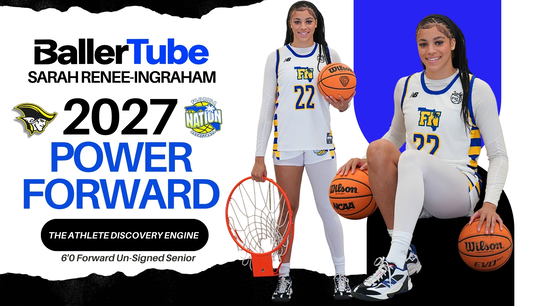
When New Balance entered the girls grassroots basketball circuit space with Lady P32, it was stepping into a world where Nike EYBL, Adidas 3SSB and Under Armour already had established identities, programs and recruiting ecosystems.
Starting another circuit was the easy part. Building credibility around it was the challenge.
New Balance found an interesting answer in the Midwest: Chris Mennig and the basketball infrastructure surrounding USJN and Blue Star Basketball.
The more closely you look at the relationship, the more Lady P32 begins to look less like a circuit New Balance had to build from the ground up and more like the convergence of two complementary assets. New Balance brought the shoe-company resources, national branding and ability to create a new circuit identity. Mennig brought decades of relationships, events, evaluation infrastructure and access to a girls basketball community that already existed.
And importantly, Mennig isn't simply the man running tournaments for New Balance.
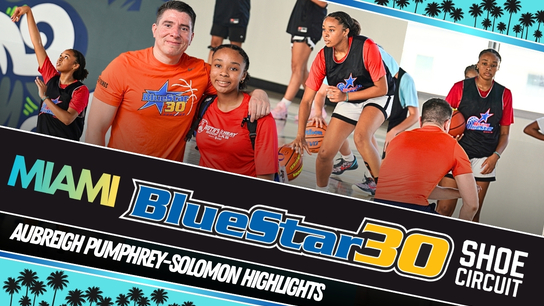
He is also the new owner of Blue Star Basketball, which describes itself as the longest-running national evaluation and college showcase organization in women's basketball.
That changes the context of the entire Lady P32 story.
New Balance Needed More Than Teams
A successful shoe circuit isn't simply 32 organizations wearing the same logo.
It needs credible programs. It needs venues. It needs events that college coaches are already comfortable attending. It needs directors who understand NCAA evaluation periods, scheduling and travel. Most importantly, it needs relationships.
Those things can take years to build.
USJN has already spent decades building them.
Its 2026 calendar demonstrates just how established that infrastructure is. The organization operated its 21st Windy City Classic, 24th Premier Showcase, 23rd Mid-America Challenge and 22nd Battle of the Programs, among numerous other events.
Instead of New Balance attempting to manufacture an entirely new girls basketball ecosystem, Lady P32 could be integrated into something that already had roots.
That strategy was particularly visible during the summer.
USJN's Premier Showcase in Cincinnati operated in conjunction with the New Balance Lady P32/E32 League and Blue Star League, specifically describing the format as a way to maximize college exposure. The event had 229 paid teams and was NCAA Division I certified. Chris Mennig was listed as the event coordinator.
Think about what that means.
Under one umbrella you have USJN events, Blue Star, Lady P32 and New Balance touching different parts of the same girls basketball marketplace.
That's much more valuable than simply having someone organize games.
The Blue Star Piece Makes the Partnership Different
This is where Mennig's ownership of Blue Star becomes particularly important.
Blue Star's history is rooted in evaluation and identification, not simply event operations. The organization describes itself as the longest-running national evaluation and college showcase organization in women's basketball. Historical Blue Star materials say its evaluations have been provided to media and colleges and cite involvement with major national honors and recognition programs over its history.
Mennig now sits at the intersection of those worlds.
USJN provides the event infrastructure.
Blue Star provides an established evaluation and showcase brand.
New Balance provides the corporate sports brand and shoe-circuit platform.
Lady P32 connects them competitively.
That relationship is already visible publicly. Blue Star hosted a Blue Star/Lady P32 Showcase in Cincinnati in July and a Lady P32 NIL Camp in St. Louis in August.
This isn't a theoretical connection. The brands are already operating together.
And that may be one of the smartest aspects of New Balance's entry into girls grassroots basketball.
A Midwest Infrastructure With National Reach
Calling it a "Midwest" operation shouldn't be confused with calling it regional.
Chicago has long been one of the important gathering points for girls grassroots basketball, and USJN's footprint extends far beyond Illinois.
Lady P32's National Championships provide a good example. USJN's official registration showed programs arriving from Arizona, California, Colorado, Connecticut, Florida, Georgia, Arkansas and other states.
The championship itself was held in Chicago from July 24-27. USJN described it as the final stop of the New Balance Lady P32 season, with league standings determining the championship brackets. The event was also NCAA Division I certified.
New Balance therefore gained something extremely valuable: an established Midwestern operational base that could service a national collection of programs.
That is difficult to recreate quickly.
USJN Had Something to Gain, Too
The relationship makes just as much sense from Mennig's side.
USJN didn't need New Balance to teach it how to run girls basketball events. Blue Star didn't need New Balance to establish an evaluation history.
What New Balance could provide was something different: a major athletic brand capable of placing a national shoe-circuit identity around that infrastructure.
That matters in today's grassroots environment.
Nike EYBL, Adidas 3SSB and Under Armour Association aren't merely tournament schedules. They are basketball ecosystems. Players increasingly identify with circuits. Programs recruit around them. Media cover them. College coaches plan around their evaluation-period events.
Lady P32 gives the USJN and Blue Star ecosystem another layer.
And New Balance has already begun extending that layer downward. USJN currently lists NB Junior Lady P32 Session I for November, covering U11 through U14.
That's important because long-term circuit strength isn't created only at 17U.
If Lady P32 can establish relationships with players and organizations at 11U, 12U, 13U and 14U, New Balance has an opportunity to build a pipeline rather than continually recruiting one from somewhere else.
The Real Opportunity Is the Ecosystem
That may ultimately be why Mennig and New Balance fit so naturally.
Grassroots basketball is fragmented. There are club teams, tournament operators, evaluators, camps, showcases, media outlets, college coaches and shoe companies, all occupying different parts of the same space.
Mennig already operates across several of those layers.
New Balance brings another.
The opportunity isn't simply for Lady P32 to become another place for elite teams to play basketball. It's to create an interconnected pipeline where younger players can enter events, prospects can be identified and evaluated, elite programs can compete on a national circuit, and college coaches can evaluate many of those athletes within an established event infrastructure.
There will still be challenges. Lady P32 has to retain its best organizations, continue recruiting strong programs and establish an identity powerful enough that players eventually seek out P32 organizations specifically because they want access to the circuit.
Those are long-term tests, particularly in a market where Nike, Adidas and Under Armour aren't standing still.
But New Balance appears to have avoided one of the biggest mistakes a new entrant could make: assuming that money and branding alone can instantly reproduce decades of grassroots relationships.
Instead, it found a partner whose infrastructure was already deeply embedded in the girls game.
New Balance had the brand but needed the basketball ecosystem. Mennig had USJN's event infrastructure, Blue Star's evaluation history and decades of relationships throughout girls basketball. Lady P32 gave those pieces a national shoe-circuit identity.
That's why this feels less like New Balance simply hiring an experienced tournament operator and more like a match made in the Midwest.