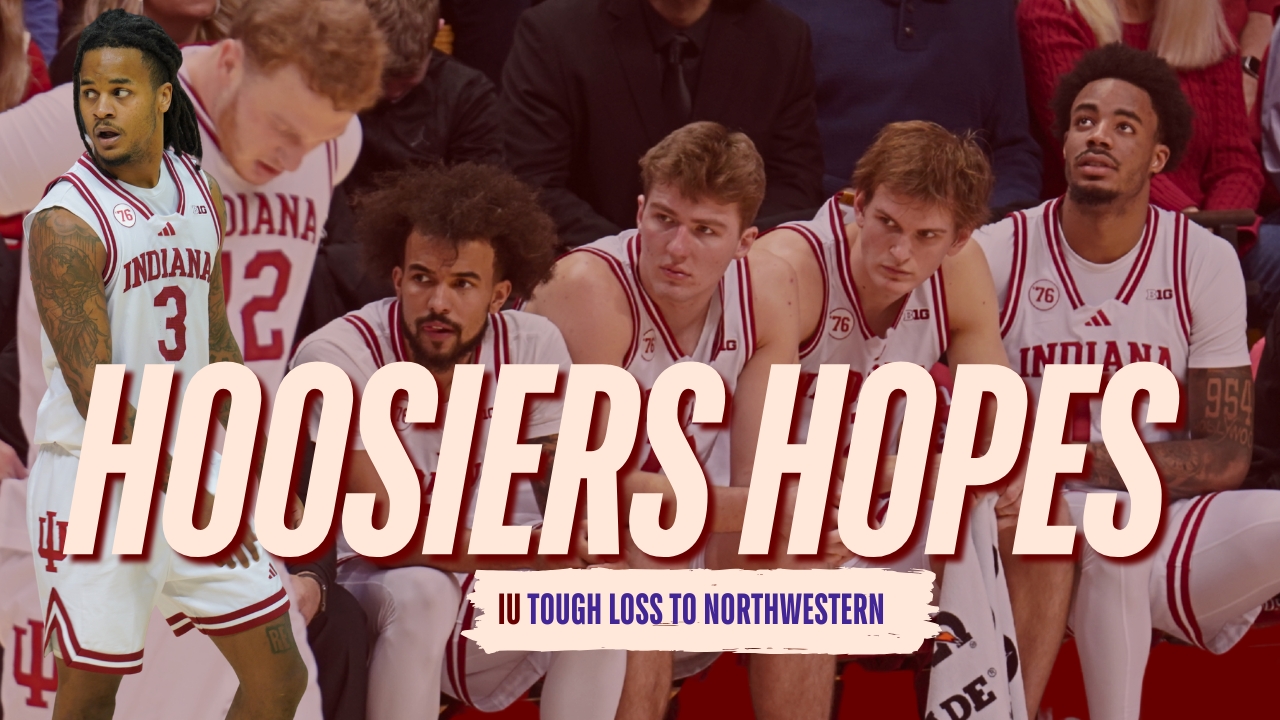

The numbers should not have been possible. Indiana, playing at home inside Simon Skjodt Assembly Hall, led Northwestern by nine points at halftime. The Hoosiers were shooting 63 percent from the floor in the first half, had assisted on 14 of their 15 made baskets, and had the Big Ten's worst rebounding team on the ropes. Then the second half started, and everything that has plagued this program under first-year head coach Darian DeVries came flooding back.
Indiana fell to Northwestern 72-68 on Tuesday night, dropping to 17-11 on the season and 8-9 in Big Ten play. The loss was not just a bad result. It may be the moment that officially ended Indiana's first NCAA Tournament campaign since the 2022-23 season before it ever truly began.
The Drought That Told the Whole Story
Let's start with the statistic that defined this game, because it needs to be stated plainly and directly.
Indiana missed 11 consecutive field goal attempts spanning over nine minutes and 33 seconds of second-half game clock. Eleven straight missed shots. Nine minutes and thirty-three seconds without the ball going through the net from the floor. That is not a rough stretch. That is a program-level crisis playing out in real time on the biggest stage available.
Indiana was in the middle of a field goal drought that lasted 9:33 when Nick Martinelli struck with a go-ahead corner three-pointer with 2:59 remaining in the game. By the time Tayton Conerway finally ended the misery with a dunk, the game was essentially over. Northwestern had already seized control, and Martinelli had already delivered the knockout blows.
This was not a one-time occurrence. This is a pattern. The Hoosiers have squandered five second-half leads of nine or more points in the last two months. Two of those collapses resulted in losses that will likely define their season, including a blown 16-point lead against No. 10 Nebraska and now this disaster against a Northwestern team that entered the game with a 3-13 conference record and the Big Ten's worst rebounding margin.
Martinelli Did What Martinelli Does
To be fair about one piece of this game, Northwestern had a player who took over when it mattered. Nick Martinelli, the Big Ten's leading scorer, finished with 28 points and was held to just seven in the first half. The damage came entirely in the second half, where he erupted for 21 second-half points, one point off his season average, as Indiana went over nine minutes without a field goal and Northwestern inched closer to tying the game.
When Indiana desperately needed stops and buckets down the stretch, Martinelli scored nine consecutive Northwestern points to close the door. Northwestern got out to its biggest lead of the game, four at 65-61, and then Indiana's field goal drought ended with a Tayton Conerway lay-in. But it was too little, far too late.
A blown no-call on an attempted Tucker DeVries three-pointer with under five seconds left prevented the Hoosiers from having a chance to tie the game and Indiana lost at home 72-68. The missed call was infuriating, but Indiana had already left themselves in a position where a single blown whistle could end their season. That is on the coaching staff and the roster construction decisions that put them here.
Indiana is 25th in 3-point attempts/game but 341st in offensive rebounds/game.
— David Cobb (@DavidWCobb) February 25, 2026
Last night, IU had 1 second-chance point. ONE. Against Northwestern -- a bad rebounding team.
How do you get one second-chance point out of 18 misses from beyond the arc?https://t.co/yLHCSiDet3
The Conerway and Miles Problem: Talent Sitting While the Team Sinks
Here is where the real conversation needs to happen.
Tayton Conerway shot 6-for-6 from the field on Tuesday night. He finished with 14 points, three assists, a steal, and shot a perfect 100 percent from the floor including a three-pointer. He also ended the infamous 11-shot field goal drought with the game's biggest made basket. In the box score, every time Conerway touched the ball and had a look at the basket, the ball went in. Every single time.
His stats from Tuesday read like a cheat code: six field goal attempts, six makes, five of those shots coming inside the paint where he was unstoppable. And yet based on his assist count and foul trouble, it is clear his minutes were limited and tightly managed by a coaching staff that continues to go back to proven veterans regardless of how those veterans are performing in the moment.
Jasai Miles is the more glaring example. In a game Indiana had to have, Miles finished with three points on one shot attempt. One attempt. In a game that Indiana needed contributions from everyone on the roster, Miles was barely given a chance to do anything. There was a stretch earlier this season where it was reported that Indiana was undefeated when Miles played 10 or more meaningful minutes. Whether that exact record has shifted slightly as the season moved forward does not change the underlying logic. The data pointed directly at what Miles brings when he is allowed to play with freedom. The coaching staff looked at that information and continued doing things their way.
This is the core frustration with watching Indiana basketball in 2026. The coaching staff has identified a rotation and committed to it through results that clearly suggest a change is needed.
Enright, Dorn, and the One-Dimensional Problem
Conor Enright is a legitimate player. He runs the offense with a certain level of efficiency, he dishes the ball, and he holds things together in ways that do not always show up in box scores. Against Northwestern he finished with five assists. That is real value. But Enright also shot 0-for-1 from the field and finished with zero points while also committing three turnovers. In a game where Indiana went over nine minutes without scoring from the floor, having a player on the floor who brings absolutely nothing as a scoring threat is a luxury Indiana cannot afford. Defense can key in on four players when it knows the fifth one will never pull the trigger, and that is exactly what happens every time Enright is on the floor in crunch situations.
Nick Dorn is a different case. Dorn has had games this season where he has gotten hot from three-point range and looked like a legitimate offensive weapon. Those games are real and they happened. The problem is that the coaching staff has ridden those moments far past their expiration date. Against Northwestern, Dorn shot 2-for-7 and every single one of his seven attempts was a three-pointer. He does not create off the dribble. He does not get to the free throw line. He does not make plays in transition or put pressure on a defense in any way beyond standing in the corner and waiting for a catch-and-shoot opportunity. When that shot is not falling, and it was not falling against Northwestern with a critical 28.6 percent clip, he offers the offense essentially nothing. Yet the coaching staff trusts him with significant minutes in games that define Indiana's season.
Tucker DeVries shot 3-for-11 Tuesday night including 2-for-7 from three. He finished with 11 points and has been the featured option alongside Lamar Wilkerson all season. DeVries has ability and has shown it at times. But when both he and Wilkerson go cold simultaneously in the second half, Indiana has no other creators on the floor who have been given the freedom to bail the offense out.
That is a coaching decision. Not a talent decision.
The Path Forward Is Nearly Impossible
Indiana now sits at 17-11 overall and 8-9 in Big Ten play heading into a brutal finish. The defeat likely puts a fatal nail in Indiana's postseason hopes as they now need to beat Michigan State, Minnesota, and win at Ohio State to feel remotely confident in a bid. Michigan State comes to Bloomington ranked 13th in the country. Ohio State is fighting for their own tournament positioning. None of those games are wins Indiana can take for granted.
Lamar Wilkerson, whose career-best streak of six consecutive 20-point games was snapped after he went 0-for-9 from the floor in the second half, knows what this loss means for Indiana's tournament chances. "This hurt our resume," Wilkerson said, staring blankly at the floor of the Assembly Hall press room.
The résumé has been damaged beyond what three wins and a deep conference tournament run can realistically repair. Indiana needed this game. They had Northwestern exactly where they wanted them at halftime. And then the same second-half collapse that has haunted this team all year happened again.
The talent is on this roster to compete. Conerway proved that with a perfect shooting night in limited time. Miles has proven it in flashes all season. But a coaching staff that continues to go back to the same one-dimensional pieces during its worst offensive stretches is making this harder than it has to be.
Indiana's NCAA Tournament window in 2026 may have officially closed at around the 9-minute mark of the second half on Tuesday night, right around the time shot number seven of eleven straight misses clanged off the rim and Nick Martinelli started walking the ball up the court with that look in his eyes.
The Hoosiers built a 13-point lead and gave it all back. They have now done that five times in two months. At some point, the story stops being about bad luck and starts being about decisions.
Follow BallerTube for continuing coverage of Indiana basketball and recruiting news throughout the country.