Youth basketball has become increasingly competitive, creating opportunities for talented athletes to showcase their abilities earlier than ever before. Among the next generation of players working to establish themselves is Lucia Mayorquin, a guard whose growing profile reflects both dedication to the game and a commitment to continuous improvement. Through participation in competitive basketball circuits, team competition, and ongoing skill development, she is building a foundation that could support future success at higher levels of the sport.
For young athletes, the journey is rarely defined by a single performance. Instead, it is shaped by countless hours of training, learning, competing, and adapting. Lucia’s profile presents the image of an athlete focused on growth, exposure, and maximizing opportunities. As a member of the Class of 2029, she still has significant time to develop her game, making her progression especially interesting to coaches, evaluators, teammates, and supporters who follow youth basketball.
The Value of Early Development
Basketball development begins long before recruiting conversations become serious. The athletes who eventually separate themselves are often those who embrace improvement from an early age. Fundamental skills such as ball handling, passing, footwork, shooting mechanics, defensive positioning, and court awareness form the basis of long-term success.
For a young guard, mastering these fundamentals is especially important. Guards are often expected to initiate offense, create scoring opportunities, defend opposing ball handlers, and make quick decisions under pressure. Developing these abilities requires patience and repetition.
Lucia’s continued participation in organized competition suggests a commitment to refining these areas of her game. Every practice, tournament, and game provides valuable experience that contributes to overall growth. At a young age, the willingness to learn can be just as important as natural talent.
The Role of a Guard
The guard position is one of the most demanding roles in basketball. While every team has unique systems and expectations, guards are typically responsible for maintaining offensive flow and ensuring teammates are involved.
A successful guard must balance multiple responsibilities simultaneously. They must read defenses, control tempo, handle pressure, communicate effectively, and make smart decisions with the basketball. The position rewards intelligence, discipline, and confidence.
Standing out as a guard often requires more than scoring ability. Coaches value players who understand spacing, move the ball effectively, defend with effort, and contribute to team success in multiple ways.
As Lucia continues developing, these aspects of the game will likely remain central to her growth. The best guards learn how to impact games regardless of whether they are scoring heavily. Leadership, composure, and consistency often separate good players from great ones.
Competing Against Strong Talent
One of the most effective ways for young athletes to improve is by competing against high-level opposition. Strong competition exposes strengths while revealing areas that require further development.
Tournament basketball provides unique challenges because athletes face different styles of play, varying levels of athleticism, and unfamiliar opponents. These environments encourage adaptability and mental toughness.
Participation in competitive circuits allows athletes to test themselves against talented players from different regions. Each matchup becomes an opportunity to learn and improve.
For Lucia, competing in these settings contributes to valuable basketball experience. Exposure to challenging competition can accelerate development by forcing athletes to make quicker decisions, execute fundamentals under pressure, and maintain focus in demanding situations.
https://www.ballertube.com/news/136/sports-tech-you-need-now-game-changing-innovations-for-athletes/
Building Recognition Through Performance
In today’s basketball environment, visibility plays an increasingly important role in an athlete’s journey. Social media, recruiting platforms, highlight videos, rankings, and tournament exposure all contribute to how players are evaluated and recognized.
However, recognition is ultimately built on performance. Consistent effort, strong fundamentals, and productive contributions during games create the foundation for attention from coaches and evaluators.
Athletes who earn recognition often do so because they repeatedly demonstrate reliability and improvement. Rankings and mentions can provide encouragement, but long-term success depends on continued development.
For young prospects, maintaining perspective is essential. Recognition should be viewed as motivation rather than a final destination. The athletes who continue progressing are often those who remain focused on daily improvement instead of external attention.
The Importance of Work Ethic
Talent can create opportunities, but work ethic determines how far those opportunities lead. Every successful basketball player reaches a point where dedication becomes the deciding factor.
Training involves much more than attending team practices. Individual skill sessions, conditioning work, shooting repetitions, film study, and recovery all contribute to player development.
Athletes who embrace consistent training habits often experience steady improvement over time. Small gains accumulate, eventually producing significant results.
Work ethic also extends beyond physical preparation. Mental discipline, accountability, and resilience are equally important. Learning from mistakes, accepting coaching, and maintaining a positive attitude can have a major impact on long-term growth.
Young athletes who develop strong habits early often carry those habits throughout their careers.
Leadership Beyond Statistics
Leadership is frequently misunderstood in sports. Many assume the leading scorer is automatically the team leader, but effective leadership can take many forms.
Some leaders motivate teammates through communication. Others lead by example through effort and consistency. The strongest leaders often combine both approaches.
Basketball teams benefit from players who remain composed during difficult moments. Encouraging teammates, maintaining energy, and demonstrating resilience can positively influence team culture.
As athletes mature, leadership becomes increasingly important. Coaches value players who elevate those around them and contribute to a positive environment.
For a young guard, leadership opportunities naturally arise because of the position’s responsibilities. Guards frequently direct offensive actions and communicate throughout games, making leadership development a natural extension of their role.
Navigating the Recruiting Landscape
The recruiting process has evolved significantly over the past decade. Athletes now have access to more exposure opportunities than ever before, but increased visibility also creates greater competition.
For younger players, the most important recruiting strategy remains simple: focus on development.
College coaches ultimately seek athletes who can contribute to winning programs. Skill level, basketball IQ, work ethic, character, and coachability often matter as much as measurable statistics.
Athletes who prioritize growth over attention generally place themselves in the strongest position for future opportunities.
Since Lucia is still early in her basketball journey, continued improvement will likely be the primary factor shaping future possibilities. Building a complete game and maintaining consistent progress can create opportunities as she advances through high school basketball.
Balancing Expectations and Growth
Young athletes often face pressure from multiple directions. Coaches, teammates, family members, rankings, and social media can all contribute to heightened expectations.
Managing these expectations requires maturity and perspective.
Improvement rarely follows a perfectly straight path. Every athlete experiences challenges, setbacks, and difficult performances. What matters most is how those moments are handled.
The strongest competitors view obstacles as opportunities to learn. Instead of becoming discouraged, they use adversity as motivation.
Developing this mindset is particularly important during adolescence, when both athletic and personal growth occur simultaneously. Athletes who maintain focus on long-term goals are often better equipped to handle the inevitable ups and downs of competitive sports.
https://www.cbssports.com/nba/news/2026-nba-draft-grades-pick-by-pick-analysis-round-1/
Representing School and Community
High school athletics provide athletes with opportunities to represent something larger than themselves. Players compete not only for personal goals but also for teammates, coaches, schools, and communities.
This responsibility can help athletes develop valuable life skills. Accountability, teamwork, communication, and perseverance all emerge through competitive experiences.
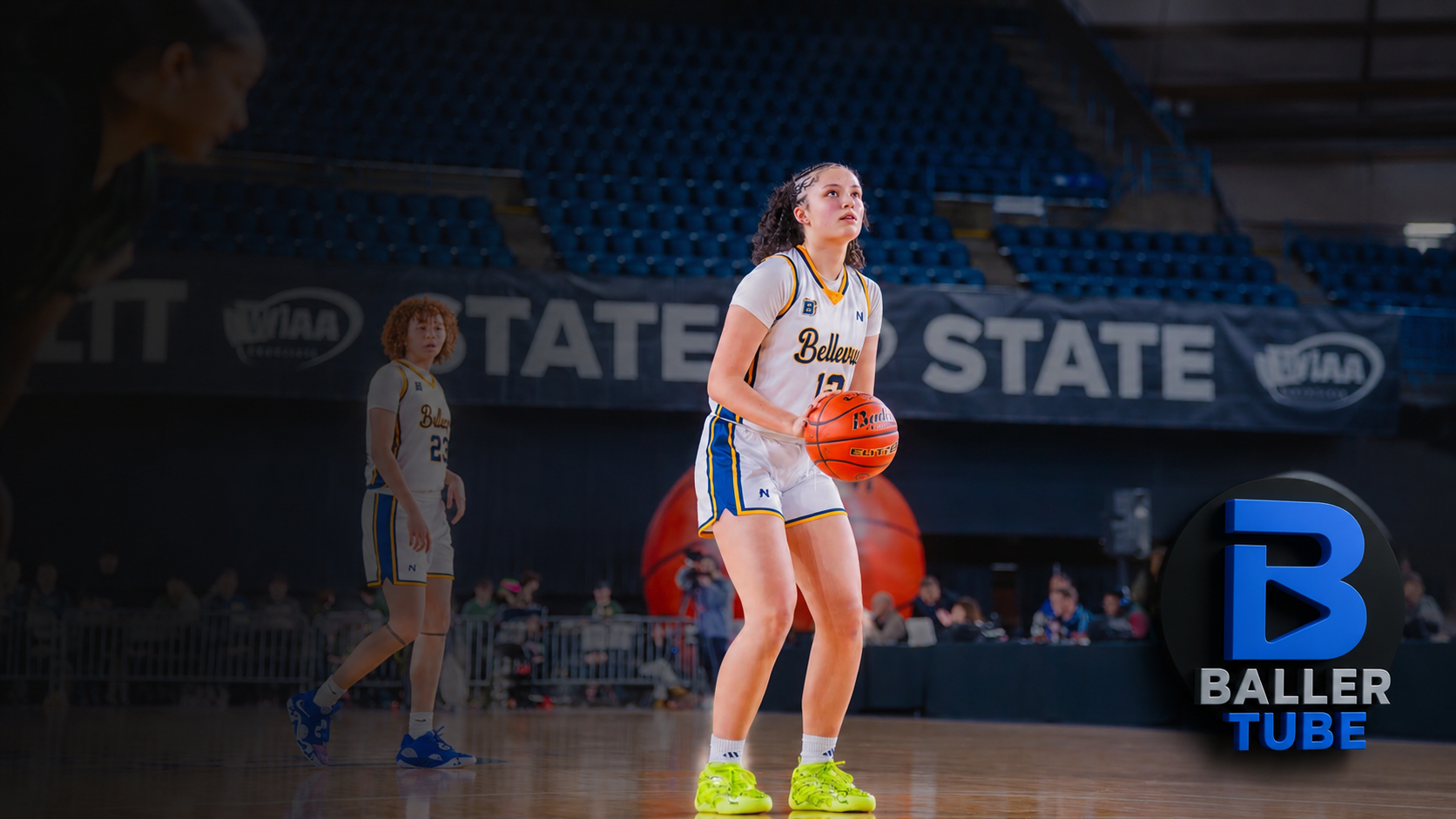
Representing Bellevue High School offers Lucia opportunities to contribute to her team while continuing her development as a player and leader.
High school basketball often creates lasting memories and relationships. The lessons learned through competition frequently extend far beyond the court, influencing future academic, professional, and personal success.
Playing Style and On-Court Impact
One of the most intriguing aspects of following young basketball players is watching their style of play evolve over time. At the youth level, athletes are often learning how to maximize their strengths while expanding other areas of their game. For a guard, this process can be especially important because the position requires versatility and adaptability.
Guards must be comfortable handling the basketball, creating opportunities for teammates, and making quick decisions in fast-paced situations. They are often expected to read defenses, recognize mismatches, and react instantly to changing circumstances. As players gain experience, they begin to understand how to influence a game beyond simply scoring points.
For Lucia Mayorquin, continued development as a guard means refining every aspect of her basketball skill set. The ability to make smart decisions, maintain composure under pressure, and contribute on both ends of the floor can significantly increase a player’s value. Coaches consistently appreciate athletes who understand the game and can execute their responsibilities with confidence.
As competition becomes stronger, players who possess a well-rounded game often stand out. Whether it involves facilitating offense, defending multiple positions, attacking the basket, or knocking down perimeter shots, versatility creates opportunities for success. The modern game rewards players who can impact multiple areas rather than relying on a single strength.
The Influence of AAU and Tournament Basketball
AAU and travel basketball have become major components of player development throughout the United States. These programs provide athletes with opportunities to compete against talented opponents while gaining valuable exposure outside of their school seasons.
Tournament weekends often involve multiple games in a short period of time. This environment challenges players physically and mentally. Athletes must learn how to adjust quickly, recover between games, and maintain focus throughout long days of competition.
For young prospects, these experiences can accelerate growth. Playing against unfamiliar opponents forces athletes to adapt to different defensive schemes, offensive systems, and playing styles. The lessons learned in these environments often contribute to significant development over time.
The exposure gained through tournament basketball also allows players to showcase their abilities in front of coaches, evaluators, and basketball communities that might not otherwise have the opportunity to see them compete. While exposure alone does not guarantee success, it creates opportunities for athletes who consistently perform at a high level.
For Lucia, participation in competitive basketball settings helps build both experience and confidence. Every game provides another chance to improve, learn, and demonstrate progress.
Balancing Athletics, Academics, and Personal Growth
Success for student-athletes extends beyond basketball. Managing academics, athletics, family responsibilities, and personal development requires discipline and strong time-management skills.
The most successful athletes understand that basketball is only one part of their overall journey. Academic achievement remains important because it creates opportunities and reflects an athlete’s commitment to excellence in all areas of life. Colleges often seek students who demonstrate responsibility both on and off the court.
Learning how to balance multiple priorities at a young age can provide lasting benefits. Time management, accountability, leadership, and perseverance are valuable skills that apply far beyond sports.
As Lucia continues progressing through high school, maintaining this balance will be an important part of her development. The habits built during these years can influence future opportunities and prepare her for the demands of higher levels of competition.
Ultimately, basketball development is about more than statistics, rankings, or recognition. It is about growth as an athlete, teammate, student, and individual. With continued dedication to improvement and a commitment to learning, Lucia Mayorquin has the opportunity to keep building a strong foundation for the future while pursuing her goals both on and off the court.
Looking Ahead
Predicting the future of any young athlete is difficult because development can occur rapidly. Growth in strength, skill, confidence, and basketball understanding often transforms players over relatively short periods.
What remains consistent is the importance of dedication and commitment.
Lucia’s basketball journey is still in its early stages, but the foundation being established today can influence future opportunities. Continued training, competitive experience, and personal growth will play important roles in determining what comes next.
Athletes who embrace the process rather than focusing solely on outcomes often experience the greatest long-term success. Improvement becomes sustainable when driven by genuine passion for the game.
Whether through team achievements, individual recognition, leadership development, or future recruiting opportunities, the path forward will be shaped by daily effort and continued growth.
Conclusion
Lucia Mayorquin represents the type of young athlete who is actively building her future through dedication to basketball. As a guard in the Class of 2029, she is developing within a competitive environment that rewards skill, discipline, and perseverance. Her growing visibility reflects not only talent but also the commitment required to compete at increasingly higher levels.
The years ahead will present new challenges and opportunities, but the qualities that drive long-term success remain unchanged. Consistent improvement, strong work habits, leadership, and a willingness to learn will continue to be essential. For any young basketball player striving to reach the next level, those principles provide the foundation for meaningful progress and lasting achievement.