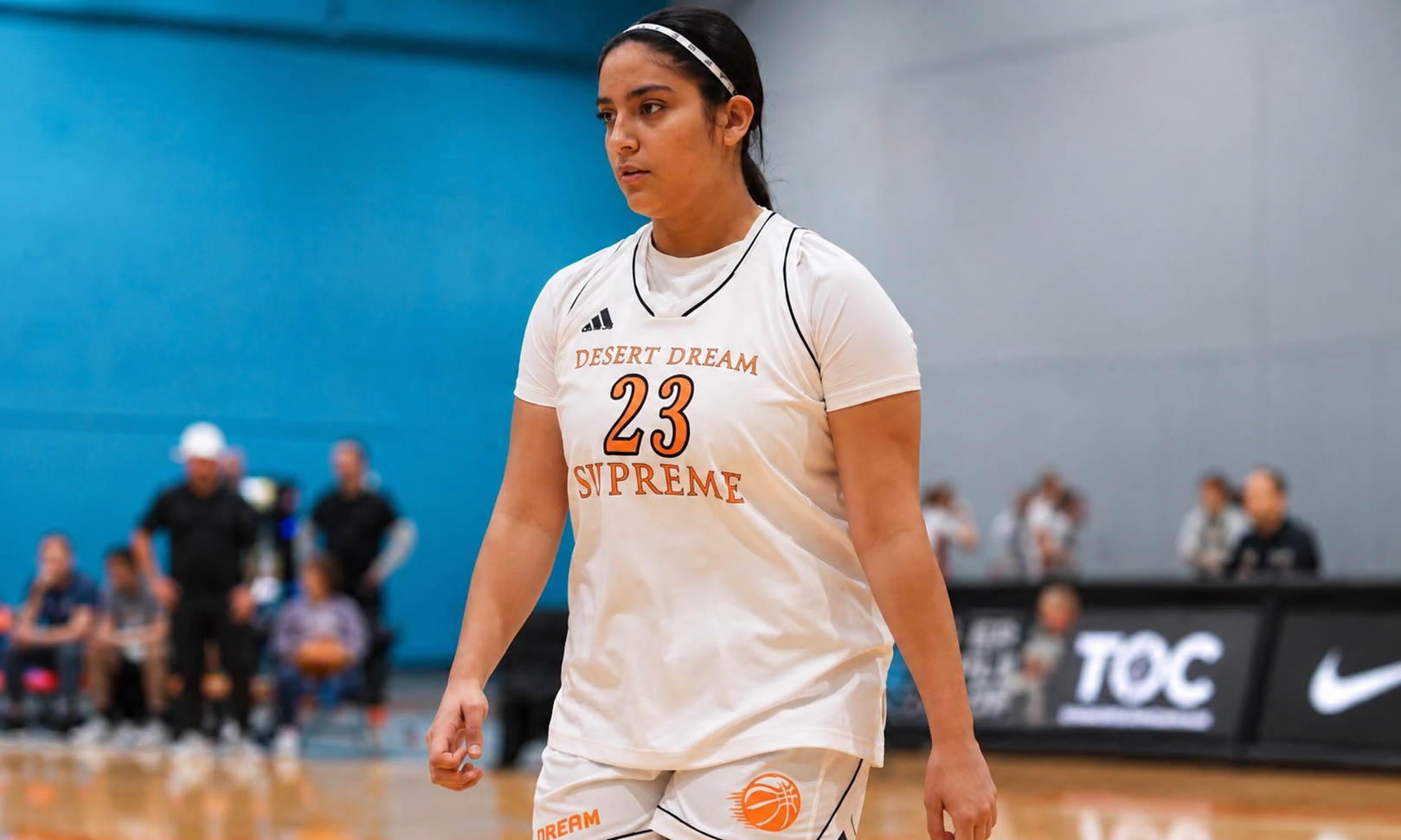
In basketball, development is rarely about one game, one tournament, or one highlight. It is about the work that happens between those moments. For Mattielynne Droeg, a member of the 2027 class from Arizona, the next chapter of her basketball journey is about continuing to grow, compete, and show what she can bring to the court.
Droeg is listed at 5-foot-8 and plays the guard/wing positions, giving her a role that can demand versatility and a willingness to do different things for a team. She is also carrying a 3.5 GPA, showing that her development is not limited to basketball. As a student-athlete, she is building her future in the classroom while continuing to pursue her goals on the court.
A Young Player With Room To Grow
Being a 2027 prospect means there is still plenty of basketball ahead. That matters because the recruiting process is not simply about where a player is today. Coaches and programs also want to see how a young athlete responds to coaching, competition, challenges, and opportunities to improve.
For Droeg, this stage of her career can be viewed as a foundation. Every practice, game, tournament, and workout can add another layer to her development. The goal is not to become a finished player overnight. The goal is to keep becoming a better version of the player she can be.
At 5-foot-8, playing on the perimeter can require confidence, decision-making, toughness, and the ability to contribute in multiple areas. The guard/wing label also suggests a player who can continue developing her versatility as her game matures.
Her Arizona Basketball Roots
Droeg is from Gilbert, Arizona, a state with a growing and competitive girls basketball community. Playing basketball in Arizona gives young athletes opportunities to face different styles of play and compete against players who are also working toward the next level.
Her school basketball experience comes with Lincoln Preparatory Academy, while she also competes with Desert Dream Supreme Basketball Club. Playing for both school and club programs can provide valuable experiences because the environments can be different.
School basketball can teach players how to operate within a team throughout a season, build relationships with teammates, and handle the daily rhythm of practices and games. Club basketball can provide another level of competition and expose players to different opponents, coaches, and tournament environments.
That combination can be important for a young player still building her identity on the court.
The Importance of Versatility
One of the most valuable things a young perimeter player can develop is versatility. Basketball continues to change, and players who can do more than one thing often give coaches additional options.
For Droeg, continuing to develop as a guard/wing can mean becoming comfortable in different situations. It can mean understanding when to attack, when to make the extra pass, how to create opportunities for teammates, and how to make smart decisions under pressure.
Versatility is also about understanding the game. A player can become more valuable by learning how to read defenses, recognize space, communicate, defend different types of players, and make plays without always needing the ball.
Those are skills that develop over time.
A Strong Academic Foundation
Droeg’s 3.5 GPA is another part of her story that deserves attention. Student-athletes are balancing two demanding environments, and success in the classroom requires discipline just as basketball does.
A strong academic foundation can create additional opportunities for a young athlete. As recruiting conversations develop, academics can become an important part of the overall picture. Coaches are not only evaluating what happens during a game. They are also looking at the person behind the jersey.
Maintaining a 3.5 GPA while competing and training reflects the importance of keeping school part of the equation. For a player in the 2027 class, there is still time to continue building both her academic profile and athletic résumé.
Competing On Bigger Stages
Droeg’s profile also highlights experience around major basketball events, including the Nike TOC in Las Vegas. Competing in a tournament environment like that can be an important part of a young player’s development because the stage can bring together teams and athletes from different areas.
Big tournaments can teach lessons that are difficult to duplicate in ordinary games. Players have to adjust quickly, handle different opponents, stay focused through a long schedule, and learn how to respond when games do not go exactly as planned.
Those experiences can help shape a player’s confidence and maturity.
For a 2027 athlete, every major event can become another opportunity to learn. The value is not only in the final score. It is also in the lessons taken from each game and carried into the next practice.
The Value Of Film
Droeg’s profile also points people toward basketball video, which can be an important tool in today’s recruiting environment. Film gives coaches, trainers, players, and families an opportunity to study the game beyond the gym.
For a developing player, watching film can also become part of the learning process. It can help an athlete recognize good decisions, identify areas that need improvement, and better understand how she fits into different situations.
The best use of film is not simply collecting highlights. It is learning from possessions.
A complete evaluation can include how a player moves without the ball, communicates with teammates, handles pressure, defends, makes decisions, and responds after mistakes. Those details may not always appear in a short highlight clip, but they can make a major difference over the course of a season.
What Comes Next
The road ahead for Droeg is still being written. As a member of the 2027 class, she has time to continue developing her game before the next major stages of her basketball and academic journey arrive.
That time should be viewed as an opportunity rather than a countdown.
There is room to become stronger, sharper, more confident, and more consistent. There is room to learn from coaches and teammates. There is room to experience different competition and discover which parts of her game can become true strengths.
The most important thing is to keep working.
Young players sometimes feel pressure to have everything figured out early. But development is rarely a straight line. There will be strong games, difficult games, great practices, and practices that expose areas that need more work. The response to those moments can be more important than the moment itself.
For Droeg, the next phase can be about embracing that process.
The Recruiting Journey
For a 2027 prospect, recruiting is still a developing part of the story. There is no need to rush the process. The strongest approach is to keep improving while allowing coaches and programs to learn about the player over time.
That means continuing to compete, keeping academics in order, building quality film, communicating professionally, and taking advantage of meaningful basketball opportunities.
It also means understanding that recruiting is about fit. The right program will be interested not only in a player’s current ability but also in how that player can grow within its system, culture, and expectations.
Droeg has time to keep building that picture.
More Than A Basketball Profile
A player profile can list a graduation year, height, position, GPA, school, and club team. Those details are useful, but they do not tell the entire story.
There are practices that require extra effort. There are games that create confidence. There are mistakes that teach valuable lessons. There are coaches who provide guidance and teammates who become part of the journey. There are also academic responsibilities that continue long after the gym lights turn off.
That is what makes the next few years important.
Droeg does not need to have her entire basketball future decided today. She needs to keep putting herself in position to grow.
The Bigger Picture
The 2027 class will continue to evolve, and so will every player within it. Some athletes will develop quickly. Others will make major jumps later. Some will change positions or roles. Others will discover that the part of their game they once considered secondary becomes one of their biggest strengths.
The process is different for everyone.
For Droeg, the foundation is already clear: she is a young Arizona basketball player, a 2027 guard/wing, a student maintaining a 3.5 GPA, and a competitor with experience in both school and club basketball.
Now comes the work of turning that foundation into something bigger.
That means showing up with purpose. It means listening to coaching. It means taking care of the details. It means learning from both success and failure. It means understanding that improvement is built possession by possession, practice by practice, and season by season.
Looking Ahead
There is plenty left to discover about Mattielynne Droeg.
The next chapters will reveal how her game continues to develop, how her role changes, and where her basketball journey eventually takes her. What is certain is that the 2027 class gives her valuable time to continue building.
For now, the focus should remain simple: keep learning, keep competing, keep improving, and keep taking care of the person behind the player.
The basketball world will have more opportunities to watch her as she moves forward. Each tournament, each school season, and each new challenge can provide another piece of the story.
And for a young player still building her path, that is exactly what this stage is supposed to be about.
The next level is not reached in one moment. It is built over time.
For Mattielynne Droeg, that journey is underway.