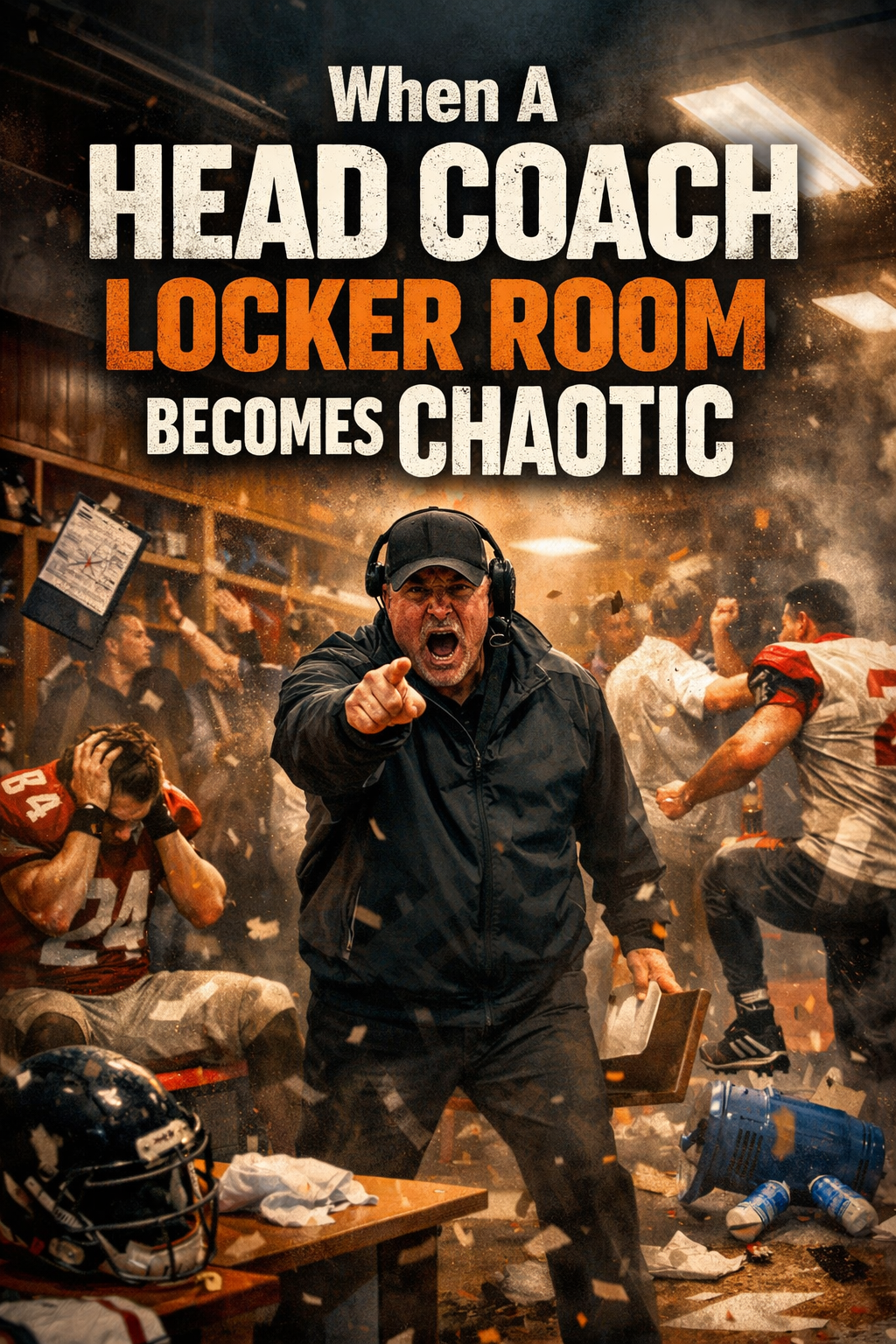
There’s a point in a season where something shifts—and if you’ve been around basketball long enough, you can feel it immediately.
It’s not always during a loss. It’s not always after a bad practice. Sometimes it happens in the middle of a normal day, a regular film session, or a random timeout.
But something changes.
The locker room doesn’t feel the same.
At first, it’s small. Almost unnoticeable if you’re not paying attention. The energy dips just a little. Guys who used to talk a lot start saying less. A few players exchange looks after the coach speaks—not disrespectful, just… knowing.
And from that moment on, everything starts moving in a different direction.
That’s usually where it begins.
It Doesn’t Happen All at Once
People on the outside think losing a locker room is dramatic. Like it’s some big blow-up, yelling match, or one defining moment where everything falls apart.
That’s rarely how it goes.
It’s quieter than that.
It’s a slow buildup of moments that don’t sit right. A rotation that doesn’t make sense. A conversation that feels one-sided. A promise that doesn’t match what actually happens in a game.
Players notice everything.
And they don’t always react right away—but they remember.
So it becomes a collection of small things:
A player gets pulled after one mistake but watches someone else stay in after three.
A role gets changed without explanation.
Film sessions start feeling more like criticism than teaching.
Communication becomes more about control than connection.
None of it feels big enough to call out on its own.
But together? It adds up.
When Players Stop Believing
Basketball is built on trust.
Not just between teammates—but between players and coaches.
Players don’t need perfection. They don’t expect every decision to be right. But they need to believe there’s a plan, and that the plan includes them.
Once that belief starts to fade, everything else gets shaky.
You can see it in how players respond.
They still listen—but they’re not really hearing it the same way.
They still run the sets—but without conviction.
They still compete—but something feels disconnected.
Internally, the questions start:
“What are we really doing?”
“Does he actually trust me?”
“Are we all being held to the same standard?”
And when those questions don’t get answered, players start creating their own answers.
That’s when buy-in starts slipping.
What Players Say When Coaches Aren’t Around
The real story isn’t told in huddles or postgame interviews.
It’s told after.
In the locker room when the coaches leave. In the parking lot. In group chats. In late-night conversations after practice.
And it’s not always loud or negative. Most of the time, it’s just honest.
You’ll hear things like:
“I don’t even know what he wants from me anymore.”
“My role changes every game.”
“We go over one thing in film, then do something completely different.”
“I’m trying, but it just feels off.”
That’s not quitting—that’s confusion.
And confusion spreads fast.
Because when players are unsure, they stop playing freely. They start thinking instead of reacting. They hesitate.
And in basketball, hesitation shows up everywhere.
The Game Starts to Look Different
From the outside, people call it bad basketball.
Missed rotations. Late closeouts. Offense that looks stuck. Possessions that turn into isolation instead of movement.
But it’s deeper than execution.
It’s connection.
When a team is aligned, the game flows. Players trust where their teammates will be. They trust the system. They trust the decisions being made.
When that alignment is gone, everything feels forced.
You’ll see guys pointing instead of rotating. Talking after the play instead of during it. Looking at the bench mid-possession instead of just reacting.
Even big plays don’t feel the same.
There’s a quick clap, maybe a nod—but no real energy behind it. No momentum that carries into the next possession.
That emotional disconnect? That’s the tell.
https://www.ballertube.com/news/333/the-point-god-s-farewell-chris-paul-retires-after-messy-ending-to-legendary-21-year-career/
Role Players Feel It First
The end of the bench usually knows before anyone else.
They’re watching everything. They’re not caught up in minutes or stats the same way, so they pick up on tone, consistency, and energy.
They feel when something’s off.
And their questions are simple:
“Why am I all-in if this doesn’t feel real?”
“What exactly are we building here?”
When those players start to disconnect, it affects everything.
Because those are the guys who bring energy in practice. Who keep things competitive. Who help build culture behind the scenes.
When they check out—even a little—the foundation starts to crack.
Star Players Adjust—They Don’t Always Check Out
Your best players usually don’t quit.
They adapt.
Some try to do more. They take on extra responsibility, try to carry the team, make plays outside the system just to keep things afloat.
Others go quiet.
They still produce—but their leadership changes. They’re less vocal. Less engaged emotionally. You can see frustration, but it’s controlled.
And sometimes, they shift into survival mode.
They focus on their performance, their future, their consistency—because the bigger picture feels uncertain.
It’s not selfish.
It’s what happens when trust isn’t there.
Coaches and Staff Know—But It’s Complicated
Assistant coaches feel it.
Managers feel it.
Everyone around the program can tell when the energy changes.
But not everyone has the space to address it.
There’s structure. There’s hierarchy. There are roles.
So instead of confronting the issue directly, people adjust around it.
Assistants might spend more time connecting with players individually. Trying to keep guys engaged. Reinforcing messages in smaller settings.
But when the main voice and the locker room aren’t aligned, those efforts only go so far.
The “We’re Good” Phase
This is where things get tricky.
Because from the outside, everything still looks normal.
Practices are still happening. Games are still being played. Social media shows smiles, team pictures, and highlights.
Postgame interviews sound right:
“We just need to be better.”
“It’s on us.”
“We’ll figure it out.”
And maybe they believe it—at least part of them does.
But inside, it’s different.
Conversations are shorter. Energy is inconsistent. Players are going through the motions more than they’re connected to them.
And nobody wants to be the one to say what everyone’s thinking:
“This isn’t working.”
So it goes unsaid.
https://www.ballertube.com/news/320/the-future-of-basketball-descends-on-spain-avance-global-cup-2026-brings-elite-talent-from-five-continents-to-malaga/
Why It’s So Hard to Fix
Once a locker room gets to that point, fixing it isn’t about drawing up a better play or tweaking a lineup.
It’s about rebuilding trust.
And that takes real conversations.
Not surface-level meetings. Not motivational speeches. Actual honesty.
It requires coaches to listen—not just talk. To be willing to adjust. To acknowledge where things may have gone wrong.
And it requires players to meet them halfway.
But if players feel like nothing’s really changing, it’s hard to fully re-engage.
So most teams don’t completely fix it midseason.
They manage it.
They rely on talent. They hope momentum swings their way. They piece together wins when they can.
But the underlying issue usually stays there.
Effort Isn’t the Problem—Uncertainty Is
One of the biggest misconceptions is that players stop trying.
That’s not true.
Most players still compete. They still care. They still want to win.
But the way they play changes.
They’re more cautious. More hesitant. Less instinctive.
Instead of playing freely, they’re second-guessing.
“Should I shoot this?”
“Am I supposed to rotate here?”
“What happens if I mess this up?”
That half-second of hesitation makes all the difference.
And from the outside, it looks like effort.
But inside, it feels like uncertainty.
The Breaking Point Always Comes
Eventually, something forces the issue.
Maybe it’s a tough loss that exposes everything. Maybe it’s a moment in practice where frustration boils over. Maybe it’s a conversation that can’t be avoided anymore.
Sometimes it’s visible—body language on the court, a sideline reaction, something that people outside the program finally pick up on.
Other times, it stays internal.
But once that moment happens, the reality is clear.
You can’t keep pretending everything is fine.
Sometimes It’s Not About Good or Bad
Here’s the part people don’t always want to admit:
Sometimes it’s not that the coach is bad.
And it’s not that the players are the problem.
Sometimes, it’s just not the right fit.
The communication style doesn’t connect. The system doesn’t match the personnel. The personalities don’t align the way they need to.
And instead of addressing that early, everyone tries to push through it.
Because that’s what competitors do.
But pushing through only works if there’s still belief behind it.
Without that, it just delays what’s already happening.
What It Looks Like When It’s Right
When a locker room is right, you can feel that too.
Communication is constant. Not forced—natural.
Players hold each other accountable. Coaches connect with players. Roles make sense, even if they’re not perfect.
Energy is consistent. Effort is real. And when things go wrong, the group responds together.
There’s trust.
And that trust shows up in how the game is played.
My Final Outlook
Losing the locker room doesn’t happen overnight.
It’s a slow shift—built from small moments, small decisions, and small disconnects that grow over time.
And pretending it’s not happening doesn’t fix it.
It just lets it continue.
The best teams don’t ignore those moments. They address them early. They communicate. They adjust.
Because at the end of the day, basketball isn’t just about talent, systems, or strategy.
It’s about people.
And when people stop believing—whether anyone says it out loud or not—you can see it in everything.