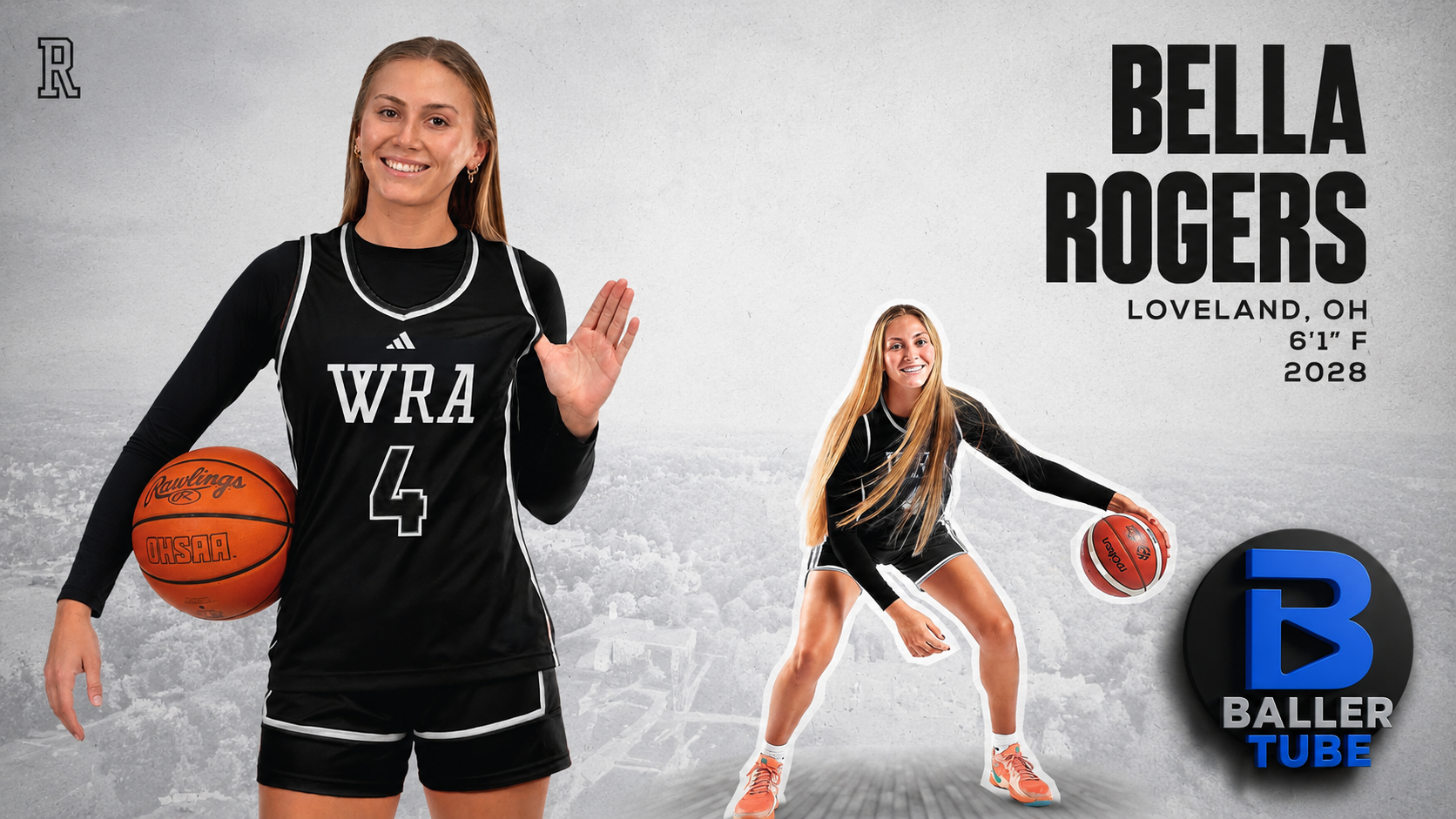
In today’s increasingly competitive world of girls basketball, standing out requires more than talent alone. Athletes must combine skill, consistency, leadership, academic dedication, and a willingness to embrace challenges at every level of competition. Bella Rogers is one of those athletes who appears to be building her basketball journey with all of those qualities in mind.
At first glance, her profile reflects a player deeply invested in her development. Standing 6-foot-1 and competing for Western Reserve Academy while also playing high-level club basketball, Rogers has positioned herself as a prospect with both immediate impact and long-term potential. Her involvement in multiple basketball environments allows her to sharpen different aspects of her game while gaining valuable experience against strong competition.
What makes Rogers particularly intriguing is that her basketball story extends beyond a single school or team. She competes within respected basketball circles, has international experience through Great Britain basketball, and continues to attract recognition as she develops into a versatile player capable of contributing in numerous ways on the court.
Building a Foundation Through Competition
Every successful basketball player begins with a foundation built through repetition, learning, and competitive experience. For Rogers, that foundation appears to be rooted in a willingness to compete in a variety of settings.
Athletes who participate in both school and club basketball often benefit from exposure to different coaching styles, systems, and expectations. School basketball emphasizes team identity, structure, and long-term chemistry. Club basketball frequently exposes players to a broader recruiting audience and a wider range of opponents.
By balancing both environments, Rogers gains opportunities to refine her game year-round. That continual exposure helps young players develop adaptability, a trait that becomes increasingly valuable as competition levels rise.
For taller perimeter-oriented players, development often involves mastering multiple roles. A player may be asked to rebound like a forward, defend multiple positions, and still contribute offensively from the perimeter. Those responsibilities can accelerate growth and help create a more complete athlete.
Western Reserve Academy Experience
Western Reserve Academy has a reputation for academic rigor and athletic opportunity. Student-athletes competing in such an environment face expectations that extend beyond the basketball court.
Success requires effective time management, discipline, and maturity. Balancing practices, games, travel, and coursework is no easy task, particularly for athletes who aspire to continue competing at the collegiate level.
For Rogers, representing Western Reserve Academy provides an opportunity to compete against quality opponents while continuing her academic development. College coaches increasingly look for players who can thrive both athletically and academically, making that combination especially important.
A strong educational environment also helps prepare athletes for life beyond sports. While basketball may open doors, academic achievement ensures that those opportunities remain available regardless of where an athletic career ultimately leads.
Growth Through AAU and Club Basketball
One of the most significant parts of modern recruiting takes place through club basketball. Summer tournaments, showcase events, and travel competitions allow athletes to perform in front of college coaches and evaluators.
Rogers’ involvement with Sports City Angels places her within a competitive club environment where player development and exposure go hand in hand.
AAU basketball often demands a different style of play than traditional school basketball. The pace can be faster. The athleticism can be greater. Players frequently encounter opponents from different regions, each bringing unique strengths and styles.
These experiences help athletes learn how to adjust quickly and compete against unfamiliar competition. The ability to make those adjustments is an important characteristic that college programs value.
Players who succeed in club basketball often demonstrate confidence, composure, and the ability to contribute regardless of circumstances. Whether a game becomes physical, fast-paced, or strategically complex, adaptable athletes tend to find ways to make an impact.
https://www.ballertube.com/news/320/the-future-of-basketball-descends-on-spain-avance-global-cup-2026-brings-elite-talent-from-five-continents-to-malaga/
International Experience Adds Value
One of the most unique aspects of Rogers’ profile is her connection to Great Britain basketball.
International basketball experience can be tremendously beneficial for young athletes. Competing against players from different countries exposes athletes to alternative playing styles, coaching philosophies, and competitive expectations.
International programs often emphasize fundamentals, team concepts, and basketball IQ. Learning within that environment can strengthen a player’s overall understanding of the game.
Representing a national program also carries responsibility. Athletes become ambassadors for their teams and countries while competing on larger stages. That experience can accelerate personal growth and build confidence that translates into domestic competition.
For Rogers, involvement with Great Britain basketball provides a valuable layer of development that many prospects never experience. The lessons learned through international competition often remain with athletes throughout their careers.
Recruiting Momentum and College Interest
One of the standout elements visible from Rogers’ profile is evidence of college recruiting attention.
Receiving offers represents an important milestone for any young athlete. It reflects recognition from coaching staffs that see potential, talent, and future value.
Recruiting, however, is rarely about a single performance. Coaches evaluate athletes over extended periods. They observe work ethic, consistency, improvement, attitude, and competitiveness.
Players who attract recruiting attention often possess qualities that extend beyond statistics. Coaches want athletes who fit their culture, communicate effectively, and demonstrate a commitment to continuous improvement.
As Rogers continues her development, additional opportunities may emerge. Recruiting landscapes can evolve quickly, particularly for players who continue adding new dimensions to their games.
The key for many prospects is maintaining focus on growth rather than external attention. Improvement tends to create opportunities naturally.
The Importance of Reclassifying to 2028
The profile also highlights Rogers’ reclassification to the Class of 2028.
Reclassification has become increasingly common in youth athletics. Families and athletes may choose this route for various reasons, including academic considerations, athletic development, physical maturity, or long-term planning.
When approached thoughtfully, reclassification can provide additional time for skill development and growth. Athletes gain opportunities to strengthen fundamentals, build confidence, and prepare for future competition.
For basketball players, an extra year of development can be significant. Physical growth, strength training, skill refinement, and game experience often produce meaningful improvements over time.
The decision reflects a long-term perspective rather than a short-term focus. In many cases, development and readiness ultimately matter more than immediate recognition.
Leadership Beyond Statistics
One of the most underrated qualities in basketball is leadership.
While points, rebounds, and assists are easily measured, leadership often reveals itself through daily actions. Encouraging teammates, maintaining a positive attitude, communicating effectively, and leading by example all contribute to team success.
Young athletes who embrace leadership responsibilities often become valuable assets regardless of their statistical production. Coaches trust players who demonstrate accountability and professionalism.
Leadership also becomes increasingly important as athletes move into higher levels of competition. Teams need individuals who can remain composed during challenging moments and help maintain focus when pressure increases.
As Rogers continues progressing through her basketball journey, leadership development may become one of the defining aspects of her overall growth.
https://www.cbssports.com/nba/news/2026-nba-round-2-second-mock-draft/
Balancing Athletics and Personal Development
The most successful athletes understand that sports represent only one part of a larger journey.
Basketball teaches lessons that extend far beyond competition. Discipline, perseverance, teamwork, resilience, and accountability are qualities that can influence every aspect of life.
For student-athletes, maintaining balance is essential. Academic achievement, personal growth, family relationships, and community involvement all contribute to long-term success.
Athletes who develop strong habits often find themselves better prepared for future challenges, whether those challenges occur on the court, in the classroom, or in professional settings.
Rogers’ involvement in multiple basketball environments suggests a commitment to growth and continuous learning, qualities that can support success in many different areas.
Areas of Future Development
Like every young prospect, Rogers will continue refining her game as she gains experience.
For taller perimeter players, ongoing development often focuses on several key areas:
- Ball-handling under pressure
- Consistent perimeter shooting
- Defensive versatility
- Strength and conditioning
- Decision-making in transition
- Leadership and communication
- Court vision and passing
Improvement in these areas can significantly elevate a player’s effectiveness and recruiting profile.
The encouraging reality for many young athletes is that development rarely follows a straight line. Growth occurs through practice, competition, setbacks, and perseverance. Players who remain committed to the process often make the greatest strides over time.
Why Bella Rogers’ Story Resonates With Modern Basketball
Another reason Bella Rogers continues to attract attention is that her journey reflects the changing landscape of modern basketball development. Today’s athletes are no longer limited to a single pathway. Success often comes through a combination of school competition, club basketball, skills training, strength development, and exposure to national or international events. Rogers appears to be taking advantage of each of these opportunities as she builds her basketball résumé.
Young players who experience different levels of competition frequently develop a broader understanding of the game. They learn how to adapt to new teammates, unfamiliar opponents, and varying coaching philosophies. Those experiences can help create a more complete athlete, one capable of handling the adjustments that come with higher levels of basketball.
Rogers also represents a growing trend of student-athletes who place equal emphasis on athletics and academics. College programs increasingly value players who demonstrate discipline in the classroom because those habits often translate to success on the court. The ability to manage responsibilities, stay organized, and maintain focus under pressure becomes increasingly important as athletes advance through their careers.
Perhaps most importantly, Rogers’ profile suggests a player who is still developing. While accomplishments and recognition are important milestones, long-term success is often determined by a player’s willingness to keep improving. The athletes who maximize their potential are usually those who embrace learning, welcome coaching, and remain committed to daily growth.
As Bella Rogers continues her journey through high school basketball, club competition, and international opportunities, she has the chance to further establish herself as a well-rounded prospect. With size, experience, and a strong developmental foundation already in place, the coming years could prove to be an exciting chapter in what is shaping up to be a promising basketball career.
Looking Ahead
Bella Rogers represents the type of prospect that coaches enjoy following because her story continues to evolve. With a combination of size, competitive experience, academic commitment, club basketball exposure, and international involvement, she possesses a foundation that offers substantial potential.
Her journey reflects many of the qualities that define successful student-athletes: dedication, adaptability, ambition, and a willingness to challenge herself in multiple competitive environments.
As she continues developing at Western Reserve Academy, competing with Sports City Angels, and representing Great Britain basketball opportunities, additional milestones will likely emerge. Recruiting attention may continue to grow, new achievements may be added to her résumé, and her game will undoubtedly continue evolving.
Ultimately, the most exciting aspect of Rogers’ story is that it is still being written. For a young athlete with years of development ahead, the future remains full of possibilities. Whether measured through individual accomplishments, team success, academic achievement, or personal growth, Bella Rogers appears positioned to continue building a basketball journey worth watching in the years to come.