Basketball content doesn't always need an NBA arena, five-star recruit or million-dollar production budget to connect with an audience.
Sometimes you just need a basketball, a public court and a personality people remember.
That's exactly what has helped turn the social media personality known as “I’m 40” into one of the more recognizable characters emerging from basketball's playground content scene.
His formula is remarkably simple.
Show up at a basketball court.
Get into the games.
Record everything.
Talk.
Compete.
Make people laugh.
Then turn an ordinary day at the park into basketball entertainment.
What separates “I’m 40” from the growing number of creators recording pickup basketball isn't necessarily elite basketball ability.
It's the character.
And judging by his recent appearance at Balling on the Beach, that character is beginning to travel far beyond the phone screen.
The “I’m 40” Movement
The name itself has become the hook.
“I’m 40.”
It's simple enough to remember and ridiculous enough to repeat.
That repetition is exactly how internet culture works.
Young basketball players see the videos.
They hear the commentary.
They repeat the sayings.
They recognize the personality.
Eventually the person behind the screen becomes a character inside basketball culture.
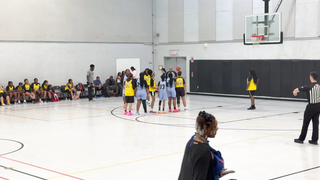
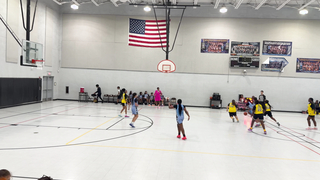
At Balling on the Beach, that became obvious.
Young players who were already familiar with the “I’m 40” movement immediately recognized him and embraced his presence at the event.
That reaction matters.
Because it shows that the content isn't simply generating views.
It's creating recognition.
From the Playground to Basketball Events
The playground has become one of basketball content's most valuable stages.
For decades, streetball culture produced legends largely through word of mouth.
Someone would tell you about the guy at Rucker Park.
The player nobody could guard in Chicago.
The older dude at the local gym who could still give everybody buckets.
The neighborhood point guard with ridiculous handles.
Social media completely changed that ecosystem.
Now those moments can immediately reach millions of people.
A random pickup game can become content.
A funny argument can become a clip.
A crossover can become a meme.
A trash-talking exchange can become a recurring series.
And a personality can become a brand.
“I’m 40” fits directly into that evolution.
The Commentary Is Part of the Game
The basketball matters, but the entertainment surrounding it may matter even more.
His content isn't presented like traditional basketball highlights.
There is personality layered into the action.
There is commentary.
There are reactions.
There are jokes.
There is trash talk.
There are interactions with whoever happens to be playing that day.
That makes the viewer feel less like they're watching a produced basketball show and more like they're standing on the sideline at the park.
That distinction is important.
A lot of younger basketball fans don't necessarily want everything polished.
They want personality.
They want authenticity.
They want moments that feel like something they would actually see at their own local court.
Basketball Creators Are Becoming Their Own Type of Celebrity
There was a time when being famous in basketball almost always meant being a professional player.
That isn't true anymore.
Basketball now has an entirely separate creator economy.
Trainers have audiences.
Videographers have audiences.
AAU media personalities have audiences.
Streetball players have audiences.
Basketball comedians have audiences.
Content creators have audiences.
Some of them can walk into a gym filled with teenagers and receive recognition comparable to players with legitimate recruiting profiles.
That is what makes the reaction to “I’m 40” at Balling on the Beach interesting.
The young athletes knew exactly who he was.
Not because he plays in the NBA.
Not because he's a college star.
Not because he's ranked by a recruiting service.
They knew him because they consume basketball through social media.
That represents a major shift in how basketball personalities are created.
The Playground Is Perfect for Social Media
Pickup basketball naturally produces content.
There are no scripts required.
Every game creates a storyline.
Someone talks trash.
Someone gets crossed.
Someone hits a game-winner.
Someone thinks they were fouled.
Someone calls next.
Someone gets exposed.
Someone unexpectedly takes over.
Then another group walks onto the court and the story starts again.
For a creator with personality, that environment is almost unlimited.
Instead of trying to manufacture entertainment, the creator simply has to capture what is already happening.
“I’m 40” has found a lane inside that environment.
The Character Makes It Repeatable
The most valuable part of the “I’m 40” concept might be how easily people can participate in it.
Fans can repeat it.
Players can joke about it.
Other creators can reference it.
Opponents can play into it.
Kids can recognize it immediately.
That's how a phrase becomes bigger than a single video.
The best internet brands frequently have something audiences can repeat.
It might be a phrase.
A celebration.
A nickname.
A sound.
A gesture.
Or a running joke.
“I’m 40” has that built directly into the identity.
Balling on the Beach Showed the Reach
Social media numbers can tell you how many people watched something.
Real-world recognition tells you something different.
When a creator walks into a basketball environment and young athletes immediately know the character, the content has crossed another threshold.
That's what stood out at Balling on the Beach.
The players weren't being introduced to “I’m 40.”
They were already familiar with him.
They understood the movement.
They understood the personality.
And they embraced his appearance because they had already consumed the content.
That is a much stronger indication of cultural reach than simply seeing another viral clip on a timeline.
Basketball Media Is Changing
The bigger story here isn't only about one creator.
It's about what basketball media is becoming.
ESPN isn't the only way young players discover basketball personalities.
Neither are NBA broadcasts.
YouTube, TikTok, Instagram and other social platforms have created completely different paths to basketball relevance.
A creator can build an audience by traveling from playground to playground.
A trainer can become nationally known from workout videos.
A high school player can build hundreds of thousands of followers before playing college basketball.
A videographer can become a recognizable figure himself.
And someone can build a basketball identity around being the older guy who keeps showing up at parks, playing against younger hoopers and making people laugh.
The barrier between basketball player, entertainer and media personality continues disappearing.
He Doesn't Have to Be the Best Player
That's another important piece of the formula.
The content doesn't require “I’m 40” to be the best basketball player on the court.
It requires him to be interesting.
That may sound simple, but it's one of the biggest lessons of modern sports media.
Talent gets attention.
Personality builds attachment.
People return because they want to see what happens next.
Who is he playing?
What is he going to say?
Who is talking trash?
Can the younger player actually beat him?
What happens when somebody recognizes him?
Every park creates another episode.
A New Kind of Streetball Star
Streetball fame isn't new.
Basketball has always produced personalities outside organized basketball.
What's different is the distribution.
Previous generations needed mixtapes, DVDs, organized tours or legendary courts to spread their reputation.
Today's creator needs a phone, a court and an audience willing to share the content.
The playground hasn't changed much.
The camera has.
And “I’m 40” is another example of what happens when traditional pickup basketball collides with modern social media.
He's not trying to make the playground look like the NBA.
The playground itself is the product.
The personalities are the product.
The conversations are the product.
The jokes are the product.
And, of course, the basketball is still the reason everybody showed up.
The Movement Is Leaving the Phone Screen
The most interesting part may be what happens next.
Once an online basketball personality starts receiving genuine recognition at real basketball events, new opportunities open.
Event appearances.
Creator games.
Collaborations.
Camps.
Brand partnerships.
Tournament activations.
Player interviews.
Streetball events.
What started as recording pickup games can become an actual basketball media brand.
And that's why the reception at Balling on the Beach matters.
It provided a real-world look at something social media has already been building.
“I’m 40” isn't simply a guy recording basketball games at playgrounds anymore.
To a growing generation of young basketball players who already know the jokes, commentary and movement, he's becoming part of basketball's creator culture.
And in 2026, that culture has become an increasingly important part of the game.