For decades, Nike's greatest strength was never simply selling shoes.
It was controlling culture.
Michael Jordan. Kobe Bryant. LeBron James. Kevin Durant. Serena Williams. Tiger Woods. Nike built an empire by identifying athletes and moments before everyone else fully understood their cultural value, then positioning the Swoosh directly in the middle of them.
Today, Nike is dealing with a very different reality.
The company's stock has fallen sharply, sales have struggled, competitors have taken market share and management is attempting to rebuild momentum under CEO Elliott Hill. Nike's fiscal 2025 revenue fell 10% to $46.3 billion, while Nike Direct declined 13%. Jordan Brand revenue fell 16%.
Yet there is one corner of the Nike universe where the brand's gravitational pull still feels remarkably strong.
Youth basketball.
More specifically, the Elite Youth Basketball League.
And when you examine Nike's recent moves, the bigger question becomes whether EYBL is still simply a grassroots basketball circuit or whether Nike is quietly building something much larger.
Nike Isn't Just Expanding EYBL. It's Building an Ecosystem.
EYBL was once relatively easy to understand.
Nike sponsored elite grassroots programs. Those programs competed against each other. The best eventually arrived at Peach Jam or Nike Nationals.
That model is becoming much broader.
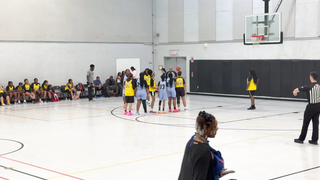
Nike now has its flagship EYBL structure, additional competition through EYCL, expanding girls programming and EYBL Scholastic, which takes the Nike basketball ecosystem directly into elite high school basketball.
EYBL Scholastic is particularly important.
Nike describes the initiative as extending EYBL programming into a year-round platform. Programs such as Montverde Academy, Link Academy, Long Island Lutheran, AZ Compass, Brewster Academy and Sunrise Christian have participated, and Nike has partnered with the NBA to stage EYBL Scholastic events alongside major NBA properties.
Think about what that means strategically.
Nike doesn't have to interact with an elite basketball prospect only during the spring and summer anymore.
The ecosystem can potentially touch that athlete during grassroots basketball, during the high school season, at major showcase events and eventually into college and professional basketball.
That's no longer just tournament sponsorship.
That's infrastructure.
And Nike Doesn't Necessarily Need You to Play EYBL to Wear Nike
This is where your observation about Select Events becomes especially interesting.
Select Events has developed Power 24 and Select 40 into one of the country's strongest independent girls basketball ecosystems. Select says every Division I program attended a Power 24 or Select 40 league event in 2025, including every power-conference school.
That means Nike doesn't necessarily need to force every valuable program into EYBL.
If Nike sponsors a strong independent program competing within another ecosystem, Nike still gets something valuable:
Nike uniforms on talented players.
That distinction matters.
The objective may not be for EYBL to absorb every elite basketball organization in America.
The larger objective could be for Nike to maintain influence over as much elite basketball culture as possible, whether those athletes are competing inside Nike's league or somewhere else.
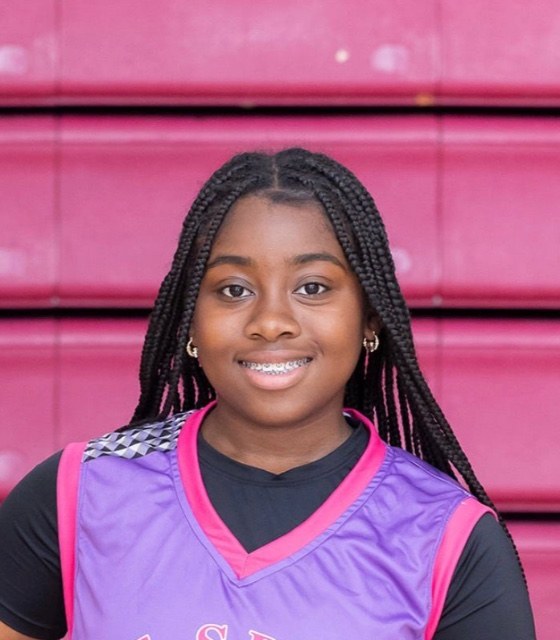
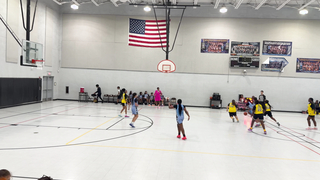
Your Hoop Code example fits that theory extremely well. A program can compete on Power 24 while still representing Nike visually.
Nike can therefore attack grassroots basketball from both directions.
It owns and expands its premium basketball ecosystem while simultaneously placing the Swoosh inside competing or independent ecosystems.
That is potentially a much smarter strategy than trying to make everybody EYBL.
Why Some Directors May Feel More Like Employees
The comments you've heard from program directors are also important because they reveal the other side of Nike's scale.
When a grassroots organization becomes attached to a massive corporate ecosystem, independence can become complicated.
Nike's girls EYBL Championship League selection process itself shows how deeply programs can be evaluated. Nike says programs are vetted on factors including their board of directors, mission statement, coaching staff, administrators, market, neighboring-program relationships, rosters, younger age groups, middle school programs, history and past success.
That is much more comprehensive than simply asking whether a 17U team is good.
Nike is evaluating the organization.
And that helps explain why a director might tell you, privately, that sometimes it feels less like being the owner of an independent grassroots organization and more like operating a branch within a larger system.
That doesn't necessarily make Nike's model bad. Programs receive tremendous value from the association: exposure, brand credibility, elite competition, apparel, recruiting visibility and access to one of basketball's strongest networks.
But there is an obvious tradeoff.
The more valuable the Nike ecosystem becomes, the more leverage Nike possesses over the organizations that want access to it.
EYBL's Real Product Isn't Basketball Games
This is where I think the entire conversation changes.
Nike doesn't really need youth basketball games.
It needs relationships.
The NBA says more than 230 NBA and WNBA players have EYBL experience. It also noted that NBA and WNBA stars including LeBron James, Kevin Durant, Chris Paul, Bradley Beal, Paul George, Russell Westbrook and Sabrina Ionescu have sponsored EYBL programs.
That's an extraordinary pipeline.
Every summer, Nike gets thousands of young athletes competing inside an environment where the Swoosh isn't merely advertising around basketball.
The Swoosh becomes associated with elite basketball itself.
A talented 13-year-old enters a Nike program.
She wants to reach EYBL.
Then Nike Nationals.
Then perhaps an EYBL Scholastic school.
Then college basketball.
Then potentially the WNBA.
Nike doesn't have to sign every one of those players to an endorsement contract for the system to work.
It is establishing the relationship years before those athletes become commercially valuable.
That's the moat.
Nike's Biggest Problem Is That the Rest of Basketball Has Caught Up
There was a period when making EYBL could almost feel like receiving admission into the highest level of grassroots basketball.
That's less absolute today.
Adidas 3SSB has major programs and elite talent. Under Armour has GUAA. New Balance has aggressively entered girls basketball. Select Events has created an enormous independent platform through Power 24 and Select 40.
Select Events says its overall event operation now touches more than 5,500 teams, 65,000 athletes and 2,500 college coaches annually.
Nike therefore faces an interesting challenge.
It can no longer assume that every elite player needs to be physically inside EYBL to receive national exposure.
So instead of protecting one closed circuit, Nike appears to be widening its footprint.
EYBL.
EYCL.
Scholastic.
Expanded girls competition.
Independent Nike-sponsored programs.
NBA partnerships.
Nike Nationals.
It's increasingly difficult to view those as unrelated initiatives.
They look like pieces of a larger basketball network.
So What Is Nike's End Game?
I think the end game is ownership of the basketball journey without necessarily owning every basketball event.
That distinction is important.
Nike doesn't need to operate every tournament.
It doesn't need every program in EYBL.
It doesn't need every elite high school under EYBL Scholastic.
What Nike needs is for the best basketball players in America to repeatedly encounter Nike as they move through the sport.
If the athlete plays EYBL, Nike wins.
If the athlete attends an EYBL Scholastic school, Nike wins.
If the athlete plays for a Nike-sponsored organization competing on an independent circuit, Nike still wins.
If that player eventually becomes an NBA or WNBA star with a decade of memories tied to Nike basketball, the relationship becomes even more valuable.
That's why grassroots basketball should probably be viewed less as an immediate revenue generator and more as customer acquisition, athlete acquisition and cultural infrastructure.
Nike is investing upstream.
Is EYBL Holding Nike Up?
Financially?
No.
It would be impossible to argue that a grassroots basketball circuit is supporting a corporation of Nike's size.
But culturally, the argument becomes much more compelling.
Nike's stock has fallen sharply. Its direct business has struggled. Its digital business has weakened. Competitors have challenged Nike in categories where the Swoosh once seemed almost untouchable. Reuters reported this week that Nike continues to grapple with declining sales and lost market share while attempting to revive innovation.
Yet go to Peach Jam.
Go to Nike Nationals.
Watch young players celebrate receiving EYBL invitations.
Watch recruiting announcements.
Look at the NBA and WNBA players who came through the ecosystem.
Nike still possesses something incredibly difficult for another company to manufacture overnight:
aspiration.
Kids don't simply wear EYBL jerseys.
They want to be EYBL.
That distinction is enormously valuable.
New Balance can spend money. Adidas can spend money. Under Armour can spend money. Independent operators can build excellent events.
But recreating decades of basketball mythology is much harder.
That may ultimately explain why Nike is expanding rather than retreating from grassroots basketball while other areas of the company are under pressure.
EYBL isn't saving Nike's balance sheet.
It may, however, be protecting something even more important to Nike's long-term future:
its claim to basketball culture.
And if Nike can turn EYBL from a summer circuit into a year-round ecosystem that stretches from middle school to grassroots basketball, elite high school basketball, college and eventually the pros, then the end game isn't simply winning the shoe-circuit war.
It's making sure that regardless of where the next generation plays basketball, Nike is already there.