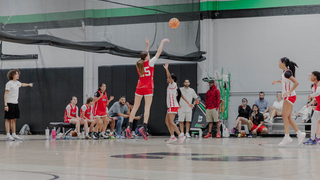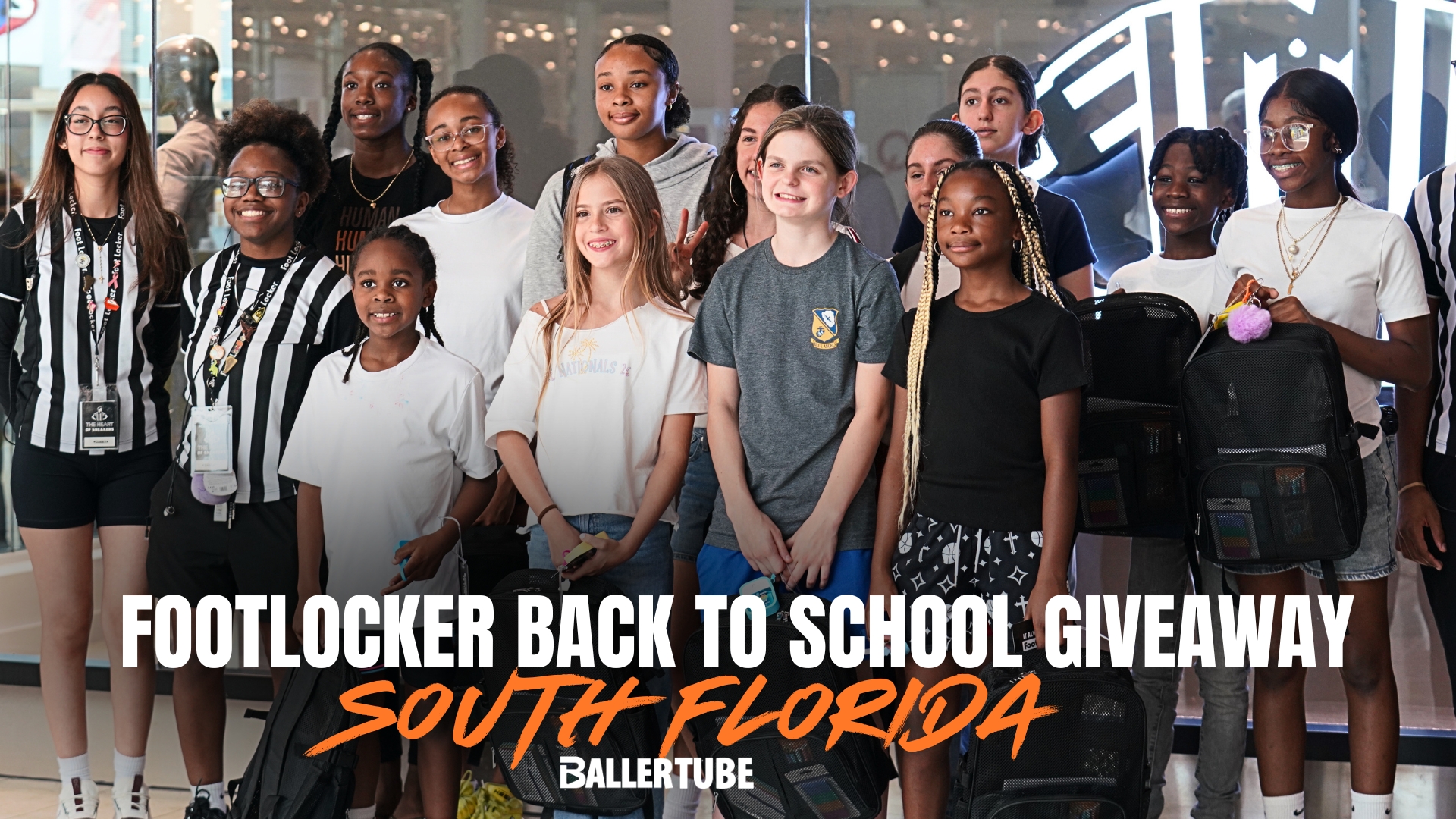
Back-to-school season has always been about more than pencils, backpacks and the first day of class. In South Florida, it has increasingly become an opportunity for brands, retailers and community organizations to create experiences that bring families together.
Foot Locker's recent South Florida activations featuring On Cloud and ASICS fit into that larger conversation. Rather than treating a giveaway as simply a table where families pick up free items, these events turn the retail location into an actual community destination, with entertainment and activities designed to make people want to spend time there.
That distinction matters at a moment when so much retail activity has moved online.
Foot Locker itself continues to promote back-to-school shopping across its digital storefront, while also offering customers the ability to pick up purchases in stores. But a website cannot recreate the experience of walking into a store and finding a DJ playing, a photo booth operating, a smoothie machine running, or a nail station serving families.
A physical event can.
And that may be one of the most interesting aspects of the modern retail strategy.
GIVE SOMETHING BACK, BUT CREATE A REASON TO SHOW UP
There is an obvious community component to a back-to-school giveaway. Families are facing the recurring cost of preparing children for another school year, and free shoes, supplies and other essentials can make a meaningful difference.
South Florida has seen a significant number of these efforts in 2026. Broward County's Children's Services Council lists multiple back-to-school events providing items including school supplies, shoes and books, while the City of Lauderhill's July event combined backpack giveaways with food trucks, a DJ, music, face painting and other activities. Local 10 also reported that thousands of South Florida families received free school supplies, clothing, meals and other essentials during August back-to-school events.
That tells us something important: the giveaway itself has become only one part of the experience.
For a retailer, there is another obvious benefit. It gives people a reason to physically come through the doors.
That doesn't mean every person attending an event is going to make a purchase, and it would be speculative to claim that a particular giveaway directly produced a specific amount of sales. But the retail logic is straightforward. A consumer who is physically inside a store has an opportunity to see products, interact with employees, discover brands and experience the environment in a way that an online transaction cannot replicate.
And that physical interaction is increasingly valuable.
THE INTERNET CAN SELL YOU A SHOE. IT CAN'T THROW THE EVENT.
This is where an event featuring brands such as On Cloud or ASICS becomes more interesting.
Online shopping is incredibly convenient. Consumers can compare products, check sizes and complete a purchase without ever leaving their homes. Foot Locker's current back-to-school collection, for example, includes more than a thousand products and allows shoppers to filter by category, brand, size and other characteristics.
But convenience isn't the same thing as experience.
An online store can't have a DJ interacting with customers in real time. It can't turn a parking lot or retail space into a community gathering. It can't create the same spontaneous photographs, conversations and moments that happen when families show up together.
That is where physical retail still has something digital commerce cannot completely duplicate.
The store can become the event.
And when a retailer can combine the shopping environment with entertainment, community engagement and brand activation, the reason for visiting becomes much bigger than simply buying a pair of shoes.
THIS IS PARTICULARLY RELEVANT FOR SPORTS RETAIL
Foot Locker occupies an interesting position because sneakers aren't simply another consumer product.
For young athletes and sneaker culture enthusiasts, footwear is connected to sports, identity, fashion and personality. A shoe can be something an athlete competes in, something a teenager wants for everyday wear, or simply something connected to a favorite player or brand.
That makes a back-to-school event a natural intersection between retail and sports culture.
ASICS can showcase running and performance footwear.
On can connect with consumers through its growing performance and lifestyle presence.
Foot Locker provides the retail environment.
And the community gets an experience.
Everyone is operating in the same physical space for a few hours.
THE BIGGER RETAIL QUESTION
The interesting question isn't whether online shopping is going away.
It isn't.
The question is what physical stores can offer that online stores cannot.
That answer increasingly appears to be experience.
Retailers have spent years making online shopping easier. Better websites, faster delivery, mobile apps, personalized recommendations and convenient pickup have all reduced the friction involved in purchasing products.
The physical store has to compete differently.
It has to give consumers a reason to want to be there.
Community events are one way to do that.
A back-to-school giveaway can bring families together. A DJ can create energy. A photo booth creates shareable memories. Food and beverages keep people around. Beauty and personal-care stations add another layer. Brand representatives can interact directly with consumers.
Suddenly, the store isn't simply a place where a transaction happens.
It's a place where something happens.
SOUTH FLORIDA IS A NATURAL TESTING GROUND FOR THIS
South Florida has an enormous youth-sports and sneaker culture, along with a dense network of schools, athletic programs, community organizations and families.
That makes the region particularly suited to these kinds of activations.
And the broader back-to-school landscape shows just how large the community-event ecosystem has become. Style Saves' 2026 Miami Beach event, for example, expected more than 20,000 families and offered everything from school supplies and sneakers to food, personal-care services and other resources.
Foot Locker's activations exist within that broader environment, but with a distinctly retail-oriented component.
The community gets something useful.
The brands get face-to-face exposure.
The retailer gets an opportunity to create traffic and interaction.
And the event itself becomes content.
That last piece shouldn't be overlooked.
THE EVENT DOESN'T END WHEN THE GIVEAWAY DOES
A strong retail activation now has a second life online.
The DJ footage becomes a reel.
The kid receiving a new pair of shoes becomes a story.
The photo booth produces social content.
Athletes and families post their experiences.
Brand representatives create content.
Media outlets document the event.
The physical activation becomes digital media.
That's another major difference between today's retail environment and the one that existed before social media.
A store event used to end when everyone went home.
Now it can continue circulating for days or weeks.
And that's where the intersection between retail, sports, community and digital media becomes particularly interesting.
Foot Locker isn't simply giving people a reason to walk into a store. An event can give people a reason to talk about the store afterward.
THE REAL WIN MAY BE THE EXPERIENCE
There is a temptation to view a giveaway purely through the lens of marketing: give away products, attract customers and hopefully generate sales.
But that is only part of the story.
For families preparing for a new school year, getting something they need for free matters.
For young athletes, receiving footwear from a major sports retailer can be memorable.
For brands, being physically present in the community creates a different relationship than an advertisement appearing on someone's phone.
And for retailers, creating an environment people actually want to visit may be increasingly important as consumers become more comfortable doing the transaction itself online.
The future of retail probably isn't online versus in-store.
It's the two working together.
Online provides convenience.
Physical retail provides experience.
Community activations provide connection.
And sports brands provide culture.
Foot Locker's South Florida back-to-school events offer a snapshot of what that combination can look like.
The giveaway may be what gets people through the door.
But the experience is what can make them remember why they came.